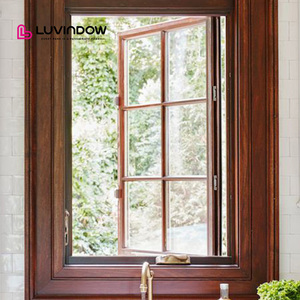
Precision Architectural Fenestration
High-Performance Aluminium-Clad Wooden Window Systems
Manufactured using German CNC precision centers, certified FSC/PEFC solid timber, and structural thermal barrier technology. Optimized for international commercial facades and luxury residential estates.
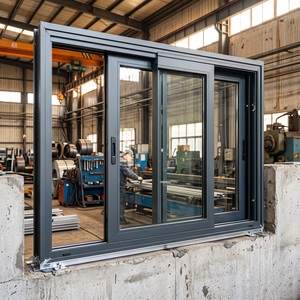
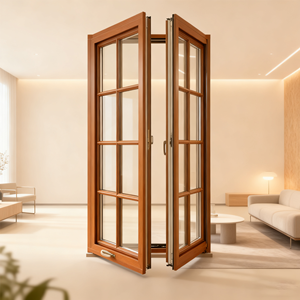
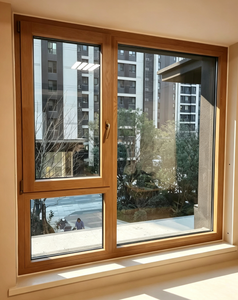
Institutional Manufacturing Strength
Guangdong Dejiyoupin Doors and Windows Co., Ltd. (DERCHI)
Consistently ranked among the Top 10 fenestration and structural envelope manufacturers in China. Over 25 years of specialized R&D delivering customized aluminium-wood solutions across global markets.
180,000㎡
Smart Manufacturing Base
600+
Skilled Craftsmen & Engineers
30+
Patented Joint & Drainage Technologies
8+
International Testing Accreditations

Uncompromised Industrial Fabrication
DERCHI bridges the gap between natural biophilic aesthetics and high-tech structural resilience. Operating out of Foshan, Guangdong, our mega-facility integrates German 5-axis CNC routing machinery, computerized multi-stage timber drying kilns, and automated powder coating/anodizing lines.
Unlike conventional joinery shops, our composite windows feature snap-on nylon isolation connectors that separate the aluminum exterior frame from the interior timber core. This critical engineering nuance neutralizes differential thermal expansion coefficients, permanently eliminating wood warp, seal failure, or internal condensation.
Our manufacturing compliance protocol is certified under ISO 9001, CE, Australian AS 2047 (N6 Cyclic Wind Rating), and North American NFRC guidelines, confirming structural integrity under extreme marine humidity, coastal hurricanes, and arid thermal swings.
Send an Inquiry
Strategic Procurement Intelligence
Future Procurement Trends in Aluminium-Wood Fenestration (2025–2030)
Global architectural procurement is shifting from standalone component costs to Lifecycle Carbon Assessment (LCA) and Whole-Building Energy Performance. Here is how international specifiers are navigating sourcing:
1. Direct-to-Factory (D2F) Modular Scheduling
General contractors across North America, the GCC, and Europe are bypassing multi-tiered local distributors. By adopting Direct-to-Factory procurement models via verified Tier-1 Chinese exporters, developers save 32% to 45% on unit rates while utilizing factory-backed BIM (Building Information Modeling) engineering support.
2. Stringent Embodied Carbon & Chain of Custody
ESG reporting mandates mean timber verification is no longer optional. B2B tenders require strict FSC (Forest Stewardship Council) and PEFC chain-of-custody tracking for Northern European Pine, American Red Oak, and Larch, paired with low-carbon recycled secondary aluminum extrusion billets.
3. Complete Unitized Prefabrication
Rising jobsite labor costs globally have accelerated demand for fully pre-glazed, factory-integrated window installations. Specifiers demand ready-to-anchor configurations complete with factory-applied expanding foam membranes (RAL/Tremco compliant), integral subsills, and architectural pre-fitted handles.
Technological Foresight
Engineering Evolution: Next-Generation Window Systems
How cutting-edge fenestration technology combines high mechanical yield strength with unmatched thermal breaks.
The traditional vulnerability of wooden windows—rot, shrinkage, UV degradation, and constant maintenance—has been fully neutralized by contemporary composite structural engineering. Exterior aluminium shells formed from 6063-T6 architectural alloy serve as a resilient weather-shield, deflecting wind-driven rain, ultraviolet radiation, and airborne salts. Internally, multi-laminated solid wood frames act as a natural structural thermal insulator (thermal conductivity λ ≈ 0.13 W/m·K), providing warmth and eliminating interior cold bridging.
| Performance Characteristic | Standard Thermally Broken Aluminium | DERCHI High-Performance Clad-Wood | Passivhaus Certified Clad-Wood Standard |
|---|---|---|---|
| Overall U-Factor (Uw) | 1.6 – 2.2 W/m²·K | 0.79 – 1.10 W/m²·K | ≤ 0.80 W/m²·K |
| Acoustic Attenuation (Rw / STC) | 30 – 35 dB (Moderate) | 42 – 48 dB (Exceptional) | 45 – 52 dB (Acoustic Laminated) |
| Structural Wind Load (Pa) | Class 3 (2000 Pa) | Class 5 / N6 (> 4500 Pa) | Hurricane Rated (> 5000 Pa) |
| Condensation Resistance Index | CRI 55 – 62 | CRI 74 – 82 (Zero Condensation) | CRI > 80 |
| Primary Mechanical Life Cycle | 15 – 20 Years | 35 – 50+ Years (Modular Maintenance) | 50+ Years |
Triple/Quadruple Vacuum Glazing
Modern builds incorporate 48mm to 56mm insulated glass units (IGUs) combining dual Low-E coatings, warm-edge silicone structural composite spacers, and 95% pure Argon fill, reducing overall window U-values to sub-zero levels.
Concealed Heavy-Duty Hardware
Eliminating visible perimeter hinges, our concealed German hardware accommodates individual sash weights up to 300kg while sustaining clean, modern sightlines and RC3-level anti-burglary multi-point locking pins.
Four-Stage Micro-Sealing Technology
Continuous co-extruded EPDM cellular synthetic rubber perimeter gaskets work alongside pressure-equalized internal chamber drainage to maintain watertight barriers under continuous driving rain pressures up to 1000 Pa.
Procurement Clearances & Technical FAQ
Frequently Asked Questions by Commercial Specifiers & Importers
In-depth technical answers addressing risk mitigation, cross-border shipping, wood moisture stabilization, and testing protocols.
How does DERCHI prevent solid wood warping or checking in extreme climates? +
Moisture stabilization is fundamental. We source select timbers (such as German Oak, North American Larch, or Russian Pine) and process them through automated constant-humidity drying kilns to calibrate moisture content strictly between 8% and 12%. The timber is then cross-laminated in three or four finger-jointed layers with structural moisture-resistant adhesives (D4 standard). This grain-opposed lamination offsets natural expansion stresses. Additionally, the exterior aluminium cladding is mounted with sliding nylon retaining clips rather than rigid screw attachments, providing dynamic thermal movement tolerance up to ±3mm without applying strain to the timber core.
Can Chinese window assemblies meet local building codes (e.g., AS2047, NFRC, CE)? +
Yes. DERCHI fenestration products are systematically certified by third-party testing bodies (including Intertek, TUV, and SAI Global). For the Australian market, our systems comply with AS 2047 and AS 1288, achieving N6 structural wind classifications. For North America, systems are tested under AAMA/WDMA/CSA 101/I.S.2/A440 for air infiltration, structural deflection, and water penetration resistance, supported by complete NFRC thermal simulation reports for Title 24 and IECC energy compliance.
What is the standard production lead time and export packaging protocol? +
Standard fabrication lead time is 25 to 35 business days following formal CAD shop drawing sign-off and color chip approvals. Because timber-clad assemblies are high-value products, our export packaging adheres to strict ISPM-15 standards. Windows are wrapped in 0.2mm protective electrostatic film, protected by edge guards, encased in shock-absorbing foam, and packed into fully enclosed fumigated plywood crates with integrated desiccant bags. Crates feature reinforced fork pockets and lifting eyelets for seamless container un-stuffing on active construction sites.
How are warranty claims, hardware replacement, and glass damage handled overseas? +
We provide a 10-year comprehensive warranty on structural frame integrity, 10-year coverage on glass seals, and 5 years on surface finishes. Because we partner with global Tier-1 hardware manufacturers such as Roto, Siegenia, and Hoppe, replacement components can be sourced locally or air-freighted directly from our factory warehouse within 72 hours. We also include a 3% spare parts package (gaskets, rollers, locking points, alignment shims) inside every full-container shipment (FCL) to resolve minor jobsite adjustments instantly.
What surface finishes are available for exterior aluminium and interior timber? +
Exterior aluminium profiles can be specified in AkzoNobel Interpon D2525 architectural powder coatings (available across the complete RAL color matrix), architectural PVDF fluorocarbon coatings for hyper-saline coastal conditions, or marine-grade anodized finishes (up to 25 microns). Interior solid timber surfaces are hand-finished using environmentally friendly, zero-VOC waterborne micro-porous wood coatings (such as German Remmers or Sikkens systems). This allows the wood to breathe naturally while protecting against moisture absorption, mildew, and interior cleaning agents.
Request Technical Shop Drawings & Factory-Direct Quotation
Submit your project elevations, window schedules, or architectural blueprints. Our bilingual engineering team will deliver a comprehensive proposal with U-value calculations, structural static checks, and itemized CIF/DDP cost modeling within 24 hours.