Engineered Architectural Glazing & Crittall-Look Series
Certified high-performance aluminium doors and windows engineered with structural precision, ultra-slim sightlines, and robust multi-point hardware configurations designed to meet international engineering benchmarks.
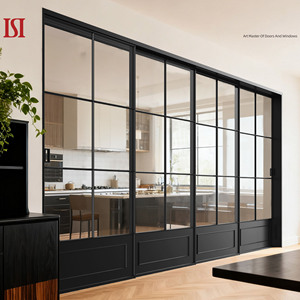
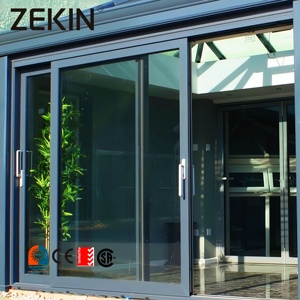
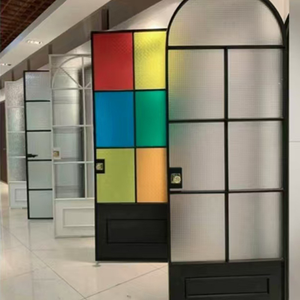
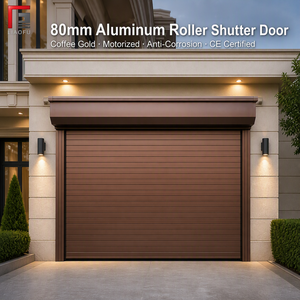
The Architectural Evolution of Steel-Look Crittall Systems in Mexico
An engineering analysis of material performance, thermal dynamics, and structural fabrication: Why modern Mexican architecture is transitioning from traditional carbon steel to extruded thermal-break aluminium Crittall door systems.
Throughout Mexico’s vibrant architectural landscape—ranging from the brutalist concrete residences in Pedregal and the neo-industrial lofts of Colonia Roma and Polanco in Mexico City, to the ultra-luxury hospitality compounds along the Riviera Maya and Los Cabos—the timeless aesthetic of slim-profile steel-frame doors (commonly known as Crittall doors) has emerged as an indispensable design language. However, the physical realities of Mexico’s microclimates have historically presented immense technical hurdles for traditional hot-rolled carbon steel fenestration.
Conventional hot-rolled steel suffers from severe drawbacks in Mexican developments: aggressive thermal bridging that overwhelms HVAC systems in northern climates like Monterrey and Hermosillo, excessive dead loads requiring costly structural lintel reinforcements, and rapid electrolytic oxidation when exposed to the high humidity, chloride-heavy marine atmospheres of coastal corridors. As an established direct-factory OEM manufacturer, we have engineered an advanced alternative: Architectural Thermally Broken 6063-T6 Aluminium Crittall Door and Partition Systems.
"By pairing aerospace-grade 6063-T6 extruded aluminium alloys with precision polyamide (PA66 GF25) thermal insulation barriers and architectural powder coatings, our Crittall systems deliver the identical, revered minimalist sightlines of authentic heritage steel framing while achieving zero oxidation, a 62% reduction in dead load, and thermal U-values compliant with Mexico’s NOM-020-ENER energy standards."
Structural Rigidity & Slim Sightlines
Our custom extrusion profiles utilize 6063-T6 structural tempering with nominal wall thicknesses of 2.0mm to 3.0mm, allowing vertical mullions as narrow as 25mm to 35mm that withstand deflection limits under high wind loads.
Advanced Polyamide Thermal Barriers
Integrated multidirectional thermal breaks (polyamide insulation strips) decouple exterior heat transfer, mitigating the intense solar radiation of Mexican desert regions and lowering internal cooling energy consumption.
Marine-Grade Surface Finishes
Treated with Qualicoat Class 2 architectural powder coatings and AAMA 2605 compliant PVDF fluorocarbon coatings, guaranteeing over 20 years of resistance against coastal salt spray, UV fading, and chalking.
To satisfy the discerning requirements of Mexican architectural firms and general contractors, our OEM manufacturing facilities combine high-tonnage precision extrusion presses with 4-axis CNC machining centers. Every mullion, transom, and glazing bead is precision-milled to tight tolerances (±0.1mm), ensuring that when our French doors, pivot entrances, sliding systems, or interior room dividers arrive at sites in Mexico, installation time is minimized while structural alignment remains flawless.
Tailored Crittall Glazing Scenarios Across Mexico
How our engineered aluminium Crittall door systems resolve real-world climatic, architectural, and acoustic demands in key metropolitan centers, resort corridors, and industrial hubs across the country.
Luxury Eco-Resorts & Coastal Beachfront Villas
In coastal tourism enclaves where internal spaces blur with tropical terraces, traditional iron doors rapidly corrode and seize due to salt-laden trade winds. Our aluminium Crittall sliding and pivot doors utilize 316-grade stainless steel hardware concealed within corrosion-proof profiles. Coupled with double-glazed low-E laminated glass, these assemblies prevent condensation while delivering high solar heat rejection without darkening the interior view.
Historic Building Conversions & Urban Loft Residences
Mexico City’s architectural landscape blends historic early-20th-century French-influenced estates with contemporary urban infill. Our Crittall-style French doors and room dividers respect the municipal preservation guidelines of INBAL while upgrading acoustic protection. Incorporating acoustic PVB interlayers, our doors dampen high-frequency street noise along avenues like Insurgentes and Paseo de la Reforma by up to 42 decibels (STC 42).
High-Altitude Residential Compounds & Thermal Performance
Subjected to severe thermal swings—blistering 40°C+ summer heat waves followed by winter cold snaps—Nuevo León’s premium villas demand superior envelope insulation. Our thermally broken aluminium Crittall systems feature 24mm to 34mm polyamide thermal barriers, argon gas fills, and warm-edge spacers that curtail thermal bridging and prevent internal thermal condensation, dramatically lowering HVAC operational costs.
Colonial Restorations, Wineries & Corporate HQs
In the Bajío region, where industrial nearshoring headquarters coincide with historic colonial hacienda restorations, developers use Crittall glass partitions for executive boardrooms and winery tasting salons. Our customizable grid configurations (true divided lites or simulated divided lites with internal duplex spacers) allow architects to specify square, rectangular, or arched profiles that complement exposed stone, brickwork, and timber beams.
Trends Shaping Fenestration Procurement in Mexico
How nearshoring expansion, international green building standards (LEED, EDGE), and seismic-structural regulations are transforming door and window specifications for Mexican general contractors.
The construction sector in Mexico is experiencing unprecedented transformation driven by the industrial nearshoring influx and the subsequent surge in commercial headquarters, luxury executive residential towers, and lifestyle developments. Architectural specifications are no longer driven solely by aesthetic appeal; they are governed by quantifiable engineering criteria, sustainability certifications, and logistics reliability.
1. Convergence with National and International Energy Codes (NOM & LEED): With Mexico tightening enforcement of NOM-008-ENER and NOM-020-ENER (energy efficiency in building envelopes), developers in Mexico City, Guadalajara, and Monterrey must demonstrate stringent Solar Heat Gain Coefficients (SHGC) and overall thermal transmittance (U-factors). Aluminium Crittall doors fitted with warm-edge insulated glass units (IGUs) fulfill these rigorous criteria, directly contributing toward LEED v4.1 Gold and Platinum certifications for Class-A corporate developments.
2. Seismic Zone Resistance and Structural Deflection: Major Mexican metropolitan zones (particularly CDMX Seismic Zone III lakebed zones) require fenestration systems capable of absorbing inter-story lateral drift without catastrophic glass failure. Our custom aluminium Crittall frames feature specialized structural silicone glazing channels and continuous EPDM perimeter dampeners designed to accommodate seismic movement while preserving air and water tightness.
3. The Shift from On-Site Welding to Modular Factory Precision: The era of commissioning local metalworkers (herreros) to fabricate heavy steel Crittall doors on job sites is rapidly declining. On-site welding yields inconsistent tolerances, uneven grinding marks, prone-to-rust joints, and uninsulated glass pockets. Developers are actively turning to large-scale certified OEM manufacturing partners capable of delivering containerized, pre-glazed, or modular knock-down units accompanied by detailed structural shop drawings and structural test data.
Why Latin American Developers Partner with DERCHI
Recognized as an industry leader in high-end architectural systems, our manufacturing facility in Foshan, Guangdong delivers seamless OEM and ODM capabilities for projects across the globe. We eliminate intermediate sourcing markups, giving Mexican developers factory-direct access to world-class fenestration engineering.
- End-to-End OEM/ODM Flexibility: Custom extrusion dies, bespoke sightline configurations, and engineered divided-lite layouts built to project architectural drawings.
- Rigorous International Testing: Products tested and verified to CE, ISO 9001, AS 2047, and North American NFRC standards for structural and weather integrity.
- Engineering Submittals & Shop Drawings: Comprehensive CAD cross-sections, anchorage details, and wind load calculation reports supplied for consultant review.
- Direct Sea Freight to Major Mexican Ports: Coordinated containerized export shipments direct to Manzanillo, Lázaro Cárdenas, Veracruz, and Altamira with complete customs documentation.

Frequently Asked Questions for Mexican Buyers
Essential technical, logistical, and commercial insights for architects, project developers, and import procurement managers sourcing Crittall doors for Mexican job sites.
How do aluminium Crittall doors compare with traditional carbon steel doors in Mexico's coastal climates?
Traditional hot-rolled carbon steel doors oxidise rapidly when exposed to the high humidity and airborne marine salts typical of coastal areas like Cancun, Tulum, Puerto Vallarta, and Los Cabos, requiring relentless sanding, repainting, and eventual profile replacement. Our aluminium Crittall doors use high-purity 6063-T6 architectural aluminium treated with AAMA 2605 compliant PVDF or Qualicoat Class 2 coatings. They are 100% rust-free, resistant to galvanic oxidation, and maintain mechanical precision without swelling, sticking, or seizing over decades of coastal exposure.
Can your aluminium Crittall door systems comply with Mexican energy efficiency standards (NOM-020-ENER)?
Yes. Mexican standard NOM-020-ENER-2011 sets thermal transmittance limits for the building envelopes of non-residential and residential constructions to curb air conditioning energy demand. We integrate reinforced polyamide (PA66 GF25) thermal insulation strips into our door extrusions, creating a complete thermal break between internal and external surfaces. Combined with double or triple insulated glass units (IGUs) filled with argon gas and low-E coatings, our systems achieve low U-values (under 1.8 W/m²·K) and custom Solar Heat Gain Coefficients (SHGC) tailored to northern and coastal Mexican zones.
What is the procedure for shipping, importing, and customs clearance (Aduana) into Mexico?
We routinely ship to Mexico’s leading commercial ports: Manzanillo and Lázaro Cárdenas on the Pacific coast, and Veracruz and Altamira on the Gulf coast. Doors are securely packed inside fully enclosed, fumigated solid-plywood crates with protective foam wrap and steel corner bracing. We provide complete documentation—commercial invoices, packing lists, Bills of Lading, and Certificates of Origin—allowing your designated Mexican customs broker (Agente Aduanal) to smoothly clear customs under the appropriate tariff codes (fracciones arancelarias) and manage the official import documentation (pedimento de importación).
How do you manage wind-load and hurricane resistance for Gulf and Pacific coastal resorts?
For cyclonic coastal regions such as Quintana Roo, Baja California Sur, and Nayarit, we engineer Crittall systems with heavy-duty profiles (nominal wall thickness up to 3.0mm) and internal steel profile reinforcements where required. Our glass options include high-performance impact-laminated units utilizing SentryGlas (SG) or heavy-duty PVB interlayers capable of withstanding large missile impacts and cyclic wind pressures in compliance with ASTM E1886 and ASTM E1996 hurricane standards.
Are the glazing bars true divided lites (TDL) or simulated divided lites (SDL)?
We offer both configurations depending on project specifications. For exterior perimeter doors requiring optimum thermal and water tightness, we recommend Simulated Divided Lites (SDL): an unbroken double-glazed IGU features surface-bonded, mechanically fastened architectural aluminium grid profiles on both interior and exterior faces, paired with internal spacer bars (duplex system) to create an authentic multi-pane look without thermal leaks. For interior partitions and wine cellars, we also manufacture True Divided Lites (TDL) with individual glass panes secured by slimline aluminium glazing stops.
Can you manufacture oversized pivot doors and arch-top Crittall doors for Mexican villas?
Yes. Grand entrance scale is a cornerstone of luxury Mexican residential design. We routinely build oversized pivot Crittall doors exceeding heights of 4.5 meters and widths of 2.5 meters. These doors incorporate concealed German-engineered floor closers and heavy-duty pivot bearings capable of supporting sash weights over 500 kg with effortless, balanced fingertip operation. Our computer-controlled profile bending machinery also enables precision-arched frames and bespoke circular fanlights tailored to colonial hacienda elevations.
What is your typical production turnaround and sample verification process?
Upon receipt of architectural schedules or elevations, our dedicated engineering team prepares full CAD shop drawings within 48 to 72 hours for consultant sign-off. Production for custom orders typically spans 25 to 35 calendar days following drawing approval. We provide pre-production corner profile samples and hardware finish mockups sent via air courier directly to your offices in Mexico, supplemented with live high-definition video inspections and factory pre-assembly verification prior to crating.
Initiate Your Custom Crittall Door Engineering Project
Connect directly with our senior fenestration engineers to review your door schedules, receive full CAD shop drawings, and secure competitive direct-factory pricing for your development in Mexico.
Get Catalog