Featured Wholesale Glazed Systems & Architectural Assemblies
Engineered for extreme structural deflection, thermal separation, and high-wind loads, our wholesale aluminium glazed doors and fenestration systems are manufactured from virgin 6063-T5/T6 structural alloys with precision multi-chamber thermal breaks.
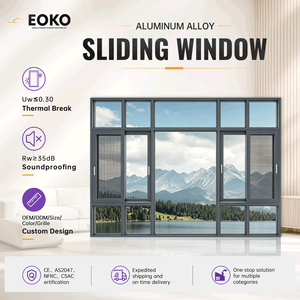
EOKO High Quality Aluminium Sliding Windows Double Glazed NFRC AS2047 Factory Direct Wholesale Price Custom Window For Engineers
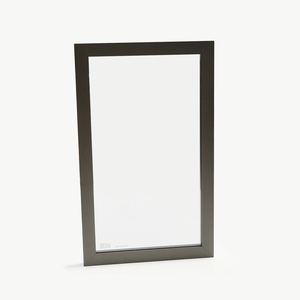
Italy Brand Aluminum Door And Window Frames For Bathroom Cabinets For Windows And Doors Kitchen Cabinet
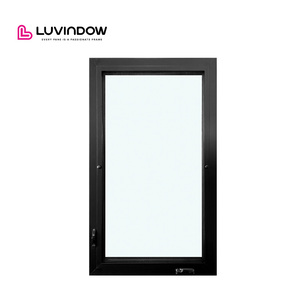
Quiet Living Long Term Durability Aluminum Crank Out Casement Windows for North American Residential Commercial Projects
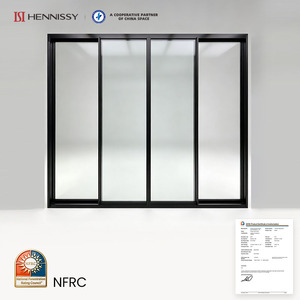
Modern NFRC Certified Thermal Break Aluminum Sliding Glass Door Low-E Double Glazed Tempered Glass U-value 1.7 for US Market
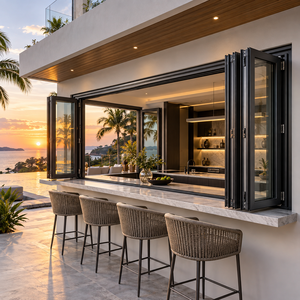
Folding Windows Aluminum Glass Bi-fold Soundproof for Balcony Terrace Villa Renovation Projects
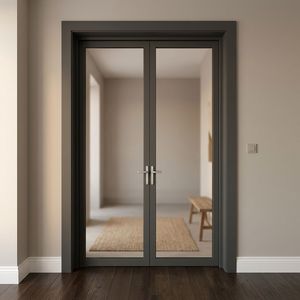
Modern Customized Aluminum Alloy Interior Casement Door with Soundproof Double Glass Waterproof Feature for Dining Front Entry
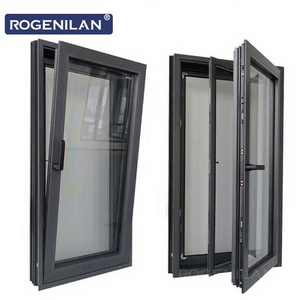
Rogenilan NO.1 Aluminum Double Glass Casement Window Triple Glaze Tilt Turn or Awning Swing Windows for House with Screen
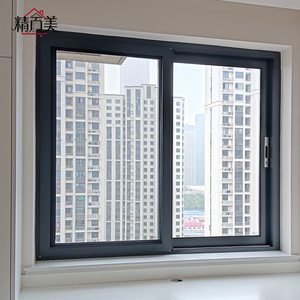
Commercial Customized Long Lasting Sturdy Aluminum Sliding Window with Sealed Gasket for Kitchen Sink Countertop Ventilation
Aluminium Glazed Door Engineering Benchmark Matrix
When evaluating China wholesale aluminium glazed door manufacturers, project specifiers must audit rigorous thermodynamic, mechanical, and acoustic thresholds. The table below delineates verified performance metrics cross-referenced with ASTM, AAMA, and AS2047 fenestration standards.
| Glazed Door System Typology | Thermal U-Value (W/m²K) | Solar Heat Gain (SHGC) | Acoustic Attenuation (STC / Rw) | Wind Load Resistance (ASTM E330) | Water Penetration Threshold |
|---|---|---|---|---|---|
| Heavy-Duty Lift & Slide Glazed Door | 1.30 – 1.65 (PA66GF25 Break) | 0.21 – 0.35 (Double Low-E) | 38 dB – 44 dB (Laminated IGU) | Design Pressure ±3500 Pa | Static 700 Pa (No Leakage) |
| Grand Architectural Pivot Glazed Door | 1.50 – 1.85 (Multi-Cavity) | 0.25 – 0.38 (Solar Reflective) | 36 dB – 42 dB (Acoustic PVB) | Design Pressure ±3000 Pa | Static 450 Pa (Drop-down Seal) |
| Thermally Broken Folding / Bi-Fold Door | 1.45 – 1.75 (Isobar Thermal) | 0.22 – 0.34 (Triple Low-E) | 35 dB – 41 dB (Insulated Double) | Design Pressure ±2800 Pa | Static 500 Pa (Compression Seal) |
| Narrow Stile Casement Glazed Door | 1.15 – 1.40 (Triple Glazed Argon) | 0.19 – 0.28 (Dual Magnetron) | 40 dB – 46 dB (Acoustic SGP) | Design Pressure ±4500 Pa | Static 900 Pa (Triple EPDM) |
| Commercial Automatic Sliding Entrance | 1.60 – 2.10 (Standard Break) | 0.28 – 0.42 (Hard Coat Low-E) | 32 dB – 37 dB (Monolithic Lam) | Design Pressure ±2400 Pa | Static 350 Pa (Brush + Neoprene) |
Future Procurement Trends in Aluminium Glazed Doors (2025–2030)
Global supply chains are transitioning from pure purchase-cost evaluations to lifecycle carbon auditing, high-precision offsite prefabrication, and deep engineering integration between Chinese export hubs and international job sites.
1. Embodied Carbon & Recycled Ingot Billets
Procurement directors in Europe, North America, and Australasia now mandate verified Environmental Product Declarations (EPDs). The market demand has shifted dramatically toward low-carbon hydroelectric aluminium with minimum 60% post-consumer recycled billet content, reducing Scope 3 supply chain emissions by up to 72%.
2. Offsite Glazed Modular Prefabrication
Rising job-site labor expenses across the United States, Australia, and the Middle East are accelerating the shift toward factory unitized and pre-glazed assemblies. Direct factory glazing ensures clean-room structural silicone curing, automated argon gas filling, and eliminates costly on-site glazing defects.
3. Strict Multi-Jurisdictional Certification
Bypassing third-party distributors requires direct wholesale factories that possess comprehensive cross-border compliance portfolios, including US NFRC 100/200 and Florida Hurricane NOA, Australian AS2047 / AS1288, and European CE (EN 14351-1) declarations of structural performance.
4. Turnkey Engineering & BIM Collaboration
Global architectural firms expect China exporters to act as collaborative fenestration engineers rather than passive metal fabricators. Direct provision of parametric BIM objects, finite element structural calculations, and bespoke CAD shop drawings for local consultant approvals has become the baseline standard.
Architectural Glazed Door Engineering Innovations
Modern architectural envelopes demand uncompromising structural transparency paired with extreme thermal envelope separation. The following four technical paradigms represent the cutting edge of contemporary glazed door manufacturing.
Ultra-Narrow Minimalist Sightlines
Eliminating massive aluminium profiles in favor of concealed structural perimeter framing allows glass surface ratios exceeding 92%. Our 20mm interlocking stiles incorporate carbon-fiber reinforced internal stiffeners that comfortably handle continuous dynamic wind pressures up to 4500 Pa on panel heights up to 4.5 meters.
Polyamide Multi-Cavity Thermal Barriers
Replacing basic poly-resin thermal breaks with German-engineered PA66 GF25 (polyamide with 25% glass fiber) continuous isobaric chambers completely interrupts conductive thermal bridges. When integrated with cellular aerogel insulation strips, overall assembly U-factors reach Passive House criteria (< 0.85 W/m²K).
Dynamic Electrochromic & Smart Glazing
Direct integration of voltage-controlled SPD or electrochromic switchable glazing allows automated solar transmission tuning from 0.05 to 0.65 SHGC. Combined with concealed linear motorized operators, glazed doors interface directly with central Building Management Systems (BMS) for passive cooling optimization.
Gulf & Coastal C5-M Anti-Corrosion
Engineered explicitly for hyper-saline coastal settings (e.g., UAE, Florida, Red Sea coastlines), profiles undergo multi-stage chemical pretreatments followed by Qualicoat Class 3 fluoropolymer (PVDF) electrostatic coatings or Class I (25μm) architectural anodization, resisting over 3,000 hours of continuous neutral salt spray exposure.
Guangdong Dejiyoupin Doors & Windows (DERCHI)
Operating as a Top 10 fenestration brand in China, our 180,000㎡ industrial complex in Foshan, Guangdong houses automated Italian CNC extrusion machining centers, robotic double-glazed IGU production lines, and an in-house A2LA-accredited testing laboratory.
With more than 25 years of engineering excellence, we supply tier-one general contractors, property developers, and architectural glazing importers across 40+ countries. Every order is executed under rigorous ISO 9001 quality management with end-to-end traceability from raw ingot billets to final sea freight crating.
- 180,000㎡ Modern Production Infrastructure: Monthly capacity exceeding 50,000 square meters of high-end architectural glazed systems.
- 8 Major Global Certifications: Tested to Australian AS2047, US NFRC, European CE, ISO 9001, and UL fire ratings.
- Zero-Defect Export Crating: Heavy-duty fully enclosed plywood crating with desiccant vapor packs, shock sensors, and anti-scratch PVC wrapping.
- In-House Structural Engineering Team: 35+ dedicated design engineers delivering shop drawings, structural calculations, and thermal analysis within 48 hours.


B2B Procurement FAQ: Standards, Logistical & Engineering Protocols
Direct answers to the critical compliance, testing, tariff, and mechanical questions frequently submitted by international EPC contractors and architectural door wholesalers.
1. How do you verify that your aluminium glazed doors comply with North American NFRC and Australian AS2047 standards?
Compliance is established through formal type-testing conducted by internationally accredited independent testing authorities (including Intertek, TÜV Rheinland, and Ian Bennie & Associates). For North America, our assemblies undergo physical NFRC 100 (U-factor), NFRC 200 (Solar Heat Gain Coefficient), and ASTM E283/E330/E331 structural wind and water chamber tests.
For Australia and New Zealand, our assemblies achieve AS2047 cyclonic and non-cyclonic ratings up to Serviceability Wind Pressure (SWP) 2500 Pa and Ultimate Wind Pressure (UWP) 4500 Pa. Full test reports, structural simulation files (THERM / WINDOW), and authority compliance certificates are systematically included in every consultant submittal package.
2. What aluminium alloys and thermal break configurations do you incorporate for heavy-duty glazed doors?
We exclusively utilize 6063-T5 or 6063-T6 structural architectural-grade primary aluminium billet extrusions, strictly conforming to GB/T 5237 and ASTM B221 specifications. For high-span structural pivot and bi-fold systems requiring elevated stiffness, 6061-T6 internal reinforcements are deployed.
Thermal isolation is accomplished via German Technoform or custom polyamide PA66 GF25 mechanical crimp strips ranging from 14.8mm to 34mm depth. We do not use inferior poured-and-debridged polyurethane resins in heavy glazed doors because polyamide ensures matching thermal expansion coefficients with aluminium, eliminating shear failure, creeping, and profile bowing under intense 50°C solar exposure.
3. How does your factory prevent glass breakage, seal failure, and oxidation during ocean container transport?
Ocean transit presents extreme thermal cycling, humidity spikes, and vibration risks. All Insulated Glass Units (IGUs) are dual-sealed using primary polyisobutylene (PIB) vapor barriers and secondary structural silicone or polysulfide matrices with warm-edge composite spacers.
Finished glazed door panels are wrapped in multi-layer electro-static protective PE films, edged with high-density EPE foam corner guards, and nestled into IPPC-certified fumigated structural plywood crates with shock-absorbing timber dunnage. Multiple industrial molecular-sieve desiccant bags are sealed inside every crate to maintain relative humidity below 30% throughout 30-to-45 day sea voyages.
4. What are your Minimum Order Quantities (MOQ), standard lead times, and sample prototype protocols?
For custom commercial projects and wholesale distribution orders, our standard MOQ is 50 square meters, or a minimum order value of $10,000 USD. For residential developments requiring a mixture of sliding, pivot, and casement doors, we accept consolidated 20GP or 40HQ container volumes.
Engineering shop drawing development requires 3 to 5 business days upon receipt of architectural schedules. Physical corner sample mockups (300mm x 300mm) showing profiles, glass build-up, and hardware integration are air-freighted within 7 days. Mass fabrication lead time runs 25 to 35 calendar days following final shop drawing and finish sign-off.
5. How do you assist international buyers in mitigating import tariffs, anti-dumping duties, and customs classifications?
We provide transparent trade classification documentation under international Harmonized System (HS) codes (principally HS 7610.10 for aluminium doors and thresholds). Our logistics specialists formulate comprehensive Commercial Invoices, detailed packing lists, and Certificates of Origin (CO / Form A / Form E / RCEP where applicable).
For markets with targeted tariffs on raw aluminium extrusions, we supply fully fabricated, pre-glazed structural units classified as finished fenestration assemblies rather than raw extrusions, substantially reducing classification disputes during port clearance.
6. What hardware brands and operational mechanisms are incorporated in your glazed door systems?
Hardware represents the primary mechanical failure point in oversized glazed assemblies. We partner with premier global hardware manufacturers, including German Siegenia, Roto Frank, Hoppe, and Italian Giesse, alongside our proprietary heavy-duty stainless steel SUS304/SUS316 components.
Our architectural pivot assemblies utilize concealed oil-damped hydraulic ground closers certified for over 500,000 continuous opening cycles, supporting individual door leaves weighing up to 800 kg with effortless finger-touch operation and 90-degree hold-open functionality.
7. Can your factory accommodate bespoke architectural finishes, two-tone powder coating, and wood-grain sublimation?
Yes. Our surface treatment division operates advanced horizontal and vertical electrostatic powder coating lines certified to AAMA 2604 and AAMA 2605 specifications utilizing AkzoNobel and PPG powders. We deliver two-tone configurations (e.g., architectural bronze exterior with pure white interior) by powder-coating interior and exterior profile halves prior to thermal break crimping.
High-definition vacuum Italian heat-transfer sublimation is also available, providing realistic wood-grain textures (walnut, teak, oak) that offer the warmth of timber with the structural longevity and fireproof stability of aluminium.
8. What warranty coverage and after-sales mechanical support do you provide for international EPC projects?
We provide a comprehensive 10-year structural and finish warranty covering aluminium profile integrity, thermal break adhesion, and powder coating film adhesion against peeling, chalking, or cracking. Insulated glass units are backed by a 10-year anti-fogging and hermetic seal warranty.
Mechanical hardware components carry a 5-to-10 year operational warranty. In the rare event of mechanical failure or transit damage, replacement parts, rollers, gaskets, or glass panels are dispatched via priority air courier at our expense, supported by our bilingual technical engineers via live video assistance.
5-Step Direct EPC Factory Procurement Protocol
From preliminary architectural elevation take-offs to port container destuffing, our engineered delivery process eliminates communication gaps and guarantees strict schedule adherence.
01. Schedule & Elevation Audit
Architects or general contractors submit project door schedules, elevation drawings, wind pressure requirements, and local thermal compliance targets for comprehensive review by our senior engineers.
02. Parametric CAD/BIM Shop Drawings
Within 48 to 72 hours, we generate precision CAD shop drawings delineating mullion connections, anchoring details, glass build-ups, threshold drainage, and perimeter flashing interfaces for consultant sign-off.
03. Automated CNC Milling & Glazing
Precision profile machining is performed on 4-axis Italian CNC centers with micron-level tolerances. Glass lamination, double-glazing, and structural silicone injection occur in an environmentally controlled clean room.
04. Multi-Stage Factory QC Inspection
Each unit is pre-assembled on test stands. Dimensional tolerances, diagonal squaring, coating film thickness, and motorized hardware are rigorously inspected, with live HD video verification sent directly to the client.
Accelerate Your Architectural Project With Direct Wholesale Pricing
Connect directly with our Foshan fenestration engineering team. We provide complimentary CAD take-offs, custom extrusion solutions, structural wind load analysis, and competitive factory-direct quotations within 24 hours.