Engineered Below-Grade Water Management & Impact Defense
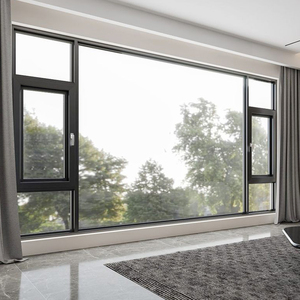
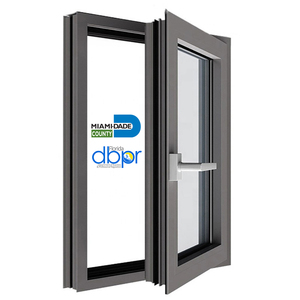
Sub-grade fenestration represents one of the most critical structural liabilities in residential and commercial architecture. Below ground level, windows endure severe hydrostatic pressure, cyclical soil moisture, high dew point divergence, and ground-level wind-borne projectile impacts during storm surges. Standard residential window systems consistently fail in subterranean environments due to frame buckling, electrochemical galvanic corrosion, and water infiltration through dynamic sills. As leading OEM and project-grade manufacturers, top China aluminum storm window factories leverage 6063-T6 multi-chamber extrusions, precision thermal barrier breaks, and marine-grade laminated assemblies designed to exceed AAMA/WDMA/CSA 101/I.S.2/A440 benchmarks and Miami-Dade Florida NOA impact certifications.
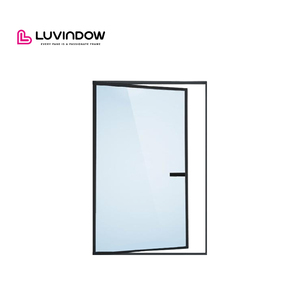
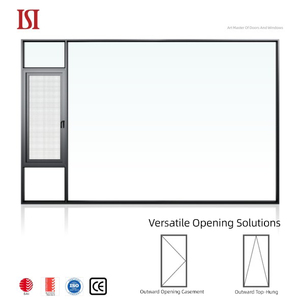
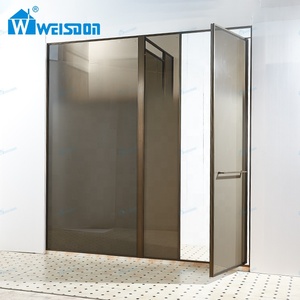
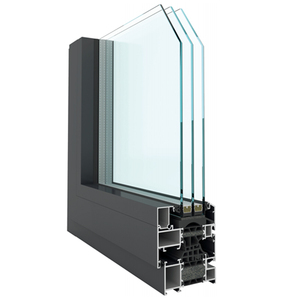
Critical Engineering Criteria for Sub-Grade Aluminum Storm Openings
When specifying fenestration systems for partially or fully submerged exterior walls, conventional window ratings are insufficient. Basement window wells create micro-catchment basins where storm runoff accumulates rapidly. A certified storm basement window must function essentially as a hydrostatic bulkhead while retaining residential thermal compliance and egress operability.
| Structural Engineering Parameter | Standard Residential Grade | China Top-Tier Heavy Storm Specification (DERCHI Standard) | Operational Impact for Developers |
|---|---|---|---|
| Alloy Composition & Wall Gauge | 1.2mm – 1.4mm Grade 6063-T5 | 2.0mm – 3.0mm Heavy Extruded 6063-T6 | Eliminates frame deflection caused by dynamic soil backfill settling and external hydrostatic wall loads. |
| Thermal Barrier Integrity | Poured debridge polyurethane (prone to slippage) | Polyamide PA66 GF25 reinforced strut bridges | Prevents subterranean condensation, stops interior mold proliferation, and meets stringent U-Factor (< 0.28) targets. |
| Water Tightness Under Wind Load | 150 Pa – 300 Pa (Basic residential) | ≥ 700 Pa to 1050 Pa (ASTM E331 / AS 2047 N6) | Guarantees zero zero-head water penetration even if window wells fill during severe flash flooding events. |
| Glazing Matrix Configuration | 3mm Single or Standard 4+9A+4 Insulated | 6mm Low-E + 12Ar + 5mm + 1.52PVB/SGP + 5mm Impact | Resists large-missile projectile impacts, eliminates thermal bridging, and provides Rw 42dB acoustic dampening. |
Recommended Product Typologies for Modern Architecture
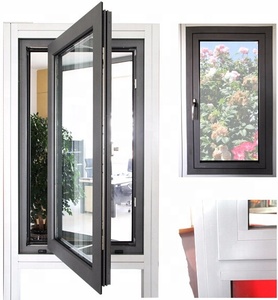
Inward Hopper & Tilt-Turn Storm Systems
Engineered specifically for low-clearance basement window wells. In the tilt position, the sash provides continuous micro-ventilation while redirecting wind-driven precipitation away from living spaces. Multi-point perimeter compression seals ensure a watertight seal when closed.
Heavy-Duty Outward Hurricane Casements
Designed for daylight basements and walk-out lower levels. Outward opening leaves allow wind pressure to compress the perimeter double EPDM rubber gaskets directly against the outer frame, creating tighter hydrostatic seals as exterior wind storm loads increase.
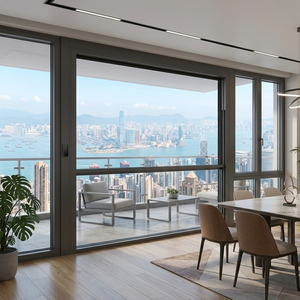
Egress-Compliant Impact Sliders
Combines emergency basement evacuation dimensions compliant with IBC (International Building Code) with structural hurricane tracks. Features stainless steel subterranean drainage valves that prevent exterior water backups into internal tracks.
Future Procurement & Technological Trends (2026–2030)
Global supply chain disruptions, escalating climate extremes, and stringent decarbonization mandates are reshaping how real estate developers, contractors, and institutional importers procure architectural aluminum assemblies from Chinese manufacturing hubs.
Technological & Design Evolution
- Integrated Drainage Micro-Valves: Traditional basement window drainage relied on open weep holes that fail during external water pooling. Next-generation systems feature internal one-way silicone flap valves that allow condensation to exit while blocking reverse flow under negative room pressure.
- SentryGlas (SGP) Interlayers Replacing Standard PVB: High-performance impact basements are pivoting to rigid ionoplast polymer interlayers. SGP provides 5 times the tear strength and 100 times the rigidity of standard PVB, remaining intact even if both glass panels shatter.
- Architectural Fluoropolymer Powder & PVDF Finishes: Sub-grade levels experience prolonged surface contact with moisture and alkaline soils. Certified AkzoNobel or PPG 3-coat fluorocarbon coatings provide 30-year resistance against chalking and pitting.
- Smart Motorized Egress & Sensorized Closures: Integration of concealed linear actuators with building management systems (BMS) allows automated sash closing when exterior moisture sensors detect rapid water accumulation.
Procurement & Global Supply Trends
- Direct-to-Fabricator BIM Coordination: Large residential developers are bypassing multi-tier regional distributors, working directly with Tier-1 Foshan factories via synchronized Revit and 3D CAD platforms to eliminate dimension errors.
- Pre-Glazed Unitized Containerization: To lower expensive western jobsite labor costs, factories deliver fully pre-glazed, pre-hung window systems packaged in heavy steel export racks ready for crane-assisted direct installation.
- Third-Party Compliance Dossiers: Global customs jurisdictions require transparent testing data. Suppliers must provide full physical laboratory reports for CE, AS2047, NFRC, and SGCC, proving thermal and projectile resistance.
- Carbon Footprint Certification: European and North American infrastructure projects are demanding low-carbon extruded billets powered by renewable hydroelectric energy in Chinese foundries.
Guangdong Dejiyoupin (DERCHI): Engineering Beyond Standard Limits
Recognized consistently as one of China's Top 10 premium door and window industrial brands, Guangdong Dejiyoupin Doors and Windows Co., Ltd. (DERCHI) combines more than 25 years of master fabrication with a vertically integrated 180,000㎡ industrial smart park in Shishan Town, Foshan. Supplying tier-one commercial and luxury residential projects across North America, Australia, the Middle East, and Europe, DERCHI engineers solve envelope vulnerabilities where standard systems fail.
Heavy Structural Capacity
With automated CNC machining centers, proprietary extrusion lines, and over 600 skilled technicians, DERCHI delivers precision tolerance cut-offs down to ±0.2mm, critical for maintaining hermetic pressure in below-grade assemblies.
Comprehensive Quality Dossier
Holding over 30 national patents and 8 global quality certifications, DERCHI products undergo rigorous wind-pressure, water-penetration, and cyclic load testing compliant with Australian AS 2047 N6, American AAMA, and European CE standards.
Turnkey OEM / Project Engineering
From preliminary structural shop drawings to custom extrusion dies, color-matched architectural hardware, and specialized seaworthy crating, our specialized engineering team provides end-to-end technical support across project lifecycles.
Frequently Asked Questions for Project Buyers
Direct insights addressing critical queries encountered by commercial buyers, general contractors, and developers when sourcing custom aluminum storm window systems from China.
What engineering elements differentiate a basement storm window from standard residential windows?
Basement storm windows require significantly higher water tightness ratings (minimum 700 Pa versus 150-300 Pa standard) due to poor drainage in sub-grade window wells. They incorporate reinforced profile walls (up to 3.0mm) to resist soil movement and masonry settling, structural multi-point locking mechanisms that compress continuous automotive-grade EPDM gaskets, and specialized drain chambers equipped with non-return valves to stop hydrostatic backflow.
How do top Chinese factories ensure zero condensation in high-humidity basement applications?
China's premier factories utilize multi-chamber thermally broken extrusions joined by imported high-density Polyamide (PA66 GF25) thermal struts. This isolates the cold exterior aluminum profile from warm, humid interior basement spaces. Paired with warm-edge spacer IGUs filled with 95% Argon gas and Low-E selective coatings, the internal surface temperature stays consistently above dew point, permanently preventing condensation and structural mold issues.
Can customized egress sizes be built to meet local building codes while maintaining storm resistance?
Yes. International Residential Code (IRC) section R310 mandates emergency escape openings with minimum net clear openings of 5.7 sq ft, clear opening heights of 24 inches, and clear opening widths of 20 inches, with sill heights within 44 inches of the floor. Top China factories engineer customized heavy-duty single-sash casement or high-load sliding systems that simultaneously meet strict egress clear opening dimensions and ASTM E1886/E1996 large missile hurricane impact resistance.
What packaging and quality control protocols prevent glass breakage and frame warping during sea shipment?
Tier-1 manufacturers like DERCHI utilize automated pre-shipment testing involving dimensional verification, corner joint torque testing, and pneumatic seal checks. For maritime logistics, units are wrapped in protective PE scratch films, corner-armored with heavy PVC caps, and packed into custom fumigated plywood crates or fully enclosed steel A-frame containers with desiccant packs, engineered to endure dynamic intermodal container stresses.
What is the typical lead time and MOQ for direct-from-factory custom OEM basement storm window orders?
Standard custom project orders typically run on a 25 to 35-day production cycle post shop-drawing sign-off. While large commercial volumes are common, leading manufacturers support flexible MOQs for luxury residential estates and boutique developments starting from 50 square meters, providing full shop drawings, structural calculations, and glass sample approvals prior to production runs.