Interior System
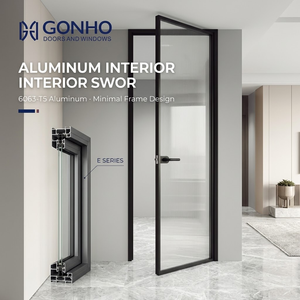
Aluminum Interior Swing Door with Glass Panel for Modern Bathroom and Residential Interior Projects
- Alloy: 6063-T5 Structural Billet
- Water-tight EPDM Multi-Fin Gaskets
Browse our high-specification portfolio engineered for coastal resilience, climatic defense, soundproofing, and institutional architectural durability across multi-unit and luxury developments.
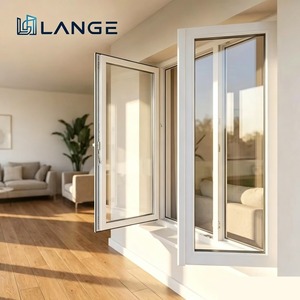
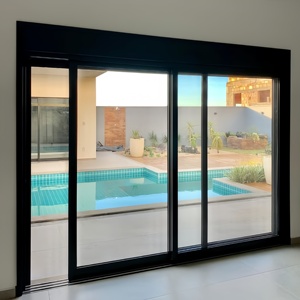
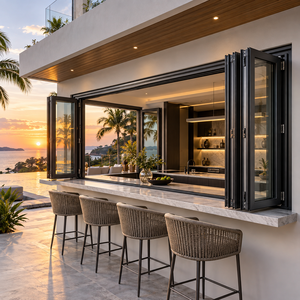
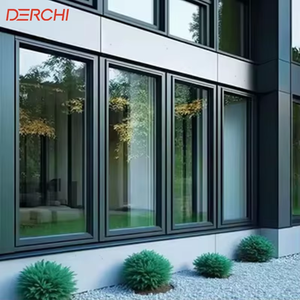
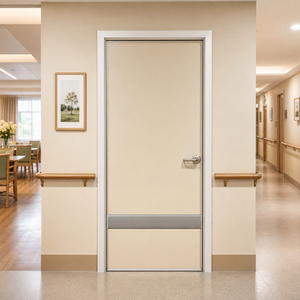
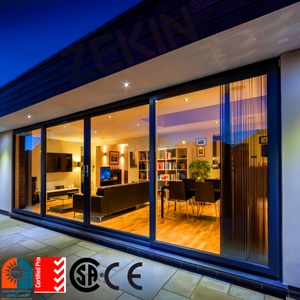
With decades of operational excellence from our manufacturing hub in Foshan, Guangdong, we bridge the gap between architectural vision and industrial fabrication.
Structural assemblies are validated against severe structural deflections, achieving Australia's AS 2047 N6 cyclonic rating, North American NFRC testing criteria, and CE European building standards.
Our sliding security doors utilize marine-grade 316 stainless steel woven wire mesh clamped with high-pressure internal aluminum wedges, resisting dynamic shear forces, knife attacks, and blunt force impact.
By controlling the entire vertical chain—from billet extrusion, powder coating, and precision CNC milling to double-tempered glass lamination—we guarantee precise schedule adherence and cost predictability.
A granular examination of profile alloy optimization, metallurgical performance, track hydraulics, and ballistic mesh ratings defining modern export-grade fenestration systems.
In modern high-performance architecture, fenestration is no longer treated as a passive envelope filler; it functions as an active barrier against thermodynamic loss, acoustic transmission, forced physical intrusion, and environmental degradation. The aluminium mesh sliding door system represents a convergence of dual disciplines: the high-tolerance mechanics of multi-track heavy-lift sliding hardware and the metallurgical toughness of high-tensile security screening.
When engineering profiles for large-format sliding elevations, standard off-the-shelf residential extrusions fail under wind loads exceeding 2000 Pa. China's leading export factories prioritize virgin 6063-T6 or 6005-T5 architectural aluminum billets. These structural profiles maintain wall thicknesses ranging from 2.0mm to 3.5mm across critical load-bearing mullions and interlockers. This guarantees structural deflection ratios within L/250 or L/300 under positive and negative pressures encountered in coastal or high-altitude installations.
| Engineering Attribute | Standard Grade Specification | Heavy-Duty Coastal / Cyclonic Grade | Architectural Benefit |
|---|---|---|---|
| Extrusion Alloy & Temper | 6063-T5 Primary Billet | 6005A-T6 or 6063-T6 Structural Profile | Tensile yield strength > 240 MPa; prevents sash sagging under extreme weight. |
| Security Mesh Infill | 304 Stainless Steel (0.7mm) | Marine Grade 316 Wire Mesh (0.8mm - 1.0mm) | Withstands Australian Knife Shear Test (AS 5041) and 1000h salt spray without galvanic rust. |
| Glazing Configuration | 5mm + 12A + 5mm Double Tempered | 6mm Low-E + 16Ar Warm Edge + 6mm / Laminated | Low-E spectral selectivity delivers Solar Heat Gain Coefficients (SHGC) < 0.28. |
| Sealing & Weatherization | Standard Santoprene Fin Piles | Multi-Lip EPDM Co-extrusion + Magnetic Strip | Air infiltration rating < 0.5 m³/(m²·h); watertightness performance beyond 700 Pa. |
| Hardware Carrier Assemblies | Nylon Single Rollers (80kg) | CNC Stainless Steel 316 Quad-Wheels (350kg+) | Effortless horizontal sliding glide exceeding 100,000 continuous operating cycles. |
A vital technological differentiation lies in the mechanical retention of the wire mesh. Lower-tier manufacturers fasten security screens via surface pop-rivets or chemical adhesives, both of which shear under concentrated crowbar or kick impacts. Premium Chinese manufacturing facilities employ a proprietary continuous high-tensile internal clamping wedge system. This design isolates the 316 stainless steel mesh from direct contact with the aluminum framing via a non-conductive PVC or Santoprene isolator gasket. This eliminates galvanic corrosion—a common failure mode in humid, salt-dense regions such as the Gulf, Southeast Asia, and Florida coastal belts.
Key shifts shaping how developers, main contractors, and facade consultants specify large-span sliding partitions, safety screens, and sustainable materials.
Global green building regulations (LEED, BREEAM, Estidama) are driving the shift toward multi-cavity thermal break systems. Procurement teams are specifying polyamide PA66 GF25 insulation strips measuring up to 34mm wide, paired with aerogel perimeter fills to satisfy demanding U-value mandates (≤ 1.4 W/m²K) in extreme climates.
The market is prioritizing floor-to-ceiling panoramic glass where visual interlockers are reduced to less than 20mm. Security meshes are increasingly recessed directly into pocket walls or motorized tracks, delivering unobstructed architectural views while maintaining anti-burglary ratings.
Next-generation commercial door lines are integrating brushless DC drive motors concealed in head jambs. These automated assemblies connect with home automation systems, weather stations, and biometric access controls, auto-sealing against wind-driven rain and airborne sand.
Institutional developers are requiring low-carbon, hydro-melted billet documentation. Chinese factories with ISO 14001, EPD (Environmental Product Declaration) filings, and closed-loop anodizing plants now hold a competitive edge over conventional carbon-intensive suppliers.
Procurement teams are shifting away from intermediate trading agents in favor of direct engagement with tier-one manufacturing hubs. Buyers demand comprehensive digital verification—such as interactive 360° VR factory audits, batch mill test certificates, and full-scale mock-up testing prior to production sign-off.
Clear, direct answers regarding quality verification, hardware compatibility, testing standards, and international logistics.
Galvanic corrosion occurs when two electrochemically dissimilar metals (such as 316 stainless steel and 6063-T5 aluminum) maintain direct physical contact in the presence of an electrolyte (moisture or salt spray). Premium Chinese manufacturers eliminate this with a three-stage isolation system: First, the security mesh is powder-coated using thermoset architectural polyester. Second, the mesh edges are seated within continuous Santoprene or non-conductive PVC isolation channels. Third, mechanical retention wedges fasten the mesh using mechanical friction rather than penetrating conductive screws, preventing metal-to-metal contact.
Our sliding mesh doors are engineered to satisfy stringent global criteria. We maintain certified test reports for Australia's AS 5039/5041 (Security Screen Doors and Window Grilles, covering knife shear, dynamic impact, and jemmy tests), AS 2047 (Windows in Buildings, validating structural wind load deflection, water penetration resistance, and air infiltration), North American AAMA/WDMA/CSA 101/I.S.2/A440, and European CE EN 14351-1. Full third-party laboratory test reports are provided during the shop drawing submittal phase.
Yes. Our multi-track architectural systems (such as the ZEKIN and Multi-Slide series) can be configured with triple or quadruple track profiles. This configuration allows independent glass leaves (using up to 28mm double-glazed insulated Low-E units) to glide smoothly alongside a dedicated outer or inner 0.8mm/1.0mm 316 stainless steel security mesh sash. Heavy-duty stainless steel quad-wheel rollers support single leaf weights up to 350kg with fluid, quiet operation.
Standard fabrication lead times range from 25 to 35 business days following final approved CAD shop drawings and finish sign-off. For long-distance sea shipping, every component undergoes a comprehensive protection regimen: extruded profiles receive peelable protective film; corner joints are secured with high-density EVA foam protectors; and complete assemblies or knocked-down (KD) frames are packed into ISPM-15 compliant, fumigated, fully enclosed plywood crates. This crating allows crane or forklift handling at destination ports without risking finish abrasions or frame torque.
Our in-house project engineering department prepares complete architectural submittal packages. These include detailed AutoCAD/Revit BIM shop drawings showing plan, elevation, and structural anchorage details; structural wind load calculation reports; glass thermal stress analyses; finish warranty documentation (such as AkzoNobel or PPG fluorocarbon guarantees up to 20 years); and clear step-by-step bilingual installation instructions.
Collaborate directly with our engineering team for free CAD shop drawings, acoustic and thermal simulations, material finishes, and quantity-discounted commercial pricing for your upcoming developments.