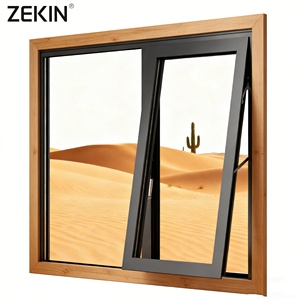
Impact & Wind Pressure
AS2047 Certified
Double Glazed
Heavy Impact
Direct from our 180,000㎡ precision manufacturing base, our structural aluminum folding systems, impact casements, and heavy-duty accordion profiles provide certified wind-load resistance, acoustic dampening, and tropical thermal insulation across Brazilian residential and commercial developments.
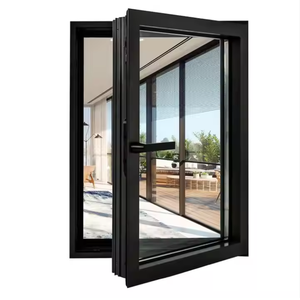
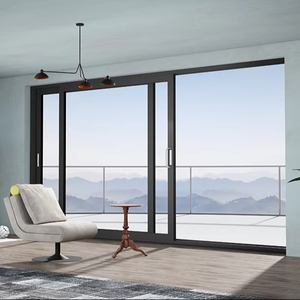
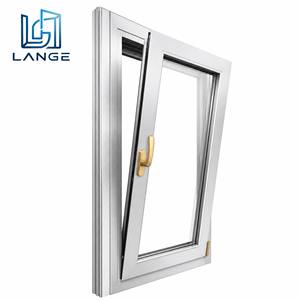
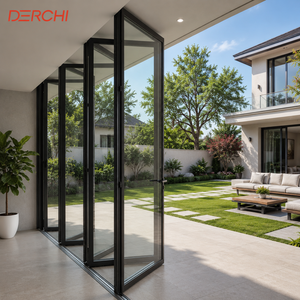
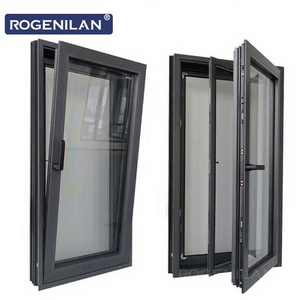
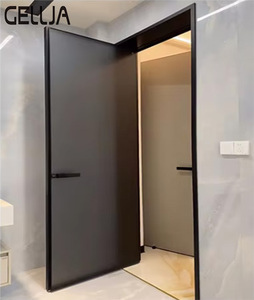
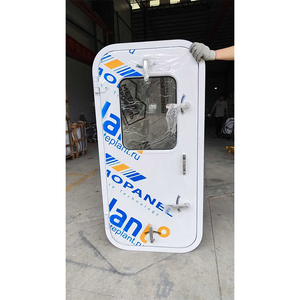
The Brazilian architectural landscape presents a sophisticated convergence of indoor-outdoor biophilic living, rapid urban verticalization, and stark regional microclimatic challenges. From the humid coastal sea spray of Rio de Janeiro, Florianópolis, and Salvador to the intense solar radiation of the Centro-Oeste and the subtropical wind variations of São Paulo and Curitiba, fenestration specification demands high-level structural integrity.
Aluminum sliding folding windows (popularly specified by Brazilian architects as janelas de correr e dobrar articuladas em alumínio or cortinas de vidro retráteis com perfis reforçados) serve as the primary fenestration barrier between luxury living spaces and open-air environments. Standard residential joinery often fails when exposed to the high dynamic wind loads and intense solar heat gain common along Brazil's 7,491-kilometer coastline.
Our aluminum fenestration systems are engineered to exceed the rigorous performance parameters of Brazil's ABNT NBR 10821 standard (Building External Windows and Facades), guaranteeing structural resistance under maximum gust loads up to 2,500 Pa (equivalent to Category 2 cyclone thresholds) and zero water penetration during South Atlantic frontal storms.
By implementing 6063-T6 aerospace-grade virgin aluminum alloys, multi-chambered polyamide thermal break bridges (PA66 GF25), and dual-durometer EPDM continuous compression weatherseals, our fenestration envelopes deliver unmatched dimensional stability without twisting, binding, or sagging over decades of intensive operation.
In high-density luxury residential towers across São Paulo (Vila Nova Conceição, Itaim Bibi) and Rio's Barra da Tijuca, sliding folding systems create unobstructed openings connecting living rooms to balcony barbecue zones, offering flush recessed floor tracks and seamless spatial expansion.
Properties along the coastlines of Angra dos Reis, Búzios, and Balneário Camboriú face constant salt spray (maresia). Our systems utilize PVDF fluorocarbon coatings (min 30 microns) and marine-grade AISI 316 stainless steel bogie guide wheels, completely eliminating electrolytic and galvanic corrosion.
In Brasília, Ribeirão Preto, and Cuiabá, temperatures frequently exceed 38°C with elevated Solar Heat Gain Coefficients (SHGC). Our folding window envelopes integrate Low-E double glazing with warm-edge spacers, reducing building HVAC energy consumption by up to 34%.
Driven by stricter energy efficiency mandates, premium high-rise construction standards, and modern contemporary Brazilian aesthetics, fenestration choices are shifting rapidly away from low-cost single-glazed sliders toward high-value architectural systems.
Avenida Paulista and Faria Lima in São Paulo suffer from ambient traffic noise exceeding 75–82 dB. Modern high-net-worth buyers now require folding fenestration with multi-layer laminated acoustic glass (PVB Acoustic Acoustic membranes), delivering an Rw acoustic reduction of over 40 dB for peaceful interior environments.
Brazilian architectural firms heavily emphasize transparency and structural lightness. The shift is decidedly towards ultra-slim mullion profiles (down to 9.5mm – 25mm visible sightlines) that conceal hardware within the sub-frame, allowing uninterrupted views of coastal bays and lush tropical gardens.
Architects across high-end developments in Alphaville and Fazenda Boa Vista now regularly specify opening panel heights between 3.2m and 4.0m. Such monumental configurations require top-hung heavy-duty stainless steel track systems capable of supporting over 300 kg per sash without operational fatigue.
Evaluating commercial-grade aluminum folding fenestration profiles against legacy systems under typical South American climatic and acoustic stress parameters.
| Technical Characteristic | DERCHI Engineered Folding System | Standard Local 2-Track Slider | Frameless Glass Balcony Curtains |
|---|---|---|---|
| Wind Pressure Resistance | Class 5 (> 2500 Pa) • Cyclone Rated | Class 2 (800 – 1200 Pa) | Class 1 (400 – 800 Pa • Prone to Rattle) |
| Air Tightness (Infiltration) | Class 4 (≤ 0.5 m³/(h·m)) Continuous EPDM | Class 2 (Brush seals, high leakage) | Unsealed (Direct air ingress at gaps) |
| Water Tightness (Static/Dynamic) | Class 9A (600 Pa with stepped drainage) | Class 3A (150 Pa • Overflow risks) | Unrated (Water ingress during heavy rains) |
| Thermal Bridging Performance | Polyamide PA66 GF25 (U-value ≤ 1.6 W/m²K) | No Thermal Barrier (U-value > 5.2 W/m²K) | No Frame Insulation Value |
| Acoustic Reduction Index (Rw) | 38 dB – 44 dB (Double/Triple Glazed) | 24 dB – 28 dB (Monolithic glass) | 18 dB – 22 dB (Leakage through vertical seams) |
| Corrosion Resistance Rating | Qualicoat Class 2 / PVDF 30μm / AISI 316 | Standard 12μm Anodized (Pitting in 3-5 yrs) | Standard chrome plated zinc hardware |
With more than 25 years of specialized fenestration craftsmanship and ranked among the Top 10 doors and windows manufacturers in China, DERCHI operates a premier 180,000㎡ industrial smart manufacturing facility in Foshan, Guangdong.
Our complete window and door series undergo third-party auditing to achieve CE, ISO 9001, AS 2047 (N6 cyclone rating), and UL fire-rated certifications. Comprehensive technical test sheets are supplied to support local CREA/CAU architectural submittals across Brazil.
We provide complimentary structural calculations, deflection verifications, and shop drawings within 24 hours of receiving your architectural plans, ensuring exact alignment with Brazilian structural opening tolerances and floor construction thicknesses.
All fenestration elements are packed in moisture-barrier fumigated solid wood ocean crates with edge corner guards and desiccant buffers, providing 100% moisture protection on long sea freight transit routes to the Port of Santos, Paranaguá, and Rio de Janeiro.
Everything Brazilian developers, commercial builders, architects, and luxury homeowners need to know about factory-direct importing, customs clearance, and technical specs.
ABNT NBR 10821 evaluates air permeability, water tightness under pressure, and wind resistance up to ultimate limit states. DERCHI folding windows are manufactured from structural 6063-T6 aluminum with wall thicknesses between 2.0mm and 3.0mm at critical load-bearing mullions. Our integrated dual-compression EPDM gaskets, concealed internal water-diverter channels, and reinforced steel-core corner cleats meet and exceed the regional performance requirements for high-rise buildings (Class IV and Class V wind zones in Brazil).
For seaside installations in Rio de Janeiro, Santa Catarina, Bahia, and Ceará, we specify Qualicoat Seaside Class 2 certified powder coatings or 3-coat Kynar 500 PVDF fluorocarbon coatings capable of withstanding over 3,000 hours of continuous neutral salt spray testing without blistering or flaking. Furthermore, all structural hinges, pivot pins, top guide rollers, and internal lock mechanisms are crafted from genuine austenitic AISI 316 stainless steel to eliminate rust completely.
Shipments depart directly from major deepwater ports in Guangdong (Nansha, Shekou, or Yantian) destined for the Port of Santos (São Paulo), Port of Paranaguá (Paraná), Port of Itajaí, or Port of Rio de Janeiro. Typical ocean transit takes between 32 and 45 days. We provide complete commercial documentation tailored for Brazilian Siscomex and RADAR registration, including commercial invoices with detailed NCM codes (Harmonized System 7610.10.00 for aluminum doors/windows), packing lists, certificates of origin, and bill of lading (B/L) drafts for advance customs clearance review.
Standard Brazilian sliding windows allow sound leakage through the top and bottom brush tracks. DERCHI folding systems apply active perimeter compression hardware: when the handle engages the multi-point locking rods, the sashes compress firmly against continuous dual-lip EPDM seals around the entire frame perimeter. Combined with asymmetric acoustic laminated double glazing (e.g., 6mm Low-E + 12Ar + 5mm+0.76PVB+5mm Acoustic Glass), sound transmission loss reaches 40–44 dB, neutralizing severe urban street and aviation noise.
Yes. Every unit is 100% custom-built to the millimetre. We manufacture individual folding sashes up to 1.2 meters in width and up to 3.8 meters in height, allowing for continuous multi-panel runs spanning over 12 meters with inward- or outward-folding configurations, odd- or even-numbered panel combinations (e.g., 3+1, 5+1, 7+0), and zero-threshold sunken track options for completely flush indoor-to-balcony flooring transitions.
Simply send us your architectural elevation drawings, door and window schedule (quadro de esquadrias), project location/altitude (to verify wind load pressure requirements), preferred glass specification (e.g., clear, bronze tint, Low-E solar control), and desired profile color (RAL color code or wood grain sublimation). Our structural engineering team will review the parameters and return a detailed quote and structural CAD shop drawing within 24 hours.
Partner directly with China's premier architectural fenestration manufacturer. Connect with our dedicated English-speaking engineering team for project feasibility evaluations, CAD drafting, and direct factory container quotes for Brazil.
