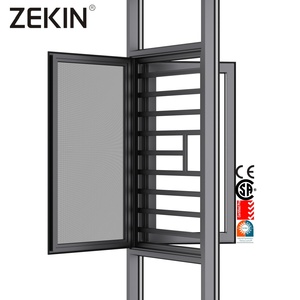
KS Grade 1 Ready
Double Glazed Thermal Break Casement Door & Window
Integrated PA66GF25 thermal barrier, argon gas filling, and Low-E glass designed to withstand Siberian freezing fronts in Gyeonggi and Gangwon provinces.
Engineered to meet the stringent demands of South Korean commercial towers, premium residential villas in Pangyo, seaside resorts in Jeju, and Gangnam high-rise renovations.
Integrated PA66GF25 thermal barrier, argon gas filling, and Low-E glass designed to withstand Siberian freezing fronts in Gyeonggi and Gangwon provinces.
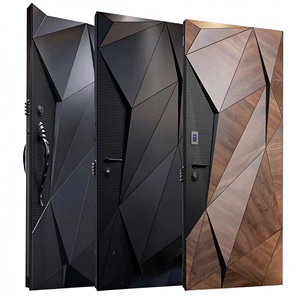
Reinforced pivot hinge with German multi-point German security locks, tailored for premium detached housing estates and private penthouses across Seoul.
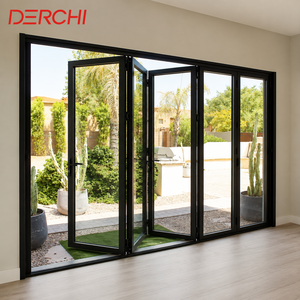
Engineered for high wind resistance and smooth bottom roller track glide. Ideal for modern Korean cafes, rooftop venues, and coastal glamping villas.
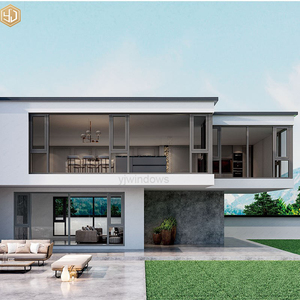
Integrated micro-mesh stainless screen blocking summer pests while maintaining natural passive cross-ventilation for eco-conscious residential units.
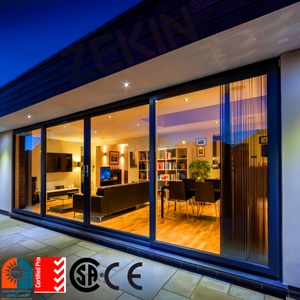
Designed for South Korea's iconic apartment balcony culture (Veranda expansion), delivering whisper-quiet sliding and unmatched thermal comfort.
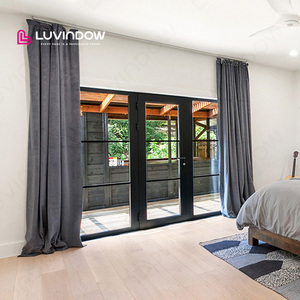
Combines vintage European iron-art styling with corrosion-free extruded aluminum alloy, providing anti-theft security and timeless kerb appeal.
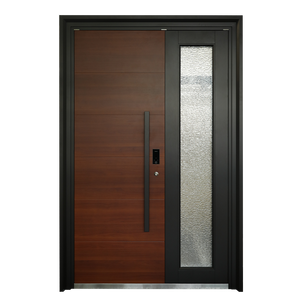
Precision-milled aluminum stiles paired with tempered laminated acoustic glass. Preferred by boutique hotels and studio complexes in Busan and Incheon.
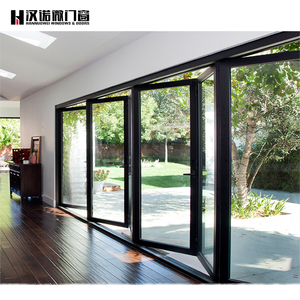
Patented hydrostatic drain sill prevents torrential monsoon rainwater backflow during South Korea’s humid summer typhoon occurrences.
South Korea exhibits one of East Asia’s most demanding architectural microclimates: extreme continental sub-zero winters, high humidity monsoon summers (Jangma), and stringent energy building mandates.
Under South Korea's Zero Energy Building (ZEB) Roadmap, public and private dwellings demand strict U-values. Our triple-glazed openable doors utilize multi-cavity thermal break extrusions, preventing condensation during harsh Siberian temperature drops reaching -15°C in Seoul and Gyeonggi-do.
Coastal developments across Busan Marine City, Haeundae, and Jeju Island face super-typhoon wind pressures and intense salt-fog corrosion. Our specialized powder-coated 6063-T6 aluminum alloys and pressure-equalized drainage systems withstand over 4500Pa wind resistance.
High-end hospitality spaces in Bukchon Hanok Village and Seongsu-dong industrial cafe conversions require slim sightline openable doors. We deliver minimalist, narrow-frame pivot and bifold installations combining traditional open-courtyard aesthetics with modern acoustic comfort (STC 42dB).
Discover key drivers shaping commercial and residential door specifications across the Republic of Korea.
While PVC (uPVC) historically dominated suburban apartment developments, premium villa markets and commercial developments have pivoted toward aluminum for slim sightlines, structural longevity, and non-combustible building code compliance.
Korea Energy Agency’s Window Energy Efficiency Rating System enforces Grade 1 (Thermal Transmittance ≤ 1.0 W/m²·K). Sourcing thermally broken aluminum profiles with warm-edge spacers has become essential for main contractors.
Korean domestic consumers lead global smart-home adoption. Door systems must ship pre-routed with factory-calibrated mortises accommodating fingerprint, push-pull handles, and facial recognition biometric mortise systems.
Heavy spring micro-fine dust (Hwangsa) and dense metropolitan noise dictate air permeability ratings exceeding KS F 2292 Grade 1 (0.00 m³/(h·m²)), requiring multi-tier co-extruded vulcanized EPDM gaskets.
Comprehensive engineering metrics comparing our customized export configurations against local South Korean certification baselines.
| Performance Characteristic | Korean National Standard (KS Baseline) | DERCHI High-Spec Engineering Profile | Applicable Test Standard |
|---|---|---|---|
| Thermal Transmittance (U-Value) | Grade 1 Standard ≤ 1.0 W/m²·K (Cold Region 1) | 0.82 - 0.96 W/m²·K (Triple Glazed Low-E + Argon) | KS F 2278 / ISO 10077-2 |
| Air Tightness (Air Leakage) | Grade 1 (Less than 1.0 m³/h·m² at 10 Pa) | Class A+ (0.12 m³/h·m² multi-point perimeter seal) | KS F 2292 / ASTM E283 |
| Water Resistance (Watertightness) | Grade 35 (350 Pa no water ingress) | Up to 700 Pa (Patented stepped anti-backflow sill) | KS F 2293 / EN 12208 |
| Wind Pressure Resistance | Grade 360 (Up to 3600 Pa for tall buildings) | Up to 4500 Pa (Engineered 6063-T6 with 2.5mm wall) | KS F 2296 / AS 2047 |
| Acoustic Isolation (Sound Reduction) | STC 30 - 35 dB (General building code) | STC 40 - 45 dB (Laminated acoustic interlayer) | KS F 2808 / ISO 717-1 |
As one of China’s Top 10 luxury door and window manufacturers based in Foshan, Guangdong Dejiyoupin Doors and Windows Co., Ltd. brings 25+ years of direct OEM/ODM engineering power to the South Korean marketplace.
Equipped with state-of-the-art German 5-axis CNC machining centers, automated electrostatic powder coating lines, and precision glazing bays. We manufacture over 350,000 square meters of high-end fenestration products annually, guaranteeing strict batch consistency.
Our dedicated engineering department provides free structural calculations, BIM modeling, and detailed CAD shop drawings. Every submittal packet includes detailed section views, anchor details, and glass load verifications ready for review by Korean architectural consultants.
Validated with ISO 9001, CE, AS 2047 N6, and UL Fire-rated certifications. Our 30+ appearance and technology patents ensure Korean distributors receive unique, proprietary profile designs with high margin differentiation.
Direct logistical access from Guangdong export ports (Shekou / Nansha) to Incheon and Busan ports delivers sea-freight transit times of merely 4 to 6 days, dramatically shortening site procurement lead times compared to European system suppliers.
Every openable door unit is wrapped in multi-layer shock-absorbent pearl cotton, corner-guarded, and secured in fumigation-free, crane-ready wooden crates, completely avoiding maritime and inland transport damages.
Our international technical sales engineers bridge drawing inquiries, hardware compatibility checks, and after-sales remote installation supervision, ensuring clear communication throughout your ordering cycle.
Key technical and procurement questions asked by Korean project managers, developers, and trade importers.
Yes. By configuring our profiles with 34mm to 40mm multi-chamber PA66GF25 polyamide thermal barriers, Warm-Edge spacer bars, and triple glazing (5mm Low-E + 12Ar + 5mm Clear + 12Ar + 5mm Low-E), our complete door systems achieve total thermal transmittance (U-values) as low as 0.82 to 0.95 W/m²·K. This safely qualifies for South Korea's Central 1 and Central 2 regional insulation codes under the Korea Energy Agency regulations.
Absolutely. South Korean residential buyers prioritize keyless smart lock systems. During the CAD confirmation stage, you can provide the specific template (e.g., Samsung push-pull, Gateman biometric, or Solity mortise). Our CNC milling centers will precision-route the lock pocket, faceplate screw holes, and internal wire conduits directly at the factory, eliminating on-site cutting.
Condensation (결로 현상) primarily occurs when cold exterior aluminum bridges directly to heated indoor air (Ondol floor heating). Our thermal break openable door systems feature an advanced multi-cavity insulation design that physically isolates indoor and outdoor aluminum extrusions. Combined with co-extruded EPDM continuous center gaskets and argon-filled insulating glass units, the inner frame surface temperature stays well above the dew point even at -15°C ambient temperatures.
For coastal locations subject to salt air (염해) and UV exposure, we recommend AkzoNobel or PPG certified fluorocarbon (PVDF) 3-coat finishes or architectural-grade 25μm anodized treatments. These finishes pass the 3,000-hour neutral salt spray test without pitting or flaking, ensuring exceptional aesthetics in coastal villa and resort projects.
Custom engineering and fabrication typically take 25 to 35 days from CAD shop drawing approval. For sea freight, departures from Shenzhen/Shekou or Guangzhou/Nansha reach Incheon or Busan ports within 4 to 6 transit days. This gives Korean contractors an end-to-end procurement cycle of approximately 5 to 6 weeks, significantly faster than typical European imports.
We provide full structural shop drawings in DWG and PDF format, comprehensive material mill test certificates (6063-T6 aluminum composition), glass performance spec sheets, factory thermal simulation test reports, and ISO 9001 / CE compliance documentation. These documents streamline architect and supervisory consultant submittals.
Evaluating an international manufacturer for large-scale South Korean tenders requires looking beyond the invoice price. Key technical validation checkpoints include:
Always verify raw ingot source. Premium manufacturers insist on primary 6063-T6 aluminum alloy with frame profile thickness ≥ 2.0mm for doors, preventing structural sag under triple-glazed weights (exceeding 80kg per leaf).
Ensure the supplier employs glass-fiber reinforced PA66GF25 polyamide strips rather than low-cost PVC composites. PA66GF25 matches aluminum's coefficient of thermal expansion, preventing delamination across 50°C seasonal swings.
Look for mechanical corner cleat crimping backed by automated dual-component polyurethane glue injection (Pin-gluing). This creates rigid joints resistant to racking during transit and prevents water penetration through miters.
Request custom CAD shop drawings, glass thermal performance data, and comprehensive export quotations from our senior engineering team within 24 hours.