Engineered Aluminium Systems for Demanding Climates
Tested for severe freeze-thaw endurance, high thermal efficiency, dynamic acoustic dampening, and multi-track expansive panoramic layouts.
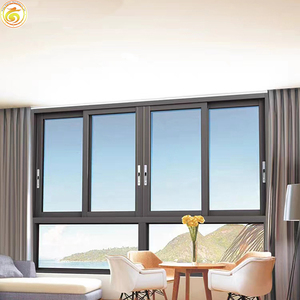
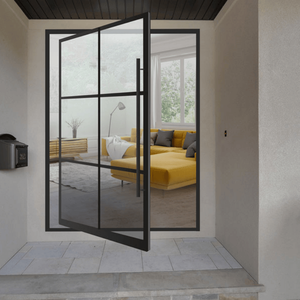
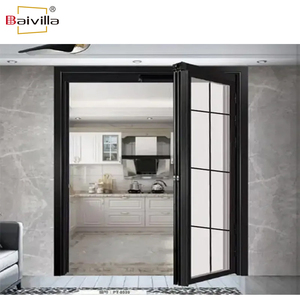
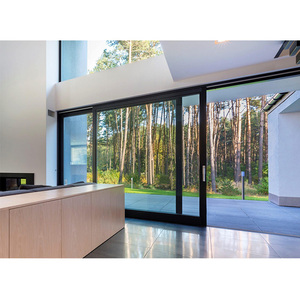
Engineering Whitepaper: Overcoming Moscow's Climatic Extremes in Aluminium Sliding Systems
Sourcing aluminium sliding windows and lift-and-slide doors for Moscow and the wider Central Federal District requires navigating one of the world's most demanding fenestration operating environments. Moscow experiences an expansive temperature spectrum ranging from winter lows below -30°C to summer peaks exceeding +32°C, combined with 4,500 to 5,000 Heating Degree Days (HDD). Standard European or subtropical sliding systems inevitably fail when deployed in this zone, resulting in thermal bridging, condensation pooling, ice jamming along the lower track, and seal embrittlement.
To ensure building code compliance and long-term durability, original equipment manufacturers (OEM) and original design manufacturers (ODM) must engineer aluminium systems specifically harmonized with SP 50.13330.2012 (Thermal Performance of Buildings) and GOST 21519-2003 (Aluminium Alloy Window Blocks). As an industry-leading manufacturer with a 180,000 m² integrated production base, our dedicated engineering division formulates specialized thermal, acoustic, and mechanical specifications designed for developers, general contractors, and facade consultants throughout the Moscow region.
Advanced Thermal Barrier Physics
Standard 14mm to 24mm thermal breaks fail under Russian winter conditions. Our Moscow-bound extrusions utilize wide 34mm to 54mm multi-chamber Polyamide PA66 GF25 strips augmented with low-density polyolefin insulation foam infills, achieving overall profile Uf values down to 1.1 W/(m²·K).
Triple-Glazed IGU Compatibility
Sliding leaves are engineered with enlarged glazing pockets accommodating 42mm to 52mm triple insulated glass units (IGU). Integrating double magnetron sputtering Low-E coatings, warm-edge composite spacers (TGI/Swisspacer), and 90% Argon gas fills achieves a total window Uw value of ≤ 0.85 W/(m²·K).
Cryogenic Gasket Formulation
Conventional PVC or vulcanized seals harden and crack when subjected to continuous sub-zero exposure. We configure sliding sashes with cellular EPDM rubber formulated according to GOST 30778-2001, maintaining elastic recovery and air tightness class A down to -45°C.
Critical Factor for Moscow Specifications: Preventing Track Freezing & Frost Heave
In standard horizontal sliding windows, accumulated interior condensation flows toward the sill rail, where contact with cold outer air causes freezing, locking the sash and deforming the bottom rollers. Our custom Moscow-grade sliding designs incorporate integrated internal-slope drainage channels, cascading water deflectors, and optional low-voltage PTC electric heating cable channels within the threshold profile to completely eliminate frost accumulation.
Target Architectural Applications in the Moscow Metropolitan Area
The Moscow construction sector is divided into distinct architectural typologies, each imposing specific structural, aesthetic, and energetic requirements. Our OEM/ODM production lines provide tailored solutions matching each project classification:
Novorizhskoe & Rublyovo-Uspenskoe Shosse Luxury Cottages
Private villa estates along Novorizhskoe Shosse, Rublyovka, and Barvikha demand floor-to-ceiling glass walls that connect indoor spaces with pine forests. For these high-end residences, we supply heavy-duty Lift & Slide (HS-Portal) systems featuring sash widths up to 3,000mm and heights up to 3,500mm. Motorized concealed operators integrate seamlessly into KNX-based Smart Home protocols, allowing effortless operation of 400kg triple-glazed sashes while maintaining a pristine thermal barrier against blizzards.
High-Rise Penthouses in Moscow City & Presnensky District
Towers within the MIBC (Moscow City) and surrounding business class developments experience extreme wind gust pressures reaching up to 1,200 Pa at elevated altitudes. Casement windows present safety hazards under such gust loads. Our structural sliding systems feature internal inertia-reinforced mullions and anti-lift safety blocks that withstand severe cyclonic wind shearing, maintaining water tightness class IA under torrential horizontal rainstorms.
All-Season Winter Gardens & Glazed Verandas
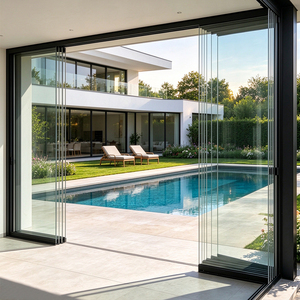
Due to the extended Russian winter, heated enclosed verandas, orangeries, and pool pavilions are foundational elements of suburban Moscow living. Our multi-track thermal-break sliding and bifold systems allow homeowners to fully seal spaces during the harsh winter while creating 90% unencumbered openings throughout July and August. Profiles feature marine-grade fluoropolymer (PVDF) powder coating tested against de-icing salt vapors and chemical cleaning agents.
Commercial Business Centers & Renovation Clusters
Renovation programs converting industrial spaces near TTK (Third Transport Ring) into modern creative hubs (e.g., Flacon, Artplay style) require slim-profile industrial sliding partitions. Our minimalist sliding series delivers ultra-narrow interlock sightlines of only 20mm to 25mm, maximizing natural daylight penetration during low-lux Moscow winter days without sacrificing structural rigidity or acoustic comfort.
Moscow Market Trends: The Structural Shift from PVC to Architectural Aluminium
Historically, the Russian residential fenestration market was dominated by multi-chamber uPVC profiles due to lower entry costs. Over the past five years, the Moscow market has undergone an aggressive structural realignment toward thermally broken aluminium systems, driven by several defining trends:
1. Expansion of Architectural Glazing Dimensions: Contemporary Russian architects are specifying larger glass formats that exceed the physical capacity of uPVC. Steel-reinforced plastic frames experience significant thermal expansion-contraction cycles, warping and failing under the combined weight of modern triple-pane acoustic IGUs. High-strength 6063-T6 virgin aluminium alloy frames provide the modulus of elasticity required to carry sash weights exceeding 400kg with zero deflection.
2. Adoption of Portal Sliding Systems (HS-Portals): Tilt-and-turn casements consume valuable interior space when swung inward, making them unpopular for modern living rooms and dining terraces. Lift-and-slide "Portal" systems, once considered ultra-luxury imports from Germany, have become standard expectations in Moscow's business and elite residential segments.
3. Direct Asian Supply Chains Replacing European Brands: Prior to recent supply chain disruptions, German and Italian profile systems commanded market dominance. Today, leading Moscow developers and regional window fabricators bypass fragmented European distribution, partnering directly with tier-1 Chinese OEM/ODM manufacturing facilities capable of delivering German elumatec-machined tolerances at substantially more competitive cost bases and reliable freight schedules.
Engineering Matrix: Standard European vs. Moscow Severe-Cold Aluminium Sliding Specs
The comparative data below demonstrates why standard commercial extrusions fail in Moscow and highlights how our factory customizes OEM profile dies to satisfy local building codes:
| Performance Metric | Standard European Sliding System | DERCHI Moscow Climate Configuration | Reference Compliance Standard |
|---|---|---|---|
| Thermal Transmittance (Uw) | 1.6 – 2.2 W/(m²·K) | 0.82 – 1.10 W/(m²·K) | SP 50.13330.2012 / GOST 21519 Class A1 |
| Thermal Break Strip Depth | 14.8mm – 24.0mm (Polyamide) | 34.0mm – 54.0mm PA66 GF25 + Foam | EN 14024 / GOST 31014-2002 |
| Glass Package Thickness | 24mm – 32mm (Double Pane) | 42mm – 52mm (Triple IGU with Argon) | GOST 24866-2014 Glass Architecture |
| Air Permeability Class | Class 3 (≤ 9.0 m³/(h·m²)) | Class 4 / Class A (≤ 1.5 m³/(h·m²)) | GOST 26602.1-99 / EN 12207 |
| Water Tightness Under Pressure | Class 4A – 6A (150 – 250 Pa) | Class 9A / Class IA (> 900 Pa) | GOST 26602.2-99 / EN 12208 |
| Gasket Temperature Endurance | -20°C to +70°C (Standard Santoprene) | -50°C to +110°C (Silicone / Low-Temp EPDM) | GOST 30778-2001 Climatic Seal Test |
| Hardware Coating Resilience | Grade 3 (96 Hours Salt Spray) | Grade 5 (> 480 Hours Salt Spray) | EN 1670 / GOST 538-2014 Corrosion |
Guangdong Dejiyoupin Doors & Windows: Your Direct Manufacturing Partner
Operating under the internationally registered brand DERCHI, Guangdong Dejiyoupin Doors and Windows Co., Ltd. ranks among China's top tier manufacturers of high-performance architectural fenestration. Located in Shishan Town, Nanhai District, Foshan—the heart of China's aluminium extrusion industry—our facilities deliver end-to-end engineering from custom die design to automated CNC milling, thermal-break crimping, structural glazing, and pre-shipment assembly inspection.
Turnkey OEM/ODM Engineering Capacities
Whether you are a Russian distributor seeking a proprietary profile extrusion system or a Moscow developer executing a custom hotel facade, our design team produces comprehensive structural CAD shop drawings, structural deflection calculations, and thermal FEA simulations (THERM/WINDOW software) for official submittals. We support customized powder coating colors matching the complete RAL Classic and AkzoNobel Interpon architectural palates, including fine-textured matte, woodgrain sublimation, and anodic finishes resilient against urban road salt aerosols.
Every sliding system shipped to Russia undergoes precision dry-assembly within our factory testing fixtures. We verify micro-tolerances of the stainless steel running tracks, examine roller fluid bearing behavior, and test the multi-point lock engaging points before products enter custom export timber packaging.
International Testing & Compliance Benchmarks
Our factory management and fenestration lines maintain active certifications spanning ISO 9001 quality systems, European CE conformity, Australian AS 2047 cyclonic tests, and American UL security benchmarks. We provide complete chemical assay reports for 6063-T6 aluminium alloy billets, certificate of origin documents, and comprehensive factory test certificates required by Russian customs brokers and certification bodies for issuing EAC (Eurasian Conformity) declarations.

Frequently Asked Questions: Sourcing from Foshan to Moscow
Key technical, financial, and logistical insights for general contractors, project developers, and fenestration importers.
How do DERCHI aluminium sliding windows prevent interior condensation during -30°C Moscow winters?
What logistics routes and lead times apply for shipments from your Foshan factory to Moscow?
Can you manufacture profiles that integrate European hardware brands like Siegenia, Roto, or G-U?
What documentation and certifications are provided for Russian GOST & EAC approval?
How do your sliding tracks operate smoothly under sub-zero temperatures without roller seizure?
What settlement terms and OEM private-labeling options are available for Russian buyers?
Initiate Your Moscow Fenestration Sourcing Project
Partner directly with Guangdong Dejiyoupin Doors and Windows Co., Ltd. for factory-direct wholesale pricing, certified engineering submittals, and cold-climate optimized aluminium sliding systems. Send us your project door schedules, elevation drawings, or OEM profile specifications for a rapid 24-hour technical proposal.