Certified Aluminum Impact Windows & Architectural Doors
Each unit is fabricated inside our 180,000㎡ Foshan manufacturing base utilizing aviation-grade 6063-T6 aluminum alloys, European hardware fittings, and hurricane-rated laminated safety glass tested for extreme pressure differential and thermal endurance.
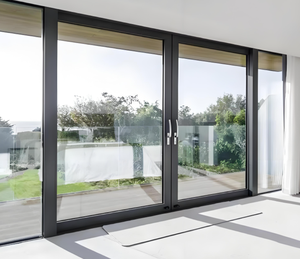
Modern Frame Black Aluminum Double Glazed Tempered Glass Patio Sliding Door Hurricane Impact Sliding Patio Doors
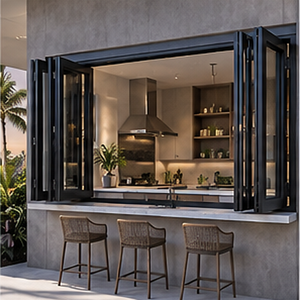
New Design Aluminum Glass Folding Windows Bi-fold Soundproof Sliding Terrace Balcony Door System
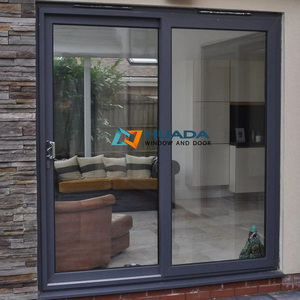
High-End Waterproof Entry Front Door Hurricane Impact Sliding Glass Windows and Doors Energy Efficient Lifting and Sliding Door
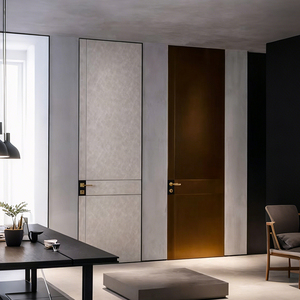
Premium Luxury Fire Rated Frameless Hidden Leather Finish Aluminium Interior Door for High-End Residential Project
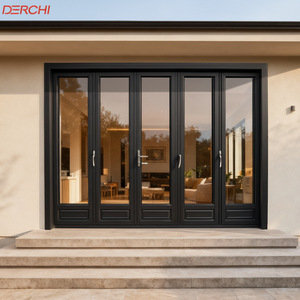
DERCHI Custom Security Bi-fold Aluminum Patio Doors with Double Tempered Glass Waterproof Design for Outdoor Use
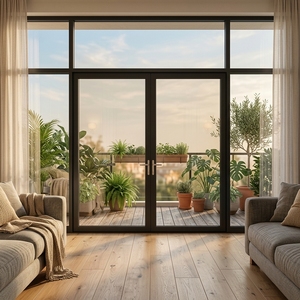
Customized Bulk Insulated Front Entry Doors French Doors Factory Direct Entry Aluminum Casement Doors
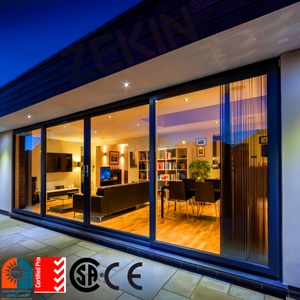
ZEKIN Customized Aluminum Patio Balcony Sliding Doors Double Tempered Glass Heavy Duty Glass Door Aluminum Sliding Doors
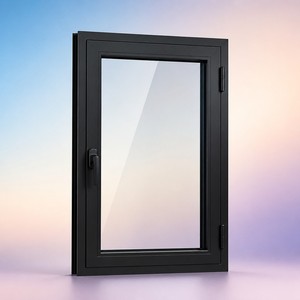
Thermal Break Aluminum Folding Window Multi Panel Stackable Wide Opening for Cafe Balcony
1. Fenestration Climatology: Engineering Impact Windows for Iraq's Extreme Operational Realities
Procuring exterior fenestration systems for the Republic of Iraq requires moving beyond standard residential building supplies. Iraq presents one of the harshest building envelope testing grounds on earth. Structural building consultants, facade contractors, and private developers in Baghdad, Erbil, Sulaymaniyah, Najaf, and Basra must engineer glazing systems against three simultaneous, aggressive physical forces: extreme ambient thermal expansion exceeding 52°C in summer, abrasive particulate ingress driven by relentless Shamal sandstorms, and acute positive-negative wind load variations generated during rapid micro-climate shifts.
Standard architectural aluminum frames manufactured for mild European or East Asian climates deteriorate quickly under Iraqi environmental stresses. Uninsulated aluminum extrusions conduct massive solar heat into living spaces, placing immense loads on HVAC units and driving mechanical cooling failures. Low-spec PVC or sub-standard non-thermal aluminum frames warp, bow, and lose seal integrity within 18 to 24 months, permitting fine dust particles (PM2.5 to PM10) to breach perimeter gaskets and damage interior electronic installations and luxury finishes.
Technical Insight: DERCHI hurricane-rated fenestration systems utilize cold-rolled 6063-T6 aluminum profiles boasting a minimum tensile yield strength of 215 MPa. By integrating multi-cavity Technoform polyamide insulating bars (PA66 GF25 with 25% glass fiber reinforcement), our profiles create a continuous thermal barrier that breaks the conductive thermal loop, slashing overall window system U-values to under 1.6 W/(m²•K) while preserving absolute structural rigidity across continuous 70°C exterior-to-interior surface temperature differentials.
Moreover, wind resistance engineering requires robust impact resilience. In high-wind regions such as the open plains around Anbar or the high-altitude developments throughout Iraqi Kurdistan, pressure fluctuations generate enormous structural stress. Hurricane-rated windows engineered to international standards (ASTM E1886/E1996 and AS 2047 Class N6) guarantee that fenestration units withstand repeated cyclic wind loads exceeding 4,500 Pascals, ensuring that structural anchors do not tear away from reinforced concrete lintels during sudden meteorological anomalies.
2. Localized Architectural Applications Across Iraq's Commercial & Residential Landscape
Urban reconstruction, foreign direct investment, and a surge in high-end private real estate development have stimulated unprecedented demand for advanced fenestration across Iraq. Different governorates and architectural typologies call for distinct technical adaptations:
Baghdad Luxury Villas & Compounds
Prestigious developments in Al-Jadriya, Yarmouk, and Mansour require immense, floor-to-ceiling panoramic sliding panels that isolate intense summer heat while matching high visual security standards. Our hurricane-impact lifting and sliding doors deliver clear spans up to 3.8 meters in height without compromising on airtight acoustic dampening against city road traffic.
Kurdistan Mixed-Use Towers (Erbil)
Developments throughout Erbil (Empire World, Dream City) and Sulaymaniyah experience steep freeze-thaw cycles in winter alongside strong mountain wind shears. High-altitude commercial pivot configurations and thermal casement windows with argon-filled triple insulating glazing prevent internal glass condensation and combat heavy lateral wind shear.
Basra Marine & Industrial Facilities
Situated near the Arabian Gulf and the Shatt al-Arab marshlands, Basra exhibits extreme relative humidity paired with salt spray and industrial sulfur emissions from petrochemical extraction. DERCHI systems specified for Basra receive architectural PVDF fluorocarbon coatings or marine-grade anodizing compliant with Qualicoat Class 2 standards to stop galvanic corrosion.
Beyond geographical environments, institutional, government, and consular properties in the International Zone (Green Zone) require security-rated facade barriers. Our hurricane impact laminated glass configurations incorporate high-tensile Eastman Saflex or Kuraray SentryGlas (SGP) ionoplast interlayers. In the event of high-velocity ballistic impact, shrapnel debris, or sudden percussion waves, the glass matrix fractures safely while adhering firmly to the elastomeric interlayer, preventing window breach and maintaining environmental and physical protection.
3. Technical Performance Benchmarking: Standard Local Systems vs. DERCHI Impact Fenestration
To eliminate ambiguity during consultant submittals and tender reviews, the following engineering matrix demonstrates how our certified hurricane impact aluminum window and door assemblies compare directly against standard local building market specifications common in the Middle East:
| Performance Characteristic | Common Regional Spec (Iraq Market) | DERCHI Hurricane Impact Standard | Compliance Test Standard |
|---|---|---|---|
| Alloy Composition & Hardness | Recycled aluminum scrap, Webster 8-10 HW | Primary 6063-T6 virgin ingot, Webster 14-16 HW | ASTM B221 / EN 755-2 |
| Thermal Transmittance (U-Value) | Uf > 4.8 W/(m²•K) (Non-Thermal Break) | Uw ≤ 1.4 - 1.8 W/(m²•K) (PA66 Multi-Cavity) | ISO 10077-1 / NFRC 100 |
| Design Wind Load Resistance | 1,200 - 1,800 Pa (Deflection occurs) | ≥ 4,500 - 5,200 Pa (Class N6 / Heavy Hurricane) | AS 2047 / ASTM E330 |
| Impact Resistance (Missile Test) | None (Standard Float / Fragile Tempered) | Passed Level D / Large Missile (9lb 2x4 @ 50 ft/s) | ASTM E1886 / ASTM E1996 |
| Acoustic Isolation (STC Rating) | STC 24 - 28 dB (Street noise penetrates) | STC 40 - 45 dB (Laminated acoustic interlayer) | ASTM E90 / ISO 140-3 |
| Air Infiltration & Sand Sealing | Basic brush seals (Fails in Shamal sandstorms) | Class 4 Air Permeability, Co-extruded EPDM gaskets | EN 12207 / ASTM E283 |
| Surface Coating Warranty | Local spray paint, chalks within 24 months | AkzoNobel Interpon D2525 PVDF Fluorocarbon (20 Yr) | Qualicoat Class 2 / AAMA 2605 |
4. Iraq Fenestration Market Trends: The Shift Toward Certified Building Envelopes
The Iraqi architectural landscape is shifting away from uncertified, spot-market building materials toward audited, high-performance systems. Three dominant trends define current procurement practices among Iraqi general contractors and procurement engineers:
A. National Push for Energy Efficiency: Rising electricity consumption and persistent strain on local power grids have made HVAC efficiency an urgent priority. Municipal authorities and private project managers now evaluate life-cycle cooling expenditure. Specifying thermally broken hurricane windows reduces cooling energy loss by up to 43%, delivering substantial operating savings over the building's operational lifecycle.
B. The Acoustic Bubble Architecture: As urbanization accelerates in Baghdad, Erbil, and Basra, noise pollution has emerged as a key quality-of-life challenge. The combination of dense traffic, perimeter security generators, and round-the-clock activity requires exceptional acoustic isolation. The combination of asymmetric glass panes (e.g., 6mm exterior + 1.52 PVB + 6mm interior laminated glass paired with a 12mm Argon cavity and an 8mm inner pane) creates an acoustic disruption barrier that drops ambient street roar below 35 decibels inside master suites and executive offices.
C. Direct Tier-1 OEM Sourcing: Iraqi builders historically relied on intermediary trading houses in regional transit hubs, which inflated supply costs and created quality verification issues. Today, developers increasingly partner directly with Tier-1 manufacturing bases in Foshan, China. This model provides transparent material mill certificates, custom shop drawings, tailored profile designs, and direct container shipping to Umm Qasr Port without third-party markup.
5. Enterprise Credibility & Manufacturing Superiority: Why DERCHI?
Guangdong Dejiyoupin Doors and Windows Co., Ltd. (DERCHI) stands among China's top tier of specialized architectural window and door manufacturers. For more than 25 years, our engineering centers have supplied high-spec building envelopes worldwide, including the GCC, North America, Australia, and across the Middle East. Choosing DERCHI gives Iraqi project stakeholders access to world-class manufacturing scale and rigorous quality assurance:
180,000㎡ Factory Base
Featuring automated CNC double-mitre saws, computerized assembly tracks, and four-corner crimping stations that secure exact frame tolerances within ±0.5mm across bulk production runs.
24-Hour CAD Shop Drawings
Our dedicated facade engineering department reviews architectural blueprints, calculates structural wind-load parameters, and delivers tailored CAD and BIM shop drawings within 24 hours.
8 Global Certifications
Independently tested and compliant with AS 2047 N6, CE EN 14351-1, ISO 9001, FCC, RoHS, and UL Fire Ratings, supported by comprehensive engineering documentation ready for consultant review.
Reinforced Maritime Crating
Every fenestration unit is individually wrapped in electrostatic protective film, encased in shock-absorbing EPE foam, and secured inside solid fumigated timber crates built for rough port handling.
Clients can also audit our facilities virtually before finalizing production orders. Our interactive 360-degree VR factory platform lets engineering teams inspect our aluminum extrusion centers, glass lamination autoclaves, and pre-shipment quality inspection stations in real time from offices in Baghdad or Erbil.
6. Iraqi Procurement & Engineering FAQ
Key technical, financial, and logistical questions answered for Iraqi project managers, trade importers, and architectural specifiers: