Certified Aluminum Window & Architectural Systems
Engineered in our 180,000㎡ Foshan fabrication complex. Built to withstand tropical typhoons, coastal salt fog, extreme thermal expansion, and stringent global building envelopes.
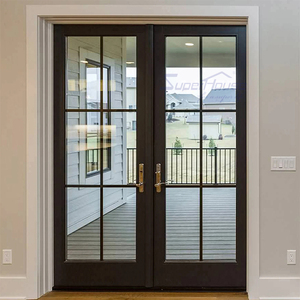
Casement Exterior French Doors Florida Hurricane Proof Laminated Glass
- SGP / PVB Laminated Impact Glazing
- Miami-Dade DP70 Certified Profile
- Multi-Point Structural Locking
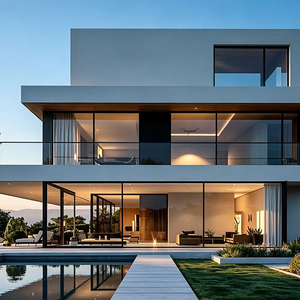
NFRC Hurricane Resistant Exterior Casement Windows With Tempered Glass
- U-Factor ≤ 0.28 W/m²·K Thermal Break
- High-Performance White Powder Coat
- High Acoustic Isolation (STC 42)
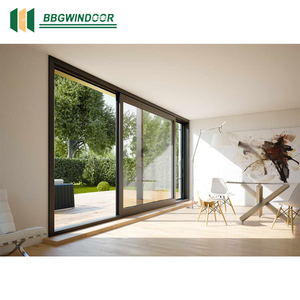
Lukliving Exterior Double Glass House Courtyard Sliding Doors
- Heavy-Duty Stainless Steel Rollers
- Low-E Argon-Filled Insulating Units
- Zero-Threshold Water Drainage Track
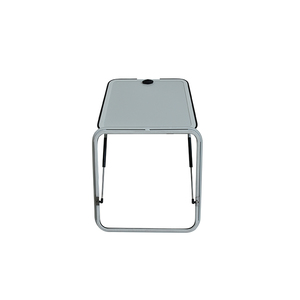
RV Aluminum Alloy Waterproof Luggage Storage Access Door with Lock
- Anti-Corrosion White Polyurethane Core
- Continuous EPDM Weather Gasket
- Flush Anti-Theft Compression Latch
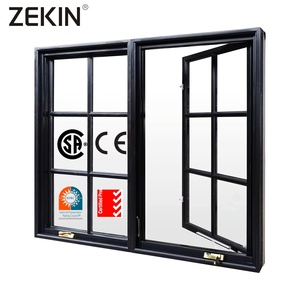
ZEKIN Casement Windows Burglar Proof Multi-Point Locking Aluminum Frame
- German Hardware Transmission Gear
- 1.8mm Wall Thickness 6063-T5 Alloy
- Concealed Perimeter Sash System
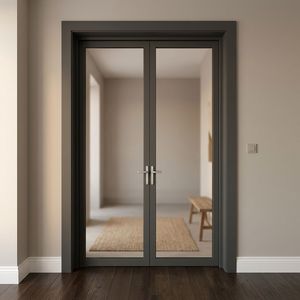
Modern Customized Aluminum Soundproof Double Glass Interior Entry Door
- Dual Air-Cavity Acoustic Dampening
- Modern Minimalist Narrow Sightlines
- Scratch-Resistant Matte White Finish
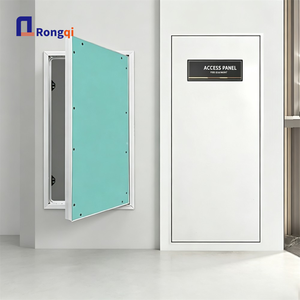
Access Panel Flush Finish Drywall Touch Latch Wall Service Hatch
- Concealed Spring Touch Catch
- Seamless Plaster Bead White Frame
- Moisture-Resistant Gypsum Core
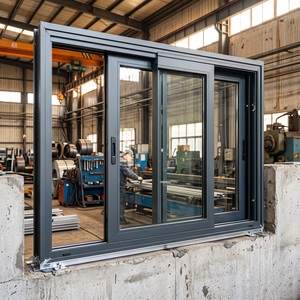
Best Selling 3i-Low-E Hung Windows Aluminum Frame Colonial Replacement
- Constant-Force Sash Balance System
- Internal Muntin Bars / Colonial Grilles
- Tilting Sash For Effortless Cleaning
The Engineering Reality of Architectural White Aluminum Windows
In modern commercial architecture and high-end residential estates, white aluminum windows represent one of the most demanding procurement categories. While uPVC frames once dominated the white fenestration segment due to low initial capital cost, their fatal propensity for solar embrittlement, UV chalking, structural sagging under elevated temperatures, and high thermal expansion rates has accelerated a global transition toward thermally broken aluminum alloys.
However, engineering a durable white exterior aluminum window involves complex surface chemistry and mechanical physics. Aluminum as an architectural substrate has a natural thermal conductivity coefficient of approximately 160–200 W/(m·K). Without a precision-engineered thermal barrier and a polymer coating resilient against photolytic decomposition, white fenestration frames can suffer from severe heat conduction into conditioned interiors, delta-E color shifting, and micro-cracking caused by cyclic thermal expansion.
Surface Chemistry: Powder Coating vs. PVDF Fluoropolymer for White Profiles
White finishes present the greatest technical challenge under intense solar radiation. White pigments (primarily Titanium Dioxide, TiO₂) absorb UV light, which can catalytically break down resin matrices if improper powder formulations are applied. For architectural grade white profiles, three international finishing standards delineate product tiers:
- AAMA 2603 (Standard Polyester Powder): Typically restricted to non-critical interior partitions. Under exterior tropical or desert UV exposure, standard polyester begins chalking and shifting to a yellowish tint within 24 to 36 months.
- AAMA 2604 / Qualicoat Class 2 (Super-Durable Architectural Powder): Formulated with advanced carboxyl-terminated polyester and high-grade aliphatic hardeners. Resists color shift (ΔE < 5.0) and maintains gloss retention over 5 years of continuous South Florida testing. Excellent scratch resistance for residential operable casements.
- AAMA 2605 / Qualicoat Class 3 (70% Kynar 500 / Hylar 5000 PVDF): The gold standard for commercial curtain walls and high-humidity coastal estates. The carbon-fluorine bond (one of the strongest chemical bonds known) renders the surface completely impervious to UV degradation, coastal salt air, acid rain, and airborne alkaline dust.
| Performance Characteristic | Architectural White Aluminum (PVDF / Super Durable) | Standard uPVC / Vinyl (White) | Clad Wood Windows (White Exterior) |
|---|---|---|---|
| Structural Modulus of Elasticity | 70,000 MPa (Zero warping, large spans up to 3.8m) | 2,800 MPa (Requires heavy steel inserts, prone to sag) | 11,000 MPa (Adequate, but prone to moisture swell) |
| Thermal Expansion (10⁻⁶ / K) | 23.2 × 10⁻⁶ (Matches concrete & glass expansion) | 60–80 × 10⁻⁶ (High risk of perimeter seal failure) | 35–45 × 10⁻⁶ (Differential expansion issues) |
| UV Photolytic Degradation (10 Yr) | ΔE ≤ 2.0 (Zero Yellowing with AAMA 2605) | High risk of brittleness, chalking & discoloration | Requires regular repainting & antifungal treatment |
| Acoustic Performance (STC / OITC) | STC 38 to 46 (With laminated acoustic IGU & dual gaskets) | STC 28 to 34 (Limited acoustic mass) | STC 32 to 38 (Good natural damping) |
| Fire Safety Rating | Non-combustible (Class A), zero toxic fume emission | Combustible, softens at 80°C, toxic chlorine gas | Combustible unless specially fire-treated |
| Recyclability & Circularity | 100% infinitely recyclable with 95% energy recovery | Downcycled; significant environmental microplastics | Biodegradable but chemically treated coatings |
Future Procurement Trends in B2B Fenestration (2025–2030)
Global fenestration procurement is undergoing a paradigm shift driven by stringent energy efficiency directives (such as the EU Energy Performance of Buildings Directive, ASHRAE 90.1, and Title 24), severe weather occurrences, and demands for circular construction materials. Leading developers and EPC contractors are restructuring their supply chain strategies based on four macro procurement dynamics:
1. Low-Embodied Carbon Extrusions
Global procurement tenders now stipulate certified Environmental Product Declarations (EPDs). Leading factories must deploy recycled aluminum billets melted via hydroelectric or renewable power, capping carbon intensity below 4.0 kg CO₂e per kg of extruded profile without diminishing metallurgical tensile integrity.
2. Polyamide PA66 GF25 Multi-Chamber Barriers
Single pour-and-debridge polyurethane thermal breaks are rapidly being replaced by multi-cavity, glass-fiber reinforced polyamide strips (PA66 GF25). These advanced isobaric chambers permit U-factors as low as 0.8 W/m²·K (Passive House certified), mitigating interior condensation during cold seasons.
3. Monolithic Prefabrication & Off-Site Glazing
To eliminate on-site labor variances and ensure precision silicone bite compliance, developers increasingly mandate pre-glazed, factory-assembled window units delivered in heavy-duty ocean crates ready for direct anchoring, reducing construction schedules by up to 35%.
Architectural Evolution: The Ascendance of Ultra-Slim Sightline White Profiles
Architectural movements prioritize maximum natural daylight and seamless visual thresholds. In modern residential design, the classic bulky white window has been re-engineered into ultra-slim sightline systems with visible frame widths under 45mm. Achieving structural rigidity with such narrow profiles necessitates high-moment-of-inertia designs with internal reinforcement chambers and bonded structural silicone glazing (SSG), transferring wind loads directly from the glass panel to the concealed anchor bolts.
Guangdong Dejiyoupin (DERCHI): Precision Manufacturing & Global Reliability
Operating from our modern 180,000 square meter manufacturing infrastructure in Foshan, Guangdong—the recognized global capital of advanced aluminum profile engineering—DERCHI has earned its position as one of China’s Top 10 luxury door and window manufacturers. For over a quarter of a century, our facility has delivered bespoke fenestration solutions across the United States, Canada, Australia, the United Kingdom, the GCC (UAE, Saudi Arabia, Qatar), and Southeast Asia.
Unlike trading intermediaries, our vertically integrated manufacturing facility houses high-precision CNC multi-axis profile machining centers, automated corner-crimping rigs, precision robotic powder coating lines, and an in-house fenestration laboratory capable of testing air infiltration (ASTM E283), water penetration under static pressure (ASTM E331), structural wind load performance (ASTM E330), and acoustic attenuation.
Compliant Submittal Packages
We provide full structural calculations, thermal modeling simulations (LBNL THERM/WINDOW), and bilingual CAD/Revit shop drawings for immediate architect and consultant sign-off.
Full Third-Party Certifications
Backed by official testing records for CE, ISO 9001, AS 2047 N6 cyclonic testing, and UL fire performance. Our fenestration products clear municipal inspections without administrative delays.
Custom Engineering & Hardware
Complete flexibility in profile depths (65mm to 120mm), glazing pocket allowances up to 48mm triple-pane, and integration with world-class hardware (Sobinco, Roto, Siegenia, CMECH).
Export Crating & Logistics
Reinforced non-fumigation plywood crates with shock-dampening foam, desiccant packs, and corner armor ensuring zero maritime transit damage across long transoceanic voyages.
B2B Procurement FAQ: Sourcing White Aluminum Windows
Clear, engineering-level answers addressing common inquiries from general contractors, architects, facade consultants, and commercial real estate developers.
How do you guarantee that exterior white aluminum frames will not yellow or chalk under high UV radiation?
What specific white finish options and gloss levels are available for architectural projects?
How does the thermal break mechanism maintain integrity under extreme climatic temperature swings?
Can DERCHI produce hurricane impact windows compliant with Florida Building Code (TAS 201/202/203)?
What is the standard production lead time and minimum order quantity (MOQ) for custom project extrusions?
How do you prevent salt-spray galvanic corrosion on coastal hotel or villa installations?
What third-party documentation is included with export shipments for customs and building authority approvals?
Connect With Our Facade Engineering Team
Whether you require CAD shop drawings, thermal simulation data for your engineering submittal, or direct factory wholesale pricing for an upcoming residential estate or commercial development, our technical engineering team responds within 24 hours.