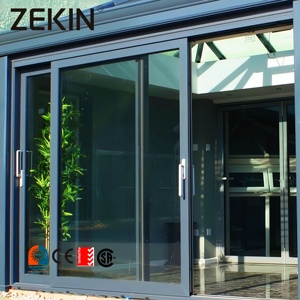
AS2047 & NFRC Standard
Explore our flagship commercial fenestration lines. Each system integrates aerospace-grade 6063-T6 or 6061-T6 aluminum alloys, insulated thermal barriers, and specialized architectural hardware optimized for high-traffic environments.
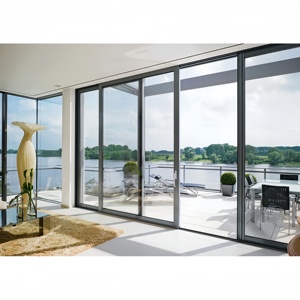
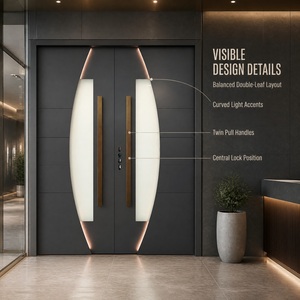
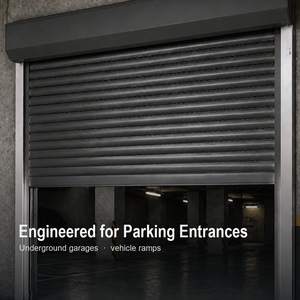
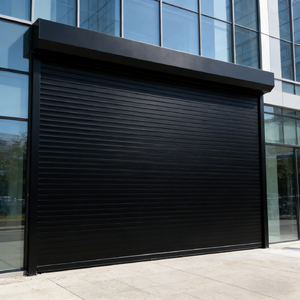
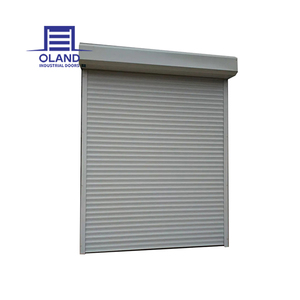
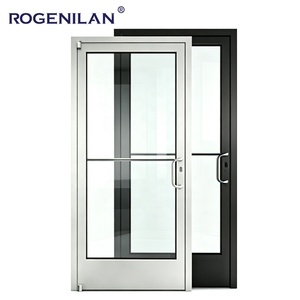
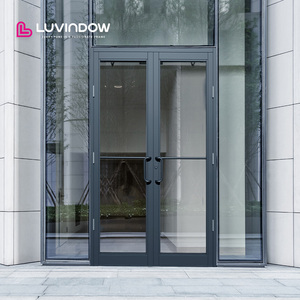
The commercial fenestration landscape is undergoing a structural paradigm shift driven by stringent energy codes, lifecycle decarbonization, and extreme climate durability mandates. For developers, general contractors, and corporate architects, procuring aluminum shop doors is no longer a purely cosmetic or budgetary decision; it is a complex engineering trade-off balancing structural wind-load resistance, acoustic isolation, and envelope thermal dynamics.
According to global building envelope performance benchmarks, non-thermally broken storefronts are rapidly being phased out across municipal codes in North America (ASHRAE 90.1 / IECC), Europe (EN 14351-1), and the Middle East (Estidama / Saudi Building Code). Modern commercial developments mandate polyamide (PA66 GF25) thermal barriers that virtually eliminate thermal bridging, preventing interior condensation while driving down HVAC runtime costs in demanding environments ranging from sub-zero Canadian winters to 50°C Persian Gulf summers.
Procurement teams are shifting analysis from initial unit cost (CapEx) to 30-year lifecycle expenditure (OpEx). Marine-grade fluorocarbon (PVDF) finishes and heavy-duty concealed floor springs reduce cyclical maintenance calls by up to 68%.
Multi-chambered profiles packed with polyisocyanurate foam cores and Low-E double/triple insulated glazing units (IGUs) achieve overall door U-values below 1.4 W/m²·K, directly supporting LEED Gold and Net-Zero energy project targets.
Smart retail entryways require native interoperability with biometric, RFID, and automated BMS access protocols. Concealed electric strikes, fail-safe magnetic shears, and heavy-duty servo operators are now pre-engineered into extrusion dies.
Commercial door manufacturing has transitioned from manual cut-and-join assembly to micron-level 5-axis CNC machining centers. In our Foshan production facility, corner joints are reinforced with hydraulic corner crimping systems and dual-component polyurethane structural adhesive injections, guaranteeing shear resistance and air tightness under severe structural wind load pressures exceeding 4500 Pa (equivalent to AS2047 N6 and ASTM E330 ratings).
| Performance Parameter | Legacy Aluminum Shop Doors | DERCHI High-Performance Engineering | Compliance / Target Testing Benchmark |
|---|---|---|---|
| Alloy Metallurgy & Wall Thickness | 1.2mm - 1.6mm 6063-T5 Recycled scrap | 2.0mm - 3.5mm Primary 6063-T6 / 6061-T6 Billets | ASTM B221 / GB 5237 Structural Standard |
| Thermal Insulation (U-Factor) | Uf > 5.8 W/m²·K (Solid Aluminum Bridge) | Uf ≤ 1.3 - 1.8 W/m²·K (24mm - 34mm PA66 GF25) | NFRC 100/200 & EN ISO 10077 Thermal Modeling |
| Air Infiltration & Water Barrier | Basic pile weatherstripping (Water: 150 Pa) | Continuous EPDM vulcanized co-extrusion (Water: ≥ 700 Pa) | AAMA/WDMA/CSA 101/I.S.2/A440 / AS2047 Test |
| Wind Pressure Resistance | Serviceability: 1200 Pa / Ultimate: 1800 Pa | Serviceability: 3000 Pa / Ultimate: 4500 Pa (N6 Level) | AS 2047 N6 Cyclonic / Florida Building Code HVHZ |
| Surface Protection Life Expectancy | Standard powder coating (Fades in 3-5 yrs) | AAMA 2605 3-Coat PVDF / 25μm Hard Anodized (20+ yrs) | Qualicoat Class 3 / ASTM D4214 UV Resistance |
Furthermore, acoustic comfort has emerged as an indispensable metric for hospitality and high-end street-level retail facades. Through asymmetric laminated glass configurations (e.g., 6mm Low-E + 1.14mm PVB + 6mm Clear) paired with dual-stage compression perimeter seals, DERCHI systems deliver verified Sound Transmission Class (STC) ratings up to 42 dB, effectively attenuating arterial urban traffic noise.
Why Tier-1 global contractors, commercial architects, and project owners in North America, Australia, Europe, and the Middle East partner directly with our Foshan manufacturing base.
Equipped with automated extrusion handling, precision CNC milling stations, glass tempering lines, and clean-room insulated glass unit (IGU) robotic sealant application.
Ranked among China’s Top 10 fenestration leaders with over two decades of international execution across villas, commercial plazas, hotels, and luxury retail developments.
Full project submittal packages with third-party testing accreditation: CE, ISO 9001, Australian AS 2047 (N6 compliance), NFRC thermal metrics, and UL fire ratings.
Free shop drawing generation in CAD/BIM formats, structural engineering calculations, custom hardware integration, and specialized export steel-frame crating.
In-depth technical answers addressing commercial building codes, metallurgy, logistics, and site installation tolerances.
Consult with our senior fenestration engineers. Submit your project schedules, CAD drawings, or architectural specifications for a comprehensive technical analysis, thermal calculations, and factory-direct project quotation within 24 hours.