Featured Fenestration & Entrance Systems
Explore our precision-machined aluminum alloy and architectural glass product portfolio. Each structural system is tested for cyclical durability, environmental tightness, and stringent international building code compliance.
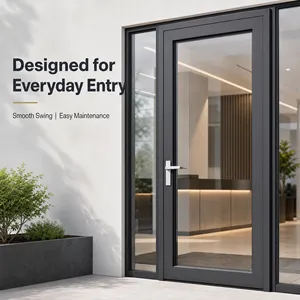
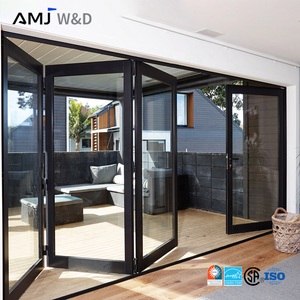
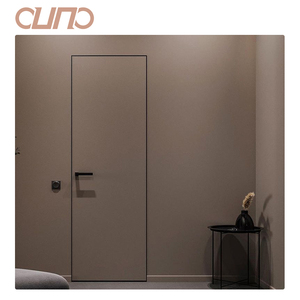
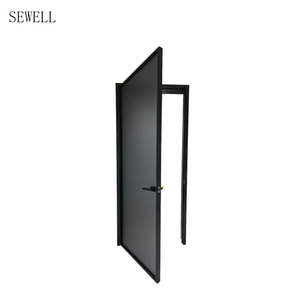
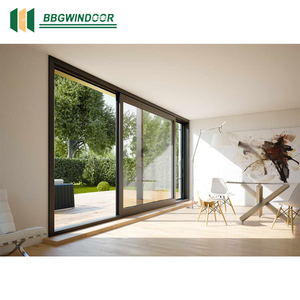
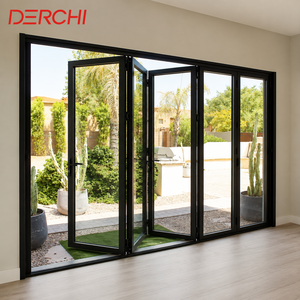
Engineering Principles of High-Performance Aluminum Frosted Glass Doors
In contemporary architectural design, aluminum frosted glass door systems represent a critical intersection between visual translucency, private zoning, and structural resilience. For project specifiers, commercial contractors, and facade engineers, selecting a manufacturer requires auditing metallurgy, profile geometry, thermal isolation breaks, and glass surface passivation. Standard commercial-grade extrusions often fail under severe environmental stresses, thermal expansion differentials, or high-cycle institutional operation if not engineered with 6063-T5 or 6063-T6 architectural alloys.
The integration of frosted glass involves several distinct industrial manufacturing processes, primarily hydrofluoric acid etching, abrasive ceramic sandblasting, and satin translucent ceramic fritting. Acid-etched glass provides an ultra-smooth, fingerprint-resistant, non-porous surface that diffuses visible light uniformly while maintaining a visual obscuration rating between 85% and 98%. Unlike surface applied films that degrade under ultraviolet exposure and ambient humidity, monolithic or laminated etched glass maintains perpetual aesthetic and mechanical integrity across high-traffic hospitality suites, office partitions, and moisture-prone luxury bathrooms.
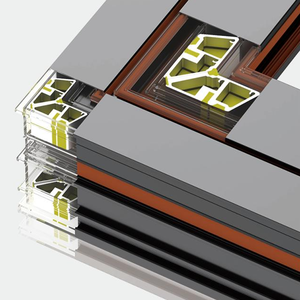
Acoustic and Thermal Optimization: High-performance interior and exterior aluminum frosted glass doors utilize multi-chamber extruded profiles fitted with continuous polyamide thermal barriers (PA66 GF25 reinforced with 25% fiberglass). This configuration reduces the overall U-factor to below 1.4 W/(m²·K). Furthermore, when integrated into dual-glazed insulating glass units (IGU) incorporating warm-edge silicone foam spacers and argon gas filling, ambient Sound Transmission Class (STC) ratings reach 38 to 44 dB. This sound insulation metric is indispensable for commercial executive boardrooms, healthcare consultation suites, and luxury residential master spaces.
Performance Metrics by Glazing & Extrusion Typology
Direct technical comparison of architectural aluminum frosted door assemblies under standardized laboratory testing protocols (ASTM, EN, and AS/NZS standards).
| Glazing & Profile Assembly | Thermal Transmittance (U-Value) | Acoustic Attenuation (STC) | Wind Load Resistance | Obscuration / Light Transmission | Primary Application Segment |
|---|---|---|---|---|---|
| Acid-Etched Double Tempered (5+12A+5mm) | 1.35 W/(m²·K) | 40 dB | Class 4 (ASTM E330) | 90% Privacy / 82% VLT | Executive Conference, Luxury Bath |
| Ceramic Frit Laminated (6+0.76PVB+6mm) | 2.10 W/(m²·K) | 38 dB | Class 5 (N6 AS 2047) | 95% Privacy / 68% VLT | Hotel Corridors, Exterior Balks |
| Single Glazed Minimalist Slim Frame (10mm) | 5.20 W/(m²·K) | 32 dB | Interior Only | 85% Privacy / 88% VLT | Interior Partition, Office Cubicle |
| Argon-Insulated Triple Frosted (4+9A+4+9A+4mm) | 0.95 W/(m²·K) | 44 dB | Severe Hurricane / Coastal | 92% Privacy / 74% VLT | Cold Climates, Passive House Units |
| Aluminum Honeycomb Composite + Frosted Sidelite | 1.10 W/(m²·K) | 42 dB | Heavy Commercial (UL Fire-rated) | 100% Core Privacy / 85% Panel | Hospitality Entry, Medical Clinics |
Strategic Sourcing & Procurement Trends for 2026–2030
The global commercial door and window supply chain is shifting toward digitized validation, verified carbon metrics, and responsive smart glazing integrations.
Low-Carbon Billeting
Enterprise buyers prioritize extruders utilizing hydro-powered aluminum smelting with recycled scrap ratios exceeding 60% to satisfy LEED v4.1 and BREEAM decarbonization mandates.
BIM & Digital Twin Supply
Procurement contracts demand native Autodesk Revit families (LOD 350 to LOD 400) embedding exact structural weights, glazing acoustic curves, and parametric shop-drawings.
PDLC Hybrid Switchable Glazing
Growth in frosted door procurement includes hybrid switchable Polymer Dispersed Liquid Crystal (PDLC) layers, converting crystal clarity to 99% frosted opacity at milliseconds notice.
Certified QA Transparency
Direct-from-manufacturer procurement bypasses multi-tier intermediaries, utilizing factory VR inspections, third-party SGS audits, and traceable mill test certifications.
Technological Advancements in Aluminum Frosted Systems
How next-generation material science and CNC fabrication are redefining durability, ergonomics, and aesthetic elegance in architectural entrance design.
Nano-Sealed Frosted Glass
Oleophobic and hydrophobic sol-gel nanoparticle sealants applied to acid-etched glass surfaces eliminate oily sebum smudges, cut maintenance overhead by 70%, and prevent permanent lime-scale binding.
Ultra-Slimline 16mm Sightlines
Advancements in 6063-T6 alloy tensile strength empower ultra-minimalist perimeter door profiles with visible sightlines as slender as 16mm, while bearing dynamic glass sash loads exceeding 250 kilograms.
Fluoropolymer PVDF Finishes
Triple-coat, double-bake 70% Kynar 500 / Hylar 5000 PVDF resin coatings deliver total salt-spray resistance, exceeding AAMA 2605 specifications with 30-year resistance to chalking and marine degradation.
Concealed Integrated Pivot Systems
Heavy-duty floor spring pivots integrated flush into the sub-sill support 360-degree rotation, adjustable damping speeds, and hold-open lock states at 90 and 180 degrees without exposed hardware.
Why Global Tier-1 Contractors Rely on DERCHI Engineering
Operating out of Foshan, Guangdong—the world's foremost epicenter for high-precision architectural aluminum fabrication—Guangdong Dejiyoupin Doors and Windows Co., Ltd. (DERCHI) has established itself as an authoritative leader among China's Top 10 door and window manufacturers. Our 180,000 square meter integrated fabrication campus encompasses aluminum extrusion billet processing, precision 5-axis CNC machining centers, automated electrostatic powder coating lines, and an isolated clean-room insulating glass unit (IGU) assembly complex.
With over a quarter-century of dedicated fenestration manufacturing experience, our products are engineered to withstand extreme climactic stresses: from the 50°C summer temperature fluctuations, airborne abrasive sands, and coastal saline humidity of the Middle East (including major landmark installations in the UAE, Saudi Arabia, Qatar, and Kuwait), to the strict wind-borne debris hurricane codes of the United States, Canada, and Australia.
Every batch of raw 6063 aluminum alloy is rigorously tested for metallurgical density, chemical balance, and Rockwell hardness. Finished units pass extensive third-party testing protocols, maintaining active certifications including CE (EN 14351-1), ISO 9001 quality management systems, AS 2047 N6 cyclonic structural compliance, and UL fire-resistance ratings. Furthermore, enterprise project teams benefit from our free comprehensive CAD shop drawings, 3D BIM modeling support, transparent 360-degree factory VR audit capabilities, and dedicated English-speaking fenestration engineers aligned with overseas client timelines.
Frequently Asked Questions (FAQ) for Engineering Sourcing
In-depth technical answers addressing specifications, structural tolerances, glass treatments, and international export logistics.
What is the performance difference between acid-etched glass and sandblasted glass?
Acid-etched frosted glass uses chemical fluorosilicic treatment creating an ultra-fine, satin-smooth molecular texture. It does not absorb skin oils, resists fingerprints, and cleans effortlessly without ghost staining. Sandblasted glass, created mechanically via abrasive particles, produces a porous, rougher surface that easily retains dust, oils, and moisture unless coated with expensive secondary sealants. For hospitality, commercial washrooms, and high-touch areas, acid-etched is universally recommended.
How do thermally broken aluminum frames prevent condensation on frosted bathroom doors?
Thermally broken frames incorporate an internal low-conductivity polyamide insulating strip (PA66 GF25) that structurally bridges the interior and exterior aluminum chambers. This prevents interior face thermal conductive dissipation during intense air conditioning, keeping the room-side profile temperature well above the ambient dew point, completely eliminating moisture sweating and subsequent mold or gypsum wall damage.
Can aluminum frosted doors accommodate custom architectural heights exceeding 3000mm?
Yes. Utilizing DERCHI's proprietary structural reinforcement channels, internal high-inertia tie rods, and heavy-duty 400kg hydraulic concealed pivot hinges, our engineering team manufactures architectural pivot and swing doors up to 4500mm in single-panel vertical heights without structural flexing or alignment drift under dynamic load.
What international safety glazing standards do your frosted glass panels satisfy?
All tempered and laminated glass options integrated into our door assemblies strictly comply with North American ANSI Z97.1 and CPSC 16 CFR 1201 standards, European CE EN 12150 and EN 12600 Class 1(C)1 impact criteria, and Australian AS/NZS 2208 safety certification requirements. In the event of forced structural impact, the glass disintegrates into harmless blunt pellets or remains adhered to the resilient PVB/SGP interlayer.
What packaging protocols are implemented to prevent freight transit damage?
Doors and frames are wrapped in five layers: static-free protective film, high-density polyethylene edge protectors, multi-layered pearl cotton bubble insulation, structural corner buffers, and heavy-duty ISPM-15 compliant fumigated solid plywood crates with integrated bottom forklift slots. This crating setup guarantees zero glass scratches, impact deformities, or torsional bowing during multimodal sea and rail transits.
What is the standard production lead time for fully customized project orders?
Following customer approval of the technical shop drawings and hardware schedule sign-off, standard production lead time ranges from 25 to 35 calendar days for bespoke architectural finishes (such as custom PVDF colors, metallic anodizing, or custom-patterned acid etching). Urgent phased batch deliveries can be scheduled in coordination with project site schedules.
Accelerate Your Project Fenestration Schedule
Submit your project door schedules, elevation drawings, or BOQ directly to our engineering department. Our technical specialists provide comprehensive CAD shop drawings, thermal calculations, and factory-direct commercial estimates within 24 hours.
Get a Quote