Engineering Large-Span Fenestration: The B2B Specification Benchmark
Modern architectural design increasingly demands the complete dissolution of structural boundaries between interior luxury spaces and external panoramas. As structural architects and facade engineers know, delivering continuous structural openings exceeding 6 to 15 meters requires fenestration assemblies engineered to resist extreme dynamic wind loads, seismic movements, thermal expansion differentials, and micro-climate stresses. As a top trusted aluminum accordion doors supplier, our mission is to eliminate the compromise between vast unobstructed sightlines, effortless kinetic movement, and uncompromising thermodynamic insulation.
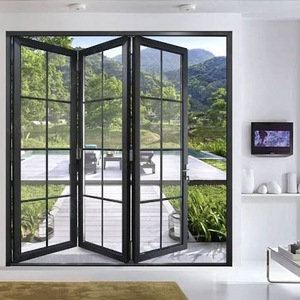
Thermal Insulation Aluminum Sliding Door For Hotel Patio Guangdong Aluminum Alloy
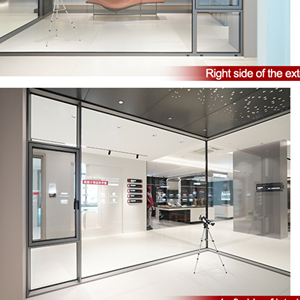
Top Brand Customized Aluminium Thermal Break Casement Window Double Glazing Swing Glass Casement Windows Accessories Popular
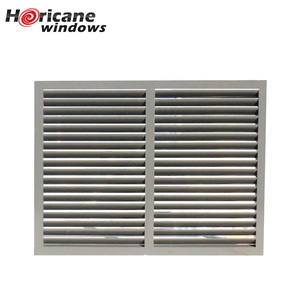
Superhouse Louvered Windows NFRC AS2047 Standard Modern Aluminum Soundproof Jalousie Window
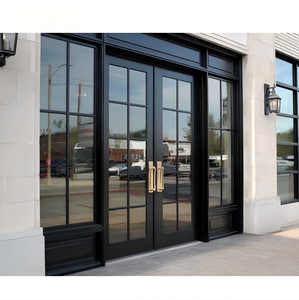
XIYATECH Modern Commercial Storefront Custom Customized Aluminum Alloy Soundproof Glass Automatic Swing Doors
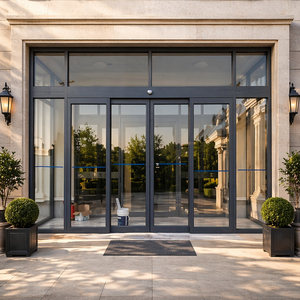
Aluminum Alloy Thermal Break Sliding Door Double Glazing Tempered Glass CE ISO9001 Certified Modern Design Wine Cellar Hospital
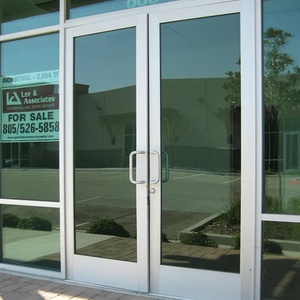
Aluminum Glass Commercial Modern Graphic Design Glass Door Security System Retail Store Glass Front Door
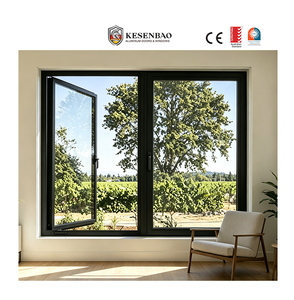
CE Custom Thermal Break Aluminum Office Window Casement Triple Glazed Aluminium French Casement Windows
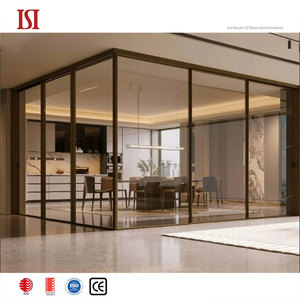
Top Brand 120 Series Modern Aluminum Sliding Glass Door Tempered Safety Glass Thermal Insulation For Bedroom Dining Bathroom
Kinematic Precision: Anatomy of High-Performance Aluminum Accordion Doors
Unlike static curtain walls or standard bi-fold sliders, aluminum accordion (folding-sliding) doors function under continuous eccentric torsional forces. When panels fold and stack, multi-point weight transfers require extreme alloy resilience and precision-calibrated bearing mechanics.
1. Extrusion Metallurgy and Billet Composition: Inferior aluminum suppliers frequently rely on secondary recycled scrap containing uncontrolled iron, zinc, and silicon impurities. This leads to intergranular corrosion and catastrophic structural creep under high wind deflections. At our Guangdong manufacturing complex, DERCHI strictly extrudes prime-grade 6063-T5 and structural 6063-T6 aluminum alloys. With wall profile thicknesses engineered between 2.0mm and 3.5mm at primary load-bearing flanges, our systems exhibit a tensile yield strength exceeding 215 MPa, fully resisting localized bucking.
2. Kinetic Roller Carriage Dynamics: The fundamental failure point in commercial bi-fold systems is roller fatigue and eccentric track wear. Our engineering team incorporates quad-roller carriages utilizing marine-grade SUS316 stainless steel needle bearings, encased in polyoxymethylene (POM) low-friction dampening rings. Each carriage assembly undergoes 100,000 continuous cycle stress tests under simulated sash weights of 250 kg per panel, maintaining an operating friction coefficient below 0.04.
3. Polyamide Multi-Chamber Thermal Barriers: Fenestration energy codes, including ASHRAE 90.1, California Title 24, and the EU Energy Performance of Buildings Directive (EPBD), impose strict maximum U-factors. Standard mechanical thermal breaks can degrade under shearing thermal stress. We specify PA66 GF25 (polyamide reinforced with 25% structural glass fiber) thermal barrier strips with integrated multi-cavity chambers. This minimizes conductive thermal bridges, achieving whole-assembly thermal transmittances (Uw) down to 1.1 W/(m²·K).
4. Continuous Dual-Durometer Weather Sealing: When multi-panel accordion doors close against driving storms or sand-laden desert winds, continuous compression is vital. DERCHI systems utilize vulcanized EPDM rubber gaskets with co-extruded cellular sponge cores. Combined with four-tier overlapping baffle plates and integrated drainage sills, the system guarantees water penetration resistance up to 900 Pa and airtightness fulfilling Australian AS2047 Class N6 benchmarks.
Structural & Wind Resistance
Engineered to satisfy cyclonic wind pressure ratings up to 4500 Pa (equivalent to Category 5 hurricanes). Corner joints are assembled using hydraulic cold-crimping with structural epoxy resin injection, ensuring zero joint deflection or diagonal sagging over 30-year operational horizons.
Acoustic Attenuation (Rw 42dB)
Mitigate urban noise pollution in high-density hotel, commercial storefront, and beachfront villa applications. Triple-glazed configurations featuring acoustic polyvinyl butyral (PVB) laminates dampen low-frequency structural reverberations and street traffic harmonics up to Rw 42dB.
Surface Coating Resilience
Finishes engineered for severe microclimates: Class 1 / Class 2 Fluoropolymer PVDF resins (70% Kynar 500) and 25-micron architectural anodization compliant with Qualicoat Seaside and AAMA 2605 certifications, guaranteed against chalking, flaking, and coastal salt-spray degradation.
Future Procurement & Technological Trends in Aluminum Folding Systems
Procurement leaders, general contractors, and real estate developers are redefining their vendor qualification criteria. Sourcing aluminum accordion doors no longer revolves solely around price per square meter; it now hinges on lifecycle carbon footprint, digital fabrication integration, and automated facade intelligence.
1. Low-Carbon Aluminum & Circular Traceability
Regulatory pressures such as the EU Carbon Border Adjustment Mechanism (CBAM) and corporate ESG reporting are pushing tier-1 suppliers toward hydro-powered smelter sourcing. Sourcing aluminum with an embodied carbon intensity below 4.0 kg CO2e/kg Al is becoming a mandatory clause in international tenders. DERCHI is pioneering traceability metrics across smelting, billet extrusion, and waste reclaim streams.
2. Ultra-Narrow Sightlines with Concealed Hardware
Architectural aesthetics are gravitating toward structural minimalism. The upcoming generation of folding systems reduces interlocking vertical mullion sightlines from traditional 140mm profiles down to ultra-slim 85mm to 95mm faces without sacrificing wind load inertia (Ix / Iy values). Concealed hinges, integrated floor tracks with zero-step ADA thresholds, and invisible pivot assemblies dominate luxury procurement requests.
3. Integrated Mechatronics & Smart Building Automation
Manual operation of massive 3-meter to 4-meter high glass panels is being augmented by brushless DC motors concealed within the head tracks. Through RS-485 Modbus or KNX protocols, automated accordion walls integrate directly into Building Management Systems (BMS), automatically venting for natural cross-ventilation during favorable ambient temperatures and locking via electromagnetic multipoint pins during adverse weather events.
4. Engineered Pre-Glazed Modular Deliveries
With skyrocketing on-site union labor rates across North America, Europe, and Australia, general contractors increasingly reject "knock-down" field-glazed frames. The procurement trend strongly favors factory-glazed, fully balanced panel cassettes packed in custom seaworthy steel-reinforced crates, reducing on-site installation schedules by up to 65%.
| System Parameter | Standard Residential Accordion | Commercial Storefront System | DERCHI Architectural Heavy-Duty |
|---|---|---|---|
| Alloy & Temper | 6063-T5 (Recycled / Standard) | 6063-T5 Prime Extrusion | 6063-T6 Structural Billet |
| Profile Wall Thickness | 1.4mm – 1.6mm | 2.0mm – 2.2mm | 2.5mm – 3.5mm Heavy Gauge |
| Thermal Barrier Core | None or Basic PVC Strip | 14.8mm PA66 Strip | 24mm – 34mm Multi-Chamber PA66 GF25 |
| Max Panel Dimensions | 800mm W × 2400mm H | 1000mm W × 3000mm H | 1200mm W × 4500mm H (Custom) |
| Roller Carriage Specs | 2-Wheel Carbon Steel Bearings | 4-Wheel SUS304 Bearings | 8-Wheel SUS316 Heavy Needle + POM |
| Air Infiltration Rate | 1.5 L/(s·m²) @ 75 Pa | 0.8 L/(s·m²) @ 150 Pa | ≤ 0.2 L/(s·m²) @ 300 Pa (AS2047 Class N6) |
| Cyclic Operational Testing | 15,000 Cycles | 30,000 Cycles | 100,000+ Cycles (BS EN 1191 Tested) |
Why Top Global Builders Partner with Guangdong Dejiyoupin (DERCHI)
Recognized among the Top 10 premium door and window manufacturers in China, Guangdong Dejiyoupin Doors and Windows Co., Ltd. (DERCHI) operates on a foundation of industrial-scale precision, certified testing rigor, and comprehensive OEM/ODM global export capabilities.
180,000㎡ Smart Base
Our sprawling automated production facility in Foshan houses German-imported 5-axis CNC machining centers, automated cutting and milling lines, and climate-controlled assembly workshops ensuring microscopic tolerances across thousands of square meters monthly.
Certified Compliance
Fully certified to CE, ISO 9001, Australian AS 2047 (N6 wind load rating), and UL fire-resistant criteria. Holding 8 international testing certificates and more than 30 utility and invention patents, we provide complete submittal documentation for consultants.
Free Shop Drawings
Our in-house facade engineering department of 40+ structural technicians translates your architectural elevations into free CAD shop drawings, finite element stress calculations, and wind load engineering reports within 24–48 hours of project submission.
Global Project Footprint
Over 25 years of engineering experience delivering turnkey residential and commercial packages to projects in the United States, Canada, Australia, the Philippines, the UAE, Saudi Arabia, Qatar, and across the GCC with zero-damage seaworthy packaging.
Frequently Asked Technical Questions
Crucial technical and logistical considerations for architectural specifiers, general contractors, and facade consultants sourcing aluminum accordion doors from China.
How do you prevent structural sagging and jamb deflection over wide spans?
What surface treatment is recommended for coastal or harsh desert environments?
Can DERCHI aluminum accordion doors achieve Passive House energy standards?
How are custom dimensions, shop drawings, and field verification handled?
What packaging protocols safeguard glass and aluminum finishes during ocean freight?
Request Engineering Consultation & Project Estimates
Partner directly with Guangdong Dejiyoupin Doors and Windows Co., Ltd. (DERCHI). Submit your architectural door schedules, elevation drawings, and structural specifications to receive custom CAD details, structural wind load analysis, and factory-direct pricing within 24 hours.