Architectural White Paper & Global Sourcing Directory
Top Trusted Aluminium Mesh Door For Main Door Exporter & Exporters
Engineering specifications, structural tensile analysis, cutting-edge anti-burglary standards, and factory-direct B2B supply frameworks for international project developers.
180,000㎡
Integrated Factory Base
25+ Years
Manufacturing Excellence
100+
Patents & Global Certs
60+ Countries
Direct Export Footprint
Global Export Sourcing Lineup
Engineered Architectural Doors & Windows Sourcing Portfolio
Precision-manufactured in our Foshan smart plant, tested to AS2047, NFRC, CE, and ISO9001 standards. Each product features heavy-duty extrusion profiles, thermal barrier performance, and seamless security mesh integration.
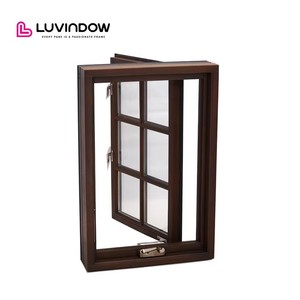
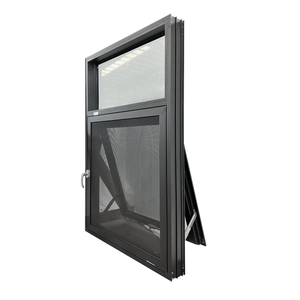
Architectural interior timber married with outdoor fluorocarbon-coated heavy aluminium framing. Premium thermal separation and built-in fine wire screen.
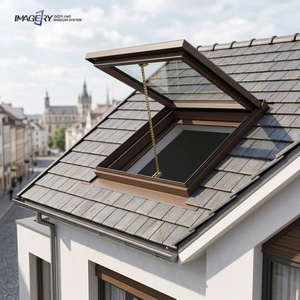
Automated actuator-driven roof window built with structural heavy alloy framing, thermal fracture bridging, rain sensor linkage, and integrated sun-shading screens.
Executive Sourcing Architecture: The Modern Aluminium Mesh Main Door
In modern high-performance residential architecture and commercial building design, the main entry door serves as both the primary aesthetic anchor and the critical first defense against forced intrusion, airborne dust, pest vectors, and ambient solar thermal transfer. The transition from legacy wrought-iron grilles and untreated timber portals toward precision-engineered aluminium mesh doors represents a fundamental paradigm shift in international fenestration engineering.
A true commercial-grade aluminium mesh door for main entrances integrates two critical structural domains: an ultra-rigid extruded aluminium frame (predominantly 6063-T5 or 6063-T6 architectural alloy) and an impenetrable, woven or perforated infill barrier constructed from 304 or marine-grade 316 stainless steel wire mesh. Unlike conventional screen doors that offer nominal insect resistance, security-rated aluminium mesh doors undergo severe mechanical stress testing—including the Australian Standard AS5039/AS5041 knife shear test, dynamic impact test, and jemmy attack test—to ensure unyielding barrier integrity without sacrificing natural cross-ventilation and optical transparency.
Global developers, architectural consultants, and procurement managers across North America, Australia, Europe, and the Middle East GCC territory now specify aluminium mesh doors as standard entrance envelope systems. By leveraging lightweight structural strength, anti-corrosive powder coat surface finishes (such as fluorocarbon PVDF and AkzoNobel architectural powders), and sophisticated multipoint locking cylinders, modern aluminium mesh entry doors satisfy both demanding life-safety codes and contemporary minimalist visual aesthetics.
Tensile Strength & Shear Defense
Fabricated using 0.8mm to 1.0mm diameter 316 marine-grade stainless wire boasting tensile strength exceeding 900 MPa. Resists high-leverage crowbar tampering, heavy physical impact, and repetitive razor-blade slash maneuvers.
Solar Factor & Natural Airflow
Micro-aperture mesh configurations dissipate direct UV radiation by up to 58%, significantly diminishing solar heat gain coefficient (SHGC) while sustaining up to 60% unrestricted pneumatic airflow for natural cross-ventilation.
Galvanic Separation & Anodizing
Patented PVC-wedge retention systems eliminate direct metal-to-metal contact between the stainless steel wire mesh and the aluminium extrusion, completely averting electrolytic galvanic corrosion in salt-heavy coastal environments.
Comparative Technical Matrix: Security Mesh Entry Doors vs. Traditional Portals
To assist MEP consultants, façades engineers, and quantity surveyors during value-engineering analyses, the matrix below details the structural, operational, and longevity parameters across different entrance door categories:
Technical Parameter
Aluminium Security Mesh Door
Solid Hardwood Door
Standard Hollow Metal Door
Cast Iron Grille Door
Alloy / Core Metallurgy
6063-T6 Extruded Billet + 316 Wire
Dense Timber (Teak/Oak Core)
Cold-Rolled Galvanized Steel
Ductile / Cast Iron Bar System
Corrosion Resistance (Salt Spray)
3,000+ Hours (C5 Marine-Grade Rated)
Vulnerable to rot, mold, moisture
Prone to rust if coating scratches
High oxidation risk; recurring paint
Airflow & Optical Visibility
60% Open Daylight / Unrestricted Draft
0% (Opaque solid barrier)
0% (Opaque solid barrier)
High airflow, but heavy prison-cage view
Impact Resistance (AS5039)
Exceeds 5 consecutive 100J impacts
Splinters under concentrated force
Dents; core may buckle over frame
High rigid resistance, fragile welds
Thermal Expansion & Warpage
Minimal (<0.1% dimensional shift)
Severe expansion/shrinkage in heat
Moderate expansion in 50°C climates
Low, but transfers heat directly
Weight & Pivot Strain
Optimized (28 - 45 kg per standard leaf)
Excessive (70 - 110 kg per leaf)
Heavy (60 - 95 kg per leaf)
Extreme (90 - 150 kg per leaf)
Hardware Ecosystem
Euro-groove 3-point hook/deadbolt
Standard single/double mortise
Standard fire push-bar/mortise
External padlock / surface lock bolt
Future Procurement Trends in the Global Aluminium Mesh Door Market
The global security fenestration market is moving rapidly beyond transactional catalog ordering into customized, smart-integrated, and climate-specific procurement models. As experienced exporters with deep institutional knowledge in the GCC, North America, and Australia, we identify four critical trends defining B2B supply agreements over the next five to ten years:
1. Architectural Integration of Smart Access and Electronic Mortises: Modern multi-family housing developers and ultra-luxury villa owners no longer accept mechanical-only keys. The future procurement cycle mandates aluminium mesh doors engineered with internal wire-raceways, enabling concealed installation of 3D facial recognition biometric scanners, motorized multi-point hook locks, and zigbee/matter-compatible smart home ecosystems. Because aluminium profiles allow exact CNC milling for recessed locks, they provide a cleaner, tamper-proof electronic lock integration than field-modified steel or timber doors.
2. Climate-Adaptive Metallurgy for Extreme Latitudes: Sourcing managers operating in extreme thermal environments—such as the 50°C summer sands of Saudi Arabia and the UAE, or the ultra-humid coastal belts of Florida and Northern Australia—are shifting purchase specifications toward thermally broken multi-cavity aluminium profiles. By isolating the outer mesh retention frame from the inner aesthetic perimeter through 24mm to 34mm polyamide (PA66 GF25) thermal barriers, the door eliminates heat bridging, dramatically lowering indoor air-conditioning compressor loads while maintaining maximum security.
3. Carbon-Accountability and Circular Billets: In response to the European Union’s Carbon Border Adjustment Mechanism (CBAM) and global LEED/BREEAM green building certifications, international building contractors now demand verified low-carbon aluminium billets produced via renewable hydroelectric power. Recycled content verification (often targeting 40%+ post-industrial scrap recycling) alongside non-toxic powder coating processes will dominate procurement scorecards by 2027.
4. Modular One-Stop Fenestration Packages: Commercial contractors face acute labor shortages on-site. Procurement directors increasingly refuse to coordinate separate purchase orders for exterior entry doors, matching mesh screen systems, interior doors, and patio accordion units. Leading exporters that can deliver a synchronized, one-stop fenestration package—where colors, extrusion profiles, glass coatings, and lock master-key systems match seamlessly—gain a decisive edge in commercial tenders.
Technological Evolution: From Simple Screen to Structural Security Barrier
The manufacturing complexity behind modern aluminium mesh doors involves microscopic metallurgy, chemical surface passivation, and heavy structural mechanical engineering. In our automated production facilities, every door panel is designed according to rigorous finite-element stress analysis:
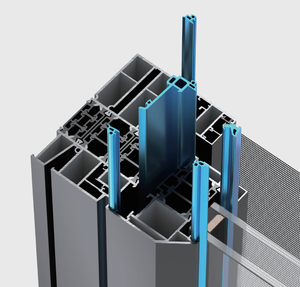
Precision Billet Extrusion & Tempering: High-grade primary aluminium ingots are pre-heated to 480°C and forced through customized diamond dies under 3,500-ton hydraulic presses to form profiles with wall thicknesses ranging from 2.0mm to 3.5mm at critical load zones. After extrusion, artificial aging (T6 heat-treatment) produces an ultimate tensile strength exceeding 205 MPa and a Brinell hardness above 75 HB, ensuring zero frame deflection during forced-entry crowbar attacks.
Aviation-Grade Mesh Retention Systems: Historical screen doors secured wire mesh with exposed screws or fragile plastic splines, which easily popped out during a blunt-force kick. Modern export-grade doors use a mechanical clamping wedge system. The stainless steel mesh is folded at a 90-degree angle along the edge, seated within an internal channel, clamped with high-molecular polymer insulators, and locked under pneumatic mechanical pressure with heavy hidden aluminium retainers. When an intruder impacts the center of the mesh, the dynamic load pulls the mesh tighter into the perimeter channel, dispersing the kinetic energy across the entire frame.
Corrosion Defense with AkzoNobel Interpon Powders: Exterior main doors endure continuous ultraviolet degradation, acid rain, and airborne chloride salt mist. Our automated vertical electrostatic powder-coating lines incorporate 14-stage chemical pre-treatment (including chrome-free zirconium conversion coating) followed by 80-120 micron application of architectural-grade thermosetting powder. This provides exceptional resistance to color fading, chalking, and blistering, backed by international Qualicoat Class 2 compliance.
Manufacturing Might & Authority
Guangdong Dejiyoupin (DERCHI): Your Premier Factory-Direct Exporter
Recognized among the Top 10 luxury door and window manufacturers in China, our expansive Foshan production ecosystem delivers end-to-end engineering, testing, and delivery certainty for commercial and residential developments worldwide.
180,000㎡ Mega Facility
Equipped with computerized high-speed machining centers, 5-axis CNC profile cutters, and robotic assembly stations powered by 600+ skilled master craftsmen.
100+ Patents & Certifications
Certified to CE, ISO 9001, AS 2047 (Australian N6 cyclonic standard), and UL fire-rated protocols. Ready for immediate consultant submittals.
Free CAD Shop Drawings
Dedicated bilingual engineering teams deliver full CAD shop drawings, connection details, and BIM models within 24 hours of receiving your door schedule.
Export Crating & Logistics
Reinforced fumigated solid-plywood crate packaging with shock-absorbing foam corner caps ensures pristine, damage-free arrival across any ocean transit route.
Clear, direct technical answers to assist developers, fenestration contractors, and procurement officers during project evaluation:
Q:How do your aluminium mesh main doors prevent forced entry compared to solid security doors?
Our doors combine heavy 6063-T6 extruded aluminium profiles (2.0mm - 3.0mm wall thickness) with high-tensile 304 or 316 marine-grade stainless steel wire mesh (0.8mm - 1.0mm wire diameter, >900 MPa tensile strength). Secured by a patented internal mechanical wedge retention system and high-security 3-point hook mortise locks, the assembly resists over 100 Joules of repetitive dynamic impact, passes continuous knife-shear testing (AS5039), and eliminates vulnerable jemmy leverage points.
Q:Can your doors endure severe 50°C summer heat and coastal humidity like the GCC or Florida?
Yes. For regions such as Saudi Arabia, UAE, Qatar, and coastal North America, we utilize thermally broken multi-chamber aluminium extrusions coupled with UV-resistant AkzoNobel fluorocarbon powder coatings. Crucially, we incorporate co-extruded dielectric PVC isolating strips between the stainless steel mesh and aluminium frame, fully preventing galvanic corrosion even under continuous marine salt mist (verified past 3,000 hours in neutral salt spray testing).
Q:What is the typical manufacturing lead time and minimum order quantity (MOQ) for overseas orders?
Because our Foshan manufacturing base spans 180,000 square meters with integrated extrusion, coating, and assembly lines, our standard turnaround for custom engineered orders is 25 to 35 calendar days following final CAD drawing approval. We accommodate both high-volume multi-unit container contracts (MOQ flexible down to single-villa custom orders when bundled with our window/door packages) and provide complete international sea-freight booking and door-to-port documentation.
Q:How are oversized pivot mesh doors and double-leaf main gates stabilized against sagging?
For grand residential entries exceeding 3,000mm in height or 1,500mm in leaf width, we engineer reinforced internal steel spine inserts within the aluminium vertical stiles and deploy German-engineered, heavy-duty floor pivots capable of supporting 500kg+ loads. Each oversized pivot leaf is factory-balanced and tested for self-closing dampening and precision latch alignment before crating.
Q:What specific international certifications can be provided for consultant submittal?
DERCHI provides comprehensive testing portfolios including CE certification (EN 14351-1), ISO 9001 Quality Management verification, Australian AS 2047 and AS 5039 compliance reports, American NFRC thermal performance ratings, and UL-certified fire-rated door options. Comprehensive test certificates, mill test sheets, and structural calculations are issued alongside project-specific CAD submittal drawings.
Accelerate Your Project Sourcing with Factory-Direct Precision
Send our senior engineering team your architectural elevations, opening schedules, or tender specifications. We provide complimentary CAD connection details, hardware consultations, and transparent factory-direct commercial estimates within 24 hours.