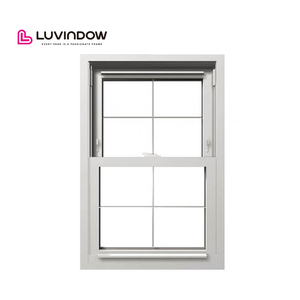
Export Portfolio
Engineered Kitchen & Villa Fenestration Systems
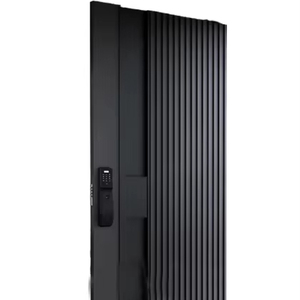
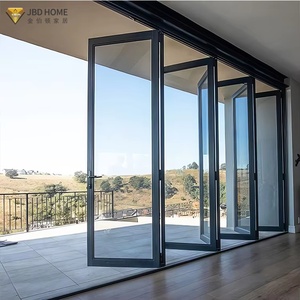
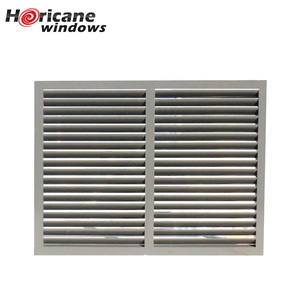
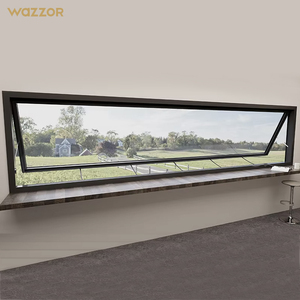
Manufactured according to international AS2047, CE, and NFRC standards. Explore our precision-crafted series suitable for kitchen partitions, pantry entries, and residential enclosures.
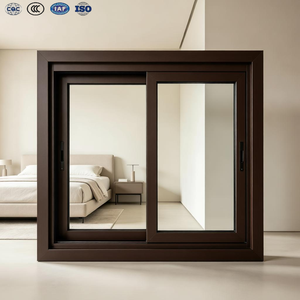
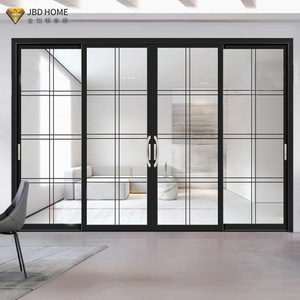
Industry Whitepaper Deep-Dive
The Architecture of Aluminium Kitchen Half Doors: Engineering, Ventilation, & Space Optimization
In modern high-density hospitality layouts, residential luxury villas, and commercial pantry systems, architectural entrance design has evolved past single-panel slab doors. The specification of Aluminium Kitchen Half Doors (commonly designated in global architectural schedules as Dutch doors, split-leaf doors, or stable doors) has seen an exponential surge in procurement demand among international developers and general contractors.
Originally conceived for rural airflow containment, the contemporary aluminium kitchen half door represents a masterclass in spatial micro-zoning. By decoupling the top sash from the lower panel, the door fulfills a dual-functional mandate: the top half operates independently as a ventilation hatch, natural daylight aperture, or service pass-through counter, while the sealed lower leaf serves as a structural barrier preventing kitchen pets or toddlers from accessing culinary hazard zones, and keeping floor-level cooking spills and grease strictly isolated.
Unlike conventional timber joinery—which succumbs to rot, moisture swelling, and delamination within high-humidity kitchen steam zones—extruded 6063-T5 and 6063-T6 architectural aluminium alloys provide permanent structural equilibrium. When treated with high-performance fluorocarbon (PVDF) or anti-grease architectural powder coatings, aluminium kitchen half doors offer zero warping, complete chemical wipe-down tolerance, and fire-resistant performance vital for both commercial catering regulations and upscale domestic safety guidelines.
Engineering Specification Matrix: Substrate Performance Comparison
Consultants and specifiers must balance lifecycle costs, mechanical load integrity, and hygiene standards when determining door schedule items. The analytical matrix below compares typical materials deployed across global kitchen transitions.
| Performance Metrics | Architectural Aluminium (6063-T5) | Solid Timber / Engineered Hardwood | uPVC / Vinyl Extrusions | Stainless Steel (Grade 304) |
|---|---|---|---|---|
| Dimensional Stability | Superior (Thermal expansion coefficient ≤23×10⁻⁶/K) | Poor (High moisture swelling ≥4.8%) | Moderate (Risk of sag at >45°C ambient) | High (Negligible warp under heat) |
| Grease & Oil Barrier | Impermeable (Chemically inert hydrophobic seal) | Absorptive (Requires frequent resealing) | Stain prone under persistent fat vapours | Non-absorptive, cleanable |
| Split-Leaf Load Capacity | High (Integrated internal corner tie-brackets) | Moderate (Screw pull-out over time) | Low (Requires steel reinforcement inserts) | Extreme (Heavy self-weight challenge) |
| Acoustic Decoupling | 32 – 42 dB (With dual EPDM & Low-E IGU) | 24 – 30 dB (Air gaps common at split) | 26 – 32 dB (Hollow chamber vibration) | 28 – 34 dB (Drumming resonance issue) |
| Fire Retardancy | Class A / Non-combustible core | Combustible (Requires intumescent dips) | Self-extinguishing (Releases halogens) | Class A / Highly fire-resistant |
*Data compiled by DERCHI Fenestration Testing Laboratory under simulated 85% relative humidity and 55°C accelerated cooking temperature conditions.
Enterprise Manufacturing Scale
Guangdong Dejiyoupin Doors & Windows Co., Ltd. (DERCHI)
Headquartered in Foshan, Guangdong—the global manufacturing capital for architectural aluminium—Guangdong Dejiyoupin Doors and Windows Co., Ltd. (DERCHI) has commanded industry leadership for more than 25 years. Recognized as one of China's Top 10 High-End Door & Window Brands, DERCHI operates a vertically integrated production infrastructure dedicated to engineering excellence.
Our comprehensive product repertoire spans custom aluminium entry doors, luxury pivot assemblies, high-performance cast aluminium villa gates, acoustic jalousie systems, and specialized interior kitchen half doors designed specifically to withstand harsh commercial and residential environments.
AS 2047 Australian Standard
CE European Compliance
ISO 9001 Quality System
UL Fire-Rated Integrity
With ongoing export operations serving large-scale villa compounds, luxury resorts, and high-rise developments throughout the United States, Australia, Canada, the Philippines, Saudi Arabia, the United Arab Emirates, and Qatar, we provide full CAD shop drawing support, precision CNC joinery, and turn-key export logistics.

180,000㎡
Modern Industrial Base
600+
Skilled Craftsmen & Engineers
100+
Patents & Global Certs
25+
Years Fenestration Authority
Procurement Forecasting
Future Sourcing Trends for Aluminium Kitchen Half Doors
As global building codes and culinary lifestyles shift, procurement directors are specifying next-generation features that solve acoustic, aesthetic, and hygienic challenges.
1. Minimalist Ultra-Narrow Sightlines
Architects are eliminating bulky frame bulkheads. Contemporary kitchen half doors are moving toward minimal 16mm-20mm visible stiles utilizing polyamide thermal barriers, maximizing sightline transparency between the food prep area and the living salon without forfeiting structural rigidity.
2. Bi-Directional Dual Interlocks
Next-generation Dutch door systems incorporate concealed German-engineered gear mechanisms that allow both sections to be latched into a singular standard single-swing door, or unlatched instantly with a concealed deadbolt trigger for upper-sash operation alone.
3. Acoustic & Vapor Hermetic Sealing
Standard Dutch doors historically suffered from air and grease leakage at the horizontal mid-rail split. Progressive designs implement automotive-grade extruded continuous vulcanized EPDM gaskets and overlapping tongue-and-groove thermal profiles that attain airtight Class 4 performance.
Technological Innovations
Engineering Developments in Modern Split-Leaf Systems
The engineering department at DERCHI has addressed key legacy challenges associated with split-leaf half doors through proprietary metallurgical treatments and mechanical design innovations:
Differential Thermal Expansion Management
Kitchens generate sharp temperature differentials—often reaching 35°C on the cooking side while adjacent air-conditioned living spaces remain at 20°C. DERCHI integrates reinforced fiberglass-reinforced polyamide (PA66 GF25) thermal breaks that structurally insulate interior and exterior aluminium skins, preventing thermal bowing across oversized leaves.
Heavy-Duty Concealed Split-Hinge Arrays
Because half doors concentrate torque along separate hinge nodes, our systems leverage 304/316 marine-grade stainless steel pivot assemblies rated for >200,000 continuous cycle movements. Concealed structural pivot hinges deliver 3-axis micro-adjustability to ensure seamless alignment during on-site installation.
Acoustic Laminated & Fluted Glazing Integration
Kitchens generate loud acoustic spikes (dishwashers, extractor fans, blenders). By configuring top-half sashes with 6mm + 0.76PVB + 6mm acoustic laminate or designer Moru (reeded) toughened glass, clients secure full visual light distribution while deadening up to 38dB of kitchen mechanical noise.
Antibacterial & Oleophobic Surface Nano-Finishes
Our automated vertical powder coating lines deposit electrostatically charged cross-linked fluoropolymer coats. This produces a hydrophobic and oleophobic micro-texture that resists cooking grease, grease condensation, and corrosive cleaning chemicals without discoloring or fading.
Procurement Knowledge Base
Frequently Asked Questions by Global Contractors & Specifiers
Direct technical guidance covering structural tolerances, international shipping mechanics, certification, and customization parameters.
Why specify an aluminium kitchen half door over a standard sliding or swing door?
Aluminium kitchen half doors solve three distinct architectural issues: 1) They allow rapid, natural culinary exhaust and cross-ventilation without opening the full door aperture; 2) They serve as a secure spatial partition keeping small children and pets out of dangerous kitchen zones while maintaining sightlines; 3) The lower leaf can serve as a physical support shelf for serving trays and kitchen pass-through operations, especially valuable in open-concept townhomes, duplexes, and boutique cafe environments.
How does the factory prevent air and grease leakage at the horizontal split between the leaves?
DERCHI incorporates a proprietary stepped interlock profile at the center meeting rail. This joint integrates an interlocking aluminum drip cap coupled with continuous co-extruded EPDM weather-stripping and embedded neodymium magnetic catch strips. Under negative pressure from kitchen exhaust hoods, the magnetic gasket pulls tighter against the rebate, ensuring zero odor or grease migration into living quarters.
What are your manufacturing capabilities for custom sizes and CAD shop drawings?
Every project is fabricated to exact opening specifications. Our engineering team, operating within our 180,000㎡ industrial facility, prepares complimentary BIM and CAD shop drawings within 24 hours of receiving door schedules. We accommodate oversized configurations up to 1500mm width and 3000mm height, with specialized custom structural transoms and sidelights.
Are DERCHI doors certified for coastal regions with high humidity and salinity?
Yes. Our systems undergo rigorous salt-fog testing exceeding 1,000 hours under ASTM B117 standards. Certified under Australian AS 2047, European CE, and ISO 9001 regulations, our marine-grade PVDF coatings and T5/T6 alloy profiles resist saline-laden humidity along coastal markets including Florida, the Caribbean, the Gulf region (UAE, Saudi Arabia, Qatar), and Southeast Asia.
What is the typical production lead time and export crating protocol?
Standard custom fabrication runs take approximately 25 to 35 business days following final CAD sign-off. For international ocean freight, all door assemblies are wrapped in 0.2mm protective film, padded with high-density EPE foam corner protectors, and hermetically crated in fumigated solid plywood export cases with desiccants to completely eliminate shipping abrasion and moisture ingress.
Can smart access control, electromagnetic latches, or intercom systems be integrated?
Yes. DERCHI provides integrated internal cable pathways through hollow multi-chamber profiles, allowing contractors to implement low-voltage electric strikes, RFID keycard pads, magnetic door contacts for smart home automation, and remote pass-through buzzer releases into the lower or upper frame without exposing external conduit.
Start Your Commercial / Residential Sourcing
Direct Factory Consultation & Custom Sizing Schedules
Submit your architectural drawings, tender specifications, or bill of quantities. Our senior fenestration engineers will provide certified CAD submittals, load calculations, and competitive FOB/CIF quotation matrices within 24 hours.