Featured Engineering Door Systems for Global Projects
Explore our precision-crafted casement, sliding, pivot, and heavy-duty swing doors tested to international building codes including Miami-Dade NOA, NFRC thermal standards, Australian AS 2047, and UL fire classifications.
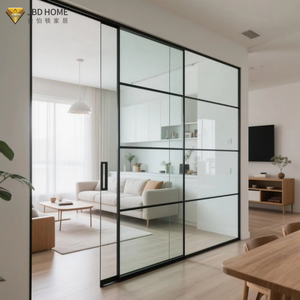
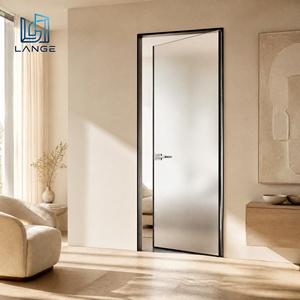
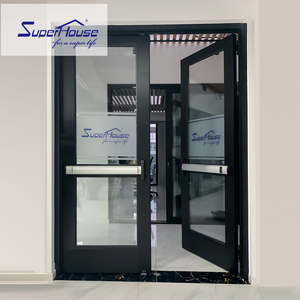
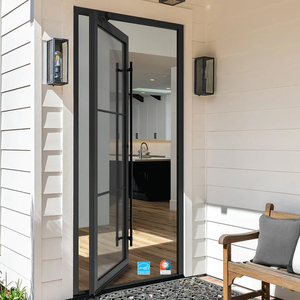
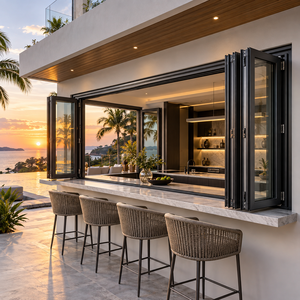
Folding Windows Aluminum Glass Bi-fold Soundproof for Balcony Terrace Villa Renovation Projects
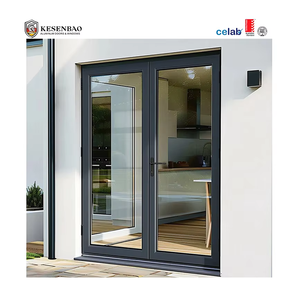
Soundproof Double Glass Aluminum Casement Door Aluminium Swing Door for Hospital House Use
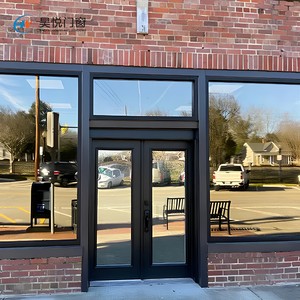
Guangdong Dejiyoupin Doors & Windows (DERCHI Brand)
Recognized as one of China's Top 10 architectural door and window enterprises, Guangdong Dejiyoupin Doors and Windows Co., Ltd. operates a high-precision manufacturing campus in Foshan, Guangdong. Over 25 years of specialized metallurgical and fenestration engineering have positioned our organization as the premier OEM/ODM supplier for high-spec aluminum swing doors, grand pivot entrances, and curtain wall subsystems.
We solve the critical vulnerabilities faced by international developers: thermal deflection under scorching desert climates (UAE, Saudi Arabia, Qatar), cyclic wind-load fatigue in coastal typhoon zones (Florida, Caribbean, Philippines), and strict acoustic damping thresholds for hospitality and healthcare projects across Europe and North America.
- 6063-T5 / 6063-T6 Primary Billet Aluminum
- Polyamide PA66 GF25 Thermal Breaks
- Automated PVDF & Fluorocarbon Coating
- Full In-House CAD & BIM Engineering Support

Technical Comparison: Architectural-Grade vs. Generic Swing Doors
When procuring aluminum swing doors from China, technical discrepancies in alloy purity, thermal-break formulation, and gasket extrusion dictate whether a door lasts 30 years or fails within two seasons.
| Performance Parameter | DERCHI Architectural Specification | Generic Commodity Supplier | Project Impact & Compliance |
|---|---|---|---|
| Extrusion Alloy & Wall Thickness | Alloy 6063-T6 / 6061-T6; 2.0mm to 3.0mm structural wall profiles (GB/T 5237 / AAMA standard) | Recycled aluminum scrap; 1.2mm to 1.4mm uneven wall profiles | Zero Deflection Under Severe Storms |
| Thermal Barrier Technology | European Technoform Polyamide PA66 GF25 (25% fiberglass reinforced, continuous crimp) | Low-grade PVC thermal strips or poured polyurethane prone to cracking | U-Factor ≤ 1.4 W/m²·K (Passive House) |
| Surface Finishing Integrity | AAMA 2605 certified PVDF 3-coat fluorocarbon (70% Kynar 500) & 25μm hard anodized | Basic commercial powder coating < 40μm thickness, non-UV stabilized | 30-Year Chalking & Salt-Spray Immunity |
| Weatherstripping & Air Tightness | Multi-circuit EPDM vulcanized co-extruded gaskets + continuous drop-down acoustic seal | Stapled PVC / foam strips that shrink, harden, and embrittle in hot weather | Class 4 Air Infiltration (EN 12207) |
| Heavy-Duty Hardware Systems | Concealed 3D adjustable continuous gear hinges or heavy floor springs (Up to 450kg load) | Standard surface butt hinges prone to sagging and frame binding within 18 months | Tested to 500,000 Cycle Durability |
| Glass Glazing Configurations | Double/Triple tempered Low-E argon insulated; optional SentryGlas® (SGP) laminated | Single pane float glass or non-certified tempered units with dry air spacer | Sound Transmission Class STC ≥ 42 dB |
Future Procurement & Architectural Engineering Trends
Global architectural demands for aluminum swing doors are moving beyond basic closure systems into high-performance structural envelopes, carbon accounting, and seamless automation.
Ultra-Narrow Sightlines & Frameless Invisibility
Contemporary luxury villa designs require maximizing the glazed daylight aperture. Procurement is shifting rapidly toward flush-concealed aluminum outer frames where the perimeter extrusion embeds directly into dry lining and stone claddings. The visible outer frame dimension is compressed to under 25mm, powered by hidden 3D adjustable pivot hinges that support glass panels up to 3.8 meters in vertical elevation.
Embodied Carbon Transparency & Recycled Billets
Developers targeting LEED Platinum, BREEAM, and Estidama certifications mandate low-embodied carbon extrusions. Leading Chinese aluminum door manufacturers have integrated green hydropower-smelted primary billets and closed-loop scrap recycling, reducing carbon footprints from 16kg CO2/kg aluminum down to under 4.0kg CO2/kg. Environmental Product Declarations (EPD) are becoming compulsory tender submittal items.
Extreme Climate Engineering & Hurricane Hardening
Climate volatility demands unprecedented fenestration resilience. Sourcing specifications now emphasize dynamic water pressure resistance up to 1050 Pa and structural wind load capacity exceeding 4500 Pa. In coastal storm zones across North America and Southeast Asia, laminated impact glass with 1.52mm SGP ionoplast interlayers prevents envelope breach even under missile impact testing (ASTM E1886/E1996).
Integrated Biometrics & Mechatronic Multi-Point Locking
Mechanical keys are disappearing from premier entrance doors. Modern aluminum swing doors integrate smart building automation (KNX, BACnet) via concealed electrical routing through the hinge axis. Multi-point motorized motorized drop-bolts activate in fractions of a second via 3D facial recognition, biometric palm scanners, and central smart-home access controls, maintaining high security without compromising perimeter thermal gaskets.
Digitized Prefabrication & BIM Parametric Modeling
Global general contractors no longer accept generic shop drawings. Tier-1 Chinese suppliers provide millimeter-accurate Revit and IFC parametric families detailing wall interface flashings, anchoring deflection brackets, and expansion joint clearances. This eliminates on-site alignment clashes, accelerating multi-story residential and commercial facade installation schedules by over 30%.
Hybrid Material Composite Extrusions
The convergence of aesthetics and metallurgical strength has created rapid demand for aluminum-timber and aluminum-carbon-fiber hybrid swing systems. Exterior surfaces feature heavy-gauge, marine-grade fluorocarbon aluminum profiles to withstand sun and salt air, while the interior reveal is clad in thermally stabilized solid European white oak or walnut, achieving luxury interior continuity without compromising exterior structural integrity.
Step-by-Step Factory Audit & Supplier Verification Guide
Follow this standardized B2B verification checklist to inspect Chinese aluminum swing door fabricators before issuing letters of credit (LC) or telegraphic transfers (TT).
Extrusion Metallurgy & MTC Audit
Request original Mill Test Certificates (MTC) verifying primary alloy composition (Al-Mg-Si). Confirm tensile strength exceeds 205 MPa and yield strength surpasses 180 MPa. Reject suppliers using secondary melted remelt ingots which cause profile bubbling during anodizing and severe structural brittleness.
Corner Joint & Crimping Tolerances
Inspect corner joint fabrication. High-end swing doors must utilize CNC corner-crimping machines with structural aluminum corner keys and twin-component polyurethane corner injection glue (e.g., German Weiss Cosmofen). Ensure corner joints are water-tight and show zero stepped misalignment.
Surface Coating Film Thickness (DFT)
Deploy an ultrasonic dry film thickness gauge. Hard-anodized architectural profiles must demonstrate ≥ 20-25μm thickness (Class 1). For fluorocarbon PVDF powder coating, verify 3-coat finishes exceed 35μm with mandatory cross-hatch adhesion testing (ASTM D3359) achieving Class 5B.
Glass Cavity & Gasket Hermetic Seals
Verify that insulated glass units (IGU) feature warm-edge composite spacers (e.g., Technoform or Swisspacer) with continuous dual-seal polysulfide/silicone barriers. Inspect EPDM vulcanized molded corner gaskets to eliminate air whistling and water capillary action under driving rain conditions.
Frequently Asked Questions by Global Buyers
Get direct, engineering-backed answers addressing the most common friction points in sourcing custom architectural aluminum swing doors from China.
Partner with China's Premier Aluminum Door Manufacturer
Submit your architectural schedule, elevations, or Bill of Quantities (BOQ). Our senior fenestration facade engineering team will generate customized CAD shop drawings, structural wind load evaluations, and a competitive factory-direct commercial quotation within 24 hours.
Get a Quote