Precision Catalog
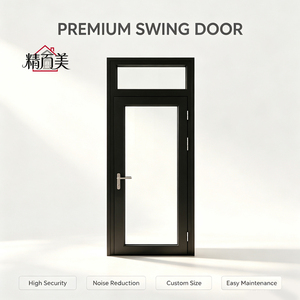
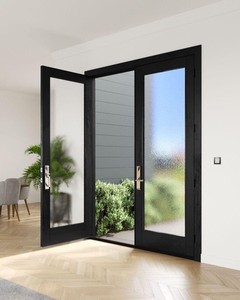
High-Performance Aluminum Glass Swing Door Portfolio
Engineered for luxury residential villas, high-traffic commercial portals, coastal resorts, and luxury hospitality projects demanding extreme structural and thermal durability.
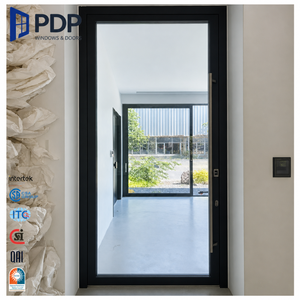
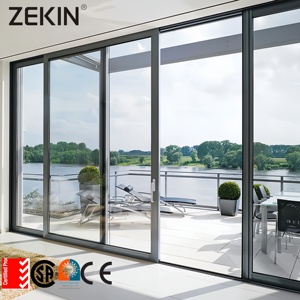
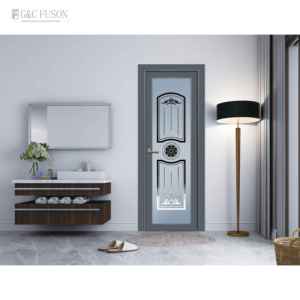
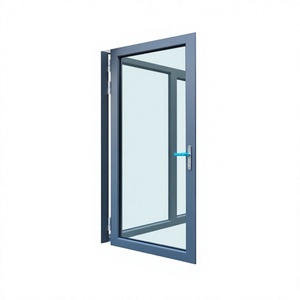
Manufacturing Mastery
Foshan Industrial Backbone: Engineering Authority & Scale
Operating from Guangdong Dejiyoupin Doors and Windows Co., Ltd. (DERCHI), recognized among the Top 10 premium window and door enterprises in China, providing end-to-end technical reliability.
180,000㎡
Smart Production Base
25+
Years Engineering Legacy
600+
Skilled Specialists
100+
Patents & Global Certs
In modern architectural fenestration, the specification of exterior and interior aluminum glass swing doors has evolved from simple spatial enclosure to mission-critical building envelope performance. As an internationally attested manufacturer based in Foshan, Guangdong—the epicenter of global aluminum extrusion and door hardware innovation—our facility bridges architectural aesthetics with mechanical durability. We engineer primary extruded 6063-T5/T6 aviation-grade aluminum profiles paired with technoform polyamide thermal breaks (PA66GF25), structural silicone glazing, and German multi-point locking systems.
Our global project delivery spans high-exposure climates across the Middle East (UAE, Saudi Arabia, Qatar, Kuwait), hurricane corridors in North America and the Caribbean, and high-wind coastal environments across Australia and Southeast Asia. Holding international verifications including CE, AS 2047 (certified to N6 ultra-high wind pressure loading), ISO 9001, and UL fire classifications, our direct factory production ensures every single-leaf, double-leaf, and casement configuration withstands severe thermal cycles, airborne salinity, dynamic wind loads, and prolonged UV exposure.
Stringent Wind Load Rating
AS 2047 N6 compliant structures utilizing heavy-wall 2.0mm to 3.0mm profiles engineered to withstand cyclic pressures up to 4500 Pa without structural deflection.
Isothermal Engineering
Multi-cavity polyamide isolation systems combined with argon-gas double/triple tempered glazing provide U-values as low as 1.4 W/m²·K to lower HVAC operational loads.
Marine-Grade Anodizing & Powder
Finishing solutions compliant with Qualicoat Seaside and AAMA 2604/2605 certifications, tested to 3,000+ hours of continuous neutral salt spray without blistering.
Full CAD/BIM Shop Drawings
Dedicated project engineers deliver structural calculations, custom extrusion dies, and millimeter-accurate shop drawings for rapid consultant approvals.
Engineering Specification Matrix
Technical Benchmark: Swing Door Configurations
Comprehensive comparative breakdown for architectural consultants, facade engineers, and general contractors during the schematic design phase.
| Series Configuration | Profile Wall Thickness | Glazing Specification | Thermal Transmittance (U-Value) | Acoustic Attenuation | Target Applications |
|---|---|---|---|---|---|
| 85 Series Extreme Thermal Break | 2.0mm – 2.5mm (6063-T6) | 6mm Low-E + 12Ar + 6mm Tempered | 1.6 – 1.8 W/m²·K | 38 dB – 42 dB | Luxury Courtyard, Hotel Villa, Coastal Patio |
| AS2047 Hurricane Impact Swing | 2.5mm – 3.0mm Reinforced | 6mm + 1.52PVB/SGP + 6mm Laminated | 2.0 – 2.2 W/m²·K | 40 dB – 45 dB | Tropical Windstorm Regions, High-Exposure Resorts |
| PDP Commercial Entry Casement | 2.0mm Architectural Grade | 8mm + 12A + 8mm Double Tempered | 2.1 – 2.4 W/m²·K | 35 dB – 38 dB | Shopping Mall Entrances, Luxury Retail, Offices |
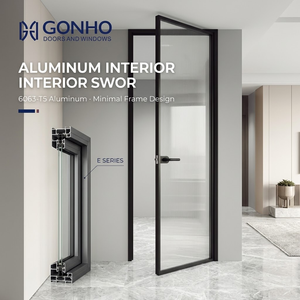
| Slimline Interior Glass Swing | 1.4mm – 1.6mm Ultra-Slim | 8mm – 10mm Monolithic/Frosted | Non-Thermal (Interior) | 30 dB – 34 dB | Executive Bathrooms, Master Suites, Wine Cellars |
Need Custom Extrusions or Architectural Submittal Packages?
Our engineering division produces custom shop drawings, test reports, and structural wind calculations within 24 hours.
Market Intelligence
Future Procurement Trends in Architectural Swing Doors
Strategic analysis for B2B developers, general contractors, and facade consultants navigating 2025–2030 international building mandates.
1. Decarbonization & Low-Carbon Aluminum
Global procurement standards under LEED v4.1 and BREEAM are requiring Environmental Product Declarations (EPD). Tier-1 manufacturers in Foshan are rapidly pivoting to hydro-powered recycled aluminum billets, reducing embedded carbon footprints by up to 60% compared to traditional smelting processes.
2. Concealed Automation & Smart Building Integration
Developers are eliminating visible surface-mounted closers. Procurement demand is surging for fully integrated electromechanical floor springs, motorized magnetic locks, and biometric/RFID access control that communicate seamlessly via dry contacts or RS485 into master smart-home automation systems.
3. Factory-Direct Containerized Consolidation
Contractors no longer procure fenestration components piecemeal. Sourcing trends prioritize one-stop Chinese manufacturing bases capable of engineering, packing, and shipping entry doors, heavy-duty sliding partitions, interior casements, and garage gates within unified container loads to eliminate site coordination errors.
R&D Vectors
Next-Generation Technology Evolution in Swing Doors
How materials science, profile geometry, and nano-coatings are transforming the operational lifecycle of commercial and residential swing doors.
Ultra-Narrow Sightlines with Heavy-Duty Capacity
Advanced structural bonding adhesive technology allows glass to act as an active load-bearing diaphragm. This structural glazed approach enables sightlines narrower than 35mm while maintaining single-leaf weight capacities exceeding 300kg, maximizing daylight transmission without sacrificing wind-load rigidity.
Aerogel Thermal Barriers & Warm-Edge Spacers
To comply with stringent zero-emission building codes in northern latitudes, standard polyamide strips are being augmented with aerogel-infused insulation cavities and non-metallic warm-edge glass spacers, preventing internal perimeter condensation under extreme exterior thermal differentials.
Multi-Point Interlocking Micro-Sealing Gaskets
Traditional EPDM compression gaskets are giving way to co-extruded vulcanized santoprene seals with closed micro-cellular structures. Integrated into 3D-adjustable concealed hinges, these systems deliver air infiltration ratings meeting passive house airtightness requirements (Class 4 EN 12207).
Procurement Clarity
Frequently Asked Questions: Technical & Sourcing FAQ
Essential answers for project managers, quantity surveyors, architects, and direct enterprise importers sourcing from China.
What are the key differences between standard aluminum and thermally broken aluminum swing doors? +
Non-thermal aluminum profiles consist of a continuous extruded alloy cross-section, which acts as a thermal bridge, rapidly conducting heat or cold into interior spaces and causing heavy condensation in humid or conditioned rooms. Thermally broken profiles incorporate a precision structural barrier—specifically high-density Polyamide 66 reinforced with 25% glass fiber (PA66GF25)—separating the exterior and interior aluminum extrusions. This stops conductive heat transfer, lowers cooling or heating energy expenditure by up to 45%, improves interior acoustic dampening, and eliminates frame sweating in high-humidity climates.
How does your factory ensure compliance with Australian AS 2047 and American AAMA/NFRC standards? +
DERCHI manufactures doors following strict quality control regimes audited under ISO 9001. For AS 2047, our door assemblies undergo physical laboratory testing covering deflection under design wind pressure (reaching N6 rating), air infiltration testing, water penetration resistance (typically testing over 450 Pa), and ultimate strength limit state pressure. For North American exports, tempered and laminated glazing units carry SGCC and IGCC certifications, with structural silicones specified according to ASTM C1184 standards to withstand hurricane cyclic fatigue.
Can your aluminum glass swing doors be specified for extreme coastal and desert environments (e.g., GCC or Pacific Islands)? +
Yes. For extreme coastal environments characterized by salt spray and high humidity, we apply architectural grade fluoropolymer (PVDF) 3-coat finishes or 25-micron anodic oxidation coatings compliant with Qualicoat Seaside standards. Furthermore, all exposed mechanical hardware, hinges, fasteners, and lock plates are specified in grade 316 marine stainless steel. For desert installations prone to fine sand ingress and 50°C summer conditions, multi-lip EPDM seals and dust-proof bottom drop-down thresholds guarantee pressure tightness.
What documentation and shop drawing support do you provide before production commences? +
Every export contract includes complete project engineering support. Upon receipt of architectural door schedules or structural floorplans, our Foshan CAD engineering office drafts millimeter-accurate shop drawings indicating opening clearances, extrusion wall thicknesses, thermal break positions, glass build-ups, hinge load distributions, anchor point details, and perimeter flashing interfaces. Production never begins without official sign-off from the client’s project consultant or facade team.
How are oversized heavy glass swing doors packaged to prevent damage during ocean transit? +
All doors undergo multi-tier export packaging: first wrapped in protective electrostatic PE film to preserve surface finishes, corner-guarded with high-density EVA foam cushions, sealed in heavy-duty polyethylene bubble envelopes, and ultimately crated in fully enclosed, IPPC-certified fumigated plywood cases with internal steel band bracing. Glass assemblies are supported by high-density rubber damping blocks to prevent vibration fractures during crane hoisting and heavy sea roll.
What is the typical production lead time and minimum order quantity (MOQ) for custom project orders? +
For standard extrusion finishes (such as textured black, architectural dark bronze, or anodized silver), production lead time is approximately 25 to 30 business days following shop drawing confirmation. Bespoke RAL color matching, custom extrusion dies, or specialized high-performance Low-E coatings generally require 35 to 40 days. While our primary focus is full-container architectural solutions for villas, hotels, and commercial developments, we accommodate flexible project MOQs based on schedule requirements.
Request Full Technical Dossier & Price Breakdown
Get in touch with our certified fenestration engineers to evaluate door schedules, U-value compliance, and volume pricing.