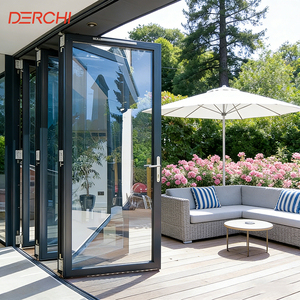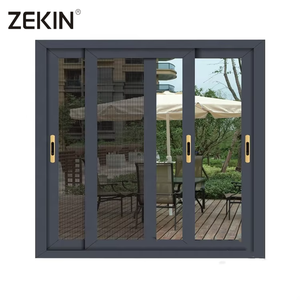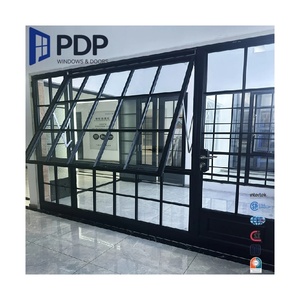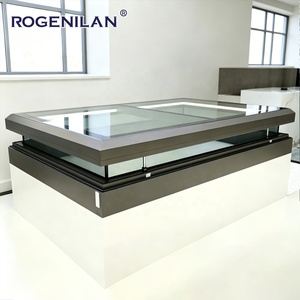
Top China Aluminum Folding Doors Supplier & Exporters

Global Engineering White Paper: Precision-fabricated, thermally broken multi-slide and bi-folding architectural systems engineered to ASTM, AS 2047, and EN 12207 structural standards.

Commercial & Villa Portfolios

Architectural Glazing & Specialized Fold-Slide Assemblies

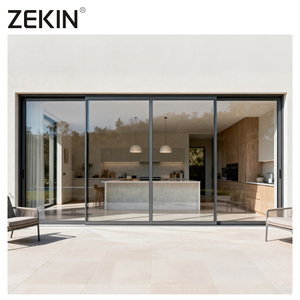
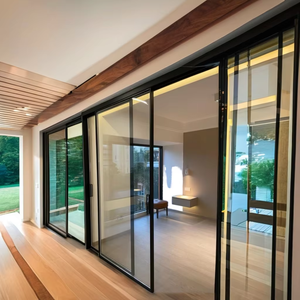
Examine our precision-machined aluminum bi-fold openings, heavy-duty vertical stacking configurations, and acoustically insulated fenestration solutions crafted for demanding commercial, institutional, and high-end residential applications.

Verified Performance Benchmarks

Architectural Procurement Technical Matrix

Detailed parametric baselines providing tier-1 contractors, facade consultants, and quantity surveyors with unvarnished data for tender compliance and thermal envelope verification.

System Configuration Alloy & Temper Polyamide Strip (PA66 GF25) Glazing Specification Wind Load (EN 12210) Water Tightness Acoustic Reduction
Heavy Bi-Fold (Top-Hung) 6063-T6 Primary (2.0mm) 34mm Multi-Cavity 8mm Low-E + 16Ar + 8mm Temp Class C5 (3000 Pa) Class 9A (600 Pa) Rw 44 dB
Slimline Concertina 6060-T66 Ultra-Rigid (1.8mm) 24mm Isobar 6mm + 14Ar + 6mm DGU Class C4 (2400 Pa) Class E750 (750 Pa) Rw 39 dB
Coastal Marine Stacking 6005A-T6 Marine Grade (2.5mm) 39mm Aerogel-Infused 10mm + 16Ar + 10mm Lami-Temp Class E3600 (3600 Pa) Class E1050 (1050 Pa) Rw 47 dB
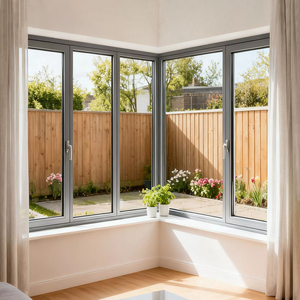
90° Post-Free Corner Fold 6063-T6 Precision (2.2mm) 28mm Reinforced 6mm Low-E + 12Ar + 6mm Temp Class C3 (1800 Pa) Class 7A (300 Pa) Rw 38 dB
Global Market Dynamics

Future Procurement Trends in Architectural Folding Enclosures

Key purchasing shifts shaping international development schedules, supply chain resilience, and global fenestration contracts through 2026–2030.

Carbon-Neutral & EPD Sourcing

Tier-one commercial developers across Europe, North America, and Australia now mandate Environmental Product Declarations (EPDs). Sourcing is shifting decisively toward primary smelters powered by renewable hydroelectric energy, reducing the embodied carbon footprint to sub-4.0 kg CO2e/kg aluminum compared to the global legacy average of 12.0 kg.

BIM Level-2 Direct Integration

Procurement officers are reducing construction timeline buffers by adopting integrated Revit and IFC parametric 3D models. Specifiers demand supplier-supplied BIM models that reflect real thermal bridge simulations, accurate glass deflection metrics, and exact installation clearance profiles directly inside general contractor master plans.

Pre-Glazed Modular Delivery

To offset escalating job-site labor rates in destination ports, international procurement teams are prioritizing factory-assembled, dry-run glazed cassette systems. Delivering bi-folding doors with factory-torqued stainless steel rollers and precision-installed glass reduces on-site snag lists and cuts final site assembly hours by up to 65%.

Engineering Evolution

Next-Generation Engineering in Aluminum Bi-Folding Systems

Technological innovations enhancing structural safety, opening spans, thermal insulation, and seamless architectural transitions.

Aerogel & Thermal Break Synergy

Modern aluminum bi-fold panels utilize multi-chamber polyamide bars (PA66 GF25) enriched with aerogel insulation cores. This engineering leap achieves total door system U-values (Uw) lower than 0.95 W/m²·K, fulfilling Passivhaus and stringent ASHRAE 90.1 energy envelope standards without sacrificing structural rigidity.

Zero-Threshold Flush Infiltration Drains

Eliminating traditional trip hazards, innovative threshold profiles integrate built-in linear drainage weeps with multi-stage siphon channels. These maintain unbroken continuity between indoor wood flooring and outdoor outdoor patios while resisting torrential rain events up to 750 Pa without water ingress.

Precision Bearing Stacking Assemblies

Sash weights exceeding 350 kg per leaf demand ultra-low-friction mechanics. State-of-the-art systems leverage aerospace-grade sealed four-wheel stainless-steel needle bearings and heavy-wall carbon steel running tracks, ensuring effortless single-hand glide cycles across more than 100,000 opening operations.

Manufacturing Excellence

Industrial Scale, Rigorous Verification & Proven Delivery

Operating from our high-precision production hub in Foshan, Guangdong, we combine multi-axis CNC machining, in-house powder coating, and full-scale factory pre-assembly testing to de-risk overseas building schedules.

180,000
m² Production Base
600+
Skilled Technicians
30+
Patents & Certifications
25+
Years of Craftsmanship

End-to-End Control

We manage aluminum billet alloy composition, precision die extrusion, computerized heat treatment, surface finishing, and double-glazing fabrication in-house to protect system tolerances.

Full Compliance Testing

Every series is evaluated for cyclonic wind loads, structural air-water tightness, and fire rating, adhering strictly to CE, ISO 9001, AS 2047, and North American NAFS specifications.

Precision Pre-Assembly

Prior to international crating, each folding door set undergoes complete test hanging, roller track calibration, and motorized operational audits to guarantee zero on-site misfits.

Dedicated Export Team

Experienced, English-speaking facade engineers deliver CAD shop drawings, structural calculations, and technical submittal packs that satisfy regional consultants and building inspectors.

Procurement Direct Answers

Frequently Asked Technical & Purchasing Questions

Direct insights resolving key procurement queries on certifications, thermal bridges, marine corrosion, crating standards, and lead times.

How do you prevent sash sagging on oversized 3-meter to 4-meter aluminum folding doors?

Sash deflection and sagging over extended cycles are prevented via three core structural approaches: First, we specify heavy-wall 6063-T6 or 6005A-T6 extrusions with profile web thicknesses up to 2.5mm–3.0mm at high-stress pivot hinges. Second, our engineering implements the 'toe-and-heel' glass blocking method, directing the physical load of the insulated glass unit directly down to the hinge jamb roller rather than hanging unsupported on the frame corners. Finally, our upper head tracks are fastened using specialized high-shear anchor brackets that tie into the overhead structural lintel, eliminating sag under multi-panel stacking configurations.

What surface finishing ensures survival in coastal marine environments (C4/C5 corrosion)?

For installations situated within 1 to 5 kilometers of open sea (such as GCC coastlines, Florida, or the Caribbean), standard commercial powder coatings can suffer micro-porosity and filiform corrosion. We apply Qualicoat Class 2 or Class 3 fluorocarbon PVDF coatings (such as AkzoNobel Interpon D3000 or PPG Duranar) with a minimum DFT of 60–80 microns, or 25-micron hard-coat architectural anodizing. All exposed hinges, handles, pins, and bogie wheels are specified in solid 316-grade marine stainless steel to eliminate galvanic oxidation.

What are the international lead times, and how are fragile large-span systems packaged for sea freight?

Standard fabrication runs require 25 to 35 business days following formal approval of CAD shop drawings and finish sign-off. For long-distance sea transit, components are wrapped in low-density polyethylene foam sheets, edge-protected with rigid composite perimeter guards, and packed into fumigated solid-plywood shipping crates reinforced with internal steel braces. Desiccant packs prevent transit moisture condensation, and crates include tilt/shock indicators to verify careful handling from port of loading to the destination site.

How do you address regional building envelope codes such as NAFS, CE, and AS 2047?

Our dedicated R&D engineering group develops dedicated profile extrusions adapted specifically for North American (NAFS / ASTM), European (CE EN 14351-1), and Australian (AS 2047 / AS 1288) regulatory systems. We provide documented accredited laboratory test reports validating cyclic fatigue, air infiltration, static water penetration under dynamic pressure, and thermal condensation indices. Project-specific calculation reports stamped by certified structural engineers can also be arranged for commercial municipal approvals.

Can your bi-fold system integrate with building automation (BMS) and smart-home access controls?

Yes. We integrate concealed multi-point motorized shoot-bolts, electronic access strikes, and magnetic sensor reed switches that communicate directly with central BMS networks, KNX architectures, or residential smart hubs. Concealed cable conduits are pre-milled into the aluminum stiles and structural frames during factory machining, allowing simple plug-and-play connection on-site without cutting or compromising the profile's thermal break integrity.

Ready to Engineer Your Architectural Folding Solution?

Upload your architectural drawings, tender schedules, or elevation elevations. Our senior facade engineering team will evaluate thermal bridge metrics, wind load specifications, and deliver customized CAD shop drawings with transparent factory-direct pricing within 24 hours.

Inquire Now