Featured Aluminum Casement, Entry & Architectural Door Systems
Engineered to international standards including AS2047, NFRC, CE, and ISO 9001. Each product combines multi-chamber thermal insulation, acoustic sealing, typhoon-grade wind load resistance, and premium surface treatments.
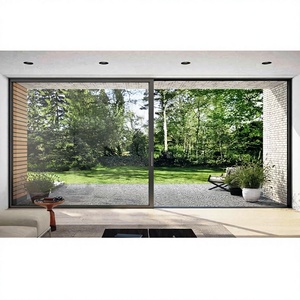
Australia Project AS2047 NFRC Modern Garden Outdoor Balcony Patio Door Double Glass Hurricane Impact Water Sound Proof Aluminum
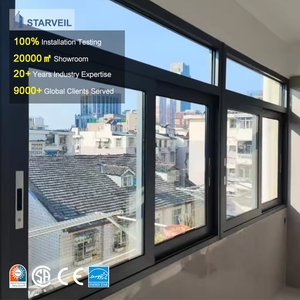
Modern Double Glazed Horizontal Sliding Stacking Commercial Exterior Windows Black Aluminum Frame Waterproof Heat Insulation
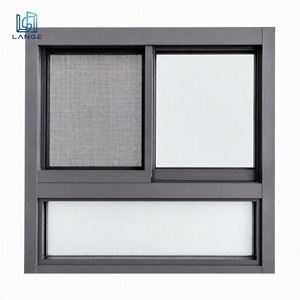
LANGE Double Glazed Aluminium Sliding Windows Low-E Glass Durable Corrosion Resistant Horizontal Slider Window
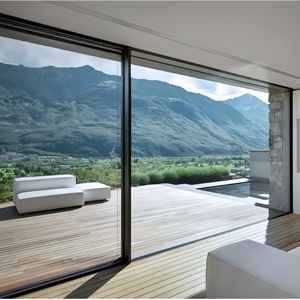
Customized Modern Style Sliding Door For Home Villa Balcony Double Glazed Energy Efficient Aluminum Glass Sliding Door For Sale
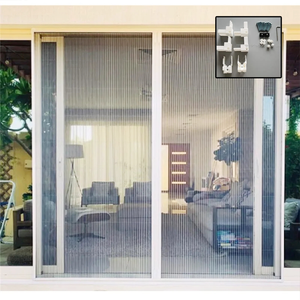
Smooth And Easy To Open And Close Mosquito Net Folding Mesh Doors Pleated Window Polyester Screen Door
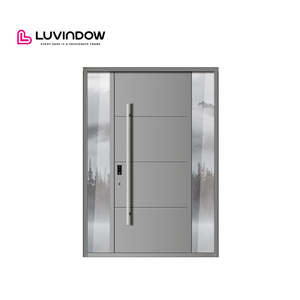
Modern Design Energy-Efficient NFRC Certified Double Pane Aluminum Entry Door Good Price Thermal Break Inward Air Tightness Home
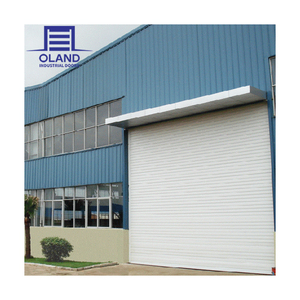
OLADN Windproof Automatic Aluminum Roller Shutter Warehouse Door Security Typhoon Resistant Vertical Electric Door 2hr Fire
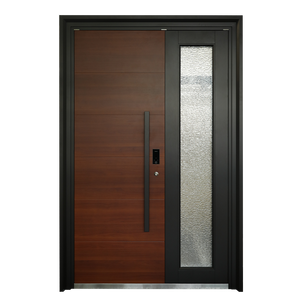
Aluminum Security French Door-Waterproof Exterior Entry Door For Hotel Apartment Villa Use
Why Global Façade Consultants & Tier-1 Contractors Partner With Us
Ranked among the Top 10 premium door and window manufacturing powerhouses in China, Guangdong Dejiyoupin Doors and Windows Co., Ltd. (DERCHI) combines massive manufacturing scalability with stringent European and Australian fenestration standards.
Rigorous International Certification
Our doors do not merely claim compliance—they have passed the world's most demanding physical and thermal testing regimens. This ensures seamless authority and consultant approvals across North America, Europe, Australia, and the Middle East.
- Australia AS2047 N6: Tested to highest cyclonic wind and water deflection.
- NFRC & CE Certified: Validated U-Factor, SHGC, and air permeability.
- ISO 9001 & UL Fire Tested: Standardized total quality management.
Bespoke CAD/BIM Shop Drawings
Eliminate project risks before profile extrusion. Our in-house engineering team provides precise shop drawings, CAD section details, structural load calculations, and anchorage schemes matching specific project wind pressure requirements.
- Rapid Submittal: Complete shop drawing package delivered within 48 hours.
- Thermal Performance Modeling: Precise Uw calculations per climate zone.
- Structural Deflection Auditing: Certified corner joint reinforcement.
End-to-End Export Crating & Support
Direct supply to over 50 countries including GCC nations (UAE, Saudi Arabia, Qatar), North America, and Australasia. We utilize heavy-duty ocean freight crating and provide comprehensive English installation schematics.
- Plywood Armor Crates: Full corner buffer protections for marine transit.
- Factory Pre-Assembly: Every casement door test-hung before packaging.
- On-Demand Video Guidance: Direct engineer-to-site live video diagnostics.
Engineering White Paper: Technical Anatomy of Export-Grade Aluminum Casement Doors
For architectural specifiers, general contractors, and fenestration procurement heads, sourcing aluminum casement doors from China requires looking beyond cosmetic finishes to scrutinize profile metallurgy, thermal barrier morphology, gasket polymer compounding, and transmission hardware mechanics. In high-wind, coastal, or severe thermal climates (such as the 50°C summer conditions of the Arabian Gulf or typhoon zones of Southeast Asia and Australia), casement door systems must exhibit uncompromising physical integrity.
"An aluminum casement door's physical longevity is dictated by three co-dependent factors: profile wall thickness exceeding ASTM/GB standards (minimum 2.0mm for heavy-duty exterior entry leaves), continuous multichamber polyamide PA66GF25 thermal breaks, and corner joint mechanical crimping reinforced with anaerobic polyurethane structural adhesive."
1. Primary Alloy Grade and Metallurgical Tempering
Premier Chinese manufacturers utilize virgin architectural 6063-T5 or 6063-T6 aluminum billet. Compared to recycled profile scrap that often contains excessive iron and copper contaminants leading to premature intergranular corrosion, virgin 6063 alloy provides exceptional tensile strength (tensile yield exceeding 160 MPa), precise corner extrusion tolerances, and clean surface grain suitable for high-grade anodizing or PVDF (polyvinylidene fluoride) fluorocarbon coatings. In exterior casement doors where sash weights regularly exceed 120 kg to 200 kg due to double-laminated Low-E acoustic insulated glass units (IGUs), profile wall thickness is engineered at 2.0mm to 3.0mm at primary structural load flanges.
2. Thermal Break Mechanics: Polyamide Isobaric Strips vs. PVC
Inferior suppliers often substitute cost-cutting PVC strips in place of authentic fiberglass-reinforced polyamide (PA66GF25). PVC features a high linear thermal expansion coefficient, causing the insulation strip to delaminate from the aluminum profile extrusion during acute temperature swings, destroying both airtightness and U-value performance. At our Foshan facility, all thermally broken casement systems employ knurled, mechanically rolled PA66GF25 thermal barriers (typically 24mm to 34mm isobaric width) with EPDM central barrier gaskets, creating a continuous triple-seal isobaric chamber that limits heat transfer to Uw ≤ 1.4 W/m²·K.
3. Technical Performance Metrics Reference
The following table presents the verified engineering benchmarks our systems deliver in laboratory testing and overseas jobsite commissioning:
| Performance Metric | Testing Protocol | Certified Rating / Parameter | Procurement Significance |
|---|---|---|---|
| Structural Wind Load | AS 2047 / ASTM E330 | Serviceability ≥ 3000 Pa, Ultimate ≥ 4500 Pa (N6 Level) | Withstands category-5 typhoon pressures without permanent frame deflection. |
| Water Penetration | AAMA 501.1 / AS 4420.5 | Static ≥ 600 Pa, Cyclic ≥ 900 Pa | Zero water leakage during driving monsoons and high-pressure coastal rainstorms. |
| Air Permeability | EN 12207 / ASTM E283 | Class 4 (≤ 0.5 m³/h·m at 100 Pa) | Prevents micro-dust infiltration during desert dust storms and stops AC energy loss. |
| Acoustic Attenuation | ISO 10140-2 / ASTM E90 | Rw / STC 38 dB to 45 dB (with asymmetric IGU) | Substantial noise dampening for airport perimeters, urban villas, and commercial hotels. |
| Thermal Transmittance (Uw) | NFRC 100 / ISO 10077 | 1.2 – 1.6 W/m²·K (Glazing dependent) | Drastically lowers building HVAC power draw, fulfilling LEED and Estidama certifications. |
| Corrosion Resistance | ASTM B117 (Salt Spray) | Qualicoat Class 2 / PVDF > 3000 Hours Salt Spray | Marine-grade exterior durability against coastal brine and high ultraviolet exposure. |
4. Hardware Integration: Multipoint Gear Transmission Mechanics
A casement door leaf is only as reliable as its hardware articulation. We engineer our casement doors with heavy-duty 304 or 316-grade stainless steel multi-point perimeter locking hardware (partnered with premier brands including Siegenia, Hoppe, Roto, and customized proprietary high-load mechanisms). Unlike conventional single-latch doors that bow under exterior wind pressure, our perimeter mushroom-head locking cams engage into hardened steel keeps along the entire vertical and horizontal frame periphery, clamping the sash firmly against the continuous EPDM vulcanized sealing gaskets to ensure airtight, waterproof, and burglar-resistant locking (RC2/RC3 European security levels).
Future Procurement Trends in the Global Aluminum Casement Door Sector
Emerging manufacturing shifts, environmental mandates, and building technology innovations reshaping how global developers and importers procure fenestration systems from China over the next decade.
Low-Carbon Recycled Billets
Global architectural projects increasingly require Environmental Product Declarations (EPDs). Leading Chinese factories are transitioning to hydro-powered and recycled "Green Aluminum" billets, reducing embodied carbon footprints to under 4.0 kg CO2e/kg Al while upholding structural strength.
Ultra-Slim Minimal Sightlines
Modern luxury villas demand maximized visible glass area. Next-generation casement doors utilize concealed hinges, narrow frame profiles (down to 45mm visible face), and structural perimeter silicone bonding capable of supporting massive oversized single-leaf dimensions up to 3.5 meters high.
Smart BMS & Biometric Locking
Integration of concealed motorized actuators and smart access systems directly into the casement profile. Factory-embedded wiring channels facilitate connection to KNX/BACnet building management systems, motorized auto-ventilation, and tamper-proof biometric recognition.
Vacuum Insulated Glass (VIG)
Procurement will migrate from bulky triple-pane units toward ultra-thin Vacuum Insulated Glass inserts. Offering center-of-glass U-values below 0.6 W/m²·K in a slim 10mm profile, VIG drastically decreases door leaf weight, saving hinge longevity while maximizing thermal efficiency.
Architectural & Technological Development Trends: Engineering the Next Generation
The global fenestration envelope is evolving from passive building enclosure toward high-performance climate-responsive building envelopes. In both high-density urban residential towers and luxury seaside villas, casement doors are replacing sliding doors in applications where uncompromising acoustic isolation, storm-water damming, and air seal hermeticity are non-negotiable.
A. Micro-Step Barrier-Free Universal Access Sills
Historically, casement doors required tall 40mm to 50mm perimeter aluminum bottom frames to achieve certified water resistance, presenting tripping hazards and violating accessibility guidelines. Breakthrough engineering now employs multi-stage hidden subterranean drainage troughs coupled with magnetic, drop-down silicone automatic threshold seals. When the door sash swings closed, rare-earth neodymium magnetic seals rise to meet the bottom sash gasket, maintaining watertight ratings above 600 Pa while providing a nearly flush 5mm to 10mm transition.
B. Acoustic Tuning with Asymmetric Laminated IGUs
Urban acoustic pollution has positioned sound transmission class (STC) ratings as a key metric for real estate developers. Traditional symmetrical double glazing (e.g., 6mm + 12Ar + 6mm) suffers from resonance frequency coincidence dips where sound waves easily penetrate. Modern engineering incorporates asymmetric pane configurations (e.g., 8mm Toughened + 16Ar Warm Edge Spacer + 6.76mm Acoustic PVB Laminated Glass), disrupting sound resonance across both high-frequency urban traffic and low-frequency aircraft flyovers, delivering field attenuation ratings in excess of 42 dB.
C. High-Durability Marine Coatings: Qualicoat Class 2 & PVDF
In aggressive climatic regions—such as beachfront villas in Dubai or Miami—standard polyester powder coating begins chalking and blistering within 3 to 5 years due to salt fog oxidation and extreme ultraviolet degradation. The industry's gold standard has shifted decisively toward 3-coat/2-bake liquid PVDF fluorocarbon coatings (exceeding 70% Kynar 500 / Hylar 5000 resin content) and Qualicoat Seaside Class 2 super-durable powders, backed by 20-to-25-year anti-fading warranties against discoloration, cracking, and chalking.
Frequently Asked Questions (FAQ) for B2B Importers & Contractors
Practical, technical answers addressing the critical procurement, compliance, packaging, and logistics questions asked by developers, contractors, and overseas door wholesalers.
What is the standard production lead time for custom aluminum casement door projects?
For custom architectural projects requiring bespoke opening dimensions and tailored RAL or anodized colors, production turnaround is typically 25 to 35 calendar days following client approval of shop drawings and receipt of deposit. Standard stocked finish profiles can be fabricated within 15 to 20 days. Large commercial container runs are dispatched on structured multi-container shipping schedules.
How do you guarantee that casement door frames do not warp or distort during overseas container shipping?
We eliminate transit damage through three levels of protection: First, internal structural corner cleats are reinforced with pinned die-cast aluminum corners and polyurethane adhesive. Second, leaves and subframes are packed in full plywood armor boxes with non-fumigation certification, protected by PE protective film, high-density pearl cotton corner guards, and vacuum plastic wrapping. Third, containers are systematically strapped with high-tensile dunnage bags to prevent shifting at sea.
Can your aluminum casement doors fulfill local council and building code requirements in Australia, the US, and the EU?
Yes. Our doors are tested in independent NATA, CE, and ISO-accredited testing laboratories. We provide full official compliance reports: Australia AS2047 & AS1288 (Certificate N6 for cyclonic wind loads), USA NFRC thermal standards and ASTM impact test approvals, and European CE EN14351-1 declarations of performance. All glass units carry SGCC, IGCC, and AS/NZS 2208 safety glass certifications.
What minimum order quantity (MOQ) is required for factory direct pricing?
Because we serve residential villa developers, custom home builders, and commercial façade contractors, our MOQ is flexible. We accept project orders starting from a single high-end villa package (e.g., 20–50 m² of combined entry doors, casement doors, and window systems). For containerized commercial orders (FCL), volume factory tier-pricing applies automatically.
How are custom dimensions and glass configurations verified before manufacturing begins?
Upon receipt of your window and door schedule or architectural PDF/CAD elevations, our senior engineering office produces complete fabrication shop drawings detailing opening dimensions, sash overlap margins, glass thickness build-ups, threshold profiles, and anchorage methods. Production does not commence until the project architect or contractor provides explicit signed sign-off.
What warranty terms are provided on aluminum frames, coatings, and mechanical hardware?
We provide a comprehensive commercial manufacturer warranty: 10 years on aluminum structural frames and thermal barrier integrity; 15 to 20 years on Qualicoat Class 2 / PVDF surface treatments against chipping, fading, or peeling; 5 to 10 years on European multi-point locksets and heavy-duty 304/316 stainless steel hinges; and 10 years on insulated glass seal failure.