Top China Aluminium Kitchen Windows Factory & Suppliers

Engineering High-Airflow, Thermal-Break Fenestration Systems & High-Performance Architectural Glass for Luxury Residences, Hospitality & Commercial High-Rises Worldwide.

Precision Manufactured in Foshan

Featured Aluminium Kitchen Windows & Architectural Enclosures

Engineered for extreme culinary steam dissipation, aggressive exterior temperature gradients, and hurricane-rated wind loads. Sourced directly from China's leading ISO 9001 and AS 2047 audited manufacturing facility.
180,000㎡

Smart Production Footprint

600+

Certified Technicians

100+

Patents & Global Certs

80+

Export Target Countries

Engineering Deep Dive: Aluminum Kitchen Window Performance Standards

Kitchen environments represent the most complex interior fenestration challenge due to high oil grease airborne particulate, extreme localized vapor pressure, and exterior thermal bridges.

Performance Vector Commercial Grade Specification DERCHI Factory Standard Validation Protocol
Alloy Composition Recycled / Mixed 6063-T5 Virgin 6063-T6 Architectural Grade (≥2.0mm wall) Spectrometer Certified
Thermal Barrier Standard PVC Strips (Degrades >70°C) Polyamide PA66 GF25 Reinforced (Technoform) ISO 9001 Tested
Surface Protection Standard Electrostatic Powder (40μm) AkzoNobel Fluorocarbon / PVDF (≥3 coats, 65μm) AAMA 2605 Passed
Acoustic Insulation Single/Dual Glaze Air Gap (Rw 28 dB) Argon-Filled Low-E Laminated Double/Triple (Rw 42 dB) EN 14351-1 Standard
Air & Water Ingress Class 2 Water (300 Pa) Multi-Chamber EPDM Co-Extrusion (Class 4 / 900 Pa) AS 2047 N6 Pass
Procurement Whitepaper

Global Procurement & Engineering Trends for Kitchen Fenestration

Architects, contractors, and hospitality specifiers are shifting toward zero-sightline integration, smart automated climate ventilation, and net-zero thermal isolation.

1. Motorized Negative-Pressure Micro-Ventilation

Modern culinary spaces generate immediate spikes in volatile organic compounds (VOCs) and oil aerosols. Emerging 2026+ procurement specifications require motorized casements integrated into Building Automation Systems (BAS) that automatically trigger micro-opening angles to evacuate high-density vapor without causing drafts.

2. Flush-Threshold Kitchen-to-Patio Serveries

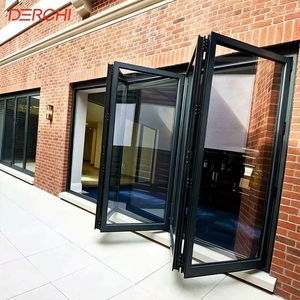
The boundary between high-end residential interior culinary suites and outdoor alfresco entertainment areas is disappearing. Commercial and villa projects are increasingly specifying bi-fold and multi-slide servery configurations with flush drainage gutters that withstand typhoons without tripping hazards.

3. Hydrophobic & Oleophobic Nano-Glazing

Conventional window glazing placed within 1.5 meters of kitchen ranges and induction cooktops suffers from grease calcification. Global buyers demand permanent factory-sputtered titanium dioxide (TiO2) and nano-ceramic coatings, allowing condensation to run sheeted and lifting airborne grease with simple warm water rinsing.

4. Vacuum Insulated Glazing (VIG) Integration

With stringent global building energy ratings (LEED v5, European nZEB), standard double-pane glass is insufficient. VIG delivers thermal center U-values under 0.60 W/(m²·K) within a slim 8.3mm profile, eliminating condensation pooling around kitchen sills even when boiling liquids inside during sub-zero winters.

5. Full BIM & Digital-Twin Prefabrication

Developers are eliminating on-site cutting and dimensional adjustments. Sourcing windows from DERCHI means receiving full Revit and IFC parametric models, ensuring multi-leaf kitchen fenestration interfaces seamlessly with structural steel subframes, precast concrete, and custom Italian joinery.

6. Supply-Chain Carbon Auditing & Circularity

International tenders across Australia, North America, and the GCC now scrutinize Environmental Product Declarations (EPD). Utilizing low-carbon smelting powered by hydro-electric power in Foshan guarantees our aluminum extrusions achieve up to a 65% reduction in cradle-to-gate embodied carbon emissions.

Direct-From-Factory Engineering & Global Delivery Integrity

Guangdong Dejiyoupin Doors and Windows Co., Ltd. (DERCHI) operates over 180,000 square meters of intelligent fabrication in Foshan, Guangdong. Backed by 25+ years of craftsmanship, our engineering department provides complimentary shop drawings, thermal modeling, and worldwide sea-freight packaging.

✓ AS 2047 & NFRC Certified ✓ Technoform PA66 Strips ✓ Heavy-Duty German Siegenia Hardware ✓ Moisture-Resistant Export Crating
Expert Answers

Frequently Asked Questions: B2B Procurement of Aluminum Kitchen Windows

Critical insights for general contractors, commercial developers, and procurement agents sourcing directly from Foshan, China.

What are the key technical specifications required for aluminum kitchen windows exposed to high heat and grease?
Kitchen windows demand primary focus on three areas: alloy corrosion resistance, weatherseal integrity, and thermal performance. We specify 6063-T6 architectural grade aluminum with a minimum profile thickness of 1.8mm to 2.0mm. Profiles must feature continuous Polyamide (PA66 GF25) thermal breaks to avoid internal thermal condensation during winter cooking. Surface finishes should always be electrostatically applied fluorocarbon (PVDF) or high-durability powder coating (complying with AAMA 2604/2605) to withstand hot cooking oil vapor, airborne acids, and aggressive chemical cleaning agents without yellowing or peeling.
How does DERCHI ensure hurricane-rated wind load and water tightness compliance?
Our systems are tested to global structural standards including Australian AS 2047 (N6 cyclone rating up to 4500 Pa) and American ASTM E1886 / E1996 for large missile impact resistance. Fenestration systems incorporate hidden drainage weep holes with multi-step baffling to prevent wind-driven rainwater backflow, combined with continuous vulcanized EPDM rubber gaskets (not inferior TPE or PVC) that maintain elasticity across extreme temperature fluctuations from -30°C to +80°C.
Can you produce custom bi-fold kitchen servery windows without bottom sill trip hazards?
Yes. We engineer customized servery configurations utilizing heavy-duty top-hung tracks capable of supporting glass panel weights over 150 kg per leaf. For servery bars connecting kitchens to outdoor barbecues or dining areas, we offer sunken flush channels (recessed into countertop marble or granite) with hidden perimeter sub-drainage, delivering a flat passage for dishes and beverages while maintaining airtight acoustic and storm barriers when closed.
What documentation and shop drawings are supplied during the engineering phase?
Every B2B or wholesale order is assigned a project-specific façade engineer. Within 24 to 48 hours of receiving structural CAD elevations or window schedules, our design office generates comprehensive CAD/BIM shop drawings including horizontal and vertical profile sections, glass pocket dimensions, anchor placement specs, and thermal U-value calculations. Production does not commence until the client's local architect or structural consultant formally signs off on the submittals.
How are aluminum fenestration products packaged to prevent container transit damage?
All finished window panels undergo a five-layer export packaging protocol: 1) Adhesive protective surface film on all exposed metal; 2) EPE foam wrapping on corners and vulnerable edges; 3) Heavy corrugated bubble wrap covering the entirety of the unit; 4) Fumigated non-coniferous plywood crates; and 5) Steel-strapped reinforcement frames with desiccants inside the container to prevent oceanic moisture condensation during sea voyage.
Get a Quote