Engineered Internal Aluminium Glass Door Assemblies
Precision-machined in Foshan, China. Fully compliant with AS2047, NFRC, CE EN-14351, and ISO9001 standards for premium residential villas, multi-family high-rises, and corporate commercial partitions.
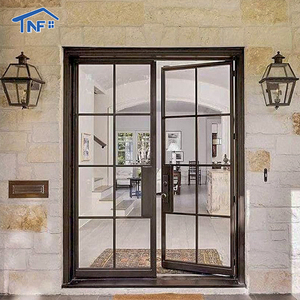
Modern Thermal Insulation Villa Casement Aluminum Door
Simulated Divided Lite (SDL) grid profile with multi-chamber thermal insulation and sound damping.
Technical Details →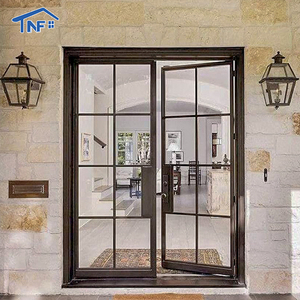
Acoustic Low-E Double Glass French Casement Doors
Heavy-duty acoustic attenuation system using Low-E tempered double glazing with Rw 38dB rating.
Technical Details →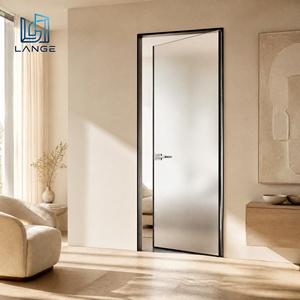
LANGE Concealed Hinge Minimalist Swing Glass Door
Seamless flush-wall coplanar frame featuring 3D adjustable 180° concealed European pivot hinges.
Technical Details →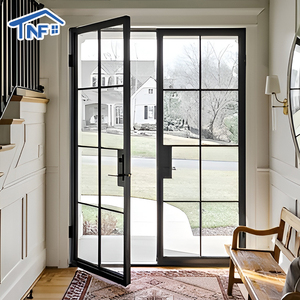
Crittall Style Interior Partition Double Tempered Glass Door
Industrial slimline aluminum profiles recreating authentic steel heritage aesthetics with anodized black finish.
Technical Details →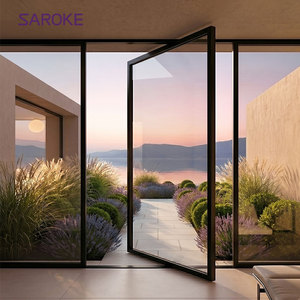
American Standard Slim Double Glass Pivot Door
Integrated German hydraulic floor spring system offering bi-directional 90° hold-open and silent auto-braking.
Technical Details →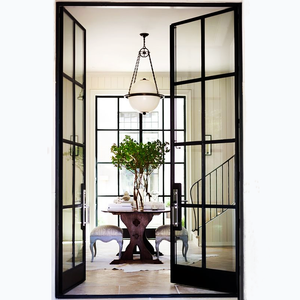
Narrow Stile Architectural Interior French Swing Door
Engineered 16mm visible frame sightlines maximizing indoor natural daylight penetration and spatial flow.
Technical Details →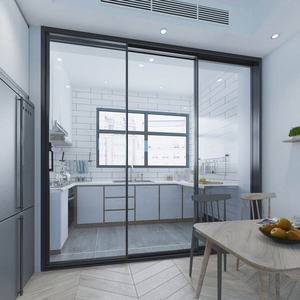
Energy Efficient Double Glazed Interior Sliding Partition
Heavy-duty stainless steel low-friction tandem rollers ensuring smooth operation across wide structural spans.
Technical Details →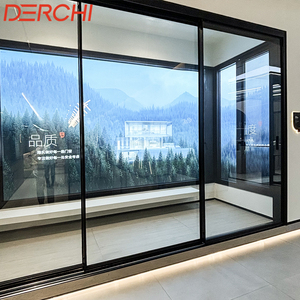
DERCHI Extremely Narrow Living Room Glass Sliding Door
Structural 8mm-12mm toughened single safety glass paired with concealed recessed ceiling tracks.
Technical Details →Comprehensive Engineering Analysis: Sourcing High-Performance Aluminium Internal Glass Doors
Navigating structural integrity, acoustic performance ratings, thermal isolation, and surface metallurgy when procuring from tier-1 Chinese manufacturers.
In contemporary commercial and high-end residential architecture, internal partition systems have transitioned from passive room dividers into high-performance structural envelopes. Sourcing from certified Chinese suppliers demands a rigorous technical understanding of raw material metallurgy, extrusion standards, structural glass safety, and dynamic hardware endurance. As the world's leading manufacturing hub in Foshan, Guangdong demonstrates, modern aluminium interior door assemblies represent an intersection of precision machining, sustainable material lifecycles, and bespoke aesthetics.
At the center of structural durability is the specification of primary billet aluminium. Standard commercial fabricators frequently utilize recycled scrap extrusions that contain uncontrolled iron and silicon impurities, compromising tensile strength and anodizing quality. In contrast, tier-1 exporters utilize primary 6063-T6 architectural-grade aluminium alloy. Under ASTM B221 and GB/T 5237 specifications, 6063-T6 achieves an ultimate tensile strength exceeding 205 MPa and yield strength greater than 170 MPa, with profile wall thicknesses maintained between 1.6mm and 2.5mm. This structural rigidity prevents profile twisting, leaf sag, and frame distortion over decades of high-cycle operation in corporate headquarters, luxury hotels, and private estates.
Furthermore, internal climate compartmentalization has elevated the relevance of thermal break integration for interior doors. While external fenestrations naturally mandate polyamide (PA66 GF25) thermal barriers, large-scale luxury interiors also rely on localized thermal breaks to maintain discrete microclimate zones—such as wine cellars, internal garden courtyards, spa enclosures, and server rooms—preventing condensation moisture and reducing overall HVAC energy loads.
| Profile Specification | Material Standard | Wall Thickness | Acoustic Damping (Rw) | Optimal Project Application |
|---|---|---|---|---|
| Ultra-Slim Modern Stile | 6063-T6 Extrusion | 1.6 mm - 2.0 mm | 32 dB - 35 dB (Monolithic Glazed) | High-End Walk-in Closets, Kitchen Living Dividers |
| Crittall French Grille | Primary Architectural Alloy | 2.0 mm structural walls | 36 dB - 38 dB (Double Glazed) | Luxury Villa Enclosures, Heritage Restorations |
| Heavy Architectural Pivot | Reinforced 6063-T6 + Steel Sub-spine | 2.5 mm - 3.0 mm | 38 dB - 42 dB (Acoustic Laminated) | Executive Office Suites, Villa Grand Majlis |
| Concealed Pocket Sliding | Precision Drawn Alloy Track | 2.2 mm structural rail | 30 dB - 34 dB (Perimeter Brush Seals) | Hospitality Guest Rooms, Penthouse Partitions |
Guangdong Dejiyoupin (DERCHI) Doors and Windows Co., Ltd.
Based in the global fenestration epicenter of Foshan, Guangdong, DERCHI delivers over 25 years of master craftsmanship, combining advanced CNC automation with certified export management.
Full Regulatory Compliance
Complete test submittals for AS2047, NFRC, CE EN-14351, UL Fire-Rated standards, and ISO9001 certified QA tracking.
Vertical Factory Integration
Extrusion machining, CNC milling, automatic glass tempering, surface powder coating, and pre-hanging executed in-house.
Free CAD & BIM Drafting
Dedicated project engineers deliver 24-hour turnaround on custom shop drawings, section details, and hardware schedule matching.
Export Reinforcement Crate
Triple-layer moisture protection, custom foam padding, and steel-banded fumigated plywood crates ensure zero transit damage.
Key Engineering & Aesthetic Trends in Aluminium Interior Doors
How next-generation engineering is reshaping interior space planning for commercial developments, residential towers, and hospitality landmarks.
Ultra-Narrow Sightlines (<16mm)
Minimalist luxury interiors are demanding sightlines reduced to mere millimeters without sacrificing structural rigidity. By pairing high-modulus 6063-T6 alloy with structural silicone glazing (SSG), modern doors achieve full structural stabilization with ultra-slim stiles, establishing unobstructed panoramic light transfer between living and working environments.
Concealed Magnetic Hardware
Traditional exposed strike plates, surface hinges, and protruding mortise latches are being replaced by German-engineered magnetic drop latches, silent soft-close hydraulics, and concealed sub-frame 3D hinges. The door leaf rests completely flush with the surrounding finished drywall or architectural wood cladding, offering whisper-quiet opening and closure.
Smart Switchable PDLC Glazing
The integration of Polymer Dispersed Liquid Crystal (PDLC) switchable privacy glass inside double-glazed internal doors has become a primary specification in high-end clinic rooms, executive offices, and luxury master en-suites. Integrated wiring routed through concealed door pivots enables dynamic transformation from optical transparency to complete visual opacity in milliseconds.
Future Procurement Trends for Global Importers & Contractors
How international procurement managers in North America, Europe, Australia, and the Middle East are optimizing their supply chain pipelines directly with Chinese manufacturers.
The global construction and interior fit-out sector is undergoing significant structural shifts. Sourcing internal aluminium doors is no longer a simple off-the-shelf purchase; it is a synchronized engineering procurement workflow governed by three overarching supply chain realities:
1. Carbon Accounting & Low-Carbon Billet Sourcing: Environmental Product Declarations (EPDs) and embodied carbon calculations are now mandatory across major European (EN 15804) and North American (LEED v4.1) tenders. Forward-thinking Chinese manufacturers are adopting green hydroelectric-smelted aluminium billets that achieve emissions under 4.0 kg CO2e per kg of aluminium (compared to the global coal-powered average of 14-16 kg CO2e). Procurement officers must demand traceable billet origin documentation to comply with global ESG quotas.
2. Full Digital Twin & BIM Pre-Assembly Verification: To eliminate costly job-site framing errors, international contractors are requiring manufacturers to supply native Autodesk Revit / IFC BIM models before extrusion cutting begins. High-precision CNC five-axis milling centers in Foshan process profile pre-cuts, lock mortises, and hinge pockets with dimensional tolerances under ±0.3mm. Every door unit undergoes complete dry-fit pre-assembly in the factory, with pre-drilled anchors minimizing installation labor costs on global sites by up to 40%.
3. Resilient Packaging and Container Freight Optimization: Freight volatility requires high-density container loading paradigms. Advanced suppliers employ knock-down (KD) frame packaging alongside pre-glazed door sashes, allowing up to 180 complete commercial interior doors to fit within a single 40ft High Cube (HC) container. Steel frame crating with vacuum desiccant packs ensures protection against maritime moisture and humidity during 30 to 45-day ocean transit.
Frequently Asked Questions by Global Project Buyers
Authoritative answers to the most common questions raised by architects, facade consultants, and general contractors sourcing interior doors from China.
How do Chinese aluminium internal doors comply with international building codes (AS2047, NFRC, CE)?
Certified tier-1 manufacturers in China design and test their systems according to strict regional destination criteria. For the Australian market, doors undergo air infiltration, water penetration resistance, and ultimate deflection testing under AS2047 and AS1288 (using safety glass compliant with AS2208). For the United States, thermal performance and solar heat gain coefficients are certified through the National Fenestration Rating Council (NFRC) and tested to AAMA/WDMA/CSA 101/I.S.2/A440. For the European Union, CE marking according to EN 14351-1 confirms mechanical durability and acoustic characteristics. All mill test reports, glass certificates, and third-party laboratory accreditations (such as Intertek or TUV) are provided during shop drawing approvals.
What is the optimal surface finish for interior aluminium doors in coastal or high-humidity zones?
For standard interior air-conditioned spaces, architectural polyester powder coatings meeting AAMA 2603 or Qualicoat Class 1 standards provide excellent scratch resistance. However, for coastal projects, hotel bathroom applications, or tropical climates, specifiers should require AAMA 2604 / Qualicoat Class 2 fluorocarbon (PVDF) coating or electrolytic anodizing with a film thickness of 15-20 microns (μm) (Class I Anodized). These treatments pass 3,000-hour neutral salt spray (ASTM B117) testing, guaranteeing zero pitting, bubbling, or edge-peeling even in beachfront villas and indoor swimming pool enclosures.
What are the differences between monolithic glass, laminated acoustic glass, and double-glazed IGUs for interior doors?
Monolithic tempered glass (typically 8mm, 10mm, or 12mm) is ideal for ultra-slim minimalist sliding doors where lightweight operation and modern aesthetics take priority, delivering an acoustic isolation of roughly 28-32 dB. Laminated acoustic glass utilizes two panes joined by a sound-damping acoustic PVB interlayer (e.g., 5mm + 0.76mm aPVB + 5mm), which disrupts acoustic shear waves and provides superior decibel reduction (Rw 36-39 dB) within a slim profile depth. Double-glazed Insulated Glass Units (IGUs) (e.g., 5mm + 9A + 5mm) offer both excellent thermal isolation and acoustic isolation (Rw 35-40 dB), making them the preferred choice for separating air-conditioned living spaces from wine cellars, laundry rooms, or home theater suites.
How can a project buyer verify factory quality control without visiting the plant in Foshan?
Professional buyers can conduct thorough remote auditing through a three-tier quality assurance protocol: First, review the factory's digital twin through immersive 360° VR factory inspections and live video walk-throughs covering the CNC line, glass tempering furnace, and assembly stations. Second, mandate an Inspection and Test Plan (ITP) where the manufacturer records dimensional tolerances, coating thickness measurements (via magnetic gauges), glass safety stamps, and hardware cycling tests on video prior to crating. Third, contract independent third-party inspection firms (e.g., SGS, Bureau Veritas, or QIMA) to perform on-site pre-shipment inspections (PSI) directly on the factory floor before releasing final payment.
What typical production lead times and shipping packaging can overseas contractors expect?
Standard fabrication timelines for fully custom architectural aluminium interior doors range between 25 and 35 calendar days following the final approval of CAD shop drawings and finish swatches. For large-scale multi-unit commercial developments, phased container shipments are scheduled to match site construction programs. Export packaging utilizes heavy-duty fumigated plywood crates reinforced with exterior steel banding, closed-cell corner guards, and vacuum-sealed desiccant packages to prevent moisture corrosion during ocean freight.
Collaborate With China's Premier Aluminium Door Manufacturer
Whether you require bespoke CAD shop drawings for a private luxury estate or mass-production supply schedules for commercial towers, DERCHI's Foshan engineering team is ready to support your project from initial design to delivery.
Get a Quote