Featured Commercial & Residential Aluminium Door Systems
Direct-from-manufacturer export configurations rigorously tested for air infiltration, water tightness, structural integrity, and long-term surface stability under harsh environments.
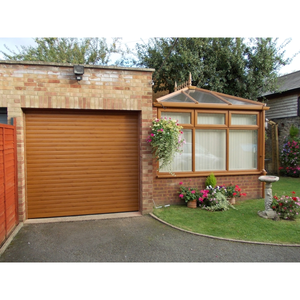
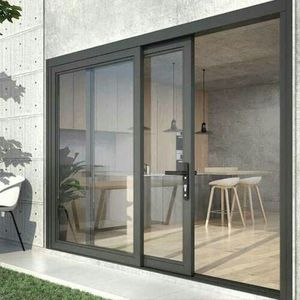
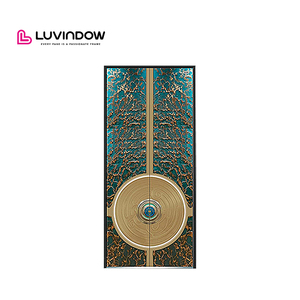
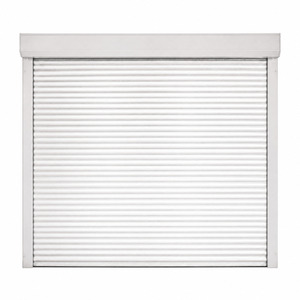
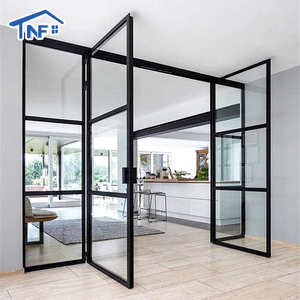
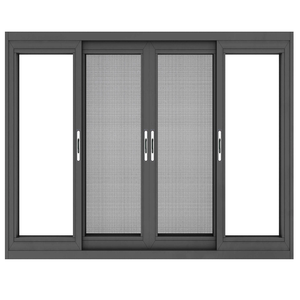
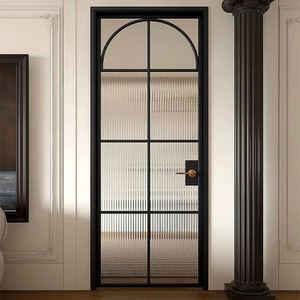
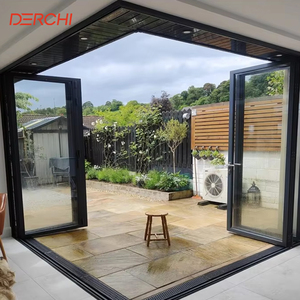
Guangdong Dejiyoupin Doors & Windows (DERCHI)
Recognized consistently as one of the Top 10 premium doors and windows brands in China, Guangdong Dejiyoupin Doors and Windows Co., Ltd. (DERCHI) operates from an industrial manufacturing base spanning over 180,000 square meters in Foshan, Guangdong. Backed by an elite team of more than 600 skilled technicians, metallurgists, and structural draftsmen, we design, extrude, fabricate, and test world-class architectural fenestration systems. Our comprehensive line includes high-performance aluminium front entrance doors, oversized pivot doors, cast aluminium villa gates, luxury interior casement partitions, and coastal-grade cyclone shutter assemblies.
Unlike regional trading brokers or simple assemblers, our vertically integrated plant controls every segment of production: from 6063-T5/T6 billet alloy formulation and precision multi-axis CNC milling to multi-stage fluorocarbon (PVDF) electrostatic coating and vacuum wood-grain heat transfer. Our factory adheres strictly to international certification matrices including ISO 9001, CE, AS 2047, and UL fire-rated standards, supported by 30+ domestic and international structural patents. We have executed large-scale luxury projects across North America, the European Union, Australia, the Philippines, and extreme-climate Middle Eastern markets such as the UAE and Saudi Arabia.
Emerging Industry Procurement Trends (2026–2030)
How international real estate developers, architects, and facade engineering consultants are updating their entrance door schedules.
Polyamide Thermal Barriers
Modern procurement guidelines now mandate multi-chambered polyamide 66 (PA66 GF25) thermal breaks within aluminium front door profiles. This decoupling architecture neutralizes drastic interior-exterior temperature gradients, drops overall system U-values below 1.2 W/m²·K, and stops thermal bow distortion in climates where external skins reach 70°C while interiors sit at 22°C.
Smart Home & Biometric Integration
Commercial and luxury residential tenders have phased out conventional keyed-only mortise hardware. High-end procurement demands seamless integration with building automation protocols (KNX, RS485, Matter) along with multi-point motorized shoot-bolts, face-recognition modules, integrated architectural LED lighting channels, and micro-switch surveillance.
Coastal Corrosion & Sand Sealing
Coastal and desert development zones require advanced surface passivation. Standard polyester coatings are rapidly being replaced by Qualicoat Class 2/3 powder systems or AAMA 2605-certified PVDF coatings capable of withstanding 3,000+ hours of continuous neutral salt spray without blistering, paired with co-extruded EPDM vulcanized sealing perimeters to block fine dust ingress.
Front Entrance Doors Technical Evolution Analysis
Architectural design has moved beyond small, conventional door frames. The industry is seeing massive adoption of oversized monolithic pivot formats, with leaf heights frequently exceeding 4,000 mm and widths spanning up to 2,000 mm. These dimensions push standard fabrication techniques past their limits, requiring high-rigidity structural aluminum profiles with wall thicknesses of 3.0 mm or more, internal steel-reinforced subframes, and heavy-duty concealed floor pivots engineered to bear operational weights of 500 to 1,000 kg.
| Performance Attribute | Conventional Market Grade | DERCHI Commercial Export Grade | Strategic Benefit |
|---|---|---|---|
| Alloy Base & Wall Spec | 1.2mm – 1.4mm Non-Thermal 6063 | 2.5mm – 3.5mm Heavy Architectural 6063-T6 | Prevents sag, resists wind loads > 5.0 kPa (AS2047 N6). |
| Thermal Insulation (U-Factor) | U > 3.5 W/(m²·K) (High Conduction) | U ≤ 1.1 – 1.6 W/(m²·K) (PA66 Break + Aerogel) | Major reduction in HVAC cooling loads; eliminates condensation. |
| Surface Coating Resilience | Standard Industrial Paint (< 5 Yr Life) | AAMA 2605 PVDF / Qualicoat Seaside Class 2 | UV resistance against fading; no chalking under extreme solar exposure. |
| Gasket & Weatherproofing | PVC Extrusion Strips (Crack prone) | Continuous Vulcanized EPDM + Magnetic Drop Seals | Maintains airtightness across severe thermal expansion cycles. |
Frequently Asked Questions (FAQ) for Global Buyers
Why should project specifiers select thermally broken aluminium over solid timber or steel for front doors?
How does DERCHI ensure structural integrity and prevent sagging on oversized pivot entrance doors?
What certifications and structural engineering documentation are provided for building authority approvals?
What packaging precautions are taken to protect high-end architectural finishes during ocean shipping?
What is the standard production lead time and quotation turnaround for custom bespoke architectural orders?
Request an Engineered Project Quotation
Connect directly with DERCHI's senior facade and door engineering team in Foshan. Submit your project schedules, architectural elevations, or structural requirements for rapid factory pricing and submittal support.
Contact Us