Featured Commercial & Residential Fenestration Systems
Factory-engineered aluminium systems rigorously certified to Australian AS2047, North American NFRC, and European CE standards. Engineered for severe acoustic mitigation, cyclone wind loads, and thermal barrier efficiency.
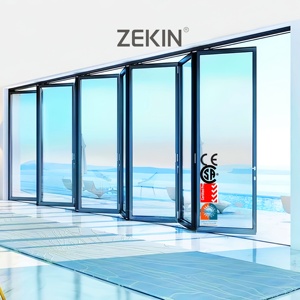
Customized Double Tempered Glass Bi-fold Doors Accordion Hurricane Proof Folding Door
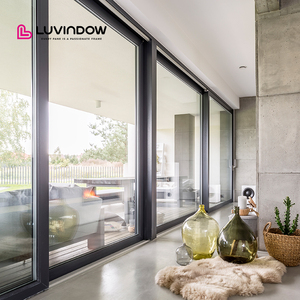
Luvindow Hurricane Impact Thermal Break Exterior Patio Sliding Doors Low E Tempered
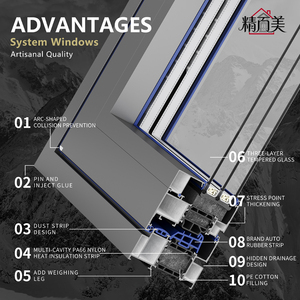
Powder Coated Customized Factory Direct Weatherproof Corrosion Resistant Villa Window
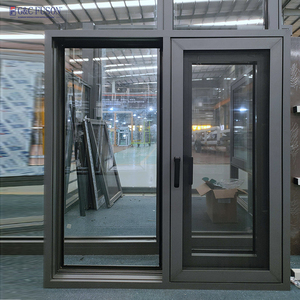
Fuson Thermal Break Double Glazing French Window Triple Glazed Casement House Windows
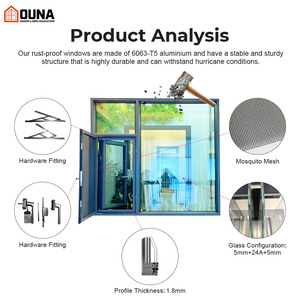
OUNA Villa Project Thermal Break Insulated Soundproof Double Glazed Casement Windows
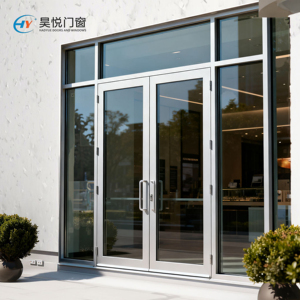
High Quality Customized Double Aluminum Alloy Glass Door French Entrance Door
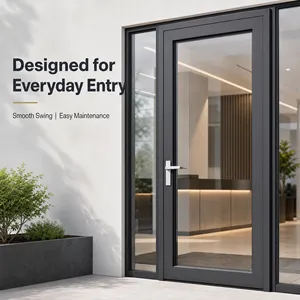
Energy Saving Waterproof Double Glazed Swing Casement Door Modern Interior Door
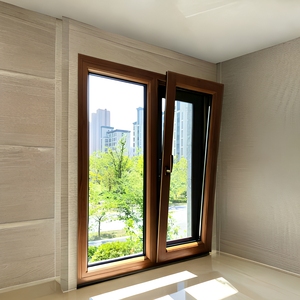
Aluminum Wood Triple Glazed Custom Waterproof Tilt Turn Windows for Modern Houses
Guangdong Fenestration Cluster & Enterprise Capacity
Headquartered in Shishan Town, Nanhai District, Foshan City—the epicenter of global aluminium extrusion—our state-of-the-art manufacturing infrastructure eliminates intermediary margins, ensures strict dimensional tolerances, and provides verified structural accountability.
Full-cycle extrusion, CNC machining, automated anodizing, and assembly workshops.
Including 45+ structural facade engineers and dedicated Fenestration QA specialists.
CE, ISO 9001, AS2047, and UL fire-rated credentials verified by third-party labs.
Delivering to Tier-1 developers across North America, Australia, Europe, and the Middle East.
Factory-Direct Engineering from Guangdong Dejiyoupin Doors and Windows Co., Ltd. (DERCHI)
Global architectural procurement requires absolute predictability. Operating as a recognized industry benchmark among the Top 10 Fenestration Brands in China, DERCHI couples vast capital investment with rigorous quality assurance protocols. Our automated production line minimizes human variance through 5-axis German elumatec CNC milling centers, robotic corner-crimping units, and computer-controlled dual-component silicone glazing robots.
By controlling the entire process from primary 6063-T5/T6 virgin billet extrusion to multi-cavity PA66GF25 thermal barrier assembly, our facilities produce architectural systems that achieve exceptional performance metrics: water penetration resistance up to 700 Pa, ultimate design wind pressures exceeding 4500 Pa (equivalent to Category 5 hurricanes), and acoustic dampening across critical low-frequency bands up to 45 dB Rw+Ctr.

Engineering Specification & International Standards Matrix
Compare core physical performance thresholds between standard commercial aluminum doors/windows and our certified high-performance architectural fenestration platforms.
| Performance Indicator | Standard Commercial Grade | DERCHI Architectural Series | Test Methodology / Standard | Regulatory Compliance |
|---|---|---|---|---|
| Aluminium Alloy & Temper | Recycled 6063-T5 (Wall: 1.2–1.4mm) | Primary Virgin 6063-T6 (Wall: 2.0–3.5mm) | ASTM B221 / GB 5237.1 | Structural Tier 1 |
| Overall U-Factor (Uw) | 3.2 – 4.5 W/(m²·K) (High Thermal Bridge) | 0.8 – 1.4 W/(m²·K) (Triple Low-E + Argon) | ISO 10077-2 / NFRC 100 | Passivhaus Ready |
| Thermal Isolator Tech | PVC / Polyurethane Pour-and-Debridge | Polyamide PA66GF25 Reinforced (24–39mm) | DIN 16941 / ASTM D638 | Zero Delamination |
| Air Infiltration Rate | > 1.5 m³/(h·m) @ 100 Pa | < 0.1 m³/(h·m) @ 100 Pa (EPDM Multi-Lip) | ASTM E283 / AS 4420.4 | Class 4 Airtightness |
| Water Tightness Under Static Load | 150 – 300 Pa | 600 – 900 Pa (Step-Drainage Chambers) | ASTM E331 / EN 12208 | Class E900 Water Safe |
| Wind Pressure Resistance (Safety) | 1500 – 2500 Pa (Serviceable) | Up to 4800 Pa (Design Wind Pressure) | ASTM E330 / AS 2047 (N6) | Miami-Dade Hurricane |
| Acoustic Performance (STC/Rw) | Rw 25–28 dB (Standard Double Glass) | Rw 38–46 dB (PVB/SGP Acoustic Glazing) | ISO 10140 / ASTM E90 | Airport Soundproof |
| Surface Treatment Longevity | Standard Anodized (10–12μm) | AkzoNobel / PPG PVDF Triple Coat (≥40μm) | AAMA 2605 / Qualicoat Class 3 | 30-Year Coastal Warranty |
Global Procurement Trends: What Major EPCs & Developers Are Buying
Strategic fenestration sourcing is shifting rapidly from low-cost component acquisition to comprehensive, certified, and risk-hedged façade packages.
Total Cost of Ownership (TCO) Over Initial Unit Price
Global developers are replacing cheap, thermally broken systems with ultra-performance façades that yield verifiable energy savings. Specifiers recognize that substandard thermal strips and poor gasket seals lead to rapid condensation, mold litigation, and HVAC degradation.
By securing direct factory procurement with audited Chinese manufacturers capable of supplying NFRC and Passivhaus-verified assemblies, EPC contractors decrease long-term building envelope maintenance expenses by up to 34% over a 25-year structural lifecycle.
Consolidated "One-Stop Envelope" Façade Contracts
Dividing contracts between separate window fabricators, door manufacturers, pivot gate craftsmen, and curtain wall subcontractors introduces dangerous interface misalignments. The trend has shifted heavily toward unified procurement packages.
Leading sourcing hubs like Foshan allow international project managers to bundle ultra-oversized cast aluminium pivot entry doors, heavy-duty lift-and-slide doors, and custom wood-aluminium casements within a single production and shipping schedule, unifying hardware warranties and color matching.
Rigorous Third-Party Factory Audits & Digital Traceability
Procurement teams are moving away from middlemen trading houses in favor of verified source manufacturers offering immersive digital audits and live material tracking. Enterprise factories now supply barcoded raw material certificates tracing virgin aluminum billets back to the smelter.
Furthermore, cloud-based VR inspections and real-time laboratory tracking empower engineering teams in Sydney, London, or Dubai to witness hydrostatic chamber testing and corner weld stress tests before container crating.
Architectural Engineering Trends Shaping 2026–2030
Explore the structural, metallurgical, and mechatronic breakthroughs redefining how modern aluminum doors and windows interact with contemporary luxury architecture.
Hyper-Slim Sightlines with Structural Glass Integration
Minimalist architecture demands the elimination of heavy visual framework. Next-generation systems leverage hidden sash technology and structural silicon bonding, shrinking visible frame sightlines to as narrow as 18mm while supporting glass panels weighing in excess of 800 kilograms.
By employing high-yield 6063-T6 or 6061 aerospace-grade alloys with embedded structural carbon fibers, these narrow frames effortlessly endure excessive wind shear pressures while maximizing daylight factor (DF) ratings.
Smart Building Automation & Concealed Motorization
The contemporary villa entrance is no longer purely mechanical. Top-tier luxury pivot gates and expansive multi-slide patio systems now integrate brushless German 24V DC drive systems concealed completely within the top jamb or underground lintel.
Equipped with biometric fingerprint scanners, encrypted smartphone BLE mesh control, and automatic air-tight drop seals that compress upon electronic locking, these fenestration platforms fuse military-grade perimeter defense with effortless barrier-free access.
Low-Carbon Recycled Billets & Passive Aerogel Insulation
In response to international Carbon Border Adjustment Mechanisms (CBAM), top-tier Chinese extruders are replacing fossil-fueled smelter ingots with hydro-powered green aluminum, slashing embodied carbon from 16kg CO2/kg to under 4kg CO2/kg.
Concurrently, multi-cavity thermal break chambers are now injected with silica aerogels or high-density EPS foam insulative cores, driving whole-window Uw ratings down toward 0.75 W/(m²·K) for extreme desert or sub-zero climates.
B2B Procurement & Engineering FAQ
Direct answers to the critical engineering, shipping, certification, and risk mitigation questions raised by commercial contractors, quantity surveyors, and project developers.
How do top Chinese factories guarantee dimensional accuracy on multi-story, bespoke architectural schedules?
Prior to packaging, complete full-scale trial assemblies are erected in our test bays. Frame diagonals, corner crimp integrity, gasket compression ratios, and sash travel friction are physically verified and certified by our quality control department, with full video reporting provided to overseas clients before crate closure.
What are the key differences between AS2047, NFRC, and CE certifications for aluminum windows?
- Australian AS 2047: Focuses heavily on extreme cyclonic deflection, structural wind load (serviceability and ultimate limit states, up to N6 / 4400 Pa), and static water resistance under high positive and negative pressures (AS 4420).
- North American NFRC / AAMA: Places deep emphasis on whole-window thermal dynamics (U-factor, Solar Heat Gain Coefficient SHGC, Visible Transmittance VT) along with air infiltration ASTM E283 and forced entry resistance. Florida hurricane zones further demand ASTM E1886/E1996 missile impact verification.
- European CE (EN 14351-1): Synthesizes thermal transmittance (EN ISO 10077), air permeability (EN 12207), water tightness (EN 12208), and hazardous substance testing.
How are fragile oversized glass assemblies protected during ocean transit against salt mist and moisture?
- All frame extrusions are masked with 80μm low-tack protective film to prevent abrasions.
- Double- and triple-glazed insulated glass units (IGUs) are separated by high-density EVA shock pads and desiccated vacuum polyethylene wrapping.
- Units are secured within heavy-duty, fully enclosed ISPM 15 fumigation-free solid plywood crates reinforced with hot-dip galvanized steel corner brackets and internal foam cushioning.
- Crates are strapped inside shipping containers utilizing industrial polyester lashing belts and air bags to eliminate dynamic shifts during heavy sea conditions.
What hardware suppliers are utilized, and how is hardware corrosion prevented in coastal environments?
Can Chinese factories engineer thermal break profiles that withstand 50°C desert or -30°C arctic extremes?
What documentation and shop drawings are submitted for structural consultant and authority sign-off?
Partner Directly with China's Premier Fenestration Engineering Group
Eliminate broker markups, mitigate site risk, and secure certified high-performance aluminium window and door systems directly from our 180,000㎡ Foshan production facility. Send your architectural schedules, CAD elevations, or tender documents to receive an engineer-reviewed commercial quote and shop drawing package within 24 hours.
Contact Us