Precision Fenestration & Architectural Sliding Assemblies
Explore precision-extruded aluminum sliding windows, heavy-duty lift-slide patio doors, acoustic vertical sashes, and high-security multi-track fenestration certified to AS 2047, CE, ISO 9001, and NFRC parameters.
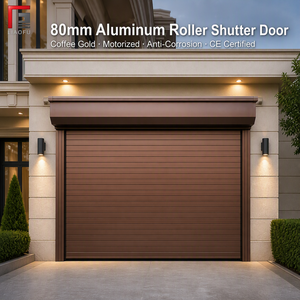
80mm Aluminium Roller Shutter Door Low Headroom Drum
- 6063-T5 High-Tensile Double-Walled Slats
- Compact overhead drum mechanism for tight headers
- Wind Resistance: Class 4 verified
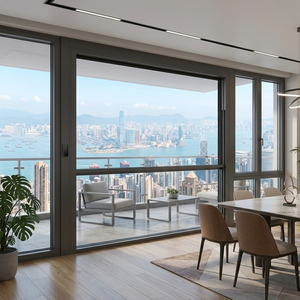
NFRC Motorized Vertical Sliding Hurricane Balcony Windows
- Guillotine structural motorized sash travel
- Laminated hurricane-impact safety glazing
- Maximum unobstructed ventilation ratios
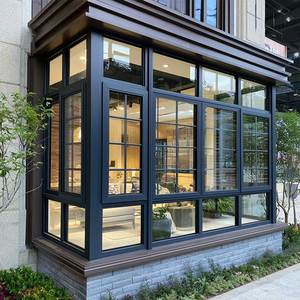
French Style Custom Double Tempered Aluminum Bay Windows
- Polyamide PA66 GF25 thermal isolation barrier
- Argon gas filled insulated double-glazing
- High-definition architectural perimeter sashes
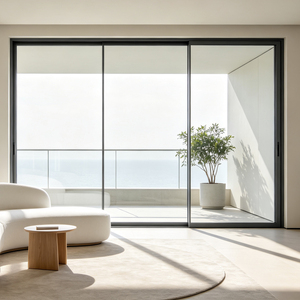
Double Glazed Windproof Sealed Aluminum Glass Sliding Door
- Anti-condensation isobaric drainage chambers
- Heavy-load tandem stainless steel bogie rollers
- Continuous vulcanized EPDM compression seals
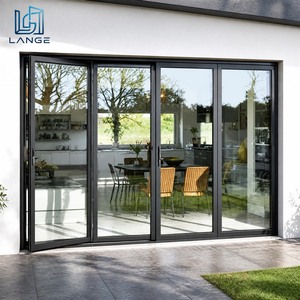
LANGE Wood Grain Transfer Coated Weather-Proof Exterior Door
- Sublimated thermosetting wood-grain finishes
- Non-fading UV coating for 50°C solar radiation
- Marine-grade corrosion resistant alloy substrate
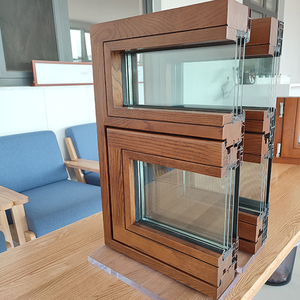
High-Grade Soundproof Aluminum Clad Tilt & Turn Fenestration
- Architectural timber core paired with exterior alloy
- Multi-axis European concealed hardware gears
- Triple-gasket barrier against street noise intrusion
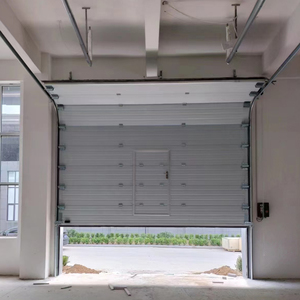
Modern Design Residential Sectional Overhead Door Systems
- Polyurethane high-density core thermal insulation
- Anti-finger-pinch safe articulated hinge layout
- Industrial-grade silent guide rail tracks
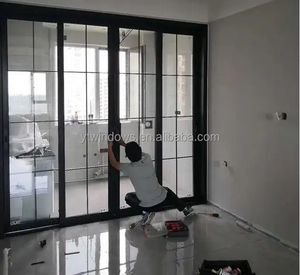
5 Tracks Aluminium Double Tempered Glass Multi-Slide System
- Multi-panel telescopic sliding configuration
- Integrated stainless steel low-profile threshold
- Heavy sash capacity accommodating 400kg per panel
Top 10 Global Aluminum Sliding Window Manufacturers & Exporters
A systematic, objective engineering analysis of tier-1 manufacturers leading the fenestration industry in structural stability, thermal coefficient performance (U-Value), and cross-border supply chain resilience.
| Manufacturer | HQ / Manufacturing | Core System Strengths | Key Testing & Certifications | Primary Global Markets |
|---|---|---|---|---|
| DERCHI (Guangdong Dejiyoupin) | Foshan, China (180,000㎡ Base) | Custom structural slide-fold, hurricane-rated sliding systems, integrated thermal breaks | AS 2047 N6, CE, ISO 9001, UL Fire-Rated, 30+ Patents | Middle East (GCC), USA, Canada, Australia, Southeast Asia |
| Schüco International | Bielefeld, Germany | Ultra-minimalist panorama design, high-end automated sliding systems | DIN EN 14351-1, Passive House Institute (PHI), CE | Europe, North America, Global Tier-1 Commercial |
| Reynaers Aluminium | Duffel, Belgium | Hi-Finity slim sightline sliders, heavy-duty lift-slide patio doors | Qualicoat, ISO 14001, CE, Cradle to Cradle Certified | European Union, UK, North America |
| YKK AP Inc. | Tokyo, Japan | Seismic-resistant fenestration, commercial curtain wall sliding sashes | JIS A 4702, AAMA/WDMA/CSA 101/I.S.2/A440, ISO 9001 | East Asia, North America, Southeast Asia |
| Kawneer (Arconic) | Norcross, GA, USA | Severe traffic architectural sliding windows, blast & hurricane mitigation | AAMA Verified Component, NFRC, Miami-Dade NOA | North America, UK, Middle East Commercial |
| Technal (Hydro Group) | Toulouse, France | Hydro CIRCAL 75R low-carbon recycled aluminum, thermal multi-track sliders | Qualanod, ISO 9001, NF Certifications, CE | Southern Europe, Middle East, Latin America |
| Alumil Systems | Kilkis, Greece | Supreme minimalist sliding typologies, submerged floor tracks | IFT Rosenheim, CE, ISO 9001, AAMA Compliant | Balkans, Middle East, Eastern Europe |
| Cortizo Fenestration | Padrón, Spain | Cor Vision minimal pocket sliding systems, thermal acoustic barriers | CE, AENOR, Qualicoat Seaside, ISO 9001 | Europe, Latin America, Caribbean Resorts |
| Wicona | Ulm, Germany | WICSLIDE motorized building management integration, high wind loading resistance | DIN EN 12207, PHI Certified, ISO 14001 | Central Europe, Scandinavia, Asia-Pacific |
| Western Window Systems | Phoenix, AZ, USA | Multi-slide and pocket moving glass walls for large residential openings | AAMA / NFRC, Title 24 California Compliance | North America Residential, Luxury Hospitality |
When evaluating aluminum sliding window manufacturers, commercial real estate developers, structural facade consultants, and general contractors must look beyond surface aesthetics. Modern fenestration engineering centers on four critical pillars: moment of inertia (Ix/Iy) profile rigidity to withstand excessive wind loading pressures, polyamide thermal isolation integrity to prevent building envelope energy transmission, multi-point locking kinematics to secure against forced entry, and micro-level metallurgical coatings capable of surviving harsh coastal, desert, or industrial microclimates.
In this competitive field, manufacturers like DERCHI (Guangdong Dejiyoupin) have transformed global procurement dynamics. By combining European-standard automated extrusion tolerances with a comprehensive 180,000㎡ industrial manufacturing complex in Foshan, DERCHI delivers architectural sliding solutions that equal German and Belgian engineering benchmarks while achieving significant cost and delivery advantages for projects across the Middle East, North America, and Australia.
Engineering Architecture of High-Performance Sliding Sashes
Delivering low U-factors, airtight acoustic isolation, and decades of seamless operation requires meticulous integration of mechanical components, metallurgy, and glazing physics.
Alloy Extrusion & Temper
Fabricated using 6063-T5 and structural 6063-T6 aluminum alloys with minimum wall thicknesses of 1.8mm to 3.0mm. Profiles undergo multi-cavity isobaric chamber extrusion ensuring extreme torsional stability and resistance to cyclic deflection under hurricane wind pressures exceeding 4.5 kPa.
PA66 GF25 Thermal Barriers
Thermal breaks utilize 24mm to 34mm fiberglass-reinforced Polyamide (PA66 GF25) strips crimped mechanically between interior and exterior aluminum sub-frames. This prevents conductive bridge transfer, cutting overall fenestration U-values down to ≤ 1.3 W/m²·K while mitigating indoor condensation.
Heavy-Duty Rollers & Tracks
Outfitted with precision needle-bearing SUS316 stainless steel bogie tandem rollers rated for sash weights over 400 kg. Monorail, dual, and triple tracks incorporate cold-drawn stainless steel capping rails to ensure smooth, low-friction gliding tested beyond 100,000 operation cycles.
Sealing & Isobaric Drainage
Multi-barrier EPDM vulcanized co-extruded synthetic rubber gaskets eliminate draft leakage (Air Permeability: Class 4 according to EN 12207). Stepped, hidden drainage weep holes maintain internal isobaric equalization, stopping driving rain infiltration at pressures up to 900 Pa (Class E900).
Future Procurement & Technological Trends in Fenestration
How architectural demand, net-zero regulations, and automated smart-home ecosystems are rewriting the global specification criteria for commercial and luxury residential projects.
Ultra-Narrow Sightlines & Concealed Frames
Architects are driving interlock widths down from conventional 45mm profiles to ultra-slim 18mm-22mm sightlines. Structural sub-sills, outer frames, and vertical mullions are fully recessed into floors, ceilings, and side jambs, delivering true floor-to-ceiling glass exposure without compromising wind resistance.
Integrated BMS & Automated Actuation
Brushless DC motors, linear electromagnetic drives, and concealed electric locks are replacing manual latches in luxury buildings. Next-generation systems integrate directly with KNX, BACnet, and Matter protocols, enabling automated natural cross-ventilation, sensor-driven rain retract, and building climate optimization.
Vacuum Insulated Glass (VIG) Synergy
Traditional triple-glazing adds significant weight to large sliding leaves, putting stress on mechanical rollers. The fenestration sector is rapidly transitioning toward hybrid tempered Vacuum Insulated Glass (VIG). VIG delivers center-of-glass U-values of 0.60 W/m²·K in an ultra-slim 8.3mm profile, reducing sash deadweight by up to 50%.
Low-Carbon Recycled Aluminum Procurement
Corporate ESG commitments and international carbon border adjustment mechanisms (CBAM) make embodied carbon a key tender metric. Leading suppliers now offer independently verified low-carbon aluminum billets produced using certified renewable hydroelectric power, keeping embodied carbon below 4.0 kg CO&sub2; per kg of aluminum.
Guangdong Dejiyoupin (DERCHI): Engineered for Extreme Climates
Founded in Foshan, Guangdong—the global manufacturing capital for architectural aluminum—Guangdong Dejiyoupin Doors and Windows Co., Ltd. (DERCHI) has spent more than 25 years engineering high-performance fenestration for demanding real-world installations.
From coastal sea-spray environments in the United Arab Emirates and Saudi Arabia to hurricane-impact zones in North America and cyclonic regions in Northern Australia, DERCHI products are structurally certified to handle temperature swings from -20°C up to +50°C without mechanical binding, thermal warping, or finish breakdown.

Frequently Asked Questions for Sourcing & Engineering Teams
Clear, definitive technical answers addressing code compliance, sea-transit protection, structural sizing limits, and customized shop-drawing approvals.
How do thermally broken aluminum windows prevent heat gain in 50°C climates?
Aluminum has high natural thermal conductivity (approx. 200 W/m·K). A thermal break separates the extrusion into exterior and interior structural profiles connected by low-conductivity PA66 polyamide reinforced with 25% glass fiber (0.3 W/m·K). Combined with argon-filled low-E insulated glass units (IGUs), this stops outdoor solar heat transfer, keeps interior surfaces comfortable, and lowers air conditioning loads by up to 35%.
What testing standard certifies hurricane-wind resistance?
Depending on project jurisdiction, we test to Australian standard AS 2047 (reaching cyclonic ratings up to N6 / 4500 Pa deflection pressure), American AAMA/WDMA/CSA 101/I.S.2/A440 with ASTM E1886/E1996 missile impact tests, and European EN 12210 (Class C5). Every test report specifies design wind pressure (DP), structural deflection, and water infiltration resistance.
How are aluminum finishes protected against sea-salt pitting in coastal regions?
For sea-front projects in Dubai, Miami, Sydney, or Manila, we apply certified Qualicoat Seaside Class 2 architectural powder coatings or 3-coat 70% Kynar 500 / Hylar 5000 PVDF fluorocarbon coatings (AAMA 2605 compliant). These undergo 4,000-hour neutral salt-spray (ASTM B117) and cyclic corrosion evaluations to verify resistance to pitting, chalking, and blistering.
What packaging standards prevent glass micro-fractures during export shipping?
Export units are sealed in IP65 protective PE stretch wrap, wrapped with heavy-density pearl cotton corner guards, and enclosed in heat-treated ISPM-15 compliant plywood crates. Crates use structural bottom skids for forklift handling and interior silica desiccant bags to prevent moisture staining during open-ocean transit.
Can DERCHI produce custom extrusion dies for bespoke architectural projects?
Yes. In addition to our catalog of over 400 standard architectural systems, our engineering tooling department designs and cuts bespoke extrusion dies for developments requiring unique mullion geometries, pocket frame profiles, or specialized curtain-wall returns. Tooling samples can be extruded and verified within 14 working days.
What is the typical production timeline from CAD sign-off to container loading?
Upon consultant approval of detailed CAD/BIM shop drawings and hardware schedules, typical factory manufacturing takes 25 to 35 calendar days depending on batch quantities and specialized glass sourcing (e.g., curved glass or custom solar tints). Pre-shipment video audits and coordinate inspection reports are completed before dispatch.
Download the Comprehensive Fenestration Technical Guide
Access our complete product portfolio, CAD section details, acoustic and thermal test certificates, and structural calculation tools for your upcoming project submittals.