180,000㎡
Smart Manufacturing Base
25+
Years Industry Engineering
30+
Patented Fenestration Designs
8+
Global Tier-1 Certifications
Architectural Precision
Engineered Fenestration & Opening Assemblies
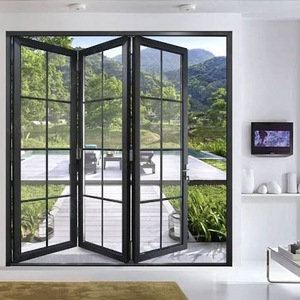
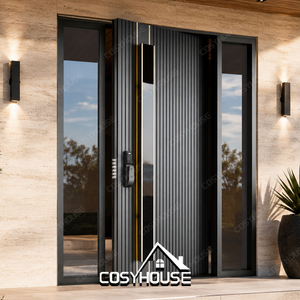
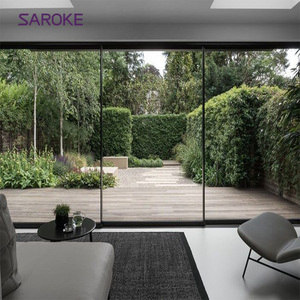
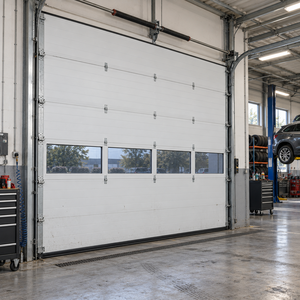
Explore commercial and high-end residential fenestration systems manufactured with precision CNC profile milling, multi-point locking security, and thermal barrier integrations engineered for extreme climates.
Technical Deep-Dive
Engineering Principles of Heavy-Duty Aluminum Hopper Windows
In modern industrial and multi-unit residential architecture, aluminum hopper windows (bottom-hung, inward-opening fenestration units) have transitioned from simple basement exhaust ports into mission-critical components for controlled envelope aerodynamics, natural smoke and heat exhaust ventilation (SHEV), and enhanced building energy retention.
When engineering high-grade aluminum hopper profiles, primary structural considerations center around gravity-assisted inward sash loading, hinge shear resistance, and dynamic negative wind load absorption. Unlike conventional casement or awning architectures, a bottom-hung hopper transfers the cumulative gravitational mass of insulated glazing units (IGUs) directly onto lower pivot hinges or continuous scissor-arm friction stays. This requires profile walls extruded from 6063-T6 or 6005-T5 architectural aluminum alloys with nominal web thicknesses exceeding 2.0 mm to resist torsional deflection under cyclic actuation.
Furthermore, air infiltration metrics govern real-world performance. Precision hopper designs incorporate co-extruded cellular EPDM perimeter gaskets combined with continuous multi-point peripheral gear locks. When the top-mounted latch draws the sash into compression against the frame, equalized chamber pressure prevents drafting, wind-driven moisture ingress, and thermal bridging.
Manufacturing Excellence
Guangdong Dejiyoupin (DERCHI): Precision Engineering at Industrial Scale
Recognized as an authoritative powerhouse among the Top 10 door and window manufacturers in China, DERCHI bridges the gap between massive manufacturing capacity and bespoke architectural engineering.
180,000㎡ Mega Production Base
Equipped with European 5-axis CNC profile machining centers, automated electrostatic powder coating lines, and computerized precision assembly bays located in Shishan Town, Foshan, Guangdong.
Global Climate Adaptability
Engineered for harsh environmental realities worldwide, from high-salinity coastal fronts and 50°C GCC desert summers to sub-zero North American freeze-thaw cycles without profile deformation.
Certified Global Compliance
Holding 8+ major international quality marks including CE, ISO 9001, AS 2047 (N6 cyclone rating), and UL-classified fire resistance systems backed by over 30 design and invention patents.
Comparative Procurement Matrix
Top 10 Aluminum Hopper Windows Manufacturers: Worldwide Evaluation
A data-backed comparative audit of the world’s foremost fenestration manufacturers specializing in thermal-break hopper and bottom-hung architectural solutions.
| Manufacturer | HQ / Region | Core System Specialization | Thermal Break Tech | Standard Certification | Project Tier Focus |
|---|---|---|---|---|---|
| DERCHI (Dejiyoupin) | Foshan, China | Heavy-Duty Aluminum Hoppers & Entry Pivot Systems | PA66 GF25 Isobaric Insulation | CE, AS 2047 N6, ISO 9001, UL | Global Commercial & Luxury Residential |
| Schüco International | Bielefeld, Germany | Integrated Mechatronic & SHEV Bottom-Hung Units | Modular Polyamide Foam Inserts | EN 14351-1, Passive House cert. | High-Rise Corporate Institutional |
| Reynaers Aluminium | Duffel, Belgium | MasterLine 8 Inward-Opening Hoppers | High-Performance Tubular Bars | Qualicoat, CE, Cradle to Cradle | Architectural & Zero-Carbon Buildings |
| YKK AP America | Georgia, USA | YHC Commercial Blast-Resistant Hoppers | ThermaBond Plus® Pour and Debridge | AAMA / WDMA / CSA 101, Miami-Dade | Institutional, Healthcare & High-Security |
| Kawneer (Arconic) | Norcross, USA | Truncheon Commercial Vent Hoppers | Thermal barrier polymatrix | AAMA CW Tier, NFRC Certified | Commercial Curtain Wall Infill |
| Wicona (Hydro Group) | Ulm, Germany | WICLINE 75 EVO Concealed Hardware Hoppers | Hydro CIRCAL Recycled Aluminum | DIN EN Standards, Minergie | Circular Economy & Sustainable Developments |
| Alumil Systems | Kilkis, Greece | SMARTIA & SUPREME Tilt/Hopper series | Glass-fiber reinforced polyamides | IFT Rosenheim Certified, CE | Mediterranean, Middle East & Euro Res. |
| Superhouse Windows | Shanghai, China | Export-Grade Awning & Bottom-Hung Hoppers | Standard Dual Cavity Polybar | AS2047, CSA, CE | Mid-to-High Residential & Export Supply |
| Aluprof S.A. | Bielsko-Biała, Poland | MB-86 Folded & Inward Tilt Systems | Aero-Inserts with Silica Aerogels | CE, ATG, Qualanod | European Multi-Family & Commercial |
| Technal | Toulouse, France | SOLEAL Structural Glazed Concealed Hoppers | Continuous Double Thermal Web | NF, CE, ISO 14001 | Modernist Public Spaces & Hospitality |
Market Intelligence
Emerging Procurement & Architectural Engineering Trends
Strategic analysis for facade consultants, general contractors, and corporate specifiers planning projects over the 2026–2035 development cycles.
Automated SHEV & BMS Integration
Aluminum hopper windows are progressively specified with 24V linear spindle chain actuators directly connected to Centralized Building Management Systems. In commercial structures, these automated vents deliver timed night-purge cooling and act as primary certified smoke evacuators during fire conditions.
Structural Aerogel & Ultra-Low U-Values
With global green building codes (LEED v4.1, BREEAM, and Estidama) tightening maximum allowable heat gain/loss, future procurement mandates multi-cavity polyamides infused with silica aerogel. Glass packages are transitioning from double-glazed units to vacuum insulated glass (VIG) delivering overall U-factors below 0.85 W/(m²·K).
Concealed Hardware & Minimal Sightlines
The aesthetic demand for unobstructed sightlines has fueled the development of concealed hinges and flush-closing interior profiles. Modern bottom-hung hopper profiles hide friction hinges inside the profile rebate, safeguarding hardware from corrosive pollutants and delivering clean, minimalist architectural reveals.
Technical Q&A
Frequently Asked Questions on Aluminum Hopper Windows
In-depth responses to direct technical, structural, and procurement inquiries encountered by facade engineering teams.
What structural distinctions differentiate an aluminum hopper window from an awning window?
+
While both designs operate on horizontal axes, an aluminum hopper window is bottom-hinged and tilts inward into the building interior, whereas an awning window is top-hinged and swings outward. This inward tilting mechanism makes hoppers safe for high-rise installations, basements, and clerestory positions where outward projection is either prohibited by municipal safety codes or physically restricted by security grates, pathways, or curtain-wall external maintenance tracks.
How do thermal break polyamides prevent condensation on aluminum hopper frames?
+
Aluminum exhibits a high thermal conductivity rate (approx. 160–200 W/m·K). Without mitigation, indoor relative humidity condenses against cold indoor aluminum surfaces in winter, leading to structural rot and indoor air quality hazards. Thermally broken hopper profiles mechanically crimp low-conductivity Polyamide strips (PA66 reinforced with 25% glass fiber, ~0.3 W/m·K) between the interior and exterior aluminum extrusions, interrupting the thermal path and maintaining the interior aluminum frame above the dew point temperature.
Can large aluminum hopper windows accommodate acoustic laminate glass packages?
+
Yes. Heavy commercial hopper systems engineered by DERCHI accommodate glazing pockets up to 48 mm thick. This enables configurations incorporating asymmetrical laminated panes with acoustic PVB (polyvinyl butyral) or SGP (SentryGlas) interlayers (e.g., 6 mm Low-E + 16Ar + 4mm + 0.76 Acoustic PVB + 4mm). Paired with double or triple continuous vulcanized EPDM compression gaskets, sound transmission class ratings exceeding STC 42 can be achieved, ideal for airport corridors and busy transit thoroughfares.
What hardware maintenance is mandatory for bottom-hung hopper window systems?
+
Because bottom hinges absorb continuous shear and operational stress, standard protocols require biannual inspections of the 304 or 316-grade stainless steel scissor-arm travel limits, mechanical latch strike plates, and friction stay pivots. Hardware should be lubricated using non-resinous silicone or PTFE-based dry sprays. Gasket integrity must be audited for compression set or UV degradation to preserve baseline air permeability and water penetration resistance metrics (tested per ASTM E283/E331 or EN 12207/12208).
How does DERCHI ensure structural integrity during long-distance maritime export?
+
DERCHI implements industrial-grade export crating protocols. Every unit is shrink-wrapped with protective anti-scratch polyethylene film, corners are secured with vulcanized high-impact buffers, and the entire assembly is crated within fully enclosed, fumigated marine plywood cases lined with moisture-barrier desiccants. Crates are engineered to withstand ocean transit dynamic torque, container shifting, and high humidity throughout sea routes to the Middle East, Americas, Europe, and Australasia.
Ready to Engineer Your Project's Fenestration Schedule?
Submit your architectural elevations, door schedules, structural wind load targets, or acoustic specifications directly to our engineering department in Foshan. Receive complimentary structural calculations, custom shop drawings, and competitive direct-from-manufacturer quotations within 24 hours.
Get a Quote