High-Performance Aluminum Glazing & Crittall-Style Door Systems
Direct-from-manufacturer precision architectural systems engineered for commercial, luxury villa, and high-specification hospitality projects across North America, Europe, Australia, and the Middle East.
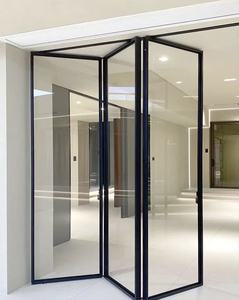
Minimalist Windproof Double Tempered Glass Folding Door
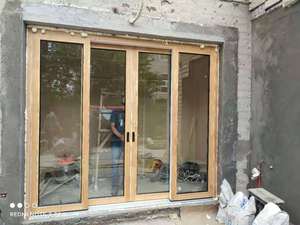
Luxury Villa Al-Clad Wood Anti-Deformation Lift Sliding Door
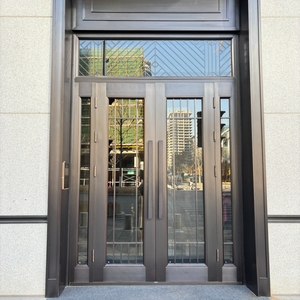
Top Grade Commercial Glass Aluminum Storefront Door
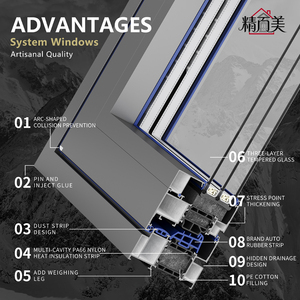
Customized Corrosion Resistant Weatherproof Villa Window
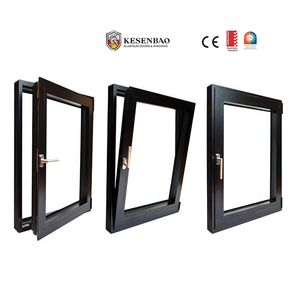
Modern Black Slim Frame French Casement Window & Door
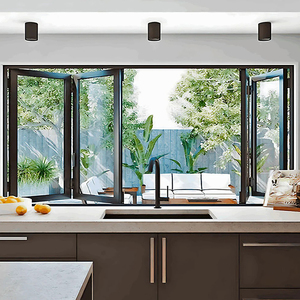
Commercial Tempered Glass Vertical Bifold Window & Door
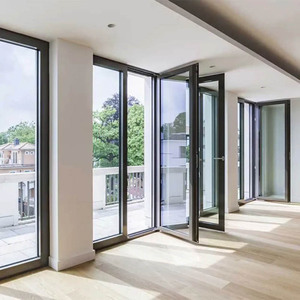
High-End European Design Waterproof French Style Glass Door
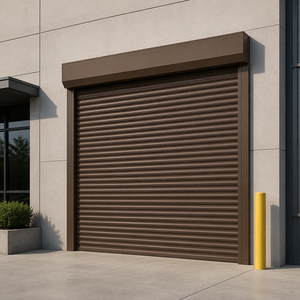
Custom Aluminum Roller Shutter Door & Window System
The Global Evolution of Aluminum Crittall Doors: Engineering Paradigm Shift
The iconic aesthetic of industrial steel fenestration, pioneered by Francis Crittall in Essex during the late 19th century, remains one of modern architecture's most enduring visual motifs. However, the architectural and building-envelope demands of the 21st century have catalyzed a profound technological transition. Traditional hot-rolled steel Crittall assemblies—while historically revered—suffer from systemic metallurgical liabilities: severe thermal bridging leading to interstitial condensation, substantial overall weight exceeding 45 kg/m² requiring costly structural sub-frame reinforcement, vulnerability to galvanic and atmospheric corrosion in coastal and high-humidity environments, and prohibitive fabrication lead times.
Modern extruded aluminum Crittall-style doors represent an engineering triumph over these historical constraints. By utilizing high-tensile 6063-T6 or 6060-T66 aluminum alloys coupled with multi-chambered polyamide thermal barriers (PA66 GF25 reinforced with 25% glass fiber), modern manufacturers replicate the razor-thin visual sightlines (as narrow as 20mm to 35mm mullions) while delivering U-values compliant with rigorous global energy standards (achieving Uw values below 1.2 W/m²K when paired with argon-filled low-emissivity double or triple insulated glazing units).
Core Structural Specifier Note: Leading architectural fenestration engineers specify 6063-T6 grade aluminum profiles with a minimum web thickness of 2.0mm to 3.0mm for exterior door leaves. This ensures that oversized steel-look doors (up to 3.8 meters in height) maintain exceptional deflection resistance (Class L/175 and L/250 under positive and negative wind pressures exceeding 3000 Pa), completely negating the structural sagging historically observed in non-thermal steel frames.
For international procurement directors, facade consultants, and general contractors overseeing high-end residential compounds, commercial hospitality projects, and adaptive-reuse developments, identifying verified, export-grade manufacturers capable of engineering precision-extruded, thermally broken Crittall profiles is paramount. This white paper establishes an exhaustive comparative matrix of the Top 10 Aluminum Crittall Doors Suppliers & Exporters, auditing their manufacturing ecosystems, engineering proficiencies, testing certifications, and international logistics resilience.
Top 10 Aluminum Crittall Doors Suppliers & Exporters Audited
Rigorous evaluation based on production scale, extrusion tolerances, thermal barrier integration, hardware interoperability, and international compliance (CE, AS2047, NFRC, ISO9001).
DERCHI (Guangdong Dejiyoupin)
Operates a massive 180,000m² intelligent production base with 600+ personnel. Premier exporter of bespoke thermally broken aluminum Crittall systems, oversized pivot doors, and certified hurricane-rated fenestration.
Smart Architectural Aluminium
Renowned for the Alitherm Heritage 47 system mimicking historical steel windows for conservation areas and retrofit heritage schemes across Europe.
Reynaers Aluminium
Global systems house engineered the SlimLine 38 (SL 38) series, delivering exceptional acoustic isolation and high-performance steel replica profiles.
Schüco International
Pinnacle of German engineering with the AWS 75 BS.SI system. Features concealed fittings and high thermal insulation for Passivhaus residential applications.
Origin Global
Specializes in bespoke aluminum bi-folding and French doors with internal heritage glazing bars and high-security 8-point locking mechanisms.
Cortizo Sistemas
Major European extruder featuring the COR Vision and Millennium Plus systems with integrated steel-look transoms and thermal barrier technology.
Alumil S.A.
Extensive manufacturer producing the SMARTIA series with industrial steel-look aesthetic, tailored for Mediterranean and high-solar coastal exposures.
Western Window Systems
Focuses on oversized luxury multi-slide and hinged doors with classic industrial grids for North American luxury estates and contemporary builds.
Technal (Hydro Building Systems)
Utilizes low-carbon CIRCAL 75R recycled aluminum billets to produce heritage SOLEAL minimal casement and hinged door configurations.
Jeld-Wen Fenestration
Mass-distribution supplier offering custom aluminum-clad and extruded industrial grids for commercial and residential multi-family projects.
Engineering Comparison: Aluminum Crittall vs. Traditional Steel Systems
For facade engineers and developers calculating structural loadings and thermal envelope calculations, the table below delineates the critical performance vectors separating modern extruded aluminum systems from hot-rolled and cold-formed steel alternatives.
| Performance Vector | DERCHI Extruded Aluminum Crittall | Traditional Hot-Rolled Steel | Cold-Formed Thin-Wall Steel |
|---|---|---|---|
| Thermal Break Technology | Multi-Chamber PA66 GF25 Polyamide (24mm–34mm) | Typically Solid (Non-Thermal) or Polyurethane Pour | Polyurethane or Cast Resin Strip |
| System U-Value (Uw) | 1.1 – 1.6 W/m²K (Low-E Double/Triple IGU) | 2.8 – 4.2 W/m²K (Severe Thermal Bridging) | 2.0 – 2.6 W/m²K |
| Weight per Square Metre | 18 – 26 kg/m² (Eliminates Heavy Sub-Frames) | 45 – 65 kg/m² (Requires Heavy Steel Lintels) | 32 – 48 kg/m² |
| Corrosion & Salt-Spray Class | Qualicoat Class 2 / Marine Anodized (1500h+ Salt Spray) | Prone to Oxidation; Requires Regular Recoating | Vulnerable at Internal Seams and Welds |
| Acoustic Isolation (Rw/STC) | Rw up to 43 dB (Laminated Acoustic Acoustic IGU) | Rw 28 – 34 dB (Single/Slim Double Glazing) | Rw 32 – 36 dB |
| Max Door Leaf Dimension | Up to 1.5m W × 3.8m H per leaf (Heavy-Duty Pivot) | Limited by hinge weight ratings and deflection | Limited by structural flexure under wind load |
| Hardware Integration | Concealed Multi-Point Euro-Groove & Magnetic Locks | Surface-Mounted Face-Bolts & Mortise Locks | Surface-Mounted or Standard Mortise |
Procurement Trends Shaping Aluminum Crittall Sourcing (2025–2030)
Architects, developers, and global supply chain executives must adapt to new regulatory, environmental, and technological benchmarks transforming architectural fenestration.
Decarbonization & Low-Carbon Aluminum Billets
Global procurement mandates increasingly mandate certified Environmental Product Declarations (EPDs). Specifiers are demanding hydro-powered, low-carbon aluminum extrusions with carbon footprints below 4.0 kg CO₂ per kg of billet, cutting embodied carbon across LEED and BREEAM Platinum developments.
Concealed Multi-Point & Pivot Automation
The traditional visible steel hinge is giving way to fully concealed heavy-duty hydraulic floor pivots and perimeter multi-point locking. Modern Crittall doors seamlessly conceal motorized self-closing dampers and 24V automation systems within head profiles, integrating directly into Crestron and KNX smart building networks.
True Divided Lite (TDL) vs. Structural SDL
Procurement teams are standardizing on High-Performance Simulated Divided Lite (SDL) systems featuring internal warm-edge spacer bars aligned precisely with exterior and interior aluminum astragals. This delivers authentic industrial depth while preserving uninterrupted glass panes for superior acoustic damping (Rw 42dB) and airtightness.
Technological Innovations in Precision Aluminum Crittall Fabrication
The manufacturing complexity of industrial-style multi-lite glazing stems from the structural challenge of intersection integrity. Where mullions and transoms intersect, traditional fabrication methods frequently suffered from micro-gaps, visible mechanical screw fixings, and finish degradation. Premier exporters have revolutionized this process through three primary technological innovations:
1. 5-Axis CNC Milling & Dual-Component Corner Crimping
Using German and Italian 5-axis CNC machining centers, profile ends are milled with micro-tolerances (+/- 0.1mm). Heavy aluminum cast corner cleats are inserted and injected with dual-component expanding polyurethane adhesive prior to hydraulic cold-crimping. This creates a hermetically sealed, rigid joint that prevents frame twisting over decades of heavy cyclic operation.
2. Qualicoat Class 2 & Fluoropolymer (PVDF) Architectural Coatings
Standard architectural powder coating fails rapidly when exposed to high ultraviolet radiation and marine airborne chlorides. Advanced Crittall door exporters employ multi-stage chemical pre-treatment baths (zirconium passivation) followed by electrostatic application of Qualicoat Class 2 super-durable powders or 3-coat Kynar 500 PVDF resins. This guarantees 25-year gloss retention, UV stability, and resistance to chalking under intense desert sun and coastal salt fog.
3. High-Performance Glass Packaging
The glazing package is central to meeting regional building codes. Leading fabricators provide comprehensive glass engineering: from 8mm SGCC-certified monolithic tempered panes for interior acoustic office partitions to 28mm–42mm double or triple insulated glazing units featuring acoustic PVB interlayer laminates, argon gas cavities, warm-edge composite spacers, and magnetron-sputtered Low-E coatings to achieve solar heat gain coefficients (SHGC) below 0.22 in cooling-dominated climates.
Guangdong Dejiyoupin Doors and Windows Co., Ltd. (DERCHI)
Recognized as one of the Top 10 High-End Door & Window Brands in China, DERCHI has spearheaded architectural fenestration excellence for over 25 years. Headquartered in Foshan's premier industrial cluster, our vertically integrated manufacturing facility produces luxury aluminum entry doors, oversized pivot assemblies, Crittall-style French doors, and specialized curtain wall systems engineered for extreme climatic resilience.


One-Stop Custom Sourcing
Streamline luxury project procurement across exterior Crittall doors, grand pivot entrances, cast aluminum villa gates, and motorized shutters from a single certified factory source.

Certified Global Compliance
Exhaustively tested and certified to Australian AS 2047 N6 (highest rating), European CE EN 14351-1, ISO 9001, and UL fire-rated standards for consultant sign-off.

BIM & Free CAD Shop Drawings
Our dedicated engineering department converts architectural concepts into detailed shop drawings, wind load calculations, and glass stress analyses within 24–48 hours.

Export Crating & Global Support
Steel-reinforced plywood export crating with moisture barriers. Dedicated English-speaking technical project managers align directly with your construction timelines.
Frequently Asked Questions for Aluminum Crittall Procurement
Authoritative engineering answers to technical inquiries frequently raised by architectural consultants, general contractors, and facade quantity surveyors.
What is the minimum visible sightline achievable on an exterior thermally broken aluminum Crittall door?
+
How do aluminum Crittall doors withstand coastal corrosion and extreme temperature swings (up to 50°C)?
+
What is the difference between True Divided Lites (TDL) and Simulated Divided Lites (SDL) in modern fenestration?
+
Can oversized aluminum Crittall doors be configured as heavy-duty pivot doors?
+
What export documentation, crating, and testing certifications are provided for overseas shipments?
+
How do lead times and project costs compare when importing directly from DERCHI versus local European or US fabricators?
+
Engineering Your Architectural Entrance with Absolute Precision
Submit your architectural elevations, door schedules, or project tender specifications directly to our senior facade engineering team. Receive complimentary CAD shop drawings, structural thermal modeling, and direct factory pricing within 24 hours.