Precision-Engineered Door & Fenestration Assemblies
Each system represents a synergistic hybrid of high-tensile 6063-T5/T6 structural aluminium framing and precision-milled interior solid wood profiles, configured to meet stringent international ASTM, CE, AS 2047, and UL fire rating standards.
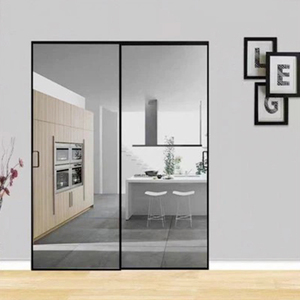
Trackless Aluminum Alloy Mosquito Net Sliding Glass Door System for Exterior Balcony Kitchen Patio Applications
- Barrier-free zero-threshold sill
- Integrated micro-mesh anti-insect screen
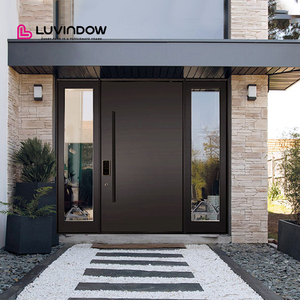
Modern Design Villas Black Profile Aluminum Frame Front Entry Pivoting Doors For Houses
- Heavy-duty hydraulic offset pivot hinge
- Multi-point mortise security locking core
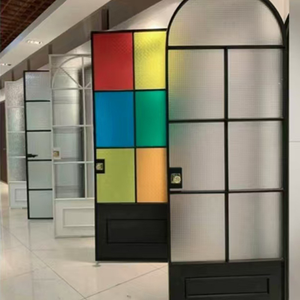
Arch Aluminum Casement Doors Interior Bathroom Kitchen Double Door Wrapped Modern Flush Glass Aluminum French Doors With Grilles
- Precision curved extrusion profiles
- Custom decorative internal grille bars
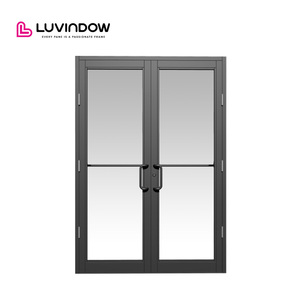
USA American Modern Design Storefront Door Commercial Kfc Double Glaze Swing Aluminium Door
- High-traffic 500,000 cycle hardware
- Double glazed tempered low-E argon unit
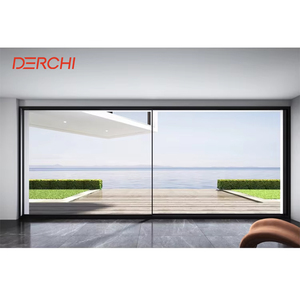
DERCHI Q9 Series High End Large Half View Ultra-narrow Aluminum Sliding Door Heavy Duty Big Panel Glass Door
- 16mm ultra-narrow interlocking stile
- Up to 400kg load-bearing roller carriage
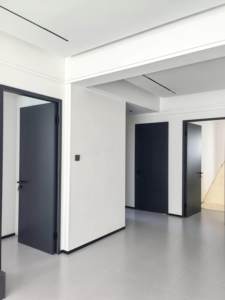
Extremely Narrow Aluminum-Wood Bedroom Door Moisture and Insect Resistant, Flat Exterior, Inward Opening Interior Door Set
- FSC-certified laminated timber core
- Acoustic magnetic latch & drop-seal
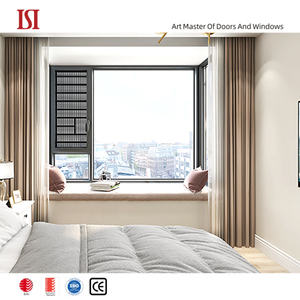
Top Brand Large Double Glass Casement Windows Custom Fixed Corner Swing Exterior Modern Powder Coating Color Families Picture
- Multi-cavity thermal break structure
- Triple-gasket EPDM continuous barrier
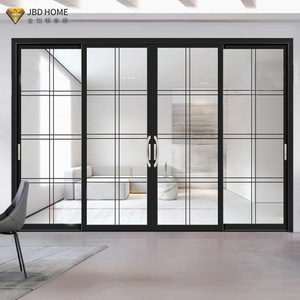
Modern Impact Resistant Thermal Insulation Aluminum Sliding Glass Door Windproof Villa Interior Customizable Sliding Glass Doors
- SGP laminated missile-impact glazing
- Structural wind load resistance ≥ 4500Pa
Technical Performance Criteria in Aluminium-Wood Door Systems
Aluminium-wood composite systems unite the external durability and climatic resilience of anodized/powder-coated structural aluminium alloys with the biological thermal insulation and luxury aesthetic of laminated interior hardwood. Our manufacturing protocols exceed key international testing metrics.
Passive house level thermal insulation with argon-filled triple insulating glass.
Multi-layer acoustic PVB interlayer blocking ambient urban and airport noise.
Certified for extreme wind pressure, structural deflection, and cyclic hurricane loads.
Heavy-duty European concealed pivot and hinge mechanisms tested to EN 1191.
| Evaluation Parameter | Tier 1 Export Standards (e.g. DERCHI) | Generic Commodity Manufacturers | Engineering Impact on Building Lifecycle |
|---|---|---|---|
| Aluminium Alloy & Temper | Primary 6063-T6 / 6060-T66 (Wall thickness ≥ 2.0-3.0mm) | Recycled billet, unregulated wall thickness (< 1.4mm) | Prevents torsion warping under severe wind pressure and high door weights. |
| Timber Lamination & Moisture | 3-layer radial rift-sawn finger-jointed timber, 8%-12% EMC | Single-slab solid unseasoned wood (> 18% EMC) | Eliminates internal grain stresses, splitting, cupping, and seasonal door binding. |
| Thermal Composite Coupling | Independent nylon float clips with dynamic expansion slip channels | Direct rigid screw fixing or low-grade adhesive bonding | Prevents thermal bimetallic deflection caused by differential material expansion. |
| Surface Protection System | AkzoNobel fluoropolymer PVDF / Class 20 Anodizing & Remmers waterborne finish | Standard single-coat decorative powder / solvent alkyd varnish | Resists 3,000+ hours neutral salt spray (ASTM B117) and intense solar UV radiation. |
| Weather Sealing Configuration | Continuous EPDM vulcanized co-extruded triple gasket rings | Porous PVC or discontinuous glued neoprene foam | Maintains airtightness (Class 4 EN 12207) and water resistance under driving rains. |
Top 10 Aluminium Wood Door Factories & Exporters: Comprehensive Industry Review
Specifying architectural fenestration for high-value residential, commercial hospitality, and institutional developments demands rigorous vetting of suppliers. The modern aluminium-wood door is not simply an aesthetic junction—it is an intricate thermodynamic and structural facade element. Below is an exhaustive overview of the global manufacturing landscape, evaluating the premier factories and exporters based on manufacturing infrastructure, engineering precision, certification credentials, and supply chain reliability.
1. DERCHI (Guangdong Dejiyoupin Co., Ltd.)
Headquartered in Foshan, China, DERCHI commands an expansive 180,000㎡ industrial manufacturing campus with over 600 skilled technicians. With more than 25 years of engineering provenance, DERCHI leads the sector in luxury architectural entry systems, massive motorized pivot doors, and aluminium-clad timber systems. Verified by AS 2047 (N6 class), CE, ISO 9001, and UL fire standards, the company serves luxury villa compounds across the GCC, North America, and Australia.
2. Internorm International GmbH (Austria)
A pioneering European titan in composite timber-aluminium fenestration, Internorm is renowned for ultra-low U-value I-tec glazing, automated locking, and integrated photovoltaic shading. Their Austrian operations set the global baseline for passive house architectural certification across high-latitude and alpine territories.
3. Schüco International KG (Germany)
Renowned globally for system engineering, Schüco provides sophisticated composite designs where custom interior timber skins interface with patented thermally broken aluminium framing. Their global exporter network delivers exceptional facade coherence for commercial and mega-residential projects.
4. Unilux GmbH (Germany)
Specializing in master-grade timber-aluminium patio sliding assemblies, casements, and majestic front entry doors. Unilux emphasizes sustainable forestry, utilizing engineered Siberian Larch, Oak, and Scots Pine married to heavy exterior architectural bronze and aluminium cladding.
5. Marvin Windows and Doors (United States)
A benchmark of North American custom millwork, Marvin manufactures premium wood-clad doors engineered to withstand Atlantic hurricane conditions and severe continental temperature swings. Their extruded aluminium exteriors exceed AAMA 2605 commercial finish requirements.
6. Pella Corporation (United States)
Celebrated for their architectural series of wood interior doors with protective aluminium exterior cladding. Pella’s proprietary EnduraClad finishes resist chalking and fading, while integrated between-the-glass blinds offer hygiene and acoustic optimization for institutional clients.
7. Andersen Windows & Doors (United States)
Their E-Series and Architectural Collection offer custom sizing down to 1/16th inch, integrating 50 exterior colors with interior woods like Cherry, Mahogany, and Walnut. Andersen’s automated supply chain provides streamlined project delivery across commercial sectors.
8. Reynaers Aluminium (Belgium)
A powerhouse in European sustainable building envelopes. Reynaers’ bespoke wood-clad hybrid variants focus on high structural inertia, massive vent heights (> 3.5m), and low environmental product declaration (EPD) lifecycle impacts.
9. Kneer-Südfenster (Germany)
Renowned for master-carpenter joinery blended with CNC industrial robotic precision. Kneer offers bespoke wood finishes treated with non-toxic, open-pore biological micro-coatings paired with exterior anodized aluminium for coastal applications.
10. Aluplast Composite Division (Germany/Poland)
Pioneering hybrid composite engineering, Aluplast combines reinforced aluminium outer shells with stabilized timber interior aesthetics. They serve high-volume multi-residential developments across Western and Eastern Europe with automated consistency.
Future Procurement Trends in Aluminium-Wood Door Manufacturing
The fenestration sector is experiencing fundamental structural transitions driven by climate extremes, smart infrastructure integration, and stringent green building decarbonization policies. Forward-thinking general contractors and facade consultants prioritize several strategic paradigms.
1. Dynamic Pivot Mechanics & Oversized Openings
Modern architectural blueprints increasingly dictate floor-to-ceiling heights exceeding 3.5 to 5.0 meters. Procurement is migrating away from standard lateral hinges toward concealed hydraulic floor springs and top pivots capable of supporting 600kg+ leaves with featherweight fingertip opening effort.
2. Hyper-Extreme Climate Engineering
Projects in the Middle East (UAE, Saudi Arabia, Qatar) face +50°C solar radiation on the exterior aluminium frame while the air-conditioned interior wood stays at 21°C. Modern systems utilize advanced PA66 GF25 thermal breaks and independent sliding clip mechanisms to absorb the substantial bimetallic expansion gap without profile deflection.
3. Biophilic Interior Engineering with FSC Traceability
Developers are seeking LEED and WELL building standard points. This trend enforces full custody chain certification for interior timber—utilizing responsibly harvested White Oak, American Black Walnut, and Teak treated with breathable, water-soluble European organic coatings that release zero VOCs into living spaces.
4. IoT Smart Building & Concealed Motorization
Next-generation luxury entry doors require seamless integration into home automation protocols (KNX, Zigbee, Control4). Concealed electromechanical multi-point locks, biometric recognition sensors embedded flush in pull handles, and automated perimeter air-drop seals are becoming essential technical specifications.

Why Global Builders & Engineering Contractors Rely on DERCHI
Recognized as one of China's Top 10 High-End Door & Window Brands, Guangdong Dejiyoupin Doors and Windows Co., Ltd. (DERCHI) operates on an industrial scale that bridges artisanal timber craftsmanship with aerospace-grade CNC aluminium processing.
- Over 25 Years of Fenestration Expertise: Deep engineering heritage delivering complex custom assemblies to the United States, Canada, Australia, the Philippines, and the GCC.
- Exhaustive International Certifications: Formally tested and audited under CE, ISO 9001, AS 2047 (N6 Cyclic Wind Rating), and UL Fire Standards with 100+ appearance and engineering patents.
- End-to-End In-House Supply Chain: Total control over billet extrusion, precision thermal-break assembly, 5-axis CNC timber milling, fluorocarbon powder application, and robotic glass lamination.
- Comprehensive Shop Drawings & Engineering Support: Dedicated bilingual structural engineering teams produce millimetre-accurate CAD/BIM shop drawings for consultant submittals within 24 hours.
Frequently Asked Questions for Commercial Buyers & Importers
Direct technical answers addressing the critical operational, engineering, and logistical concerns of project developers, facade consultants, and quantity surveyors.
How do aluminium-wood composite systems resolve the differential thermal expansion between metal and timber?
What timber species and curing standards are mandatory for international coastal and desert projects?
How does DERCHI ensure corrosion resistance for sea-front installations subject to salt spray?
Can large-format pivot doors achieve full wind and water tightness under cyclic storm loads?
What is the lead time, shipping logistics, and packaging protection for containerized ocean freight?
What project documents are required to obtain a binding structural shop drawing and cost quotation?
Request Technical Shop Drawings & Factory-Direct Quotations
Collaborate with DERCHI's fenestration engineers to optimize your architectural door schedules, specify climate-resilient composite materials, and secure certified, factory-direct pricing for your upcoming commercial or luxury residential projects.