Acoustic Swing
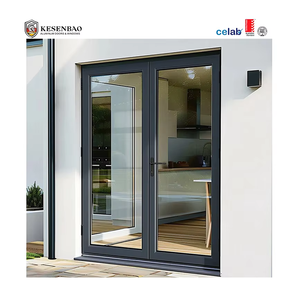
Soundproof Double Glass Aluminum Casement Door for Hospital & Medical Facilities
STC 40 dB
Double Glazed
Anti-Bacterial Seal
Precision-machined from architectural 6063-T5 and 6063-T6 virgin aluminum alloy billets. Optimized for commercial sound attenuation, structural coplanarity, anti-microbial healthcare protocols, and high-traffic interior durability.
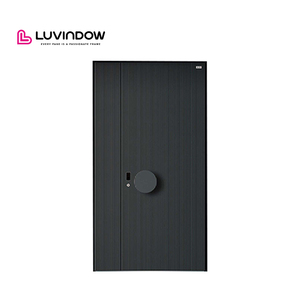
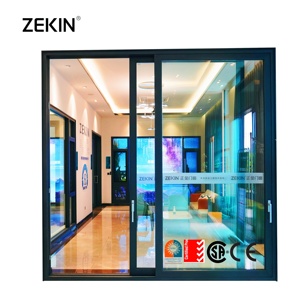
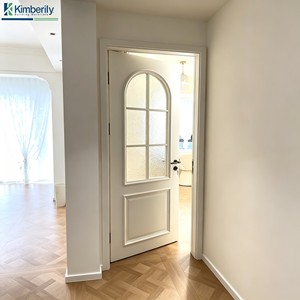
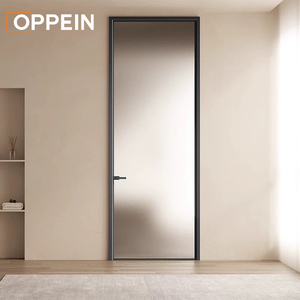
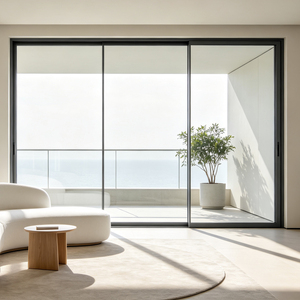
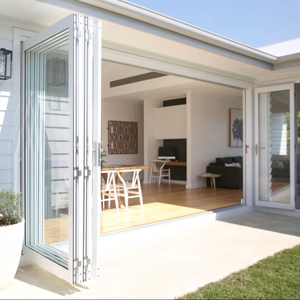
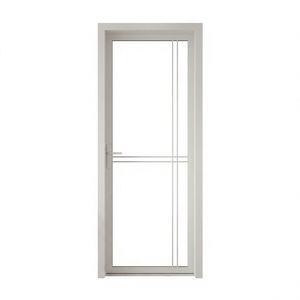
Modern interior architecture is undergoing a rapid transition from traditional organic substrate doors (solid timber, hollow-core MDF) to precision-extruded aluminium fenestration systems. Specifiers, general contractors, and developers require verifiable technical criteria to evaluate mechanical longevity, acoustic decibel damping, and dimensional stability.
Commercial interior doors require dimensional coplanarity over opening heights exceeding 3,000mm. Primary billet virgin aluminium (containing controlled magnesium 0.45–0.9% and silicon 0.2–0.6%) guarantees tensile strength (≥ 205 MPa for T6) preventing hinge sag, deflection under pressure differentials, and thermal distortion.
Interior doors endure continuous human friction, cleaning reagents, and UV degradation via interior windows. High-specification anodizing (≥ Class AA20 / 20–25μm) or fluorocarbon (PVDF) powder coatings compliant with AAMA 2604 guarantee pencil hardness of ≥ 2H, scratch resilience, and zero discoloration over 20-year cycles.
Acoustic privacy in conference facilities, executive offices, and luxury master suites is dictated by laboratory-tested Sound Transmission Class (STC) ratings. Dual-fin EPDM extruded gaskets, co-extruded magnetic latches, and automatic mechanical bottom drop-seals eliminate acoustic flanking paths, achieving ratings between STC 35 and STC 42.
An authoritative benchmark evaluating industrial fabrication capacities, patent portfolios, international compliance certificates (CE, AS2047, ISO9001), engineering tolerances, and export readiness for Tier-1 commercial projects.
| Manufacturer / Brand | HQ & Manufacturing Base | Production Footprint | Primary Alloys & Standards | Acoustic Damping Max | B2B / OEM Capability |
|---|---|---|---|---|---|
| 1 DERCHI (Guangdong Dejiyoupin) | Foshan, Guangdong, China | 180,000 m² (600+ Staff) | 6063-T5/T6; AS2047, CE, ISO9001, UL | STC 42 dB (Double Glazed) | Full Bespoke OEM/ODM, Free CAD Drawings |
| 2 Schüco International | Bielefeld, Germany | Decentralized Licensed Network | EN AW-6060; DIN EN 12207, CE | STC 44 dB | Architectural Specification Only (High Cost) |
| 3 Reynaers Aluminium | Duffel, Belgium | Centralized Europe & Global Hubs | Alloy 6060; ISO 14001, CE Mark | STC 41 dB | Strict Partner Fabricator Network |
| 4 Alumil Systems | Kilkis, Greece | 12 Industrial Facilities Europe | AlMgSi0.5; IFT Rosenheim Tested | STC 39 dB | Standardized Interior Commercial Partitions |
| 5 OPPEIN Home Group | Guangzhou, China | Over 500,000 m² (Integrated) | 6063-T5; Residential Grade Interior | STC 34 dB | Mass Residential Modular Assembly |
| 6 YKK AP Architectural Products | Tokyo, Japan | Multinational Automated Plants | JIS H4100 / AAMA Compliant | STC 38 dB | High Standardized Volume Commercial |
| 7 Xingfa Aluminium | Foshan, Guangdong, China | Extrusion Megabase Complex | GB 5237, ISO9001, Qualicoat | STC 36 dB | Bulk Raw Extrusion & Assembled Systems |
| 8 Cortizo Architectural Systems | Padrón, Spain | 9 Extrusion Production Centers | EN AW-6063; Qualanod Certified | STC 40 dB | European Commercial Distribution |
| 9 Technal (Hydro Group) | Toulouse, France | Global Hydro Extrusion Plants | Low-Carbon Recycled CIRCAL 75R | STC 41 dB | Sustainable Green Building Specification |
| 10 LIXIL Building Systems | Tokyo, Japan | Asia-Pacific Regional Factories | JIS Standard Aluminium Alloy | STC 35 dB | Modular Hospitality & Residential Projects |
Headquartered in the global aluminium capital of Nanhai, Foshan, DERCHI operates a massive 180,000 m² integrated intelligent fabrication facility. Backed by 25+ years of German-calibrated fabrication standards and over 100 invention patents and certifications (including Australian AS 2047, European CE, ISO 9001, and North American UL fire ratings), DERCHI leads the international OEM/ODM sector. Their internal engineering wing produces custom sub-frame extrusions, ultra-narrow sightlines (16mm minimal frames), integrated acoustic double-glazed systems, and heavy-duty concealed pivots capable of supporting 200kg single-leaf interior swing doors with zero deflection.
Renowned as the European benchmark for architectural envelope and internal partition systems. Schüco's interior systems feature modular hardware cavities, integrated concealed door closers, and compatibility with complex Building Management Systems (BMS). While representing gold-standard engineering, procurement lead times and high licensing premiums often lead global contractors to deploy factory-direct tier-1 fabricators like DERCHI for value-engineered custom specifications.
Specializing in high-performance architectural systems, Reynaers focuses on minimalist aesthetics with their interior flush swing and pivot doors. Their products integrate concealed hinges and magnetic flush latches. Their distribution model relies primarily on authorized downstream fabricators, which introduces variance in regional assembly precision unless managed under strict central QA audits.
Located in Shishan Town, Nanhai District, Foshan, Guangdong Dejiyoupin Doors and Windows Co., Ltd. represents the peak of Chinese high-end fenestration manufacturing. Serving luxury hospitality, high-end residential estates, and commercial towers across the Middle East, North America, Australia, and Europe.
Equipped with high-precision 5-axis CNC machining centers, fully automated German Elumatec corner crimping systems, dust-free insulated glass assembly lines, and high-volume electrostatic powder coating tunnels. Every interior door leaf is test-hung on factory calibrators to verify latch engagement, acoustic seal compression, and micron-level squareness before crating in reinforced export-grade plywood containers.



Architectural requirements for interior partitions are moving rapidly toward ultra-slim sightlines, seamless ceiling integration, acoustic isolation, and smart access automation.
The global commercial and luxury residential market has pivoted sharply away from bulky 65mm styles. Current engineering mandates high-tensile 6063-T6 alloy frames with sightlines down to 16mm–18mm that accommodate tempered laminated safety glass while retaining torsional rigidity up to 3200mm ceiling heights.
Modern interior design relies on doors that blend seamlessly with gypsum, marble, or timber wall paneling. Extruded aluminium hidden sub-frames (two-piece pre-installation frames) allow dry-wall plastering directly to the jamb profile, achieving seamless zero-reveal architectural coplanarity.
Aluminium inside doors are evolving beyond simple glass inserts. Leading manufacturers now bond lightweight extruded aluminium internal skeletons with ultra-thin porcelain slabs, fluted architectural glass, anodized bronze liquid metals, and Italian carbon fiber sheets to achieve bespoke decorative tactile warmth without warping.
Supply-chain risk mitigation, BIM digital integration, and pre-hung modularization are transforming how global developers procure interior door packages.
On-site carpentry and manual lock mortising are obsolete due to escalating job-site labor costs in Europe, the GCC, and North America. Procurement now favors 100% factory pre-hung assemblies where frames, 3D adjustable concealed hinges, magnetic locks, and glass are pre-fitted at the factory, cutting job-site installation times by 65%.
Architects require LOD 300 to LOD 400 BIM objects early in the design stage. Sourcing decisions favor manufacturers that supply fully parameterized digital families with exact rough opening clearances, thermal performance parameters, and acoustic data embedded directly into Autodesk Revit schedules.
Commercial developers are bypassing regional distributors to eliminate 30–45% markups. By establishing direct contracts with certified super-factories like DERCHI, developers gain dedicated English-speaking project engineering teams, rapid custom CAD shop drawings, and guaranteed container-level QA traceability.
Authoritative answers to the most common engineering, acoustic, and logistical questions encountered during commercial aluminium inside door tenders.
Traditional wood and engineered timber products (HDF/MDF) possess organic hygroscopic structures that expand, warp, and host mold when exposed to relative humidity fluctuations above 60% (common in tropical regions, coastal projects, spas, and hospital wet areas). Extruded aluminium (Alloy 6063) features zero water absorption, zero swelling, zero VOC emissions, and complete structural immutability under severe temperature/moisture gradients. When coated with Qualicoat-certified powder coatings or Class AA25 anodizing, aluminium doors deliver a maintenance-free service life exceeding 25 years without delamination or finish peeling.
Yes. Acoustic performance in aluminium inside doors is achieved through engineered damping rather than mass alone. DERCHI utilizes multi-chambered internal profiles fitted with heavy multi-layer EPDM cellular rubber gaskets along the perimeter rebates. Glazing units utilize acoustic PVB (polyvinyl butyral) or SGP laminated safety glass (e.g., 5mm + 0.76mm acoustic PVB + 5mm). At the bottom threshold, an automatic mechanical drop-down seal engages automatically when the door closes against the jamb, completely closing the undercut acoustic gap and delivering verified acoustic damping from STC 38 up to STC 42 dB.
Concealed flush-wall aluminium frames require strict rough opening tolerances of ±3mm plumb and square across vertical and horizontal planes. Specifiers should incorporate a two-piece aluminium sub-frame system: the primary structural base frame is mechanically fastened to the masonry or steel-stud opening prior to plasterboard or dry-wall installation. Once finishing coats, wall claddings, or paint are completed, the finished decorative casing and door leaf are secured using 3D-adjustable internal cam screws, ensuring perfect 2.5mm perimeter visual reveals without exposed fixings.
Quality protection begins at the extrusion line. All anodized or PVDF-coated surfaces receive a co-extruded, low-tack protective polymer film that remains in place throughout CNC machining, assembly, and on-site construction. Finished doors are individually wrapped in 5-layer shock-absorbing pearl foam, sealed with moisture-barrier polyethylene wrap, protected with high-density corrugated edge protectors, and secured within fumigated custom plywood crates engineered with internal steel reinforcing bands. Crates are loaded using dedicated container ramp dollies to prevent forklift punctures during maritime transit.
Upon receipt of your architectural door schedule and floor plans, DERCHI's in-house engineering team generates complete 2D/3D CAD shop drawings within 24 to 48 hours for consultant approval. Following sign-off and prototype approval (if required), standard mass production for a 200–500 unit custom interior door package requires 25 to 30 calendar days at our 180,000 m² Foshan facility. Pre-hung factory assembly and comprehensive multi-station quality inspections (verifying latch alignment, anodizing thickness, and squareness) are completed prior to export crating.
Connect directly with our senior fenestration engineering department. Submit your architectural elevations, rough opening schedules, or acoustic requirements for custom CAD shop drawings, formal price tenders, and certified sample kits.