Impact Rated
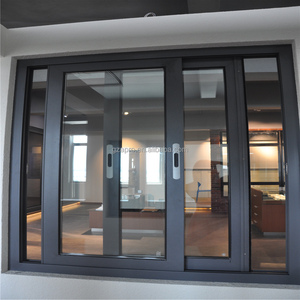
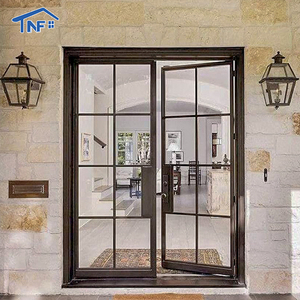
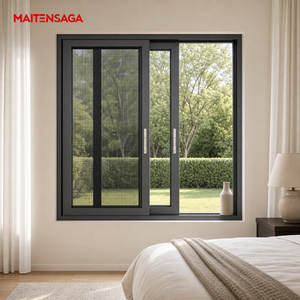
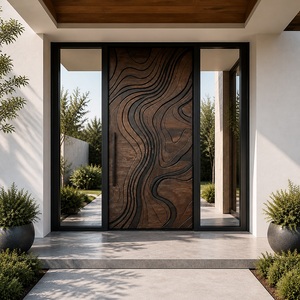
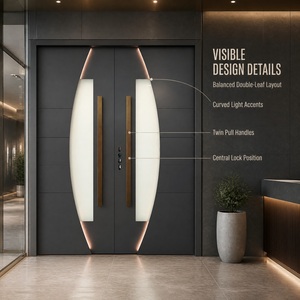
Architects, project engineers, and developers seeking heritage aesthetics demand slim sightlines, structural integrity, and multi-point atmospheric performance. Explore our premier exported architectural systems.
Intelligent Manufacturing Base
Specialized Engineers & Artisans
International Patents & Testing Certs
Export Destination Countries
Historic architectural renovation and contemporary industrial-modern design frequently converge on a single design language: the slender-profile steel-look fenestration system, historically associated with 19th-century Crittall metalwork. However, legacy carbon-steel profiles present severe thermal transmission vulnerabilities (condensation bridging, thermal conductance λ ≈ 50 W/m·K) and susceptibility to oxidation in marine or high-humidity regions.
A comprehensive assessment protocol applied by European, American, and Gulf Cooperation Council (GCC) developers to evaluate Chinese extrusion and manufacturing authority.
Top-tier heritage doors integrate technoform PA66 GF25 polyamide bars engineered with multi-chamber cross-sections. This prevents thermal conduction bridging across the inner and outer aluminium skins, eliminating internal condensation during humid summers or freezing winters without fattening the visible exterior sightline.
Export leaders machine internal glazing pockets capable of supporting double-glazed (5mm+12A+5mm) or triple-glazed acoustic laminates (up to 42mm total depth). Through acoustic PVB interlayers and warm-edge swisspacers, sound reduction indexes reach Rw 38dB to 44dB, isolating bustling urban noise.
Direct export factories utilize virgin primary aluminium ingots meeting ASTM B221 specifications. Extrusion profiles feature minimum 2.0mm to 3.0mm primary wall thickness for doors, guaranteeing wind-load resistance exceeding 3000 Pa (equivalent to Category 5 hurricane wind loads).
Standard architectural powder coating degrades under intense ultraviolet radiation within 36 months. Top exporters mandate AkzoNobel or PPG fluorocarbon (PVDF) electrostatic finishing or Qualicoat Class 2 super-durable architectural powder, providing a minimum 20-year colorfastness and sand-abrasion warranty.
Slender heritage doors require precise European standard hardware grooves (Eurorack 15/20mm). Top factories equip doors with multi-point perimeter gear locking systems from Siegenia, Roto Frank, or custom precision stainless steel concealed pivot hinges that prevent sash drooping over decades of continuous operation.
True export authority is certified by test evidence rather than self-declaration. Verified manufacturing entities maintain accredited test certificates across ISO 9001 quality systems, Australian AS 2047 / AS 1288, North American NFRC / AAMA, CE EN 14351-1, and UL 10C positive pressure fire tests.
A side-by-side technical specification matrix informing architectural tender schedules and value engineering evaluations.
| Performance Characteristic | Traditional Wrought Steel | Standard Non-Thermal Aluminium | Engineered Thermal Break Aluminium |
|---|---|---|---|
| Average U-Value (W/m²·K) | 4.5 – 5.8 (High heat gain/loss) | 3.8 – 4.5 (Moderate conductance) | 1.2 – 1.8 (Passivhaus Capable) |
| Corrosion & Saline Resistance | Poor; requires frequent painting | Moderate; standard mill finish | Excellent (Qualicoat Class 2 / PVDF) |
| Structural Sightline (Frame+Sash) | Ultra-slim (28mm – 36mm) | Medium (55mm – 75mm) | Slimline Heritage (32mm – 45mm) |
| Total Structural Weight Load | Heavy (~7.85 g/cm³); requires steel lintels | Light (~2.70 g/cm³) | Optimized (~2.70 g/cm³); Smooth Operation |
| Glazing Adaptability | Restricted to single or thin double glass | Standard double glazing (up to 24mm) | Triple Acoustic/Low-E up to 42mm |
| Air Tightness (ASTM E283) | Low; prone to thermal bowing | Medium; single brush seals | Class 4 / DP70 with Multi-Layer EPDM |
| Total Lifecycle Sourcing Cost | High initial cost & ongoing upkeep | Low initial; high energy losses | Optimal ROI; 30+ Year Maintenance-Free |

Recognized as one of China's top tier-1 luxury door and window manufacturers, Guangdong Dejiyoupin Doors and Windows Co., Ltd. (DERCHI) operates an expansive 180,000㎡ industrial smart manufacturing campus in Foshan, Guangdong—the world's epicentre of advanced architectural aluminium processing.
With 25+ years of fenestration craftsmanship and engineering mastery, DERCHI serves international architects, commercial contractors, and luxury private developers across North America, the Middle East (UAE, Saudi Arabia, Qatar), Australia, and Europe.
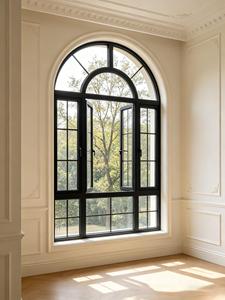
Custom heritage grid designs, arched profiles, true-divided light (TDL) or simulated divided light (SDL) muntins tailored to project elevations.
Engineered to withstand 50°C GCC desert summers, salt-spray coastal humidity, and extreme alpine freezing without profile warping.
Multi-layered protective film, desiccant bags, corner guards, and heat-treated non-fumigation reinforced plywood export crates.
Over a quarter-century of on-time project execution spanning high-end resorts, private villa compounds, and civic landmark restorations.
The global luxury door and window sector is undergoing profound technological transitions driven by net-zero building regulations and high-end residential demand.
European and American developers are demanding verified Environmental Product Declarations (EPDs). Leading exporters are shifting toward recycled green aluminium smelted with renewable hydro-power, slashing embodied carbon from 16.7 kg CO₂/kg aluminium down to under 4.0 kg CO₂/kg profile.
Traditional heritage doors were burdened by external rim locks. The future of heritage doors blends classic multipaned grilles with concealed magnetic contacts, motorized multi-point latching, and seamless biometric/smart-home access control integrated invisibly within the door stile.
Emerging vacuum insulated glass (VIG) technology provides Ug values as low as 0.4 W/m²·K in an 8.3mm profile thickness. This enables aluminium heritage doors to achieve the razor-thin sightlines of historic single glazing while outperforming standard triple-glazed walls in thermal insulation.
Luxury villa entrances in California, Dubai, and Sydney increasingly demand monumental pivot heritage doors exceeding 4 meters in height and 2 meters in width. Heavy-duty concealed oil-bath floor springs ensure effortless fingertip actuation regardless of 400kg+ leaf weights.
Historic preservation commissions in the UK and USA strictly scrutinize heritage grid profiles. Top factories supply True Divided Light (TDL) with individual glass units, or engineered Simulated Divided Light (SDL) featuring internal duplex spacer bars matching exterior putty-line profiles.
International procurement friction has been minimized through high-definition 360° VR interactive factory tours and real-time CNC milestone tracking, enabling European and American general contractors to audit tolerances and finishes prior to crating.
Authoritative answers addressing technical specifications, overseas logistics, performance testing, and warranty commitments.
Submit your door schedules, architectural elevations, or tender drawings directly to our senior fenestration engineering desk. Receive certified thermal calculations, CAD shop drawings, and competitive factory-direct export proposals within 24 hours.