The Structural Imperative for Grand-Format Architectural Openings
In modern luxury residential and high-traffic commercial architecture, oversized entryway and perimeter systems define structural identity. Engineering big aluminium entrance systems requires strict calculation of wind loads, thermal bridge disruption, floor-pivot deadweight capacity, and coastal corrosion resistance. Sourcing from premier manufacturers guarantees certified deflection performance and lifetime mechanical durability.
Engineered Aluminium Systems for Large Openings
Explore our structural portfolio engineered for large spans, severe wind shear resistance, superior U-value thermal retention, and long-term operating balance.
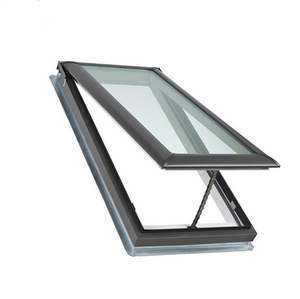
Aluminum Roof Skylight Window Frame Casement Sliding Window
Precision-extruded structural aluminium skylights designed with heavy-duty run-off channels, multi-point dual gaskets, and automated actuator compatibility.
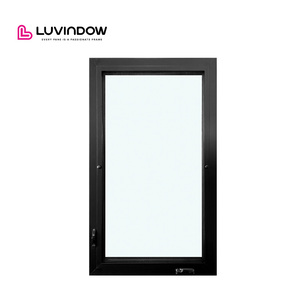
Quiet Living Long Term Durability Aluminum Crank Out Casement Windows
Dual-sealed perimeter compression with heavy stainless steel scissor gearing, reducing external ambient acoustic transfer by up to 42dB.
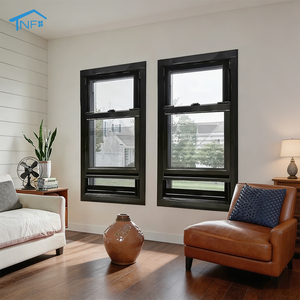
Normal Aluminium Profile Single Hung Window
Counterbalanced vertical movement sash engineered with 6063-T6 alloy for residential multi-unit housing and commercial facade schedules.
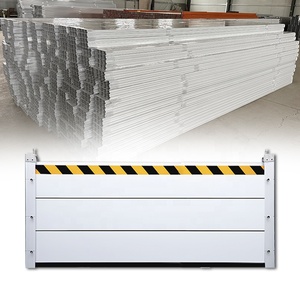
Removable Flood Control Barrier Door Aluminum Flood Barrier
Modular interlocking aluminium slats equipped with bottom hydrostatic compression seals to secure basement and wide perimeter garage spans against high-water ingress.
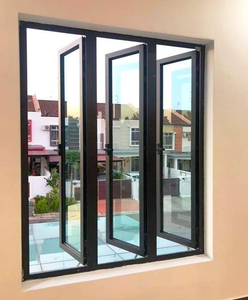
Custom Energy-Efficient Aluminum Casement Windows Wholesale
Multi-chamber thermal insulation core featuring structural polyamide struts that decouple exterior thermal swings from conditioned internal spaces.
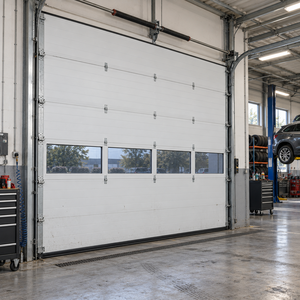
CE Certified Daylight-Enhancing Industrial Sectional Door
High-transparency panoramic aluminium profiles paired with impact-resistant polycarbonate panels, built for automotive display centers and wide workshops.
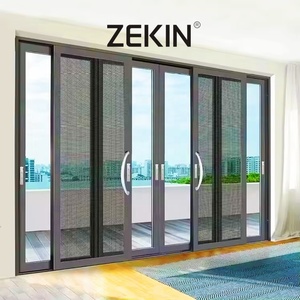
As2047 Double Glass Stacker Doors Exterior Sliding Doors
Multi-track architectural big-span sliding doors engineered for wide open-corner applications, complete with high-durability 316 stainless-steel roller bearings.
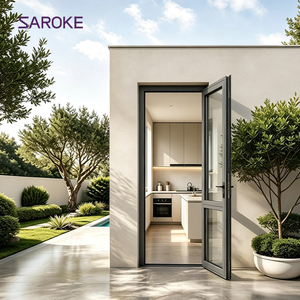
Aluminium Hurricane Proof Impact Casement Windows and Doors
Engineered to comply with Florida Building Code impact standards, featuring thick extruded structural aluminium walls and heavy SentryGlas interlayer composites.
Future Sourcing Trends for Aluminium Big Doors (2025–2030)
An analysis of architectural demand for structural portals, climate resistance, and supply-chain risk mitigation.
1. Monolithic Pivot Leaf Scaling
Architects are shifting away from traditional double doors in favor of oversized pivot leaves exceeding 3.5m in height and 2m in width. This shift demands precision-balanced ground concealed pivots with load limits above 800kg, requiring zero axial sag across seasonal temperature shifts.
2. Severe-Climate Thermal Integrity
Driven by strict energy codes (such as ASHRAE 90.1, Title 24, and GCC Estidama), modern pivot portals must prevent thermal bridging. Global projects now require structural polyamide barriers of at least 34mm, combined with multi-layer perimeter EPDM gas-strut drop seals that block desert sandstorms and extreme coastal humidity.
3. Architectural Hardening & Smart Access
Procurement specifications increasingly mandate motorized electromagnetic locking arrays with 7-point automatic deadbolts. These systems integrate smoothly into unified building management systems (BMS), utilizing biometric scanners and automated fail-secure mechanisms while maintaining clean, minimalist lines.
Engineering Comparison: Big Door Structural Material Systems
| Structural Parameter | Thermally Broken 6063-T6 Aluminium | Solid Cast Aluminium | 316 Marine Stainless Steel | Traditional Timber Big Door |
|---|---|---|---|---|
| Deadweight Load Ratio | Optimal (Low Pivot Wear) | Heavy (High Surface Rigidity) | Very Heavy (Requires Heavy Bearings) | Medium-High (Subject to Moisture Variance) |
| Thermal Expansion (Alpha) | Controlled via Multi-Chamber Breaks | Uniform (Requires Thermal Gap) | Moderate Dimensional Stability | Unstable (Warps at >45°C Gradients) |
| Coastal Resistance (C5-M) | High (Fluorocarbon PVDF Coated) | Exceptional (Passivated Inherent Alloy) | High (Requires Frequent Passivation) | Poor (Delaminates under high humidity) |
| Custom Relief & Monolithic Spans | Bespoke Extrusions to 6000mm | Artisan Geometric Casting Relief | Plate-Formed Fabrications | Laminated Joinery Spans |
Technological Evolution: From Standard Extrusions to Structural Portals
Over the past two decades, high-end big door engineering has shifted from standard reinforced profiles to advanced composite structures capable of handling high wind pressures and massive glass weights without bowing.
Anti-Bimetal Thermal Decoupling
Oversized doors facing intense sunlight develop significant thermal differentials: outer skins can reach up to 80°C while interiors stay at 22°C. Modern engineering solves this with sliding polyamide strips that allow outer aluminium profiles to expand independently, completely eliminating leaf deflection and air leaks.
Advanced Hydrostatic & Acoustic Sealing
Big doors often struggle to create an effective seal along their lower thresholds. Today's systems employ magnetic dual-drop mechanical seals and active pneumatics that activate upon closing, preventing water ingress even in wind-driven rain exceeding 600 Pa while keeping thresholds barrier-free.
Precision Automated CNC Assembly
Modern architectural big doors require precision fabrication. Advanced 5-axis CNC machining centers process extra-long aluminium profiles in a single pass, ensuring micrometer-accurate corner joints, perfectly flush lock housings, and balanced pivot hardware installations.

Guangdong Dejiyoupin Doors & Windows Co., Ltd. (DERCHI)
Ranked among the elite Top 10 door and window manufacturers in China, DERCHI brings over 25 years of engineering mastery to global architecture. Operating from an expansive modern facility in Foshan, Guangdong, we supply custom-built, code-compliant door systems to high-end developments worldwide.
- Integrated 180,000㎡ Production Base: Full control over raw material extrusion, CNC profile machining, robotic coating, casting, and multi-stage testing.
- Global Code Certifications: Fully certified under international standards including CE, ISO 9001, AS 2047 (N6 wind load rated), and UL fire-rating specifications.
- Turnkey Architectural Customization: In-house engineering teams produce comprehensive CAD shop drawings to match client schedules, opening sizes, and structural requirements.
- Severe Climate Durability: Systems tailored for intense UV, desert sandstorms, and coastal saltwater environments, proven across the GCC, North America, Australia, and the Philippines.
Frequently Asked Questions for Big Door Exporters
Key technical, logistical, and compliance considerations for international architects, facade engineers, and procurement teams sourcing large-scale aluminium openings.
Large aluminium doors resist wind loads through thick profile walls (2.5mm to 3.0mm) combined with high-grade alloys like 6063-T6 or 6005-T5. Interior multi-chamber configurations and internal steel-insert reinforcements prevent twisting. Finite element deflection modeling ensures the system stays well within L/175 or L/240 building codes under high wind pressures.
Doors weighing 500kg or more use commercial-grade bottom pivot assemblies with heavy-duty thrust needle bearings set into the concrete floor. This transfers the door's entire deadweight to the foundation slab, leaving the top pivot to handle only lateral loads. The assembly includes 3D alignment adjustments, built-in hydraulic damping, and concealed hold-open positioning.
Large doors are packed in reinforced, IPPC-compliant wooden crates built on integrated structural steel bases. Leaves are wrapped in surface protection films, padded with closed-cell EVA foam, and cushioned against shocks. Crates include desiccant bags, moisture barriers, and tilt/impact sensors to monitor handling throughout international transit.
Yes. By using advanced EPDM perimeter gaskets, dual-drop motorized floor sweeps, and multi-point locking systems that pull the sash tight against the frame, large aluminium doors reliably meet air infiltration (<0.1 cfm/ft²) and water resistance requirements (>600 Pa), compliant with AS 2047, NFRC, and CE standards.
Connect with Our Big Door Technical Engineering Office
Planning a luxury residence, commercial headquarters, or high-end villa development? Send us your elevation drawings, CAD door schedules, or performance requirements for a fast, comprehensive technical proposal.
Contact Us