Featured Architectural Systems & Glazing Assemblies
Engineered precisely in Foshan, China by Guangdong Dejiyoupin Doors and Windows Co., Ltd. (DERCHI). Built with certified structural 6063-T6 thermal break profiles, multi-cavity EPDM sealing, and insulated low-emissivity glass arrays for world-class residential and commercial builds.
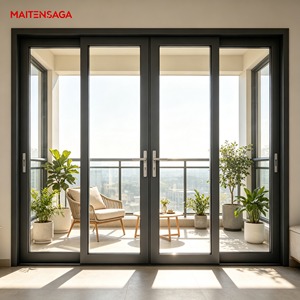
Aluminum Casement Window And Door System Custom Thermal Break Design
- Profile: 6063-T6 Polyamide PA66
- Sound Attenuation: STC 42 dB
- Finish: AkzoNobel Fluorocarbon
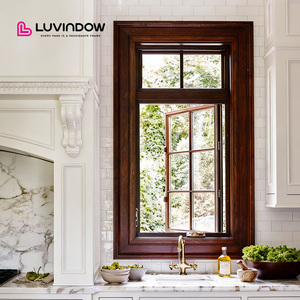
Wholesale Custom Triple Glazed Aluminum Wood Composite System
- Glazing: Triple Low-E Argon Filled
- Interior Timber: Oak / Walnut
- U-Value: ≤ 0.82 W/(m²·K)
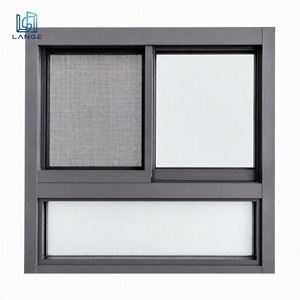
LANGE Double Glazed Low-E Aluminium Sliding Horizontal Glazing
- Heavy-duty Stainless 316 Rollers
- Corrosion Resistant: Marine Grade
- Interlock Stile: 22mm Ultra-Slim
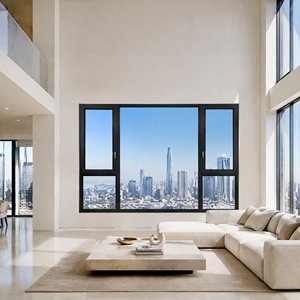
Modern Thermal Break Casement Window Flush Screen System
- Screen: 304 High-Tensile Steel
- Hardware: Siegenia / HOPPE
- Air Tightness: Class 4 (EN 12207)
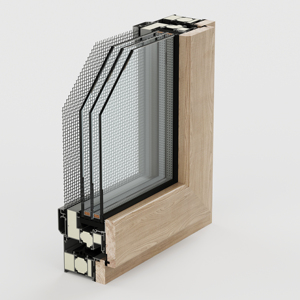
LEAWOD Wood-Aluminum Composite Smart Motorized Glazing
- Control: Zigbee / KNX / Tuya
- Hidden Electric Chain Actuator
- Wind & Rain Sensor Automatic
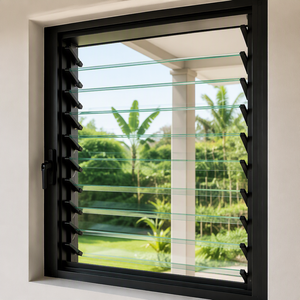
Adjustable Tempered Glass Louver Aluminum Window Architectural
- Blade: 6mm/8mm Tempered Frosted
- Continuous 0° to 90° Ventilation
- Mechanical Gearbox Operator
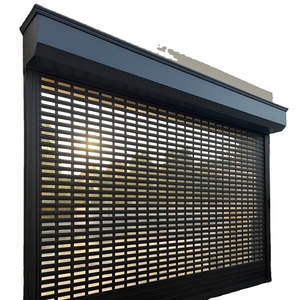
Outus Tambour Automatic Roller Shutter Door Microwave Sensor
- Motor: High-Torque DC Brushless
- Sensor: Microwave Radar Detection
- Extruded Slat: Double-Wall Alloy
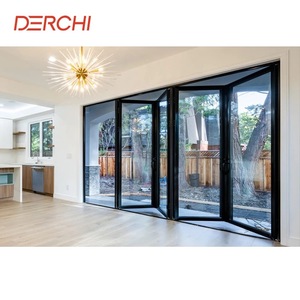
DERCHI AS2047 Modern Bi-fold Double Glass Exterior Folding Door
- Load Capacity: Up to 350kg/Panel
- Water Penetration: 450 Pa
- Flush Sill Track: Wheelchair ADA
Global Sourcing Matrix: Evaluating Top Aluminium & Glass Door Manufacturers
A technical roadmap for general contractors, architectural specifiers, and procurement officers navigating complex structural fenestration supply chains.
Modern architectural fenestration has evolved far beyond basic building enclosures. In contemporary high-performance construction, the exterior aluminium and glass door assembly is an active mechanical, structural, and thermodynamic barrier. Choosing the right partner from the multitude of international fabricators requires looking past standard trade brochures into the physics of material chemistry, thermal transference parameters, and cyclic structural endurance.
Whether sourcing ultra-large pivot entrances for luxury residential estates in Dubai and Riyadh, or supplying thousands of acoustic balcony sliders for multi-unit high-rise towers in Sydney, London, or Toronto, selecting a certified tier-1 manufacturer is paramount. Sub-par thermal breaks cause condensation and interior mold, while deficient structural interlocks result in severe deflection under cyclonic wind forces. This guide highlights the core engineering parameters used to evaluate leading global manufacturers.
The 10 Technical Pillars of Tier-1 Aluminium & Glass Door Suppliers
1. 6063-T6 Structural Billet Extrusion
Top fabricators melt and extrude virgin prime aluminium billets with controlled silicon and magnesium ratios, ensuring high tensile yield strength (≥ 160 MPa) and resistance to cyclic deflection under severe negative wind loads.
2. Polyamide PA66-GF25 Thermal Barriers
Eliminating thermal bridging demands glass-fiber reinforced polyamide strips (PA66-GF25) knurled and mechanically crimped within multi-chambered profiles, avoiding cheaper PVC substitutes that expand, loosen, and fail.
3. Surface Integrity & Salt Spray Resistance
Suppliers serving extreme coastal microclimates mandate Qualicoat Class 2 powder coatings or AAMA 2605 fluorocarbon (PVDF) finishes that withstand over 3,000 hours of continuous ASTM B117 salt spray exposure without blistering.
4. Hermetically Sealed Multi-Pane IGUs
Top factories maintain in-house automated robotic insulated glass unit (IGU) lines utilizing warm-edge composite spacers, secondary structural silicone seals, and automated 90%+ Argon gas filling to stop perimeter seal degradation.
5. Heavy-Duty European Hardware Kinematics
The operational lifespan of multi-slide and bi-fold doors hinges on running gear. Elite suppliers partner with Siegenia, HOPPE, or Roto, deploying precision-ground stainless steel bogie rollers tested to over 100,000 operational cycles.
6. Continuous Co-Extruded EPDM Gaskets
Superior weatherability relies on co-extruded EPDM (Ethylene Propylene Diene Monomer) gasket systems featuring vulcanized welded corners to eliminate air leakage paths and water entry under extreme dynamic pressure.
7. Third-Party Code Certifications
A legitimate global tier-1 factory holds accredited certificates for major target jurisdictions: AS 2047 (Australia), NFRC / AAMA (North America), CE / EN 14351-1 (Europe), and UL 10C fire door compliance for commercial lobbies.
8. 5-Axis CNC Precision Machining
Eliminating human fabrication errors requires integrated CAD-CAM pipelines and automated German 5-axis CNC machining centers that rout mortises, weep slots, and corner joint brackets down to 0.1mm dimensional tolerances.
9. In-House Pre-Assembly & Dry-Hang Testing
Top factories conduct 100% pre-assembly of oversized pivot systems and bi-folds before crating, validating mechanical clearances, squareness, and electronic latch alignment to stop costly site rework.
10. Maritime Export Crate Engineering
Ocean freight poses high risk of moisture damage and physical impact. World-class exporters use fully enclosed fumigated steel-reinforced wooden crates, desiccants, and shock-absorbing protective films.
| System Typology | Standard Thickness | Thermal Transmittance (U-Value) | Acoustic Rating (STC) | Structural Air/Water Compliance |
|---|---|---|---|---|
| Thermal Break Casement Door | 70mm – 85mm Profile | 1.2 – 1.6 W/(m²·K) | 38 – 44 dB | AS 2047 / CE EN 12208 (Class 9A) |
| Panoramic Minimalist Slider | 120mm – 160mm System | 1.4 – 1.8 W/(m²·K) | 35 – 40 dB | AAMA 101 DP 50 - 65 |
| Architectural Pivot Entrance | 80mm – 120mm Leaf | 1.1 – 1.5 W/(m²·K) | 40 – 45 dB | UL Fire Rated / Custom Wind Load |
| Heavy-Duty Folding / Bi-fold | 75mm – 90mm System | 1.3 – 1.7 W/(m²·K) | 36 – 42 dB | AS 2047 N6 Wind Certified |
Future Architectural Trends & Sourcing Outlook (2025–2035)
The architectural aluminium and glass landscape is shifting rapidly due to stricter global green building certifications (LEED Platinum, BREEAM Outstanding, Estidama Pearl, and Net-Zero Carbon codes). Developers and procurement teams must align specifications with these transformative trends:
1. Ultra-Low Carbon & Recycled Extrusion Feedstocks: Conventional primary aluminium smelting is carbon-intensive. Future procurement contracts increasingly mandate certified low-carbon aluminium produced using renewable hydroelectricity (yielding under 4.0 kg CO₂e per kg of Al) alongside closed-loop scrap recycling. Suppliers lacking Environmental Product Declarations (EPDs) will soon be excluded from institutional projects.
2. Vacuum Insulated Glass (VIG) Integration: While triple-glazing with argon has been standard for energy conservation, it adds significant weight to large door panels, placing extreme wear on hinges and rollers. The emergence of tempered Vacuum Insulated Glass achieves center-of-glass thermal resistance as low as U = 0.45 W/(m²·K) in a slim 8mm to 12mm profile, drastically reducing operating weight while enhancing thermal performance.
3. Invisible Mechatronic Automation & Biometric Building Integration: The line between traditional ironmongery and smart home networks is disappearing. Architects now routinely specify zero-sightline motorized track mechanisms concealed entirely within head jambs, complemented by biometric fingerprint scanners, facial recognition cameras, and automated motorized locks connected directly to BACnet or KNX commercial building control systems.
4. Extreme Weather & High-Deflection Resistance: Rising global temperatures, stronger typhoon seasons in the Asia-Pacific, and severe dust storms across the Arabian Gulf demand unprecedented performance. Suppliers must now provide finite element analysis (FEA) validating structural integrity against 5,000 Pa blast pressures and extreme coastal wind loads, while preserving tight air seals to prevent micro-fine sand infiltration.
Why Global Builders Standardize on DERCHI Factory Systems
Headquartered in Shishan Town, Foshan—the global manufacturing hub for structural architectural profiles—DERCHI represents the pinnacle of Chinese precision engineering, combining large-scale production capacity with exacting global compliance.
Parametric BIM & CAD Engineering
Our dedicated engineering department reviews architectural elevations, preparing verified structural shop drawings, wind load calculations, and anchor detailing within 24 hours.
Fully Integrated Manufacturing
Spanning 180,000㎡, our facility unifies precision CNC profile milling, robotic corner crimping, automated powder-coating lines, and robotic IGU lamination under one roof.
Rigorous Testing & Pre-Assembly
Every custom pivot and sliding array undergoes factory mock-up dry assembly, air leakage validation, and optical surface checks before packaging sign-off.
Global Logistics & On-Site Support
Delivered direct to major ports across North America, Europe, Australia, and the Middle East, with complete English documentation, CAD videos, and remote engineering guidance.
Frequently Asked Questions (FAQ)
Technical, structural, and commercial guidance addressing common challenges faced by international project teams sourcing aluminium and glass door systems.
What is the difference between standard non-thermal profiles and thermally broken aluminium systems?
Aluminium is an exceptional thermal conductor (thermal conductivity approximately 160-200 W/m·K). Standard non-thermal profiles transfer outdoor heat or cold directly into conditioned interior spaces, causing high cooling or heating expenses and severe indoor condensation.
Thermally broken profiles physically separate interior and exterior aluminium extrusions using structural, glass-fiber reinforced polyamide strips (PA66-GF25). This composite thermal barrier lowers the total system U-factor to as low as 1.1–1.6 W/(m²·K), preventing surface condensation, saving energy, and complying with modern building energy codes.
How do DERCHI door systems withstand coastal salt spray and 50°C summer conditions in the Middle East?
Extreme climates like the Arabian Gulf and coastal marine zones require specialized metallurgical and surface engineering:
1. Surface Finishes: We apply AkzoNobel fluorocarbon (PVDF) 3-coat finishes and marine-grade Qualicoat Class 2 architectural powders that undergo rigorous ASTM B117 salt spray tests, resisting UV fading and chalking under intense desert sun.
2. Thermal Stress Management: Multi-chamber profiles with reinforced polyamide strips ensure thermal stability up to 100°C without warping or delamination.
3. Sand & Dust Sealing: Heavy-duty, UV-stabilized continuous EPDM compression gaskets form multi-stage barrier seals that stop fine airborne sand and high-pressure dust penetration during seasonal shamal windstorms.
What international testing standards and certifications do your doors hold for Australian and North American projects?
DERCHI products are tested and certified to primary international fenestration standards, supporting smooth consultant review and municipal permitting:
• Australia: Fully certified to AS 2047-2014 and AS 1288, meeting extreme N6 design wind pressure classifications, cyclic water penetration standards, and air infiltration metrics.
• North America: Tested in compliance with AAMA/WDMA/CSA 101/I.S.2/A440 and NFRC thermal standards (U-Factor, Solar Heat Gain Coefficient SHGC, and Visible Transmittance VT).
• Europe: CE mark compliance under EN 14351-1, ISO 9001 quality manufacturing, and optional UL 10C positive pressure fire testing certification for select commercial pivot configurations.
Can DERCHI produce custom oversized pivot doors, and what hardware is utilized to prevent panel sagging?
Yes. We regularly engineer grand architectural pivot doors reaching heights of 4 to 6 meters and widths up to 2.5 meters. To ensure smooth operation and eliminate sagging over time:
1. We engineer heavy-gauge internal steel and aircraft-grade aluminium structural corner braces across the leaf framework.
2. We incorporate heavy-duty European bottom pivot hinges (such as FritsJurgens or German engineered hydraulic floor springs) rated for weights from 350kg up to 500kg+, providing 360° balanced rotation, adjustable closing speeds, and 90° hold-open functionality.
What documentation is required from clients to receive an accurate, rapid engineering quotation?
To provide a detailed quotation and initial CAD engineering shop drawing within 24 to 48 hours, our technical team needs:
1. Architectural Door & Window Schedule: Opening rough dimensions (width, height, wall depths), leaf count, and swing configurations.
2. Glazing Specifications: Target U-value, preferred IGU configuration (e.g., 6mm Low-E + 12Ar + 6mm Tempered, or laminated acoustic glass), and glass tints.
3. Hardware & Surface Finish: Manual or motorized opening, access control requirements, profile colour (RAL code), and finish type (powder coating, fluorocarbon, or anodized).
4. Project Location: The destination port or city helps us evaluate local wind pressures, thermal conditions, and freight logistics.
How are oversized glass and heavy aluminium assemblies packaged for safe international ocean transport?
Ocean freight demands robust export packaging. We use a multi-tiered protection system:
1. Individual profile surfaces are wrapped with anti-scratch protective PE films and shock-absorbing foam corners.
2. Pre-assembled frames and glass panels are sealed in vapor-barrier poly wraps with industrial desiccants to eliminate moisture condensation inside marine containers.
3. Assemblies are crated in fully enclosed, fumigated ISPM-15 compliant plywood crates with heavy steel bracing, designed for forklift access and safe transport on container ships.