Featured Industrial & Architectural Tambour Systems
Explore our precision-machined 6063-T5 extruded aluminum tambour door configurations. Every unit undergoes automated dimensional calibration, cycle endurance verification, and surface passivation to meet strict commercial architectural and industrial specifications.
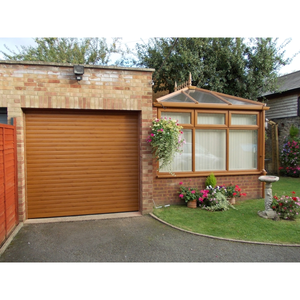
Powder Coated Tambour Door Roller Shutter Aluminium Typhoon Door
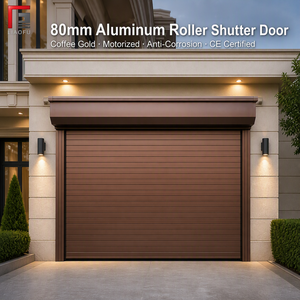
80mm Aluminium Roller Shutter Door Low Headroom Compact Drum
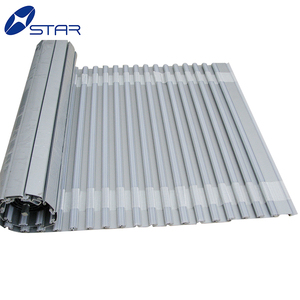
Vertical or Horizontal Roller Shutter Aluminum Tambour Door
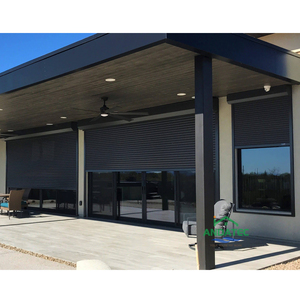
Aluminum Automatic Roll Up Insulated Garage Tambour Door Kit
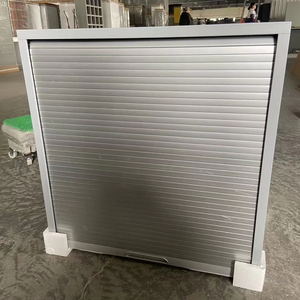
Tambour Door Kit Silver Black White Slats Track Spirals Fixings
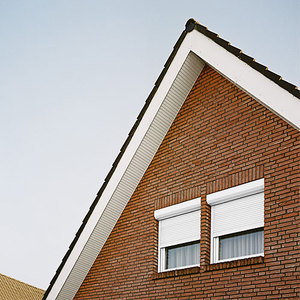
Manual Spring Hand Push Roll up Tambour Window Door With Lock
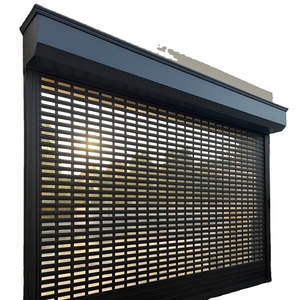
Tambour Door Kit Automatic Door Opener With Microwave Sensor
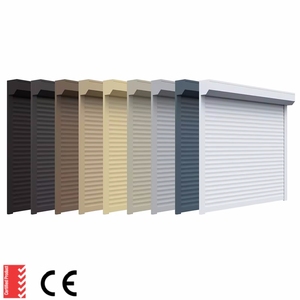
Aluminium Tambour Roller Shutter Door Electric Rolling Door
Extruded 6063-T5/T6 Aluminum Alloy: Structural Integrity & Dimensional Precision
Aluminum tambour door systems demand an intricate balance between continuous torsional articulation, flexural rigidity, and minimal rolling circumference. At our Guangdong manufacturing center, we exclusively utilize virgin Al-Mg-Si 6063 aluminum billets, heat-treated to T5 or T6 hardness specifications.
This metallurgical discipline achieves an ultimate tensile strength exceeding 215 MPa and a yield strength greater than 160 MPa. Unlike conventional roll-formed sheet steel or generic lightweight plastics, our heavy-gauge dual-chamber extruded profiles resist permanent deflection under severe mechanical stress, lateral gale-force pressure, and relentless daily duty cycles.
- Ball-and-Socket Interlocking Joints: Continuous male-female hinge channels with integrated self-lubricating polymer strips to eliminate metal-on-metal friction and reduce operating noise below 48 dB.
- Anti-Jammed Track Engineering: High-precision CNC milled side guides with deep retention grooves that physically prevent slat pullout during high negative-wind conditions.
- Architectural Surface Finishing: Automated vertical electrostatic powder coating lines and Class II anodizing (up to 25μm) guaranteeing zero fading, peeling, or chalking under aggressive coastal salt fog (ASTM B117 > 1,000 hrs).
OEM/ODM Customization Matrix
We collaborate directly with architectural hardware brands, specialty vehicle upfitters, modular casework builders, and industrial facade contractors to formulate bespoke tooling profiles.
In-house die shop capable of EDM tooling turnaround within 12–15 business days for single-wall, double-wall insulated, or micro-perforated airflow profiles.
90-degree tight radius corner tracks, 180-degree return spirals, horizontal flush ceiling guides, and recessed millwork profiles designed via parametric 3D CAD/CAM models.
Pre-wired DC tubular motors with soft-start/soft-stop algorithms, manual counterbalanced constant-force spring cassettes, or dry-contact building automation interfaces.
Technological Innovations Reshaping Modern Roll-Up Engineering
The modern aluminum tambour shutter has evolved from a simple mechanical privacy barrier into an intelligent, thermally managed, and acoustically insulated architectural sub-assembly.
Micro-Cavity Polyurethane Core Infusion
Advanced high-pressure dosing systems inject continuous ozone-friendly polyurethane foam into dual-walled extruded aluminum slats. This eliminates thermal bridges, dampens vibration, and delivers thermal transmittance values down to U ≤ 1.8 W/(m²·K), critical for modern climate-controlled warehouses and energy-conscious estates.
Brushless DC Motors & Optical Encoders
The industry is rapidly abandoning AC induction drives in favor of variable-frequency 24V/48V brushless DC motors. Integrated absolute optical encoders calculate slat position down to the millimeter, allowing programmed deceleration curves that protect slat hinge knuckles from shock loads, prolonging operational lifecycle past 100,000 cycles.
Minimalist Helical Winding Geometries
Through finite-element analysis (FEA), slatted profiles now utilize progressive multi-radii hinge knuckles. This geometry allows the shutter curtain to wrap tightly around smaller diameter central drums (as compact as 90mm), dramatically reducing the required fascia headroom box size for modern space-constrained luxury cabinetry and micro-apartments.
Acoustic Decoupling & Silent Glides
High-end hospitality and healthcare sectors demand whisper-quiet operations. By co-extruding thermoplastic elastomer (TPE) fins directly along the side track guides and applying flocking liners within the spiral cassette, operational drag is reduced by 60%, dampening motor resonance and metal reverberation during deployment.
Hybrid Vision & Controlled Ventilation Slats
Balancing physical intrusion resistance with climate flow, modern curtain assemblies feature punched micro-perforations or integrated clear polycarbonate glazing links. These configurations enable up to 35% controlled passive cross-ventilation and product visibility without compromising forced-entry resistance.
IoT Building Automation & Sensor Telemetry
Tambour controller modules now natively support RS-485 Modbus, Zigbee 3.0, and dry-contact building management systems (BMS). Automated fire curtain fail-safe systems interface with centralized smoke sensors to trigger controlled gravitational descent during emergency events, complying with international life-safety codes.
Global Sourcing & Procurement Trends: 2025–2030 Outlook
How Tier-1 developers, architectural specifiers, and procurement executives are derisking global lead times and optimizing total cost of ownership (TCO).
Shift to CKD/SKD Modular Kit Deliveries
To reduce international ocean freight volume and import tariffs, B2B buyers are moving away from pre-assembled bulky tambour frames. Sourcing standardized Complete Knock-Down (CKD) kits—including cut-to-length slats, pre-tensioned spring shafts, and modular clip-together side channels—cuts shipping crate cube dimensions by over 55% while expediting on-site assembly.
Low-Carbon Green Billet Sourcing (Scope 3 Compliance)
Enterprise contractors face strict carbon accounting mandates under LEED v4.1 and European CBAM frameworks. Procurement leads now demand certified low-carbon aluminum smelted with renewable hydro-power, featuring verified Environmental Product Declarations (EPD) that document a carbon footprint of under 4.0 kg CO&sub2;e per kg of primary metal.
Parametric BIM & Fast-Track Engineering Approval
Modern architectural workflows no longer accept delayed shop drawing submittals. Tier-1 manufacturers provide automated Revit BIM libraries with dynamic LOD 350 parametric models. This allows engineering consultants to simulate wind deflection, structural anchor loads, and motor power requirements prior to issuing procurement contracts.
Engineering Material Performance Matrix
A direct empirical comparison of extruded aluminum versus alternative materials for tambour door applications.
| Key Parameter | Extruded Aluminum (6063-T5) | Roll-Formed Galvanized Steel | Rigid PVC / Polymer Composite |
|---|---|---|---|
| Strength-to-Weight Ratio | Superior (approx. 2.7 g/cm³; enables compact drums) | Moderate (7.85 g/cm³; requires heavier motor/shafts) | Low (1.4 g/cm³; prone to mid-span flexural sag) |
| Atmospheric Corrosion Resistance | Immune to Rust; natural self-healing oxide + anodized | Vulnerable once zinc layer is breached or scratched | Immune to rust, but degrades under UV radiation |
| Dimensional Stability Under 50°C+ Sun | High (Thermal expansion coeff: 23.1 μm/m·K) | High (Thermal expansion coeff: 12.0 μm/m·K) | Poor (High warping, binding, and thermal deformation) |
| Precision Slat Interlocking | Extruded Micrometer Tolerances (±0.10mm) | Roll-formed stamped seam; wider tolerance variance | Extruded polymer; requires continuous flex joint tape |
| Wind Load Classification | Class 4 to Class 5 (Up to 1.8 kPa with wind locks) | Class 3 to Class 5 (Depending on heavy steel gauge) | Class 0 to Class 1 (Unsuitable for exterior structural openings) |
| Expected Lifecycle / Duty Cycles | 50,000 – 100,000+ Cycles | 20,000 – 40,000 Cycles (Spring wear, joint wear) | 8,000 – 15,000 Cycles (Hinge fatigue cracking) |
Why Major Industrial Specifiers Partner With Us
Operating from our massive Shishan Town, Foshan manufacturing base, we combine complete raw billet extrusion, anodizing, precision CNC processing, and automated testing under a single unified roof.
180,000㎡ Vertically Integrated Facility
From initial billet homogenization and high-tonnage extrusion to automated powder coating and final crating, our unified supply chain completely eliminates secondary sub-contractor markups, securing competitive factory pricing for high-volume OEM/ODM projects.
Internationally Certified Quality Standards
Our quality management infrastructure is certified to ISO 9001, CE, AS 2047 (Australian standards for wind, water tightness, and acoustic dampening), and UL fire resistance standards. Every production lot is accompanied by factory mill test certificates and dimensional QA reports.
Rigorous Quality & Dynamic Testing Protocols
Prior to seaworthy timber crating, sample shutter panels undergo continuous mechanical endurance testing up to 50,000 operational cycles, acoustic chamber noise analysis, high-pressure water spray verification, and automated motor torque calibration.
Frequently Asked Technical & Sourcing Questions
Essential information for engineering consultants, project estimators, and global procurement managers.
What is the typical lead time for custom OEM/ODM extrusion dies?
For fully custom slat profiles, track channels, or bottom beams, our in-house die fabrication facility completes CAD verification and tooling steel fabrication in 10 to 14 business days. First-article extruded samples and surface-treated swatches are dispatched via express courier for engineering sign-off within 5 days thereafter.
Can your aluminum tambour doors withstand high coastal typhoon wind pressures?
Yes. By pairing our heavy-duty 80mm or 100mm double-walled extruded slats with heavy-gauge end-locks and deep-channel guide tracks, our systems achieve compliance with AS 2047 and EN 12424 Class 4 and Class 5 wind ratings (resisting sustained structural wind loads exceeding 1,600 to 2,000 Pa).
What Minimum Order Quantities (MOQ) apply to architectural tambour projects?
For standard anodized, black, or white powder-coated profiles stocked in our master warehouse, MOQ is as low as 20 square meters (or 10 complete kit sets). For custom proprietary extrusion dies or special architectural RAL powder formulations, typical initial run requirements begin at 500 kg to 1,000 kg of extruded profile.
How are finished assemblies packaged to prevent scratching during ocean freight?
Every profile slat is masked with low-tack protective PE film. Assembled curtains or knocked-down components are wrapped in multi-layer shock-absorbent EPE bubble foam, edged with reinforced cardboard angle protectors, and crated inside heavy ISPM-15 certified heat-treated plywood crates engineered for multi-tier ocean container stacking.
Do you provide tubular motorization systems compatible with regional voltages?
We supply CE and UL certified tubular motors engineered for dual-frequency operations: 220V–240V 50Hz (UK, Europe, GCC, Australia) and 110V–120V 60Hz (North America), as well as 24V DC battery-backed installations. Motors can be specified with mechanical limit switches, electronic torque sensors, or wireless RF remotes.
Can tambour doors be installed in horizontal or curved track layouts?
Yes. Our precision engineered track systems support vertical upward roll-up, horizontal side-sliding, or 90-degree ceiling wrap configurations. We manufacture custom spring-tensioned cassettes and continuous curved nylon tracks that ensure bind-free glide along tight-radius interior cabinetry or vehicle body partitions.