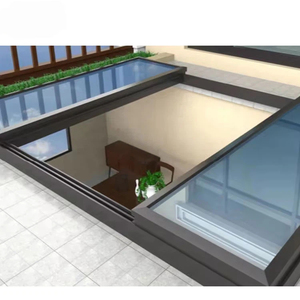
Sliding Security Windows for Home & Shop Front Glass
Reinforced track chassis, windproof perimeter interlockers, 5-year commercial performance warranty, impact-grade safety glass.
Send an Inquiry
DERCHI provides custom-engineered window and structural entrance assemblies fabricated with high-yield 6063-T6 virgin aluminum billets, precision multi-point European perimeter latching, and ultra-durable powder finishes complying with AAMA 2604/2605 specifications.
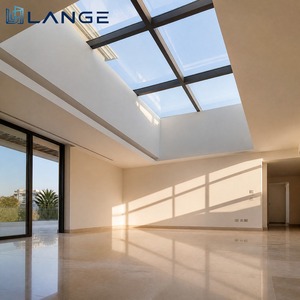
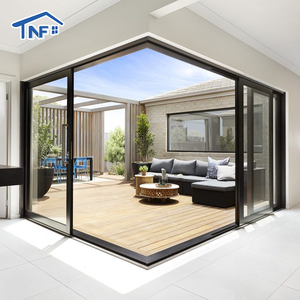
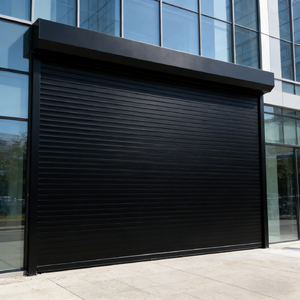
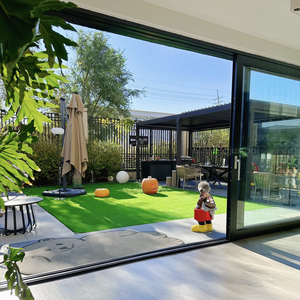
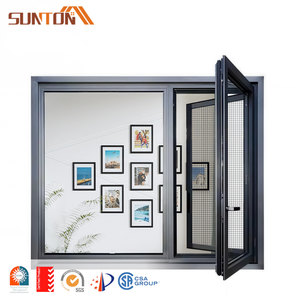
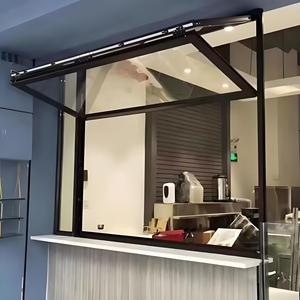
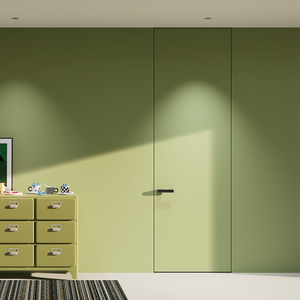
In modern commercial and luxury residential fenestration, aluminum sash windows have evolved beyond basic vertical sliders into mechanically counterbalanced, thermally isolated kinetic building envelopes. Sourcing managers and curtain wall engineers require strict verification of structural deflection, thermal transmission, and hardware cycle longevity.
DERCHI sources exclusively 6063-T6 or 6061-T6 structural billet aluminum with profile wall thicknesses between 1.8mm and 3.0mm. This delivers structural resistance against wind loads exceeding 3500 Pa (AS 2047 N6 rating) without catastrophic frame deflection or torsion.
Equipped with multi-chamber PA66 GF25 (25% glass fiber reinforced polyamide) thermal break strips, our sash window configurations curb U-values down to 1.1 - 1.4 W/m²K, mitigating interior condensation and thermal bridge losses in both tropical and sub-zero climates.
Traditional sash weight failures are eliminated using pre-calibrated constant-force spiral and block-and-tackle stainless torsion balancers. Each counter-balance hardware package is factory fatigue-tested up to 50,000 continuous opening and closing cycles without tension decay.
Global procurement teams must balance tighter carbon accounting regulations with increased demand for motorized building automation. Here is how international engineering specifications are shifting.
European and North American developers increasingly mandate Environmental Product Declarations (EPDs). Global OEM suppliers now incorporate up to 75% post-consumer recycled aluminum, reducing embodied carbon to under 4.0 kg CO2e per kg aluminum without losing tensile strength.
Architects require clean sightlines without protruding handles. Next-generation sash windows utilize concealed 24V linear actuators tucked inside the jamb profile, tying directly into KNX, Zigbee, and centralized BACnet commercial building management networks.
Rising tropical storms and desert sandstorms dictate monolithic SGP (SentryGlas®) structural interlayers. Sash systems must resist projectile impacts, negative wind pressures exceeding 4.5 kPa, and seal tightly against fine sand infiltration during intense shamal winds.
| Performance Criterion | Commercial Minimum Standard | DERCHI Architectural Heavy-Duty Tier | Compliance Test Standards |
|---|---|---|---|
| Air Infiltration Rating | < 1.5 m³/(h·m) at 100 Pa | < 0.5 m³/(h·m) (Triple Continuous EPDM) | ASTM E283 / EN 12207 Class 4 |
| Water Penetration Resistance | 300 Pa Static Pressure | Up to 700 Pa (Stepped Drain Sill Technology) | ASTM E331 / AAMA 501.1 / EN 12208 |
| Structural Wind Load | 2000 Pa Serviceability | 3500 Pa to 5000 Pa (Impact Reinforced Jambs) | AS 2047 N6 / ASTM E330 / ASCE 7 |
| Acoustic Attenuation | STC 28 - 32 dB | STC 38 - 43 dB (Asymmetric Laminated Glass) | ASTM E90 / ISO 10140-2 |
| Thermal Transmittance (Uf) | 2.2 - 2.8 W/m²K | 1.2 - 1.5 W/m²K (25mm Iso-Bar Polyamide) | NFRC 100 / EN ISO 10077-2 |
Operating a massive 180,000㎡ industrial footprint in Foshan, Guangdong, Guangdong Dejiyoupin Doors and Windows Co., Ltd. (DERCHI) stands among China's Top 10 fenestration manufacturers. We bridge high-capacity automated production with custom architectural drafting.
From aluminum extrusion cutting, high-speed CNC mortising, automated corner crimping to electrostatic fluorocarbon (PVDF) coating, every phase is completed inside our facility to maintain strict dimensional tolerance within ±0.5mm.
Our multilingual structural engineering group delivers complete parametric CAD shop drawings, wind load calculations, glass deflection models, and Revit BIM assets to fast-track municipal permit approvals and consultant sign-offs.
Holding more than 100 patents and testing validations across CE, ISO 9001, AS 2047, and UL fire standards, DERCHI fenestration products have been deployed across demanding projects in the USA, Canada, Australia, the Philippines, and the GCC region.
Direct technical answers addressing structural integration, minimum orders, surface treatments, and international shipping protocols.
Submit your architectural elevations, window schedules, and thermal specifications. Our senior project engineers evaluate wind loading, U-values, and hardware requirements within 24 hours.