Engineered Bifold & Architectural Product Portfolio
Explore our certified export series of aluminum bifold windows, heavy-duty sliding systems, and security entry solutions built under strict ISO 9001, AS 2047, and CSA protocols.
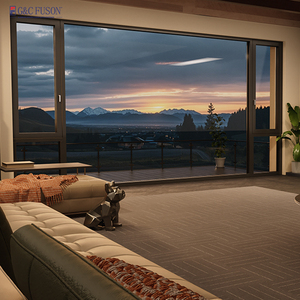
Fuson Triple Glazed Tilt & Turn Aluminum Windows
Reinforced ballistic-grade structural integrity with multi-cavity thermal break extrusions, high acoustic insulation, and dual opening flexibility.
Specifications →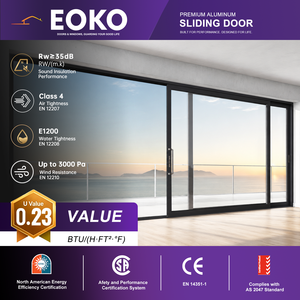
EOKO NFRC CSA Heavy Duty Exterior Sliding Door
Engineered for high-traffic villa facades and hotel resort corridors featuring stainless bogie rollers and exceptional solar heat gain control.
Specifications →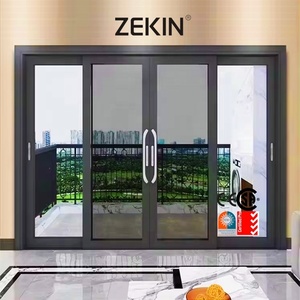
AS2047 Certified Sliding Patio Door with Flyscreen
Compliant with Australian cyclonic wind ratings, featuring double structural sealed units and integrated architectural security mesh.
Specifications →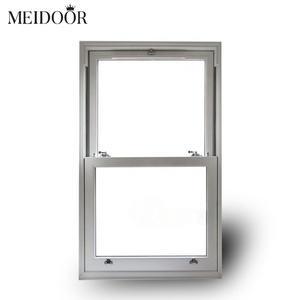
Vertical Lift Double Hung Glass Window Systems
Spiral balance mechanics optimized for smooth vertical operation, multi-point tamper resistance, and superior perimeter wind sealing.
Specifications →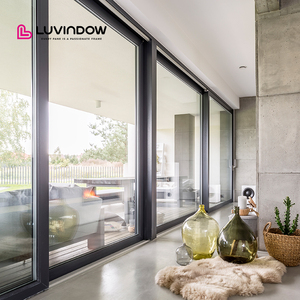
Luvindow Hurricane Impact Argon Low-E Sliding Doors
Engineered for extreme cyclonic regions with structural interlocks, laminated safety glass, and heavy-wall thermal barrier aluminum extrusions.
Specifications →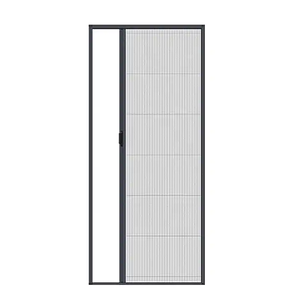
Pleated Retractable Insect Screen Integration
Invisible barrier systems with high-tenacity polyester plisse netting, designed to integrate seamlessly into multi-leaf bifold window tracks.
Specifications →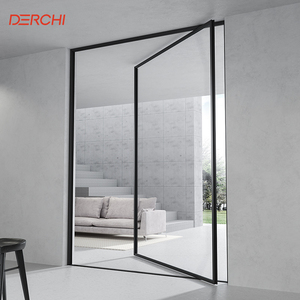
DERCHI Architectural Luxury Pivot Door Systems
Concealed floor spring pivoting mechanisms capable of sustaining single sashes up to 500kg with multi-point automated electronic latching.
Specifications →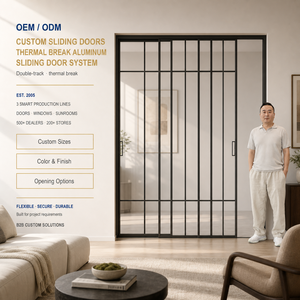
Slimline Minimalist Black Interior Bifold Glass Partitions
Ultra-narrow sightline systems creating seamless spatial transitions between residential open-plan living rooms, kitchens, and patios.
Specifications →Industry Whitepaper: The Evolution of OEM/ODM Aluminum Bifold Windows
Modern architectural design has experienced a profound shift toward unrestricted indoor-outdoor connectivity, expansive natural illumination, and energy conservation. At the center of this movement is the aluminum bifold window (accordion window system). Historically perceived primarily as a luxury residential aesthetic element, bifold window systems are now specified across high-end commercial hospitality facilities, coastal developments, modern luxury villas, and multi-family high-density estates globally.
As a Tier-1 fenestration manufacturer with over a quarter-century of extrusion and hardware integration expertise, Guangdong Dejiyoupin Doors and Windows Co., Ltd. (DERCHI) operates an extensive 180,000㎡ precision manufacturing footprint in Foshan, China. Sourcing commercial-grade bifold window systems requires looking beyond surface aesthetics to understand systemic engineering: alloy metallurgy, structural thermal barriers, kinetic bearing hardware, and multi-tier weatherization matrices capable of withstanding extreme environmental loads.
1. Advanced Technical Anatomy of High-Performance Bifold Systems
An aluminum bifold window functions under dynamic kinetic principles vastly different from static fixed or hinged casement windows. Every leaf added to a bifold system introduces a potential path for thermal bridging, acoustic infiltration, and moisture penetration unless counteracted by precision engineering:
Primary Alloy Chemistry (6063-T5 / 6063-T6): The backbone of our OEM/ODM fenestration is virgin architectural-grade 6063-T5/T6 billet aluminum. Offering wall thicknesses ranging from 1.8mm up to 3.0mm depending on engineering wind pressure calculations, our profiles maintain deflection parameters under positive and negative pressures compliant with ASTM E330 and AS 2047 cyclonic testing.
Polyamide PA66 GF25 Thermal Breaks: Direct heat convection across aluminum frames is disrupted using glass fiber-reinforced polyamide 6.6 (PA66 GF25) thermal insulation strips. This structure dramatically lowers overall frame U-values (Uw down to 1.3 W/m²K when combined with warm-edge triple glazing), mitigating internal surface condensation even during extreme ambient temperature differentials common in the Middle East, North America, and Northern Europe.
Dynamic Kinetic Hardware & Bogie Roller Carriages: The failure of lower-tier bifold windows almost universally traces back to bearing deterioration. Our OEM systems integrate top-hung or bottom-rolling 316-grade stainless steel multi-wheel quad carriages rated for up to 150kg per sash. The heavy-duty self-lubricating sealed bearings glide across CNC-milled structural guide tracks, guaranteeing frictionless glide performance across 100,000+ operational cycles without sash sagging or hinge fatigue.
2. Future Global Procurement Trends in Commercial Bifold Fenestration
Global procurement teams, real estate developers, and architectural specifiers are navigating a transforming supply chain. Based on international cross-border purchasing patterns across North America, the GCC, and Australasia, four critical procurement trends are defining specifications for the coming decade:
Holistic Building Life-Cycle Carbon Accounting
Developers are pivoting away from unverified suppliers to manufacturers with traceable raw material supply chains, low-carbon billet smelting, and non-toxic powder coat certifications like Qualicoat Class 2 and AAMA 2605.
Pre-Engineered Prefabricated Modules
Due to surging job-site labor costs across Western markets, buyers prioritize OEM suppliers capable of pre-assembling frame jambs, pre-calibrating multi-point shootbolts, and delivering containerized modular crating ready for drop-in installation.
Multi-Disaster Resilience Testing
Coastal developments require dual-action protection: salt-fog corrosion prevention (C5-M marine rating) combined with TAS 201/202/203 missile impact resistance, eliminating seasonal shutter installations.
3. Technological Trajectories: What Defines Next-Gen Bifold Windows?
As fenestration engineering moves toward greater minimalism, thermal efficiency, and automation, our R&D divisions are pioneering three core advancements:
1. Ultra-Narrow Sightlines (Minimalist Transoms): Traditional bifold leaves feature meeting stiles exceeding 140mm, which creates visual bulk when closed. Next-generation designs leverage high-moment-of-inertia carbon-reinforced extrusions to reduce meeting stile sightlines down to 98mm or less, expanding clear glass surface area by up to 18%.
2. Motorized Concealed In-Track Actuation: In response to the luxury residential and penthouse sectors, we engineer concealed linear actuators within head tracks. These allow multiple bifold panels to fold and nest against perimeter walls via wall touchscreens, smart home bus protocols (KNX/Crestron), or automated rain and wind sensors.
3. Dynamic Acoustic Stratification: By pairing variable-thickness asymmetric laminated safety glass (e.g., 6mm Low-E + 1.52mm Acoustic PVB + 8mm Clear) with continuous triple EPDM bubble gasket vulcanization, modern systems achieve Sound Transmission Class (STC) ratings above 42 dB, insulating interiors against freeway noise and urban cacophony.
Why Global Importers & Contractors Partner With Us
Ranked among the Top 10 fenestration brands in China, Guangdong Dejiyoupin provides institutional-grade assurance across the complete supply value chain.
180,000㎡ Mega-Facility
End-to-end in-house casting, CNC extrusion milling, dual-color thermal stripping, fluorocarbon painting, and glass tempering ensure comprehensive timeline control.
Rigorous International Approvals
Certified across CE, ISO 9001, AS 2047, NFRC, CSA, and UL fire-rated standards. Fully documented technical cut-sheets prepared for municipal authority submittals.
Full-Bespoke OEM/ODM Service
Complimentary CAD shop drawing detailing, structural calculations, custom color matching, and private-label hardware branding tailored to proprietary systems.
Extreme Climate Specialization
From 50°C high-UV environments in Dubai and Riyadh to -30°C Canadian winters, our thermal barrier configurations prevent sagging, seal shrinking, and seal rupture.
Fast-Track Jobsite Support
Bilingual sales engineers, BIM/Revit architectural families, 24-hour turnaround on shop drawings, and remote video engineering guidance for installers.
Heavy-Duty Export Crating
Multi-layer protective packaging: scratch-proof peelable films, thick closed-cell pearl foam padding, steel-strapped solid plywood crates built for zero breakages.
Frequently Asked Questions for B2B Importers
Essential technical, manufacturing, and commercial answers for developers, contractors, and fenestration distributors.
What maximum dimensions can be engineered for individual bifold window sashes?
Our standard heavy-duty OEM profiles support individual leaf heights up to 3,000mm and widths up to 1,000mm, with maximum sash weights of 120kg for windows and 160kg for bifold doors. For custom architectural applications exceeding these limits, our Foshan engineering department provides bespoke structural interlocks and reinforced heavy-gauge pivot rollers.
How do your bifold systems perform against water penetration during severe rainstorms?
Water tightness is achieved through stepped multi-tier weep-hole chambers, downward-draining sill channels, and co-extruded continuous vulcanized EPDM seals. Systems are factory tested up to 600 Pa water pressure under ASTM E331 and Australian AS 2047 standards, preventing interior leaks even when driven by high-velocity gale-force winds.
Can we specify European hardware brands or custom surface finish systems?
Yes. As a comprehensive OEM/ODM supplier, we support factory-fitted German hardware (Siegenia, Roto, Hoppe) or our proprietary commercial-grade 316 stainless steel multi-point gearboxes. Surface treatments range from Class 1 AkzoNobel powder coating and PVDF fluorocarbon coatings (with 20-year color warranties against chalking) to anodized and architectural wood-grain finishes.
What are standard production lead times, and how do you handle international shipping?
Standard custom fabrication lead time is 25 to 35 business days following final CAD shop drawing sign-off and glass procurement. For containerized sea freight, finished frames are labeled by elevation and floor zone, packed in moisture-sealed treated plywood crates, and loaded directly at our Foshan facility for departure via Shenzhen, Guangzhou, or Hong Kong ports.
How do you assist foreign architects and contractors with local building code compliance?
Our technical engineering office maintains an extensive library of third-party laboratory test reports covering thermal transmittance (U-factor/SHGC), structural wind load resistance, air infiltration, acoustic isolation (STC/OITC), and impact testing. We furnish formal structural calculation books and stamped shop drawings to streamline consultant and municipal approvals.
What is the minimum order quantity (MOQ) for custom architectural aluminum bifold orders?
To support luxury custom residential villas as well as large-scale commercial developments, our MOQ policy is flexible. We service bespoke private villa project schedules starting from single custom units up to multi-container master-planned commercial orders, providing consistent engineering rigor across all project scales.