Recommended Architectural Aluminium Window & Entrance Systems
Tested rigorously under international building standards (CE, AS 2047, ISO 9001), our high-precision aluminium assemblies provide structural longevity, solar gain control, and versatile profile configurations.
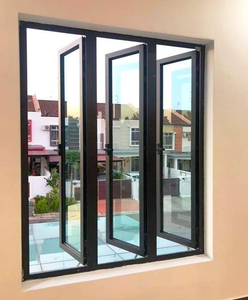
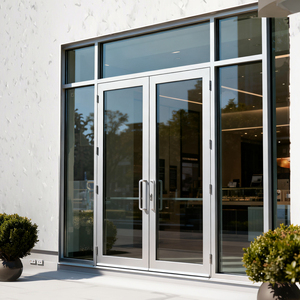
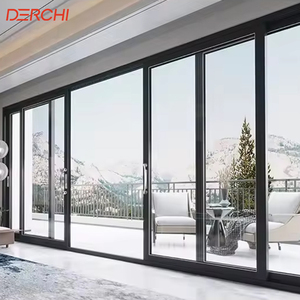
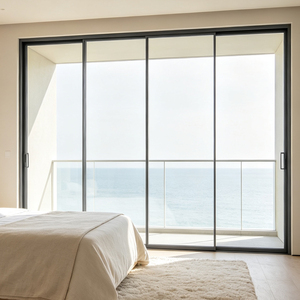
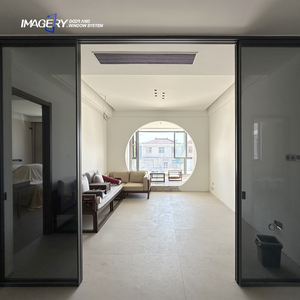
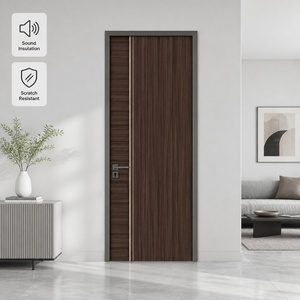
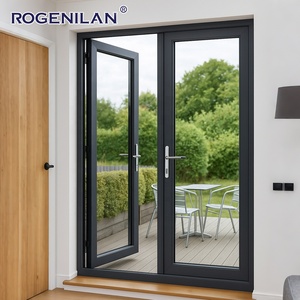
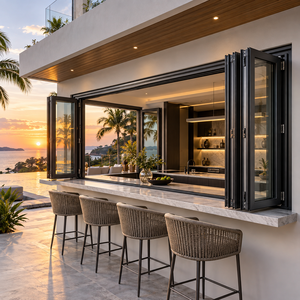
Architectural Evolution: The Structural Imperative for Small Aluminium Fenestration
In modern building envelope design, OEM/ODM aluminium small windows are no longer treated as secondary utility openings. From high-density luxury residential projects in Dubai and Riyadh to commercial curtain wall integrations in North America and Australia, compact fenestration units (such as hopper, awning, clerestory, transom, and targeted micro-ventilation openings) represent critical interfaces where thermal bridges, windward turbulence, and acoustic leakage are heavily concentrated.
Industrial standardisation requires precise extrusion tolerances. Derchi (Guangdong Dejiyoupin Doors and Windows Co., Ltd.) leverages 25+ years of production expertise to resolve persistent sector challenges: seal deformation in high-temperature micro-frames, low water tightness under cyclonic conditions, and dimensional drift during continuous thermal shifting. By incorporating primary-grade 6063-T5 and 6063-T6 architectural aluminium alloys, coupled with polyamide multi-cavity thermal barriers (PA66 GF25), our small window assemblies guarantee an optimal strength-to-weight ratio while maintaining overall structural rigidity under negative pressure loadings up to 4500 Pa.
As energy performance codes tighten—including Title 24 in the US, GCC Building Code requirements in the Middle East, and Australian NCC energy metrics—the thermal transmittance (U-factor) and Solar Heat Gain Coefficient (SHGC) of small aluminium openings must mirror the performance of multi-pane passive assemblies. Our dedicated custom OEM/ODM engineering division develops multi-chambered frame systems engineered to house insulated glass units (IGUs) ranging from 24mm to 42mm overall thickness, incorporating warm-edge silicone foam spacers, argon gas filling, and hard/soft double Low-E pyrolytic coatings.
Future Global Procurement Trends in Aluminium Fenestration
Data-driven forecasts shaping procurement parameters, supply-chain resilience, and structural specifications through 2030.
Near-Zero Carbon & Recycled Ingot Audits
Global general contractors and tier-1 property developers increasingly mandate Environmental Product Declarations (EPDs). Procurement workflows now demand scrap-to-billet tracing, favouring aluminium small window profiles produced via hydroelectric or low-carbon smelters to reduce embodied emissions.
Modular Prefabrication & Sub-Frame Integration
Job-site labour shortages in the GCC, North America, and Europe are pivoting procurement toward fully integrated sub-frame systems. Small aluminium windows must arrive with pre-set anchors, concealed water barrier flashing, and factory-tested EPDM perimeter seals that slash on-site installation intervals by over 40%.
Smart Micro-Actuation & Sensor Fusion
Building Management Systems (BMS) are demanding automated micro-apertures. Small aluminium hopper and casement windows are rapidly moving from manual cam-locks to concealed 24V DC micro-chain actuators integrated with rain, wind, and IAQ (indoor air quality) telemetry networks for natural night cooling.
Engineering Advancements & Technological Frontiers
How cutting-edge surface metallurgy, multi-point kinetic mechanics, and compound glazing redefine small-format fenestration durability.
Fluorocarbon & Marine-Grade Anodising
Salt-spray degradation along coastal sectors (e.g., Dubai Waterfront, coastal Florida) poses high corrosion risks. Modern aluminium small windows feature PVDF 3-coat fluorocarbon coatings or 25-micron hard-anodised layers that withstand 3,000+ hours of continuous neutral salt spray (ASTM B117) without micro-pitting.
Isothermal Alignment & Polyamide Thermal Breaks
Small frames run the risk of thermal bridging if the break layer is discontinuous. Advanced 34mm multi-chamber PA66 GF25 thermal breaks align isotherms along the same vertical plane, preventing interior perimeter condensation even when outside temperatures exceed 50°C or drop below -20°C.
Concealed Multi-Point Compression Hardware
Small vents experience intense localized wind uplift. Employing concealed 304/316 stainless-steel four-bar friction stays coupled with perimeter mushroom-head multi-point locking mechanisms ensures uniform gasket compression of 3.5mm around the entire frame perimeter, eliminating whistling and draft infiltration.
Engineering Benchmark: Standard vs. Architectural Thermal Break Specs
Direct comparison of technical parameters crucial for consultant review, project scheduling, and authority submittals.
| Performance Metric | Standard Commercial Small Window | Derchi Architectural OEM/ODM System | Compliance / Testing Norm |
|---|---|---|---|
| Alloy Base & Wall Thickness | Secondary Al / 1.2mm – 1.4mm profile | Primary 6063-T6 / 1.8mm – 2.2mm structural walls | GB 5237 / EN 755 / ASTM B221 |
| Thermal Barrier Core | PVC or low-spec standard plastic strip | PA66 GF25 Polyamide reinforced with glass fibre | DIN 16941 / ISO 16396-PA66 |
| Air Infiltration Rate | 1.5 to 2.0 m³/(m·h) at 100 Pa | < 0.5 m³/(m·h) — Class 4 Airtightness | EN 12207 / AS 2047 Class N6 |
| Water Penetration Resistance | Static pressure up to 250 Pa | Progressive drainage chamber up to 700 Pa (No Leak) | EN 12208 (Class 9A) / ASTM E331 |
| Acoustic Attenuation (Rw) | 28 dB – 30 dB (Single / Double standard) | Up to 44 dB with Acoustic PVB Laminated IGU | ISO 10140-2 / ASTM E90 |
| Surface Coating Integrity | Standard powder coat (60-80μm) | AkzoNobel / PPG PVDF Fluorocarbon (3-Coat, 50μm+) | AAMA 2605 / Qualicoat Class 3 |
Enterprise Manufacturing Authority: Why Specifiers Partner with Derchi
Operating out of an expansive 180,000㎡ industrial manufacturing campus in Foshan, Guangdong, Guangdong Dejiyoupin Doors and Windows Co., Ltd. (DERCHI) is officially ranked among the Top 10 premium door and window manufacturing brands in China. Over a quarter-century of focused fenestration innovation has yielded more than 30 appearance and technology patents and an elite team of 600+ master craftsmen, profile engineers, and facade quality inspectors.
Derchi provides an integrated one-stop fenestration and entrance solution. Clients across the United States, Canada, Australia, the Philippines, and key GCC territories (including UAE, Saudi Arabia, Qatar, and Kuwait) rely on our enterprise to source small custom windows, high-span sliding patio assemblies, architectural pivot doors, and cast aluminium entrance systems from a single dedicated manufacturing hub. This consolidated workflow eliminates fragmented multi-vendor liabilities, cuts container transport volume by over 18%, and guarantees homogeneous coating, hardware, and glass coloration across the entire project scope.
Every custom OEM/ODM order is backed by comprehensive engineering documentation: free CAD shop drawings, finite-element wind load calculations, 3D corner samples, and full mill test reports. Holding 8 major international certifications—including ISO 9001, CE, AS 2047 (tested to the highest Australian N6 classification), and UL fire ratings—our products integrate seamlessly into complex commercial and residential consultant submittals without municipal approval bottlenecks.
Comprehensive B2B Procurement FAQ: Aluminium Small Windows
In-depth responses covering sizing constraints, climatic engineering, freight protection, and custom manufacturing runs.
What are the absolute minimum and maximum fabrication dimensions for custom aluminium small windows?
Our computerized CNC cutting and corner-crimping centers allow custom operable casement or awning small windows to be built as compact as 350mm x 350mm (13.7" x 13.7"), while maintaining complete thermal break integrity and multi-point sealing. For fixed picture micro-windows or transom inserts, sizes can be calibrated down to 250mm x 250mm. Conversely, maximum sash sizes for single small-format ventilation vents generally reach 1200mm in width or height, depending on glass weight and hardware friction stay load ratings.
How do your small aluminium windows prevent profile warping in regions with 50°C+ summer conditions?
Extreme solar irradiance creates an intense thermal differential (bi-metallic effect) between exterior and interior aluminium walls. Derchi prevents frame deflection and sash jamming by utilizing reinforced multi-cavity PA66 GF25 thermal break strips engineered with a low coefficient of linear thermal expansion. Furthermore, our profiles use premium primary-billet 6063-T6 alloys with uniform grain structure and strict wall thicknesses (1.8mm to 2.2mm), ensuring dimensional stability under cyclic desert conditions in Saudi Arabia, UAE, and Qatar.
Can you accommodate bespoke OEM profile extrusion dies for unique curtain wall or modular housing designs?
Yes. As a direct OEM/ODM enterprise, our in-house tool and die design department creates custom extrusion profiles tailored to your architectural elevations. We produce rapid 3D-printed profile models for cross-section confirmation within 72 hours, manufacture hardened alloy extrusion dies within 15–20 working days, and deliver initial extruded sample lengths with custom surface treatments for full laboratory air, water, and structural sign-off prior to mass fabrication runs.
What glass makeups are standardly specified for acoustic dampening and low solar heat gain in small windows?
Because small windows are often specified in bathrooms, stairwells, and mechanical spaces where noise isolation and privacy are paramount, we offer customized insulated glass units (IGUs). Common configurations include: 6mm Tempered Low-E + 12A (Argon Space with Warm Edge) + 6mm Tempered Clear, or high-performance acoustic laminated configurations such as 5mm + 0.76mm Acoustic PVB + 5mm. Frosted acid-etched, reeded glass, or switchable smart PDLC film can also be seamlessly integrated.
How does your factory protect small window shipments against sea freight vibration and rough port handling?
Every window undergoes a strict six-layer export packaging standard: 1) Protective PE film on exposed aluminium surfaces; 2) Molded corner guards; 3) Bubble wrap cushioning around the frame; 4) Moisture-resistant corrugated wrap; 5) Multi-unit grouping within heavy-duty fumigated solid timber/plywood crates with built-in steel strapping; and 6) Internal desiccants to eliminate condensation during long ocean voyages through variable climate zones.
What documentation do you supply to assist architectural consultants with project authority submittals?
We provide a complete technical submittal binder within 48 hours of contract award. This package includes comprehensive CAD elevation and section shop drawings, structural wind load calculations (FEA reports), glass thermal/optical performance certificates (NFRC or European norms), third-party laboratory test reports (CE, AS 2047, ISO 9001), powder coating warranty sheets (up to 20 years for PVDF), and detailed English installation manuals with corner flashing details.