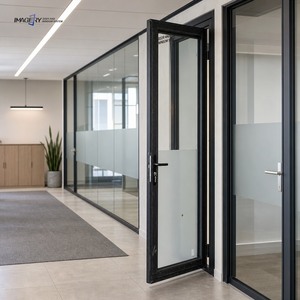
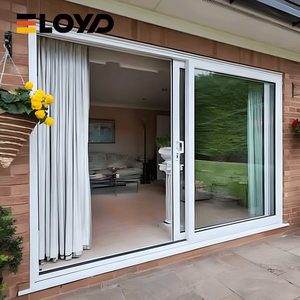
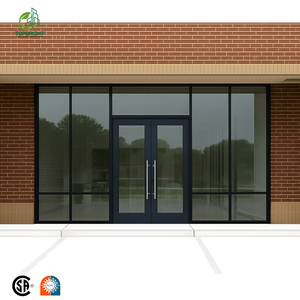
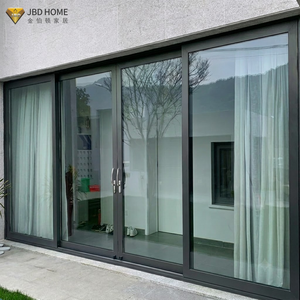
High-performance fenestration systems manufactured with prime 6063-T5/T6 aviation-grade aluminum alloys, multi-chambered polyamide thermal breaks, and structural architectural glazing tested to international ASTM, AS2047, and EN codes.
Operated by Guangdong Dejiyoupin Doors and Windows Co., Ltd. (DERCHI), our production headquarters in Foshan represents one of China's Top 10 fenestration manufacturing operations. With over 25 years of specialized metallurgical and architectural engineering experience, we empower global project contractors, facade engineering consultancies, and wholesale fenestration brands across North America, Europe, Australia, and the GCC.
Smart Factory Facility
Certified Technicians
OEM/ODM Fenestration R&D
Export Target Countries
Modern window procurement demands verifiable thermodynamic performance, seismic structural integrity, and acoustic mitigation metrics. Our proprietary profile geometries eliminate the compromise between aesthetic slim sightlines and extreme mechanical load requirements.
Standard aluminum extrusion possesses an ultra-high thermal conductivity of approximately 205 W/m·K. Our profiles introduce multi-cavity Polyamide 66 reinforced with 25% glass fiber (PA66 GF25), dropping profile conduction by 94% and neutralizing interior condensation risks in extreme temperature differentials from -40°C Arctic climates to +55°C desert zones.
For coastal cyclone, typhoon, and hurricane exposure zones, our reinforced vertical sliding and casement assemblies utilize 6063-T6 tempered alloys engineered to resist 9-lb 2x4 timber missile impact velocities up to 50 ft/s (Large Missile Level D). Structural silicone wet glazing bonds the SentryGlas (SGP) laminated panels directly into internal frame recesses to resist structural cyclical pressure up to 6000 Pa.
Urban density and airport flight-path developments require high transmission loss. DERCHI multi-point sash compression systems incorporate co-extruded EPDM continuous vulcanized gaskets paired with asymmetrical acoustic PVB laminated IGU setups (e.g., 6mm Low-E + 16Ar Warm Spacer + 4mm + 0.76aPVB + 4mm), dampening resonance modes across low-frequency traffic bands.
| Profile System Class | Alloy & Temper | Thermal Barrier Config | Air Infiltration (ASTM E283) | Water Tightness (ASTM E331) | Structural Load (ASTM E330) | Recommended Sourcing Market |
|---|---|---|---|---|---|---|
| Commercial 65 Series Casement | Primary 6063-T5 | 24mm Multi-Chamber PA66 | < 0.05 L/s·m² | 700 Pa (15 PSF) | 3500 Pa (73 PSF) | North America / EU |
| Hurricane 85 Pit Vertical Slider | Structural 6063-T6 | Reinforced Multi-Cavity | < 0.03 L/s·m² | 900 Pa (18.8 PSF) | 5000 Pa (104 PSF) | Florida / Caribbean |
| Panoramic Narrow 20mm Sliding | High-Tensile 6061-T6 | Concealed Thermal Break | < 0.08 L/s·m² | 600 Pa (12.5 PSF) | 3000 Pa (62 PSF) | GCC / Coastal Villas |
| Passive House 105 Tilt-Turn | Aviation 6063-T5 | 42mm Aerogel Infill Strip | < 0.01 L/s·m² | 1050 Pa (22 PSF) | 4500 Pa (94 PSF) | Canada / N. Europe |
Global building standards are shifting rapidly under aggressive net-zero carbon legislation, tighter embodied carbon audits, and building information modeling (BIM) mandates. Sourcing agents, developers, and facade contractors must prepare for five seismic procurement shifts.
Global architectural specifications increasingly require Environmental Product Declarations (EPD). Upstream procurement is shifting from primary fossil-fuel smelted ingots toward secondary post-consumer recycled aluminum billets certified by the Aluminium Stewardship Initiative (ASI), reducing embodied carbon from 18 kg CO₂e/kg Al to below 4.0 kg CO₂e/kg Al.
Procuring windows is no longer a manual 2D CAD process. OEM suppliers must furnish Level of Development (LOD) 350 to 400 BIM components integrated into Autodesk Revit, IFC formats, and Rhino Grasshopper workflows. These components carry structural weight, thermal conductivity parameters, and operational hinge clearance geometries.
The demand for motorized concealed drive units within slim-frame sliding and awning assemblies is growing at 22% CAGR. Multi-point locking actuators, pneumatic seals, and concealed chain openers are embedded directly inside the aluminum profile sash, connecting via KNX, BACnet, or Zigbee protocols into automated HVAC economizer networks.
Climate volatility is expanding stringent hurricane and flood requirements beyond traditional tropical coastlines into inland metropolitan regions. Water penetration resistance benchmarks are moving from 300 Pa to over 750 Pa, requiring cascading drainage sill channels, vulcanized corner welded EPDM gaskets, and anti-lift stainless steel interlocks.
Essential technical, compliance, logistical, and warranty answers for commercial purchasing managers, structural engineers, and importers evaluating DERCHI OEM/ODM manufacturing partnerships.
We exclusively cast and extrude using 100% primary aluminium ingots conforming to 6063 and 6061 chemical composition limits (ASTM B221 / GB 5237). For residential and architectural profiles, 6063-T5 provides optimal surface smoothness and structural ductility for intricate multi-chamber dies. For high-windload mullions, large-span pivot entries, and hurricane coastal frames, we employ 6063-T6 or 6061-T6 temper with tensile strength exceeding 205 MPa (30,000 psi) and yield strength over 170 MPa (25,000 psi). Mill test certificates (MTC) stating precise magnesium, silicon, and iron mass fractions accompany every production heat lot.
DERCHI systems are pre-tested and third-party certified through internationally accredited testing laboratories (such as Intertek, Azuma, and SGS). For Australia, our products meet AS 2047 up to N6 / C4 ratings covering AS 4420 deflection, air infiltration, water penetration resistance, and ultimate structural strength. For North America, our assemblies conform to AAMA/WDMA/CSA 101/I.S.2/A440 (NAFS) specifications and NFRC thermal standards (U-factor, SHGC, and VT ratings). Full submittal dossiers including calculation sheets, stamped engineering reports, and factory production control (FPC) audit manuals are supplied for consultant sign-off.
For existing catalog systems and standardized architectural dies, our MOQ is flexible (typically 1 complete 20ft container or project schedules exceeding 150 m²). For completely custom proprietary OEM profile extrusions: tooling die design and CNC wire-cut die manufacturing take 12 to 15 business days. Sample extrusion, anodizing/coating, and initial corner joint validation require 7 days. Upon first-article inspection (FAI) approval, full container mass fabrication runs on a 25 to 35-day manufacturing cycle, backed by our 180,000 m² factory capacity producing over 300,000 m² of glazed fenestration annually.
Coastal durability demands meticulous electrochemical engineering. First, all surface extrusions receive either a 25-micron marine-grade architectural anodized coating (AAMA 611 Class I) or a minimum 70% Kynar 500 / Hylar 5000 PVDF fluoropolymer coating meeting AAMA 2605 specifications (tested for 4000+ hours in ASTM B117 salt spray chambers without blistering). Second, all mechanical fasteners, corner cleats, rollers, and balance springs are upgraded to Austenitic AISI 316 / A4 marine-grade stainless steel. Third, dielectric non-conductive isolation pads are installed between disparate metallic joints (e.g., steel lintels and aluminum sub-frames) to eliminate galvanic corrosion.
Intercontinental sea freight subjects cargo to dynamic shock, multi-axis g-forces, and extreme relative humidity swings. Finished window panels are wrapped in protective polyethylene co-extruded films, corner-capped with rigid composite buffers, and separated by non-residue cork pads. Units are loaded into heat-treated ISPM-15 compliant fully enclosed plywood crates engineered with internal steel sub-frames and lifting sling cutouts. Heavy industrial moisture-absorbent silica desiccant bags are sealed inside every vapor-barrier shroud to prevent glass calcification and chemical surface staining during tropical port dwell times.
We provide a comprehensive 10-year structural profile and operational hardware warranty, coupled with up to 25-year finish warranties on select PVDF coatings and 10-year seal failure warranties on hermetically sealed double/triple IGUs (ASTM E2190). Our quality protocol enforces 6 mandatory QA checkpoints: incoming billet spectrometry, post-extrusion dimensional laser scan, coating film-thickness micro-gage test, PA66 shear-strength test, pre-glazing mock-up assembly, and final water chamber vacuum testing. Factory audit visits can be conducted on-site or via our high-resolution 360° interactive VR facility tour.