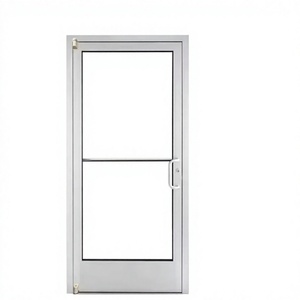
Bestselling Commercial LH Tempered Glass Storefront Door
Waterproof architectural alloy construction designed for intensive high-traffic commercial storefront ingress and egress points.
Product Details →Direct factory-tested fenestration assemblies meeting stringent ASTM, NFRC, and AS2047 international benchmarks for residential developments and heavy commercial facades.
Waterproof architectural alloy construction designed for intensive high-traffic commercial storefront ingress and egress points.
Product Details →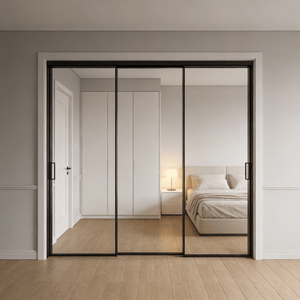
Acoustic dampening glass partition systems tailored for open-concept master bedrooms, kitchen enclosures, and commercial office suites.
Product Details →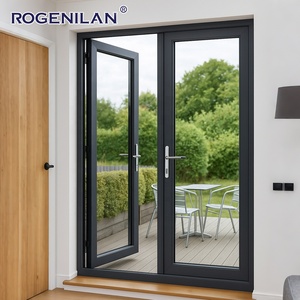
Oversized insulated vision panels framed in 6063-T6 virgin aluminium with multi-tier perimeter EPDM sealing gaskets.
Product Details →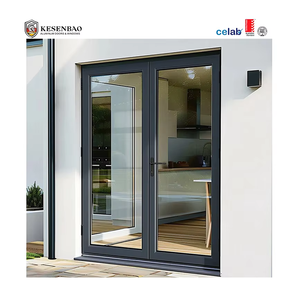
Engineered for cleanroom medical facilities and luxury residences, offering verified Sound Transmission Class (STC) attenuation up to 42 dB.
Product Details →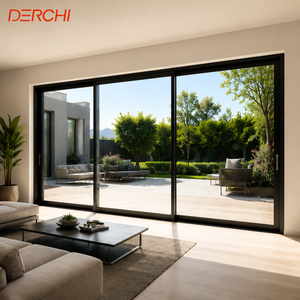
High-precision polyamide (PA66) thermal barrier configuration paired with whisper-quiet automation hardware kits.
Product Details →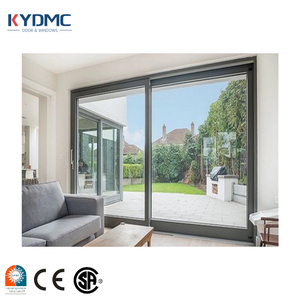
Ultra-narrow sightline framing engineered for uncompromised coastal cyclone resistance, high wind load, and expansive glass expanses.
Product Details →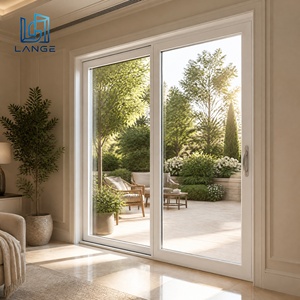
Incorporates German-standard multi-point espagnolette locking pins, providing maximum anti-burglary defense and air tightness.
Product Details →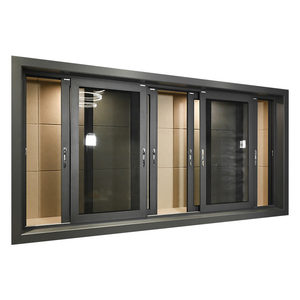
Custom formulated for high UV exposure and sandy micro-climates, with low Solar Heat Gain Coefficient (SHGC) ratings.
Product Details →Information gain criteria for mechanical consultants, specifiers, and procurement officers evaluating U-values, structural tolerances, and acoustic damping capabilities.
| Performance Criterion | Industry Standard Generic | DERCHI Commercial Grade | DERCHI Extreme Series (OEM/ODM) | Benchmark Standard |
|---|---|---|---|---|
| Thermal Transmittance (U-Factor) | 2.8 - 3.5 W/(m²·K) | 1.6 - 1.9 W/(m²·K) | 0.9 - 1.2 W/(m²·K) | NFRC 100 / ISO 10077-2 |
| Acoustic Attenuation (STC / Rw) | 28 - 32 dB | 36 - 40 dB | 42 - 47 dB (Acoustic Laminated) | ASTM E90 / ISO 717-1 |
| Air Infiltration Rate | 1.5 m³/(h·m) | 0.5 m³/(h·m) | ≤ 0.1 m³/(h·m) Grade 8 | ASTM E283 / AS 2047 |
| Structural Wind Load Resistance | 1800 Pa (Class P2) | 3500 Pa (Class P4) | ≥ 5000 Pa (N6 Cyclone Tested) | AS 2047 / ASTM E330 |
| Profile Alloy Metallurgy | Recycled Scraps / 6063-T5 | Primary Billet 6063-T6 | 6060-T66 High Hardness Primary | EN 573-3 / GB/T 5237 |
Integrating vertically managed extrusion, coating, thermal barrier insertion, and automated robotic glass assembly within our sprawling smart facility.
Headquartered in Foshan's high-tech manufacturing belt, our massive footprint features automated German tooling capable of outputting 350,000+ sqm of architectural fenestration annually.
More than a quarter-century of fenestration engineering leadership, holding 8 premier international certifications including CE, AS2047, and UL fire classifications alongside 30+ patented designs.
We eliminate site installation clashes by delivering shop drawings, structural wind-pressure static calculations, and localized anchor plans crafted by 40+ dedicated facade engineers.
Our systems have successfully weathered severe conditions across landmark installations spanning North America, coastal Australia (AS2047 N6), the Gulf Cooperation Council (GCC), and Southeast Asia.
Macro-economic regulatory shifts, carbon-neutral mandates, and smart building topologies reshaping global fenestration supply chains through 2026–2030.
International building codes (such as ASHRAE 90.1, EU EPBD, and UAE Estidama) now necessitate multi-chamber thermal breaks exceeding 34mm width. OEM/ODM casement window procurement is aggressively pivoting toward triple-glazed krypton-filled units boasting warm-edge spacer technology that completely stops interior perimeter condensation.
Modern architectural paradigms prioritize maximum glass-to-frame ratios. Next-generation casement trends center on concealed sash profiles and co-planar exterior surfaces. By hiding hinges, operators, and water-drainage weeps within the structural frame, exterior building envelopes achieve a sleek, frameless glass curtain wall aesthetic without losing tilt-and-turn capability.
Institutional developers demand Environmental Product Declarations (EPD). Procuring casement systems produced using hydro-electric smelting reduces embodied carbon from 16kg CO2/kg Al down to under 4kg. Our Foshan extrusion lines support supply chain traceability, assisting general contractors in securing LEED Platinum and BREEAM certifications.
Critical technical inquiries addressed by our facade structural engineers for overseas project managers, developers, and wholesale buyers.
For mid-rise and high-rise commercial casement window systems, we strictly extrude primary 6063-T6 or 6060-T66 architectural aluminium billets with structural outer wall thicknesses varying between 1.6mm and 2.2mm, matching or exceeding AS2047, AAMA/WDMA 101, and EN 12020-2 standards. For regions subject to typhoons and tropical cyclones (such as Florida, the Caribbean, and coastal Australia), structural mullion chambers are further reinforced with internal zinc-chromatized galvanized steel inserts to prevent dynamic wind load deflections beyond L/175 or L/240.
Upon receipt of your initial CAD elevations, structural tender specifications, and geographic wind-table codes, our engineering department deploys finite element analysis (FEA) software. We run localized calculations covering glass center deflection, glass edge stress, thermal expansion tolerances, and fastener pull-out resistance. Our clients receive fully stamped shop drawing submittal packages—including simulated U-factors (using THERM / WINDOW software) and water-tightness boundary diagrams—prior to opening production tooling or cutting profiles.
For desert-arid and oceanfront settings (such as the GCC, coastal Florida, or Mediterranean properties), standard decorative powder coatings deteriorate quickly. We utilize AkzoNobel or PPG certified fluoropolymer (PVDF) electrostatic coatings (guaranteed 20+ years against chalking and color fading) or Class 1 / Class 2 anodic oxidation finishes (minimum thickness 20–25 microns). These finishes successfully endure 3,000 to 5,000 hours of continuous neutral salt spray (NSS) testing per ASTM B117 standards without blistering, flaking, or micro-cracking.
Our OEM/ODM lines natively support world-leading European hardware partners such as Roto Frank, Siegenia-Aubi, G-U, and HOPPE, alongside our top-tier precision domestic hardware options. Each casement sash incorporates 3D-adjustable heavy-duty stainless steel friction hinges (capable of supporting leaf weights up to 130–180 kg) coupled with hardened mushroom-cam multi-point espagnolette locking systems. This delivers RC2/RC3 European burglar resistance (EN 1627) and guarantees uniform gasket compression for exceptional air and acoustic seals.
International sea freight exposes crated goods to violent rolling, ocean moisture, and container humidity cycling. Every DERCHI order undergoes our 5-tier export crating procedure: (1) low-tack protective film applied over all visual extrusions, (2) shock-absorbing corner corner-caps, (3) waterproof heat-shrink polyethylene wrapping, (4) desiccant packet placement within sealed packages, and (5) consolidation within ISPM-15 compliant, fumigated, fully enclosed marine-plywood crates reinforced with internal steel strapping. Zero direct glass-to-glass contact is maintained.
Engage our experienced technical facade team to analyze your architectural schedules, verify wind-load performance parameters, and receive preliminary shop drawings within 24 working hours.
Contact Us