Engineered Fenestration Systems & High-Performance Assemblies
Discover our precision-machined architectural bi-fold doors, industrial overhead systems, and thermal break exterior glazing engineered for structural rigidity, cyclic durability, and superior weather tightness across diverse climates.
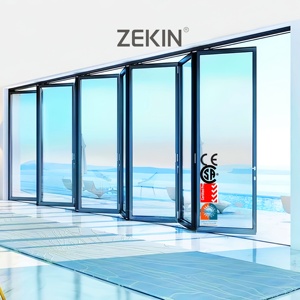
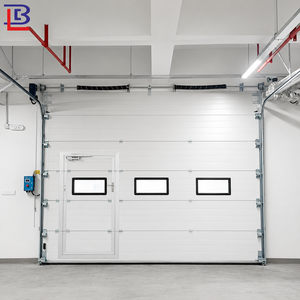 Heavy Commercial
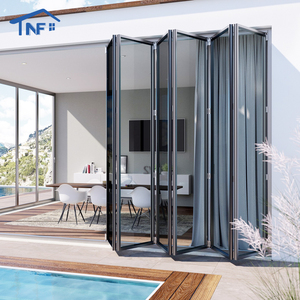
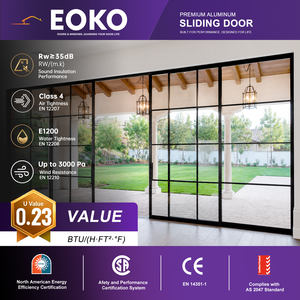 EN-14351 Certified
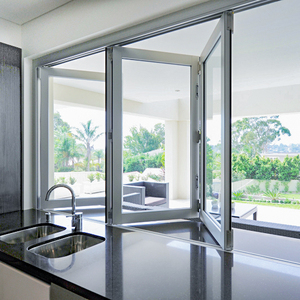 90° Postless Corner
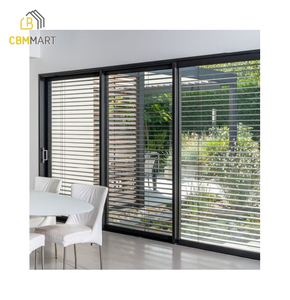 Anti-Intrusion
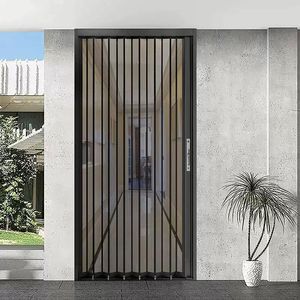 Diamond Marine Mesh
Why Tier-1 Contractors and Global Developers Partner With Us
Backed by Guangdong Dejiyoupin Doors and Windows Co., Ltd. (DERCHI) — ranked among China's Top 10 fenestration enterprises — we blend structural metallurgy, custom architectural extrusions, and automated assembly to supply landmark projects in North America, Australia, the GCC, and Europe.

Standard sliding folding doors commonly suffer from carriage fatigue, sagging stiles, and excessive air infiltration over repetitive duty cycles. Our OEM engineering eliminates these points of failure through advanced structural mechanics:
- Quadruple Sealed Stainless Rollers: SUS316 needle-bearing bogie carriages engineered to handle deadweight loads exceeding 350kg per door leaf without rolling resistance or operational friction.
- Multi-Chambered PA66 GF25 Strips: 24mm to 34mm fiberglass-reinforced polyamide thermal breaks mechanically crimped to ensure U-values as low as 1.3 W/m²K, decoupling exterior solar heat from chilled interior ambients.
- Continuous EPDM Dual-Durometer Gaskets: Vulcanized corner-molded gaskets prevent water ingress at 700 Pa static pressure, surpassing stringent Gulf and coastal cyclonic rain tests.
Technological & Procurement Development Trends (2025–2030)
The global architectural fenestration market is moving rapidly from commodity storefronts to hyper-engineered envelope systems. Project directors, facade consultants, and general contractors must navigate key industry transformations to protect capital expenditure and sustainability ratings.
Strategic B2B Sourcing Trends for Commercial Buyers
Procurement directors are fundamentally restructuring fenestration supply chains to mitigate tariff volatility, ensure raw material traceability, and guarantee delivery schedules against compressed construction timelines.
Engineering Performance Benchmark: Aluminum Folding Door Series
Review verified laboratory ratings across our OEM/ODM sliding folding product lines, engineered to satisfy diverse international structural codes and acoustic parameters.
| System Series | Profile Alloy & Wall | Thermal Barrier | Glazing Config | Air Tightness | Water Penetration | Acoustic (Rw) | Certification Tier |
|---|---|---|---|---|---|---|---|
| FD-80 Hurricane Pro | 6063-T6 / 2.5–3.0mm | PA66 GF25 (34mm) | 8mm Toughened + 1.52PVB + 8mm Toughened | Class 4 (EN 12207) | 900 Pa (ASTM E331) | Rw 42 dB | AS2047 / NFRC / CE |
| FD-68 Architectural | 6063-T5 / 2.0mm | PA66 GF25 (24mm) | 6mm Low-E + 16Ar + 6mm Toughened | Class 3 (EN 12207) | 600 Pa (ASTM E331) | Rw 38 dB | CE / ISO9001 |
| FD-50 Slim Interior | 6063-T5 / 1.8mm | Non-Thermal Acoustic | 5mm Frosted + 12A + 5mm Tempered | Class 2 (EN 12207) | 350 Pa (ASTM E331) | Rw 34 dB | EN-14351-1 |
| FD-90 Heavy Commercial | 6005-T5 / 3.0mm | Triple PA66 Polythermal | 6mm + 12Ar + 6mm + 12Ar + 6mm Triple Low-E | Class 4 (EN 12207) | 1050 Pa (ASTM E331) | Rw 45 dB | UL Listed / AS2047 |
| SD-Mesh Security Shield | 6063-T6 Extrusion | Integrated Structural Stop | 316 Marine Diamond Mesh (0.9mm wire) | High-Flow Natural | Drainage Channel Integrated | N/A Anti-Theft | AS5039 Security |
From raw aluminum ingot spectrographic analysis to pre-shipment dry runs, our 180,000㎡ Foshan manufacturing headquarters enforces strict German and Swiss quality criteria:
- Spectrometric Ingot Verification: Optical emission spectrometers verify elemental zinc, magnesium, and silicon percentages before billets proceed to extrusion presses, guaranteeing tensile strength above 240 MPa.
- CNC Milling & Dual-Component Corner Crimping: Multi-axis CNC machining centers drill and rout hinge mortises within ±0.1mm tolerances. Corner joints are crimped with cast aluminum chevrons and bonded with two-part polyurethane structural adhesive to prevent joint gap opening over decades.
- 100% Factory Pre-Assembly & Operation Trials: Every custom folding door leaf set is hung in a mock opening at the factory to calibrate smooth glide kinematics, verify multi-point deadbolt engagement, and certify laser plumb alignments before crating.

Frequently Asked Questions: OEM Aluminum Folding Door Procurement
Comprehensive technical, commercial, and engineering answers compiled by our chief facade specialists to assist architectural specifiers, overseas developers, and procurement authorities.
What distinguishes 6063-T6 aluminum alloys from standard 6063-T5 in folding door applications? +
How do bottom-rolling and top-hung sliding folding systems compare structurally? +
Can your aluminum bi-fold doors withstand coastal climates and extreme temperatures (50°C / -30°C)? +
What air and water infiltration certifications do your bi-fold doors comply with? +
What options exist for flush floor transitions without compromising water tightness? +
What are the lead times for custom OEM/ODM tooling, extrusion, and mass production? +
How does DERCHI prevent glass panel breakage and frame distortion during international sea transit? +
Can you supply integrated hardware, motorized operators, and smart electronic locks? +
Connect With Our Facade Engineering & Sourcing Desk
Send your project schedules, CAD architectural elevations, and specification targets. Our English-speaking fenestration engineers will provide itemized quotation proposals, thermal analysis data, and preliminary BIM shop drawings within 24 hours.