High-Span Architectural Fenestration: Structural Integrity & Energy Dynamics
In contemporary global architecture, expansive oversized glazing has transitioned from an aesthetic luxury to a standard structural requirement. Specifying large-format aluminium fenestration demands engineering rigor—balancing profile inertia, deflection limits under high wind velocity, acoustic attenuation, and stringent thermal transmittance ($U$-factors). As a factory-direct OEM/ODM manufacturer backed by 25+ years of engineering mastery and a 180,000㎡ industrial footprint, Guangdong Dejiyoupin Doors and Windows Co., Ltd. (DERCHI) delivers high-performance custom fenestration solutions compliant with North American (NFRC, ASTM), European (CE, EN), and Australian (AS 2047) standards.
Equipped with German 5-axis CNC machining centers and automated dual-component sealing lines.
Specialized in extreme-climate architectural fenestration and structural curtain wall integration.
Fully tested and accredited to CE, ISO 9001, AS 2047 N6, NFRC, and UL standards.
In-house structural engineering, free CAD shop drawings, and 24/7 technical consultation desk.
High-Performance Custom Aluminium Large Window Series
Explore our rigorously tested structural fenestration assemblies, designed for luxury villas, commercial towers, coastal residences, and passive energy building envelopes.
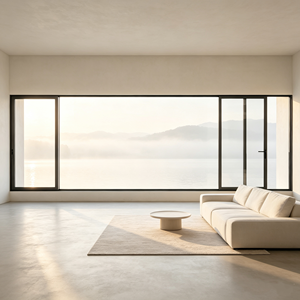
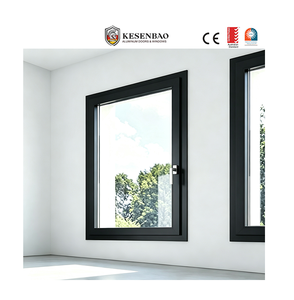
NFRC Custom Double Glazed Aluminum Casement windows With Screens For Villa House Project
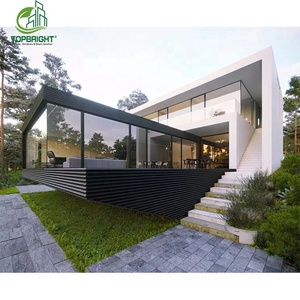
Houses Oem Large Glass Window Double Glazed Hurricane Impact windows Proof Aluminum windows
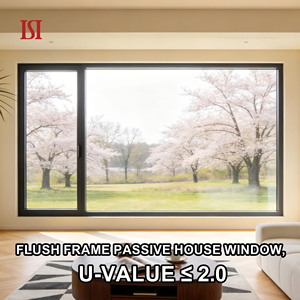
Modern Style Energy Efficient Thermal Break Aluminum Triple Double Glaze Windows Passive House Casement Glass
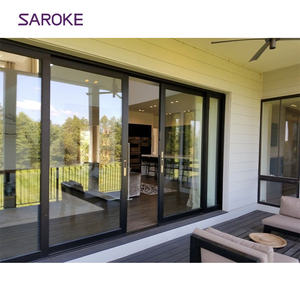
4 Panel Large Glass European Model High End Aluminum Sliding Doors and windows
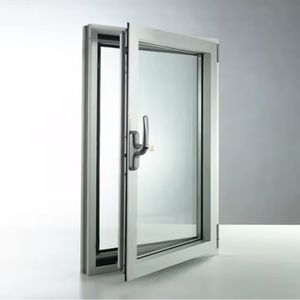
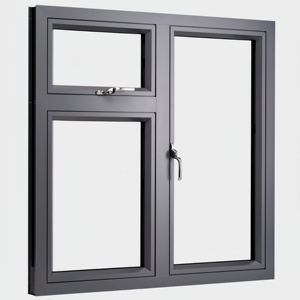
Customized Modern Louver Casement Window Large Aluminum Fixed Double Tempered Insulation Glass Soundproof Windproof Heat 5 Year
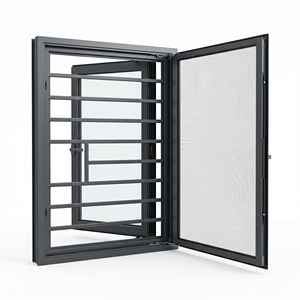
High Impact Insulated Thermal Break Bridge Aluminum Profile Frame Casement Windows with Screens and Bars for Houses
Why Leading Developers and General Contractors Partner With DERCHI
Sourcing large-span aluminium fenestration requires absolute manufacturing repeatability, stringent structural engineering, and end-to-end traceability. Our vertically integrated production model eliminates third-party markups while safeguarding tolerances down to 0.5mm.
6063-T5 / 6063-T6 Primary Extrusions
We strictly utilize virgin aerospace-grade primary aluminium billets without scrap blending. Wall thicknesses range from 2.0mm to 3.5mm, delivering exceptional moment of inertia ($I_x, I_y$) for oversized openings exceeding 4 meters in height without supplementary structural steel mullions.
Engineered Technoform Polyamide Strips
Our multi-cavity thermal break profiles incorporate PA66 GF25 (25% glass fiber reinforced polyamide) insulation bars. This separates internal and external profile chambers, preventing condensation and reducing system thermal transmittance down to $U_w \le 0.18\text{ BTU}/(\text{hr}\cdot\text{ft}^2\cdot^\circ\text{F})$ ($1.02\text{ W}/(\text{m}^2\cdot\text{K})$).
Architectural Surface Passivation & PVDF
Available in AkzoNobel PPG fluorocarbon (PVDF 3-coat system) and architectural anodizing conforming to Qualicoat Class 2 and AAMA 2605. Formulated to resist 4,000+ hours of continuous salt-spray testing, high-UV degradation, and sandstorm abrasion in coastal and desert climates.
Certified Structural Impact & Wind Pressure
Engineered for high-velocity hurricane zones (HVHZ) and coastal cyclone corridors. Systems are certified to AS 2047 Serviceability (N6 rating up to 4500Pa) and ASTM E1886 / E1996 large missile impact criteria using SentryGlas (SGP) and Saflex PVB interlayers.
Full-BIM & Free CAD Shop Drawings
Our dedicated engineering department converts your architectural schedules and elevations into structural shop drawings, anchor calculations, deflection simulations, and thermal boundary analyses within 48 hours to accelerate consultant approvals.
Turnkey Export Packaging & Ocean Logistics
Windows are packed in fumigated, steel-banded plywood crates with continuous cellular polyethylene wrapping and desiccant packs. We coordinate FCL/LCL ocean freight directly to major international ports across the US, Canada, Australia, and GCC nations.
| Engineering Property | Standard Testing Protocol | DERCHI Factory Benchmark | Market Advantage |
|---|---|---|---|
| Alloy Composition | ASTM B221 / EN 755 | 6063-T5 / 6063-T6 Primary Ingot | High tensile yield, no post-weld micro-porosity |
| Air Permeability | ASTM E283 / EN 12207 | Class 4 / < 0.10 cfm/ft² | Triple EPDM co-extruded compression gaskets |
| Water Tightness | ASTM E331 / EN 12208 | ≥ 900 Pa (18.8 psf) | Cascaded multi-chamber drainage & non-return baffles |
| Wind Resistance | ASTM E330 / AS 2047 N6 | ≥ 4500 Pa Design / 6750 Pa Proof | Engineered for super high-rise and hurricane zones |
| Acoustic Insulation | ISO 10140 / ASTM E90 | $R_w$ 38 dB to 45 dB ($STC \ge 42$) | Double/triple asymmetrical laminated insulated glass |
| Thermal Transmittance | NFRC 100 / EN ISO 10077 | $U_w$ down to $0.18\text{ BTU}/(\text{hr}\cdot\text{ft}^2\cdot^\circ\text{F})$ | Passive-house compliant polyamide thermal breaks |
Future Technology Trends in Large Aluminium Fenestration
Architectural glazing is evolving beyond static daylight provision. The intersection of structural minimalism, smart building integration, and decarbonization dictates the next generation of custom aluminium big windows.
Ultra-Slim Sightlines & Structural Concealment
Architects increasingly demand minimal visual frames. Current engineering focuses on flush-floor sills, concealed perimeter outer frames embedded within exterior cladding, and interlock profiles as narrow as 20mm–25mm while sustaining wind pressures through reinforced carbon-steel spine inserts.
Smart Automation & Concealed Magnetic Drives
As single glass panels surpass 350kg–800kg, manual sash operation requires motorized assistance. Trendsetters are adopting brushless magnetic levitation drives, fully integrated into BMS (Building Management Systems) with rain, wind, and air quality sensors for automated natural ventilation.
Vacuum Insulated Glass (VIG) & Electrochromics
The integration of hybrid VIG units delivers triple-glazing thermal performance ($U$-values below $0.6\text{ W}/(\text{m}^2\cdot\text{K})$) in a compact 10mm–12mm profile. Coupled with dynamic electrochromic glass, modern big windows alter solar heat gain coefficient (SHGC) on demand without motor shades.
Global Procurement Trends Shaping B2B Fenestration Sourcing
Understanding shifting regulatory frameworks and logistical paradigms is essential for commercial developers, fenestration contractors, and procurement executives seeking optimal capital efficiency and risk mitigation.
Direct Manufacturer OEM Alliances
Global developers are aggressively disintermediating traditional multi-tier trading brokers. Sourcing directly from large-scale OEM factories in Foshan provides full technical transparency, rapid custom profile extrusion, third-party lab verification, and 30%–45% procurement cost advantages on major tenders.
Decarbonization & Low-Carbon Aluminium (EPD)
Driven by LEED v4.1, BREEAM, and EU Carbon Border Adjustment Mechanisms (CBAM), procurement criteria now mandate Environmental Product Declarations (EPD). Demands are expanding for scrap-free recycled hydro-powered smelting to curtail Scope 3 embodied carbon across building lifecycles.
Pre-Glazed Modular Unitization
Elevated on-site labor rates in North America, Europe, and Australia have triggered a massive shift toward factory-glazed, fully unitized window assemblies. Delivering pre-glazed, pre-hung units eliminates field glazing errors, reduces site cycle times, and ensures factory-controlled seal cleanliness.
Frequently Asked Questions on Custom Big Window Procurement
In-depth answers addressing structural criteria, code approvals, profile specifications, and global delivery logistics.
How do you calculate deflection limits on oversized big window mullions?
Deflection is calculated based on project-specific design wind pressures ($P_d$) conforming to ASTM E330 or AS/NZS 1170. Under serviceability limit states, structural mullions are engineered to not exceed $L/175$ for spans up to 4.1m (or $L/240 + 6.35\text{mm}$ where brittle interior finishes are adjacent), preventing glass edge binding and perimeter seal rupture.
Can your large-format windows withstand 50°C summer heat in coastal desert climates?
Yes. For Gulf (GCC) and desert environments, we specify structural PA66 GF25 thermal breaks, solar-reflective Low-E coatings with low SHGC (≤ 0.23), triple EPDM peroxide-cured weather gaskets, and AAMA 2605 compliant PVDF fluorocarbon coatings to prevent thermal bow, chalking, and seal degradation under extreme $\Delta T$.
What is the maximum glass panel size and payload capacity for sliding systems?
Our heavy-duty European-engineered lift-and-slide and motorized horizontal sliding systems support individual sash weights up to 600kg (manual) and 1,200kg (automated), accommodating monolithic laminated or triple-glazed units up to 3.8 meters in width by 4.5 meters in height.
Do your fenestration products meet NFRC, CE, and AS 2047 certification standards?
Yes. Our window configurations have been independently tested by accredited testing laboratories (such as Intertek and national fenestration testing authorities) achieving NFRC thermal ratings, CE marking under EN 14351-1, and Australia AS 2047 N6 cyclonic structural compliance with complete test reports for submittals.
Which glass configuration is optimal for acoustic attenuation near highways or airports?
For high acoustic attenuation, symmetrical double glazing should be avoided due to coincidence frequency resonance. We recommend an asymmetrical insulated makeup—such as 8mm Toughened Exterior + 16mm Argon Warm Edge Spacer + 6.76mm (33.2) Acoustic PVB Laminated Interior, achieving Sound Transmission Class (STC) 42–45 dB.
What is the standard OEM engineering timeline from shop drawing to factory dispatch?
Upon receipt of your architectural window schedule, our CAD team prepares fully dimensioned shop drawings within 2 to 3 working days. Following sign-off and extrusion anodizing/coating, production cycle times average 25–35 calendar days, followed by rigorous pre-shipment trial assembly and crating.
How do you safeguard oversized glass against cracking during ocean freight transit?
All large-format glass assemblies utilize heavy-gauge cork separation pads, moisture-resistant heat-shrink vacuum wrapping, corner structural protectors, and custom reinforced A-frame or steel-braced non-fumigation plywood crates built to withstand lateral acceleration in maritime shipping.
What hardware brands and locking mechanisms are integrated into your systems?
To guarantee longevity under cyclic loading, we integrate tier-1 global hardware partners, including German G-U, Siegenia, Hoppe, Sobinco, and Belgian Sobinco multi-point mushroom cam gearboxes, heavy-duty stainless steel 316 friction stays, and concealed multipoint locks.
Request an OEM Engineering Quote & Free CAD Shop Drawings
Send your project elevations, window schedule, or preliminary architectural drawings. Our senior fenestration engineers will provide structural load assessments, thermal values, and competitive factory-direct pricing within 24 hours.