Top-Tier Engineered Aluminum Bathroom Windows & Entry Solutions
Custom-fabricated to stringent international standards (CE, AS 2047, ISO 9001). Engineered specifically for high-moisture resistance, superior privacy, and structural longevity.
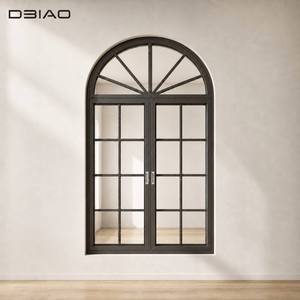
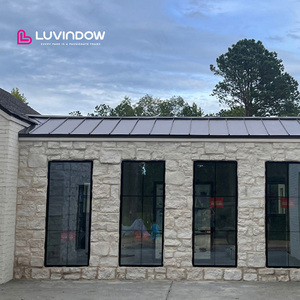
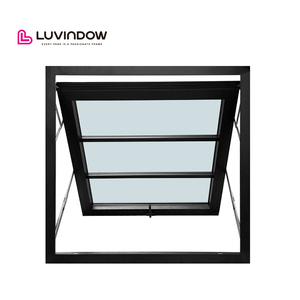
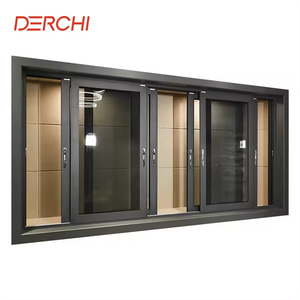
Engineering Specifications & Material Selection for Humid Environments
Bathroom fenestration presents unique micro-climatic challenges. Commercial specifiers must balance constant indoor relative humidity (RH > 80%) with external temperature swings without risking seal rupture or structural condensation.
| Window Mechanism | Optimal Placement | Air Tightness & Acoustic Index | Water Penetration Threshold | Ventilation Efficiency |
|---|---|---|---|---|
| Thermal Break Casement | Master en-suites, high-end private residences | Class 4 (EN 12207) / Rw 38–42 dB | E900 (900 Pa pressure) | 100% full-sash aerodynamic draw |
| Tilt-and-Turn Multi-Lock | Modern villas, luxury hotels, penthouses | Class 4 / Rw 40–44 dB | E1050 (Continuous hurricane seal) | Dual-mode (Draft-free tilt / Quick-flush turn) |
| Top-Hung Awning Transom | Wet zones, walk-in shower enclosures | Class 3 / Rw 34–36 dB | 600 Pa (Maintains shed angle during storm) | Continuous rain-defended micro-ventilation |
| Precision Slim Sliding | Compact powder rooms, space-constrained suites | Class 2–3 / Rw 30–33 dB | 450 Pa (Equipped with stepped weep tracks) | Horizontal sliding, 50% clear opening |
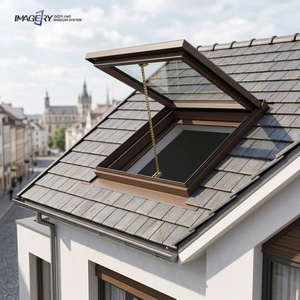
| Motorized Roof Skylight | Spa sanctuaries, private atrium bathrooms | Class 4 / Rw 36–39 dB | E1200 (Continuous perimeter dry-gasket) | Vertical buoyancy convective extraction |
Future Procurement & Technology Trends in Bathroom Fenestration
Strategic analysis for B2B distributors, architects, and general contractors navigating the next decade of residential and commercial bathroom design specifications.
1. Electrochromic PDLC Privacy Glazing
Traditional frosted or sandblasted glass is rapidly being replaced in luxury specifications by switchable Polymer Dispersed Liquid Crystal (PDLC) double-glazed units. Specifiers gain instant, flicker-free transitions between absolute privacy and crystal clarity via wall switches, mobile automation, or presence sensors, eliminating the need for unsanitary fabric blinds in damp environments.
2. Multi-Chamber Polyamide Thermal Barriers
As international green building codes (LEED v4.1, BREEAM, and European nZEB) tighten thermal performance baselines, thermal conductivity in bathroom windows is under scrutiny. Leading exports now employ 24mm to 34mm multi-cavity PA66 GF25 thermal breaks that eliminate cold-bridge dew-point condensation, mitigating internal frame mold growth.
3. Automated Convective IAQ Integration
The convergence of fenestration with Indoor Air Quality (IAQ) sensors represents a major procurement vector. Commercial developers favor concealed chain-actuator awning and skylight systems calibrated to humidity and volatile compound metrics. These windows modulate openings autonomously to vent excess steam without relying on loud, energy-draining mechanical exhaust fans.
4. Marine-Grade Qualicoat Seaside Finishes
Bathrooms pose dual corrosion threats: persistent internal soap residue and moisture, coupled with coastal salinity or urban smog externally. Modern bulk procurement contracts mandate Qualicoat Class 2 powder coatings or 25-micron hard-anodized surfaces that withstand 3,000+ hours of continuous acetic acid salt-spray (AASS) testing without micro-blistering.
5. Ultra-Slim Minimal Sightlines with High Inertia
Architects demand maximum natural daylight via ultra-narrow profiles (sub-45mm visible face width). Achieving structural stability with heavy acoustic laminated double-glass units requires aerospace-grade 6063-T6 virgin aluminum alloys featuring optimized internal web reinforcement, delivering architectural elegance without mechanical sagging.
6. Concealed Hardware & Flush Drainage
Aesthetic minimalism has moved into secondary spaces. High-end procurement requires completely concealed 180° hinges, hidden magnetic locks, and flush-integrated sub-sill drainage modules with non-return silicone valves that stop wind-driven rain from blowing back into the frame rebate.
Why Tier-1 Contractors Rely on DERCHI Engineering
As an industry leader operating from our 180,000㎡ smart manufacturing facility in Foshan, Guangdong, we bridge the gap between high-volume output and precise architectural detailing.
25+ Years Industrial Dominance
Recognized as one of the Top 10 door and window brands in China, Guangdong Dejiyoupin Doors and Windows Co., Ltd. (DERCHI) operates over 180,000 square meters of production infrastructure with 600+ trained technical artisans, delivering structural framing to landmark projects across the USA, Canada, Australia, the UK, and the Middle East.
Stringent Multi-Standard Certification
Our window assemblies are rigorously certified against the world's most demanding fenestration benchmarks. We hold verified compliance for AS 2047 (Australian N6 cyclonic testing), CE marking (EN 14351-1), ISO 9001 quality audits, and UL safety standards, ensuring that project submittals pass building authority reviews on the first submission.
One-Stop Architectural Customization
From initial design takeoff to complete structural shop drawings (free CAD/BIM detailing provided by our in-house engineering team within 24 hours), we customize every assembly: precision miter cuts, corner crimping with injected two-component polyurethane adhesives, and premium European multi-point locking gear (Siegenia, Roto, Hoppe).
Frequently Asked Technical & Sourcing Questions
Detailed guidance for project managers, structural estimators, and commercial procurement officers sourcing aluminum bathroom windows from China.
How do you stop condensation and mold on bathroom aluminum frames?
Condensation occurs when moist interior air meets a frame surface colder than the room's dew point. We solve this by using structurally decoupled thermal break profiles separated by low-conductivity polyamide (PA66 GF25) insulation strips. Paired with warm-edge spacer bars and double/triple tempered glazing filled with argon gas, the interior frame temperature stays safely above the dew point, eliminating frame sweat and moisture damage.
Which privacy glazing works best for commercial hospitality bathrooms?
For high-traffic hospitality applications, ceramic frit obscured glass or acid-etched low-iron glass provides permanent, fingerprint-resistant privacy that will not degrade under heavy chemical cleaning. For five-star suites and executive villas, we integrate switchable smart PDLC film inside an insulated glass unit (IGU), giving guests instant switchable control over daylight and privacy.
What hardware alloy is specified to avoid rust from high humidity?
Standard carbon steel or zinc-plated hardware corrodes quickly in humid shower environments. DERCHI constructs friction stays, hinges, fasteners, and multi-point locking pins from austenitic SUS304 or marine-grade SUS316 stainless steel. Transmission handles receive multi-layer anti-corrosion electroplating to withstand continuous humidity and steam exposure.
What are your typical export packaging standards to prevent glass breakage?
Every window unit undergoes a four-stage packaging protocol: first, a protective film shields the profile surface from scratches; corner protectors are fitted around the frames; the entire assembly is sealed in heavy-gauge polyethylene heat-shrink wrapping; and finally, units are secured inside custom-built fumigated solid plywood crates with integrated shock-absorbing foam lining, built to withstand ocean freight and container handling.
Can DERCHI match specific architectural RAL colors and anodized finishes?
Yes. Our automated vertical electrostatic powder-coating lines support the entire international RAL Classic and Design color catalogs. We offer metallic mica coats, deep matte anti-glare coatings, ultra-realistic fluorocarbon wood-grain transfers, and Class 1/Class 2 architectural anodizing (15–25 microns) suited for extreme marine environments.
What project documentation do you provide for tender submissions?
We provide full technical submittal dossiers within 24–48 hours of schedule receipt. This includes certified structural calculations (wind load resistance up to 6000 Pa), thermal simulation reports (U-factor/SHGC ratings), laboratory acoustic test certificates, detailed shop drawings in CAD (.dwg) and PDF formats, and complete material data safety sheets (MSDS).