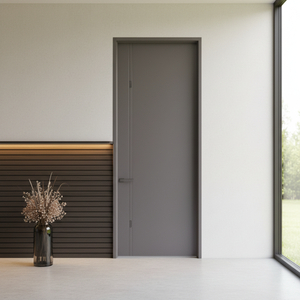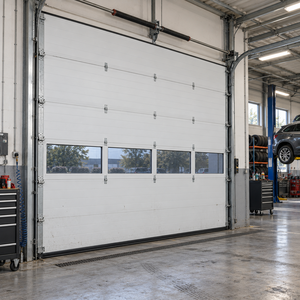
ISO 9001 & CE Certified Architectural Fenestration

China Wholesale Aluminium Jali For Window Manufacturer & Exporter

Precision-engineered perforated lattice panels, security mesh screens, and decorative architectural Mashrabiya grilles directly fabricated in Foshan for luxury residential and commercial developments.

Engineered Fenestration Showcase

High-Spec Aluminum Windows, Doors & Screen Assemblies

Combining heavy-duty 6063-T6 aluminum extrusion alloy profiles with precision architectural jali screening, cyclone-rated folding hardware, and thermal barrier engineering for demanding global climates.
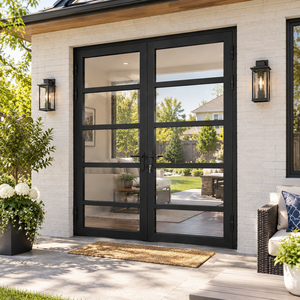
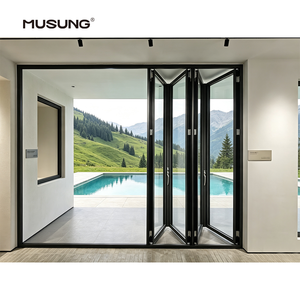
Technical Whitepaper & Metallurgy

Engineering Anatomy of Architectural Aluminium Jali Systems

Architectural aluminum jali screens represent the modern evolution of traditional microclimate solar louvres and ornamental fenestration. By combining structural alloy formulations with precision CNC fiber-laser cutting, our jali window systems deliver balanced solar shading, natural passive ventilation, acoustic deflection, and forced-entry deterrence.

Alloy Selection: 6063-T6 & 5052-H32

We source primary A00-grade aluminum billets. Extruded outer sash frames utilize 6063-T6 alloy possessing tensile strengths exceeding 240 MPa. For intricate laser-cut perforated panels, marine-grade 5052-H32 aluminum-magnesium alloy provides superior elongation, pristine edge formation without micro-fracturing, and unmatched coastal salinity endurance.

Solar Radiation & SHGC Attenuation

Engineered with custom Open Area Ratios (OAR) varying from 28% to 62%, our aluminum window jali acts as a passive solar envelope. It intercepts direct thermal radiation before striking insulated glazing units (IGUs), dropping indoor surface temperatures by up to 11.4°C and slashing building cooling loads (HVAC) by 32% in hyper-arid climates.

PVDF & Architectural Powder Coating

Surface treatments comply rigorously with AAMA 2605 specifications. Using automated multi-stage pre-treatment with zirconium conversion coatings, followed by fluoropolymer PVDF resins (70% Kynar 500), our jalis resist 4,000+ hours of continuous salt-spray exposure and intense UV degradation across Middle Eastern and Southeast Asian projects.

Multi-Point Integrated Security Locks

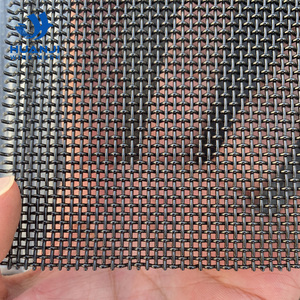
Beyond aesthetic value, our window jali frameworks integrate internal 304/316 stainless steel security meshing (0.8mm-1.0mm high-tensile wire) and dual-side multi-point shootbolt locking mechanisms. This creates a multi-layered barrier rated against dynamic impact forces exceeding 150 Joules without obstructing outward panoramic vision.

Acoustic Dampening & Fluid Dynamics

Perforated lattice screens create micro-vortex disturbances that disrupt laminar wind currents and attenuate low-to-mid frequency ambient noise. By functioning as an exterior acoustic baffle, our decorative jalis decrease sound transmission levels (Rw) by 5 to 8 dB prior to primary casement glass engagement.

Thermal Bridge Isolation (Polyamide PA66)

For thermally broken window assemblies incorporating exterior jali screens, we integrate 24mm to 34mm fiberglass-reinforced Polyamide (PA66 GF25) thermal insulating strips. This critical barrier decouples indoor and outdoor thermal conduction paths, guaranteeing system U-values under 1.6 W/m²·K in compliance with global green codes.

Market Intelligence & Forecast

Future Procurement Trends in Architectural Window Jali (2026–2035)

The global specification market for exterior architectural screening and aluminum jali windows is transitioning from static ornamental ironwork to dynamic, energy-positive fenestration systems. Key commercial driving factors include mandatory building life-cycle assessments, seismic-wind structural compliance, and intelligent facade integration.

DECARBONIZATION

Certified Low-Carbon Aluminum Sourcing

Institutional developers across North America and Europe now mandate Environmental Product Declarations (EPDs). Global procurement is pivoting to low-carbon primary aluminum smelted using hydroelectric or solar energy, lowering embodied carbon metrics from 12.0 kg CO2e/kg to below 4.0 kg CO2e/kg Al.

-65% Embodied Carbon Footprint
AUTOMATION

Motorized Kinetic Shutter Envelopes

Procurement demands for ultra-luxury villas and commercial headquarters increasingly feature motorized sliding and bifolding jali screens. Synchronized with Building Management Systems (BMS) and solar tracking sensors, these screens articulate dynamically throughout diurnal cycles to maximize daylight while eliminating glare.

28.4% Annual Cooling Cost Reduction
FABRICATION

Parametric & Algorithmic Perforation

Standard geometric punches have given way to 3D fiber-laser ablation driven by parametric CAD algorithms. Architects submit customized BIM/Revit models exhibiting variable-density porosity, which optimizes internal solar shading coefficients based on precise building orientation azimuths.

0.05mm Fiber Laser Machining Precision
CLIMATE RESILIENCE

Extreme Windload & Cyclone Engineering

Coastal developments across Florida, Australia, and the Caribbean enforce cyclonic and hurricane impact performance. Next-generation jalis are tested under ASTM E1886/E1996 and AS 2047 cyclonic protocols, acting as an initial sacrificial impact deflector that protects primary glass against high-speed airborne storm debris.

N6 / C4 AS 2047 Severe Cyclone Rating
FINISH LONGEVITY

Superdurable Powder Coatings & PVDF

Standard architectural powder finishes fail rapidly in high-UV, maritime environments. Sourcing guidelines mandate Class 2/Class 3 superdurable fluoropolymer resins complying with AAMA 2604/2605 standards, guaranteeing 20+ year color retention (Delta E < 5) and gloss stability under continuous UV exposure.

25-Year Florida Test Weatherability
SYSTEM UNIFICATION

Unitized All-in-One Fenestration Modules

To reduce onsite labor bottlenecks, developers seek pre-assembled unitized systems containing the structural sub-frame, double/triple glazed window sash, internal mosquito netting, and external aluminum jali panel delivered as a calibrated, pre-tested architectural subassembly.

40% Faster Onsite Installation Time
Enterprise Manufacturing Scale

Guangdong Dejiyoupin Doors and Windows Co., Ltd. (DERCHI)

As one of China's top tier fenestration manufacturers, our Foshan industrial manufacturing base spans an expansive 180,000 square meters. Backed by 25+ years of continuous craftsmanship, our engineering and export departments have delivered bespoke architectural aluminum systems to over 50 countries across the Middle East, North America, Australia, and Southeast Asia.

180k㎡
Production Complex
600+
Skilled Fabricators
100+
Patents & Global Certs
ISO 9001:2015 Registered CE Certified (EN 14351-1) AS 2047 Australian Standard (N6 Pass) UL Fire Resistance Certified

Our advanced infrastructure integrates automated German Elumatec CNC 5-axis profile machining centers, high-power 12kW fiber-laser cutters, computerized powder coating lines, and comprehensive environmental testing laboratories validating water penetration, structural deflection, and cyclic air infiltration.

Export Specification Benchmarks

Extrusion Profile Alloy: 6063-T6 / 6061-T6 (GB 5237-2017)
Laser-Cut Sheet Alloy: 5052-H32 / 3003-H14 Marine Grade
Sheet Thickness Range: 2.0 mm to 6.0 mm Structural Aluminum
Surface Finish Chemistry: 70% Kynar 500 PVDF / AkzoNobel Superdurable
Hardware & Locking: German Siegenia / HOPPE / Heavy-Duty 304 SS
Air Tightness / Water Infiltration: Class 4 (EN 12207) / Class 9A (EN 12208)
Wind Pressure Resistance: Class C5 (EN 12210) > 5000 Pa Ultimate
Engineering CAD/BIM Services: AutoCAD Shop Drawings & Revit 3D Models
Procurement Intelligence

Frequently Asked Technical & Sourcing Questions

Authoritative answers addressing structural sizing, alloy specifications, sea-freight logistics, and project certification requirements for international contractors and architectural consultants.

Q1

What is the minimum recommended aluminum thickness for exterior window jali screens?

For residential low-rise applications, a minimum gauge of 2.5mm (5052-H32) is required to maintain structural rigidity after extensive laser perforation. For multi-story commercial buildings or high-wind coastal environments, we specify 3.0mm to 5.0mm sheet thickness with perimeter stiffener ribs welded directly to the unexposed face to avoid oil-canning and harmonic vibration under gale conditions.
Q2

How does your factory protect aluminum jali screens from coastal salt-air corrosion?

We follow a rigorous 14-stage chemical pre-treatment standard including acid etching, de-smutting, and non-chrome titanium/zirconium passivation. We then apply multi-coat PVDF coatings baked at 230°C or hard-anodizing exceeding 25 microns (Class I architectural finish). All assemblies use 316-grade marine stainless steel mounting brackets and fasteners to eliminate galvanic corrosion risks.
Q3

Can you produce bespoke parametric patterns directly from our architectural Revit/DWG files?

Yes. Our in-house engineering team works directly with architectural DWG, DXF, STP, and Revit files. We conduct a preliminary Manufacturability Assessment (DFM) to evaluate open-area structural integrity, kerf-width limitations, and fastening locations, providing complete coordinated shop drawings for architect sign-off within 48 to 72 hours.
Q4

What are your quality control procedures prior to international container loading?

Every production batch undergoes a 5-tier inspection: 1) Spectrometer chemical alloy composition verification; 2) Dry film thickness (DFT) gauge tests across 10 random points; 3) Cross-hatch adhesion testing (ASTM D3359); 4) Complete dry-assembly fit testing on precision flat-beds; 5) Multi-point locking functionality checks. Comprehensive Quality Inspection Reports accompanied by HD photos/videos are issued prior to container sealing.
Q5

How are the jali panels packaged to eliminate scratch and transit deformation risks?

Each aluminum jali screen is layered with a peelable 80-micron protective film, interleaved with pearl-cotton (EPE) shock dampening sheets, wrapped in vacuum-sealed waterproof plastic, and crated inside fumigated ISPM-15 compliant multi-layer plywood cases. Internal structural braces and desiccant silica gel packets prevent moisture condensation and shifting during rough ocean voyages.
Q6

What is your production lead time for standard and large-scale bespoke project volumes?

Prototype samples and shop drawings take 5 to 7 working days. Full-scale project runs (500 to 3,000 square meters) average 20 to 30 calendar days from the date of final shop drawing approval and deposit confirmation. Accelerated fabrication channels are available for critical construction schedules with tight milestone deadlines.
Q7

Do your assemblies comply with regional hurricane and cyclone building codes?

Yes. Our heavy-duty window and jali shutter assemblies are tested according to Australian AS 2047 (passing the highest N6 structural wind pressure benchmark) as well as CE EN 12210 Class C5 criteria. For coastal projects requiring large missile impact certification, we engineer dedicated backing brackets and reinforced structural substructures capable of withstanding extreme cyclic wind and missile load impacts.
Q8

Can the aluminum jali panel be incorporated into operable sliding or folding window frames?

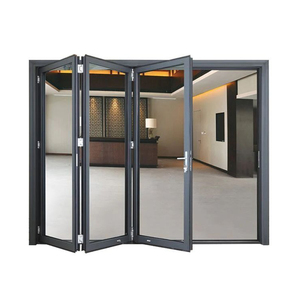
Absolutely. We manufacture modular track systems specifically designed to hold aluminum jali panels as independent operable panels. These integrate smoothly alongside standard casement windows, multitrack sliding doors, or bifolding assemblies, enabling occupants to independently position the jali screen for privacy, shaded airflow, or clear views.

Source Factory-Direct Architectural Aluminum Jali Windows

Collaborate directly with our Foshan engineering and manufacturing team. Whether you need custom decorative Mashrabiya screens, coastal cyclone-rated sliding shutters, or wholesale fenestration systems, our estimators provide detailed quotes, DFM assessments, and material samples within 24 hours.

Inquire Now
Direct Factory Wholesale Pricing (FOB / CIF / DDP)
Free Engineering CAD Shop Drawings & BIM Models
Full ASTM, CE, AS 2047 & ISO 9001 Test Reports
25-Year Marine-Grade Coating Performance Warranties
Reinforced Export Packaging for Zero Transit Damage