Commercial Entry
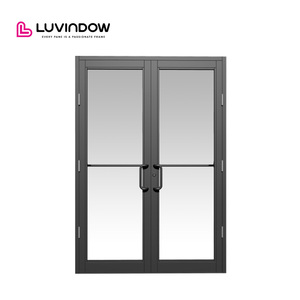
Explore our engineering-certified product matrix engineered specifically for heavy pedestrian traffic, severe wind-load resistance, acoustic isolation, and superior thermal efficiency across global climates.
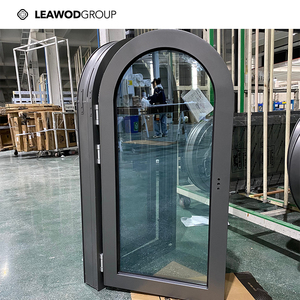
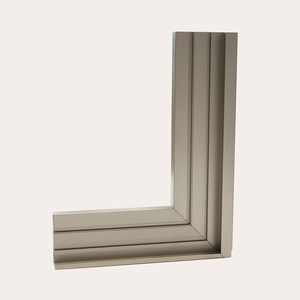
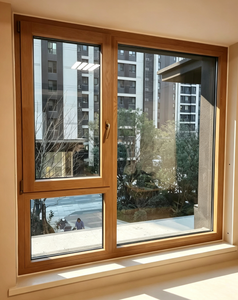
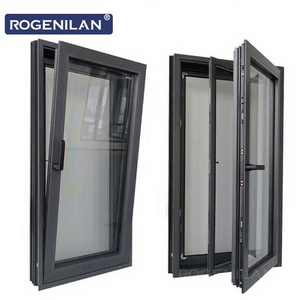
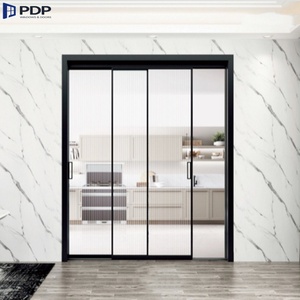
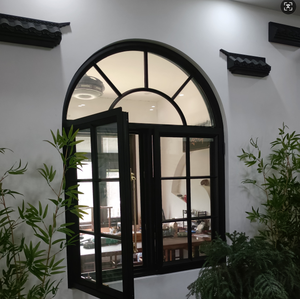
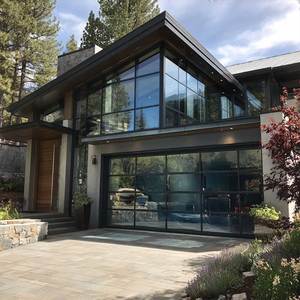
Headquartered in Building 19, Shenke Chuangzhi Park, Shishan Town, Nanhai District, Foshan—the global epicentre of structural aluminum extrusion—DERCHI stands as a Top-10 recognized fenestration titan in China. Operating across a fully digitalized 180,000㎡ smart production complex, we combine automated German Elumatec 5-axis CNC machining centers, robotic structural silicone glazing lines, and precision computerized corner crimping stations.
Our engineered systems are deployed across prestigious high-rises, institutional campuses, luxury villas, and resort developments in the United States, Canada, Australia, the United Arab Emirates, Saudi Arabia, Qatar, and the EU. Every export assembly undergoes rigorous dimensional verifications, dynamic helium leak testing, and multi-axis cycle fatigue audits.

Architects, facade consultants, and general contractors evaluate entrance assemblies based on structural deflection ratings, thermal break conductivity, air infiltration resistance, and cycle durability. Below is our engineering benchmark across key door configurations.
| System Architecture | Extrusion Profile & Wall | Glazing Specification | Thermal U-Factor (W/m²K) | Wind Load Resistance | Acoustic Rating (STC) |
|---|---|---|---|---|---|
| Narrow-Stile Minimalist Sliding | 6063-T6 / 2.0mm - 2.5mm | 8mm+12A+8mm Toughened Low-E | 1.4 - 1.8 | ASTM E330 3500 Pa | 36 - 39 dB |
| Heavy-Duty Commercial Pivot | 6061-T6 High Tensile / 3.0mm | 10mm+1.52SGP+10mm Laminated | 1.6 - 2.0 | AS 2047 N6 (>4500 Pa) | 40 - 43 dB |
| Thermally Broken French Entrance | 6063-T5 / PA66 GF25 34mm Insul | 6Low-E+16Ar+6mm Dual Warm Edge | 1.0 - 1.3 (Passive) | EN 12211 Class C5 | 38 - 42 dB |
| Full-View Overhead Glazing Door | Structural Ribbed Extrusion 2.5mm | 6mm+0.76PVB+6mm Impact Glass | 2.2 - 2.6 | TAS 201/202/203 Impact | 32 - 35 dB |
| Storefront Security Entrance | Tubular Reinforcement 3.0mm - 4.0mm | 12mm Monolithic Heat-Soaked | 2.8 - 3.2 | ASTM F588 Forced Entry | 33 - 36 dB |
Global procurement teams are shifting away from localized spot buying to structured direct-from-manufacturer strategic agreements. Discover the technological, ecological, and economic forces shaping wholesale B2B door sourcing over the next decade.
International building codes (LEED v4.1, BREEAM, and the EU CBAM carbon border tax) now incentivize verifiable low-carbon aluminum. Manufacturers utilizing hydropower-smelted primary billets and post-consumer recycled alloys (Hydro REDUXA standards) with verified Environmental Product Declarations (EPD) are capturing institutional mega-project tenders.
Architects are replacing external mechanical latch locks with motorized concealed locking hardware integrated directly into the door stile. Future procurement mandates concealed magnetic contacts, 24V bus-wire concealed power hinges, and bi-directional API interfaces for commercial Crestron, Control4, and Honeywell Building Management Systems (BMS).
Escalating on-site carpentry and glazing labor rates across the US, UK, Australia, and GCC are compelling developers to specify 100% factory-glazed, fully assembled sub-frame systems. Prefabricated plug-and-play door packages reduce installation schedules by up to 65% while eliminating costly on-site glass handling damages.
Breakthroughs in structural polymer chemistry, surface nanotechnology, and composite metallurgy have redefined what is architecturally possible with oversized entrance glass panels.
By employing SentryGlas® Plus (SGP) ionoplast interlayers between oversized tempered panels, glass stiles achieve five times the tear strength and one hundred times the rigidity of conventional PVB. This allows the structural glass itself to bear dynamic live loads, enabling majestic frameless pivot doors up to 6 meters in single-leaf vertical clearance.
Traditional polyamide (PA66) thermal breaks are now being supercharged with silica aerogel infusions. These microscopic porous structures interrupt conductive heat transfer within aluminum hollow chambers, achieving passive-house thermal conductance ratings ($U_f \le 0.85\ \text{W/m}^2\text{K}$) without increasing external profile depth.
For high-salinity coastal fronts and aggressive desert UV exposures, advanced 70% Kynar 500 / Hylar 5000 PVDF resin coatings comply with AAMA 2605 specifications. This advanced molecular matrix resists over 4,000 hours of continuous ASTM B117 salt spray testing with zero chalking, blistering, or gloss degradation.
In-depth answers to critical technical questions asked by commercial procurement officers, quantity surveyors, facade engineers, and international importers sourcing full glass door systems from China.
For standard architectural catalogue profiles, our factory MOQ starts at a single set for bespoke residential mockups or project prototypes. For custom dies requiring unique proprietary extrusion tooling, the MOQ is 1 metric ton of aluminum billet, with an expedited die-casting turnaround of 10-14 days. Standard fabrication cycles average 25-35 days from approved CAD shop drawings.
All finished assemblies are encased in fumigated, fully enclosed marine-grade plywood crates constructed with heavy internal timber runners and corner gusset bracing. Glass panels are separated by 3mm cork vibration dampeners, vacuum-wrapped in moisture-barrier film, and integrated with industrial silica desiccant bags to prevent surface glass corrosion under tropical shipping conditions.
Yes. Our in-house technical engineering department generates complete structural shop drawings, wind-load structural deflection calculations (complying with AS 1170, ASTM E1300, and EN 1991), and thermal simulation analyses (LBNL THERM/WINDOW). Full third-party physical test reports (CE, AS2047, AAMA, UL) are provided for consultant sign-off.
We partner directly with leading international hardware manufacturers including Siegenia, GU, Roto Frank, Sobinco, Dormakaba, and Hoppe, as well as Kin Long and CMECH. For oversized architectural pivot systems, we integrate heavy-duty concealed hydraulic floor springs rated for continuous duty cycles exceeding 500,000 openings on panels weighing up to 600 kg.
In temperate climates or exterior building envelopes subjected to heating/cooling energy codes (ASHRAE 90.1, Title 24, Part L), thermally broken profiles featuring glass-fiber reinforced polyamide (PA66 GF25) are mandatory to mitigate internal condensation and energy loss. Non-thermal breaks are reserved strictly for interior office partitions, shopping mall corridors, or sheltered vestibules.
DERCHI implements a four-stage QC protocol: raw extrusion alloy spectrometer verification, anodizing/coating dry film thickness (DFT) adhesion cross-hatch testing, factory 100% pre-assembly dimensional fit checks, and dynamic air/water chamber testing. High-resolution photo and 4K video inspection portfolios are transmitted to clients prior to dispatch.
Send our senior engineering team your architectural elevations, door schedules, or tender drawings. Receive a detailed Bill of Quantities (BOQ), structural compliance recommendation, and direct factory pricing within 24 hours.