Engineered Architectural Security & Glazing Solutions
Explore our precision-manufactured fenestration and intrusion-resistant systems. Each profile is tested for structural rigidity, hydrostatic barrier integrity, and mechanical anti-jemmy resistance across demanding residential and commercial environments.
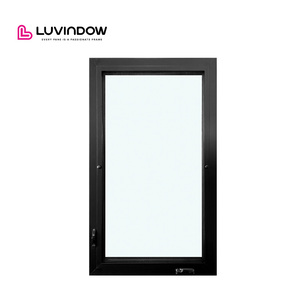
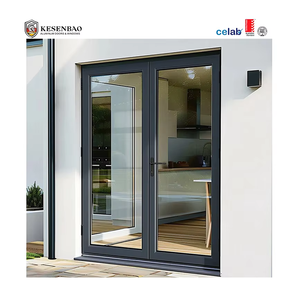
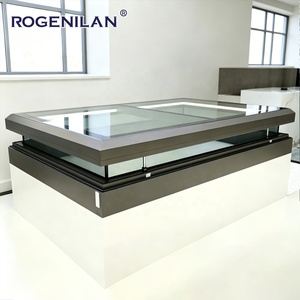
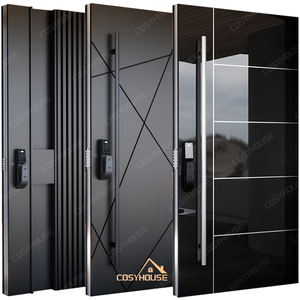
Engineering Architecture of High-Security Aluminium Burglar Doors
Specifying commercial and luxury residential burglar doors requires an objective evaluation of structural metallurgy, kinetic load distribution, and tamper-proof hardware mechanics. Chinese manufacturing ecosystems have evolved from basic window framing into sophisticated, automated extrusion facilities capable of meeting rigorous Western security standards.
Modern architectural security doors manufactured from aluminium alloys do not rely solely on profile thickness; their performance is determined by the synergy between alloy tempering (6063-T6 versus 6061-T6), internal multi-chamber wall geometries, mechanical interlocking stiles, and thermal insulation barriers that resist structural deformation under mechanical attack. In high-risk institutional, commercial, and luxury residential projects, an aluminium security door must resist coordinated prying, levering, drilling, and impact techniques while maintaining thermal envelope compliance (low U-factors) and architectural elegance.
By integrating multi-point perimeter deadlocking gears directly into reinforced euro-groove channels, our door assemblies redistribute localized kinetic forces across the entire structural subframe. Rather than yielding at a single strike plate, the door leaf interlocks with heavy-duty aluminium or 304/316 stainless steel keeps every 400mm along the vertical jambs, rendering crowbar manipulation ineffective. Furthermore, high-tensile 316 marine-grade stainless steel security mesh and PVB/SentryGlas laminated safety glass configurations eliminate vulnerabilities without compromising visibility or airflow.
Structural 6063-T6 Extrusions
Engineered with minimum 2.0mm to 3.5mm web thickness. Multi-chamber cross-sections provide torsional rigidity against jack-spreading and crowbar attacks while accommodating polyamide (PA66 GF25) thermal breaks.
Multipoint Hook & Pin Locks
German-origin and heavy-duty proprietary espagnolette systems feature hardened steel anti-saw hook bolts and anti-drill manganese plates shielding the lock cylinder from physical attack.
Anti-Jemmy Interlocking Rebate
Continuous vertical interlocking flanges along the hinge stiles eliminate external access points for crowbars. Concealed heavy-duty barrel or pivot hinges support loads exceeding 400kg per leaf.
Forced-Entry Resistance Matrix: Global Compliance Benchmarks
Comparing international anti-burglary test standards allows architects, contractors, and procurement officers to align structural specifications with municipal building codes and insurance underwriting requirements.
| Testing Standard | Target Market | Resistance Classification | Attacker Tool Profile | DERCHI Compliance Strategy |
|---|---|---|---|---|
| EN 1627 / RC2 | European Union / Global | Class RC 2 (3 min physical attack) | Screwdrivers, pliers, wedges, pipe wrenches | Reinforced multi-point locks, P4A laminated glass, 2.0mm wall thickness |
| EN 1627 / RC3 | European Union / Commercial | Class RC 3 (5 min targeted attack) | Crowbar (710mm), steel wedges, manual hand drill | Internal steel reinforcement tubes, anti-drill cylinders, P5A glass |
| PAS 24:2022 | United Kingdom | Enhanced Security Door System | 3kN mechanical infill load, manual lever attack | Continuous interlocking hinge rebates, welded corners, anti-lift bars |
| AS 5039 / AS 5041 | Australia / New Zealand | Security Screen Doors | Dynamic impact (100J × 5), knife shear, jemmy test | 0.8mm – 1.0mm 316 stainless mesh mechanically locked in heavy frame |
| ASTM F588 / F476 | North America / USA | Grade 40 Forced Entry Resistance | Static compressive load (300 lbf), concentrated impact | Heavy-gauge 6063-T6 framing, hardened steel deadbolts, structural glazing |
Strategic Sourcing & Future Market Trends (2025–2030)
The global architectural security door sector is undergoing a rapid transition toward concealed high-load hardware, smart IoT access ecosystems, and thermally unbroken sustainability. Understanding these micro- and macro-trends ensures institutional and wholesale investments retain value over a 20-year lifecycle.
Concealed Architectural Pivot Gates
The market is migrating from conventional hinged systems to grand-format, oversized pivot doors reaching 4.5m in height. Integrating floor-concealed hydraulic closers with hidden high-security multi-point locking enables minimalist aesthetics without sacrificing structural perimeter security.
Multi-Biometric Smart Interfacing
Mechanical keys are increasingly replaced by embedded biometric recognition, 3D structured-light facial recognition, and encrypted Zigbee/Matter building automation interfaces. Lock cylinders now incorporate hardened anti-drill shields paired with encrypted power disconnects.
Low-Carbon Recycled Extrusions
Corporate ESG procurement mandates demand secondary recycled billet aluminum with verified low-embodied carbon. DERCHI adopts energy-efficient electric-induction extrusion lines and zero-VOC architectural fluorocarbon (PVDF) electrostatic powder coating.
Extreme Climate Resilience
For regions like the Middle East (GCC), high-salinity marine coasts, or typhoon-prone coastal belts, doors require high-durability anodizing (Class 25 ≥ 25μm), UV-stable finishes, and triple EPDM compression seals preventing sand, salt-mist, and 50°C heat penetration.

Guangdong Dejiyoupin Doors and Windows Co., Ltd. (DERCHI)
As an industry-leading manufacturer recognized among the Top 10 door and window brands in China, DERCHI brings over 25 years of specialized engineering excellence from our primary production complex in Shishan Town, Nanhai District, Foshan.
- Massive Industrial Scale: 180,000㎡ modernized fabrication workshops equipped with German Elumatec CNC 5-axis profile machining centers.
- Skilled Engineering Team: 600+ trained craftsmen, quality assurance inspectors, and dedicated façade structural engineers.
- Certified Quality & Patents: Certified to ISO 9001, CE, AS 2047, and UL fire ratings, supported by over 30 proprietary technology patents.
- Export-Ready Ocean Crating: Fumigated solid-ply timber crates with shock-absorbing foam lining and waterproof desiccants ensure zero transit distortion.

Frequently Asked Questions for B2B Importers & Contractors
Comprehensive answers addressing profile metallurgy, minimum order volumes, third-party inspection, and site-ready logistics.
Q1: How do aluminium burglar doors compare to solid stainless steel or armored steel doors?
Aluminium burglar doors provide superior strength-to-weight ratios, intrinsic rust-proof longevity, and infinite extrusion flexibility without the excessive weight of solid steel. When engineered with internal multi-chamber ribbing, reinforced steel sub-tubes, and anti-cut multipoint locksets, aluminium systems match or exceed steel RC2/RC3 forced-entry resistance while providing superior thermal insulation and rust-free performance in humid and coastal marine environments.
Q2: What surface treatments are recommended for sea-front and high-salinity villa installations?
For coastal properties in Florida, the Mediterranean, or the Persian Gulf, we specify architectural PVDF (fluorocarbon) three-coat finishes or marine-grade Qualicoat Class 2 / Class 3 powder coatings tested to 3,000+ hours of continuous neutral salt spray (ASTM B117). For anodized finishes, a minimum thickness of 20μm to 25μm (Class 25) is applied to prevent pitting, chalking, and environmental galvanic corrosion.
Q3: Can DERCHI accommodate non-standard opening sizes, custom architectural reveals, and CAD submittals?
Yes. Every commercial and residential project is 100% custom-engineered. Our in-house engineering division prepares comprehensive 2D CAD shop drawings, 3D structural BIM models, and wind-load calculations for consultant approval prior to extrusion cutting. We fabricate grand-format pivot doors up to 5000mm in height and multi-leaf bi-folding partitions customized to specific structural rough openings.
Q4: What is the factory minimum order quantity (MOQ) and production lead time for container orders?
Our standard MOQ for wholesale custom orders is 10 sets for bespoke grand pivot/front entry doors, or 50㎡ for integrated window and door assemblies. Standard prototype and sample lead time is 15–20 days. Full 20GP or 40HQ container shipments are completed within 30–38 days following final CAD drawing and hardware schedule sign-off.
Q5: What glass configurations are installed to maintain security while achieving energy ratings?
To fulfill anti-burglary standards without compromising energy efficiency, we utilize double- or triple-glazed insulated units incorporating an exterior Low-E pane and an interior safety pane comprising 6mm + 1.52mm PVB/SentryGlas + 6mm laminated tempered glass. This configuration stops forced entry via sledgehammers or axes and achieves low U-factors (≤ 1.6 W/㎡·K) and acoustic damping exceeding 38dB.
Q6: How are heavy and delicate oversized doors protected during long-distance ocean shipping?
Every door leaf and structural frame is shrink-wrapped with protective PE film, edged with thick high-density corner guards, and sealed in customized 18mm non-fumigation plywood crates. Delicate powder-coated surfaces and glass panels are separated by continuous pearl-cotton cushioning, ensuring zero transit scratching, frame warping, or moisture exposure during 30 to 45 days at sea.