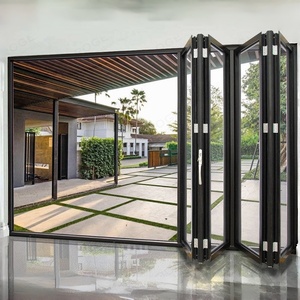
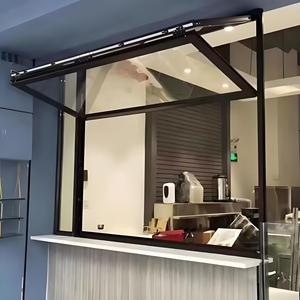
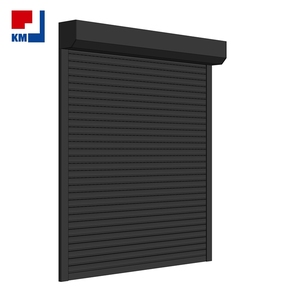
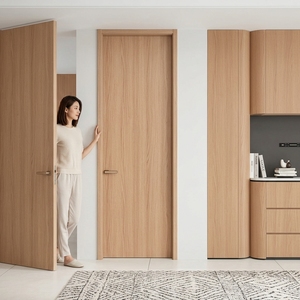
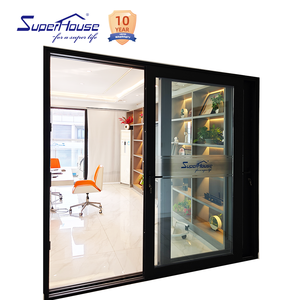
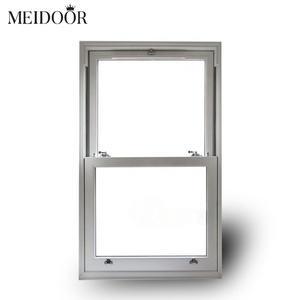
China Wholesale Aluminium And Glass Window Factory & Suppliers

Engineering High-Performance Architectural Fenestration, Thermally Broken Façades, and Custom Glazing Solutions for Commercial Developers and High-End Residential Builders Worldwide.

Factory Engineered Portfolio

Certified Architectural Window & Door Systems

Direct from Foshan's manufacturing heartland. Our architectural fenestration systems combine aerospace-grade 6063-T5 aluminum extrusions, precision European thermal barrier breaks, and certified IGCC/CE architectural insulated glass.

Manufacturer Scale & Capabilities

Guangdong Dejiyoupin (DERCHI): Foshan’s Fenestration Benchmark

Recognized as an elite Tier-1 manufacturer in China’s high-precision fenestration sector, our facility bridges structural architectural design with mass-customization industrial manufacturing.

180,000㎡
Smart Manufacturing Base
600+
Certified Engineers & Technicians
30+
International Invention Patents
100+
Global Product Certifications

Operating from our modern 180,000 square meter industrial park situated in Foshan, Guangdong Province, Guangdong Dejiyoupin Doors and Windows Co., Ltd. (DERCHI) stands at the pinnacle of Chinese architectural envelope manufacturing. For over 25 years, our engineering departments have partnered with Tier-1 general contractors, facade consultants, and property developers throughout North America, Western Europe, Australia, and the Middle East.

Unlike trading entities or regional assembly shops, our factory integrates every phase of production in-house: from 6063-T5/T6 billet precision extrusion analysis and 5-axis German CNC profile milling to automated corner crimping, automated multi-angle structural welding, and robotic sealant application. Our automated vertical electrostatic powder coating line runs Qualicoat Class 2 and Class 3 architectural fluoropolymer PVDF systems, ensuring exterior coatings withstand over 3,000 hours of continuous accelerated salt spray testing without fading, chalking, or delaminating.

Every fenestration assembly leaves our facility verified under ISO 9001 quality management procedures and backed by third-party testing reports compliant with Australian AS 2047, European CE EN 14351-1, and American NFRC / AAMA performance standards. By consolidating your procurement directly with our engineering headquarters, project stakeholders eliminate middleman markups while securing dedicated BIM drafting, parametric shop drawing approvals, and scheduled containerized logistics.
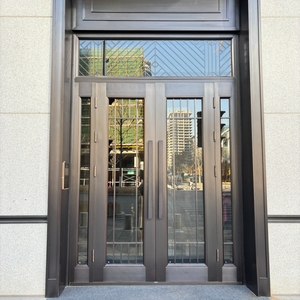
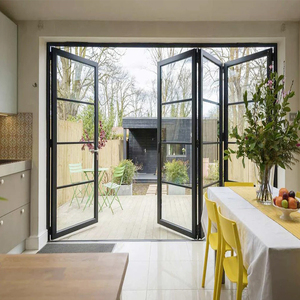
Engineering Whitepaper

Advanced Engineering: Thermal, Acoustic & Structural Performance

Delivering superior performance metrics requires deep material science. Discover the structural principles governing our commercial aluminum profiles and insulated glass units.

PA66-GF25 Thermal Barriers

We utilize German Technoform 25% glass fiber reinforced polyamide (PA66-GF25) thermal struts. By physically separating exterior and interior aluminum extrusion profiles, we reduce frame thermal conductivity (Uf) down to 1.3 W/m²K, eliminating interior sweating and drastically lowering building cooling and heating loads.

Double & Triple Argon Glazing

Our in-house automated cleanroom glazing lines configure dual- and triple-sealed insulated glass units (IGU) equipped with warm-edge composite spacers, 95%+ argon gas fills, and magnetron sputtered Low-E coatings (Solarban 60/70 grades). Achieve overall window U-values (Uw) as low as 0.85 W/m²K (0.15 BTU/hr·ft²·°F).

SentryGlas® Hurricane Interlayers

Engineered for extreme coastal weather zones. Our impact-tested systems incorporate Kuraray SentryGlas® (SGP) and structural PVB ionoplast interlayers, surviving high-velocity hurricane impact tests (large missile impact level D) and continuous cyclic wind pressure up to +/- 5,000 Pa without envelope breach.

System Architecture Thermal U-Value (Uw) Solar Heat Gain (SHGC) Acoustic Damping (STC/Rw) Structural Wind Load
Non-Thermal Architectural Profile 2.8 – 3.4 W/m²K 0.45 – 0.62 28 – 32 dB 1,800 – 2,400 Pa
Standard Polyamide Thermal Break (24mm) 1.6 – 2.0 W/m²K 0.28 – 0.38 35 – 39 dB 3,000 – 4,200 Pa
Ultra-Thermal Multi-Chamber Break (34mm+) 1.1 – 1.4 W/m²K 0.20 – 0.26 40 – 44 dB 4,500 – 5,500 Pa
Passive House Certified Triple Low-E Argon 0.75 – 0.95 W/m²K 0.18 – 0.24 43 – 48 dB 5,000+ Pa (Cyclonic)
Procurement Intelligence

Future Procurement Trends: Fenestration Sourcing for 2026–2030

Global architectural procurement is undergoing a paradigm shift. Real estate developers, facade engineers, and general contractors face changing statutory mandates and supply chain recalibrations.

The global construction market is experiencing tighter regulatory scrutiny regarding the lifecycle embodied carbon of building elements, driving significant transformation in commercial aluminum fenestration procurement. Navigating this transition requires international developers to rethink material specifications and manufacturer evaluation criteria:

Low-Carbon Recycled Aluminum Billets

Driven by Europe's Carbon Border Adjustment Mechanism (CBAM) and US LEED v4.1 certification, procurement is shifting toward hydroelectric-smelted primary aluminum and post-consumer recycled alloys. DERCHI supplies certified Environmental Product Declarations (EPD) proving low embodied carbon profiles (<4.0 kg CO2e/kg Al).

Prefabricated Unitized Façade Modules

With job-site skilled labor costs soaring globally, builders are moving away from on-site stick-built window installations. Factory-glazed, fully unitized curtain wall cassettes and pre-cased window modules allow developers to close building envelopes 60% faster, eliminating on-site weather-dependent sealing risks.

Next-Gen Vacuum Insulated Glass (VIG)

Vacuum glass represents the next technological frontier. By extracting air to create a 0.15mm vacuum barrier between glass panes, VIG achieves center-of-glass thermal resistance equivalent to an insulated brick wall (U-value 0.40 W/m²K) in a profile thickness of just 8.3mm, freeing designs from bulky frames.

Regulatory Validation

International Building Code Compliance & Testing

Project delays occur when imported materials fail to meet local building inspector checks. Our fenestration systems are engineered to satisfy stringent cross-border municipal codes.

A primary risk for architectural project managers sourcing custom fenestration from China is regional code compliance. At DERCHI, all product series are tested in accredited third-party laboratories (including Intertek, TÜV Rheinland, and SAI Global) against target jurisdiction standards:

  • North America (USA & Canada): Tested in strict conformance with AAMA/WDMA/CSA 101/I.S.2/A440 standards, NFRC thermal performance ratings (U-Factor, SHGC, VT), California Title 24 energy mandates, and Miami-Dade County Florida Building Code impact requirements.
  • Australia & New Zealand: Full compliance with AS 2047 (Windows in buildings - selection & installation) and AS 1288 (Glass in buildings - selection & installation). Systems undergo rigorous testing for structural deflection, air infiltration, water penetration resistance up to 700 Pa, and ultimate limit state cyclonic loads up to rating N6.
  • European Union & UK: Fully CE marked under EN 14351-1:2006+A2:2016 for external pedestrian doorsets and windows, confirming air permeability (Class 4), water tightness (Class E900), and wind load resistance (Class C5).
  • Middle East & Gulf (GCC): Specially modified dual-extrusion systems featuring silicone-encapsulated heavy-duty EPDM dual gaskets to combat extreme thermal cycling (+50°C), UV radiation, fine-grain sand ingress, and coastal saltwater humidity.
Procurement Knowledge Base

Frequently Asked Questions (FAQ) for B2B Importers

Clear answers to the essential commercial, engineering, and logistics questions raised by developers, commercial contractors, and architectural purchasing managers.

What is the standard production lead time and Minimum Order Quantity (MOQ)? +

Our standard MOQ for custom architectural projects is 50 square meters (or a baseline project value equivalent to 1 residential villa / small commercial storefront package). For high-volume multi-family and commercial developments, our factory output accommodates up to 35,000 square meters per month. Standard fabrication lead times range between 25 and 35 calendar days following client sign-off on detailed AutoCAD shop drawings and color sample confirmations. Emergency fast-track schedules can be arranged for time-sensitive building contracts.

How do you prevent glass breakage and surface oxidation during ocean transit? +

All finished products undergo a specialized four-tier export crating procedure. First, frame surfaces are wrapped with custom 80-micron protective film and corner guards. Second, assemblies are encased in waterproof heat-shrink polyethylene wrapping packed with industrial desiccant bags. Third, units are packed into heavy-duty fumigated solid plywood cases or hot-dip galvanized steel A-frames. Finally, packages are secured within shipping containers using nylon load straps and air-cushion dunnage bags, maintaining zero cargo movement during ocean transit.

Can your engineering team assist with architectural shop drawings and submittals? +

Yes. Our in-house technical department includes 40+ structural and facade design engineers. We review architectural elevation schedules, structural drawings, and wind-load calculations to generate comprehensive AutoCAD shop drawings, structural section cutaways, profile extrusions, glass makeups, anchoring details, and static calculations at no extra charge. We also supply parametric BIM (Revit) objects to streamline project submittals to client consultants and municipal authorities.

Which hardware brands and surface finish standards are offered? +

We work with internationally recognized architectural hardware partners—including German Siegenia, Hoppe, Roto Frank, and GU (Gretsch-Unitas), alongside premium tier Chinese brand Kin Long. For surface finishes, we provide architectural anodizing up to 25 microns (Class AA25), AkzoNobel powder coating (AAMA 2604 compliant), and PPG fluoropolymer PVDF coating (AAMA 2605 compliant, carrying up to a 20-year factory performance warranty against chalking, fading, or cracking under intense ultraviolet exposure).

How are quality verification and factory acceptance audits conducted for overseas buyers? +

We operate transparent QA/QC workflows. Clients and their appointed third-party inspection firms (e.g., SGS, Bureau Veritas, Intertek) are invited to conduct on-site factory acceptance testing (FAT) before crating. Alternatively, for international buyers unable to travel to Foshan, our quality department provides high-resolution live video walkthroughs, pre-shipment dimensional calibration reports, water spray nozzle chamber test videos, and verified batch coating thickness micrometer documentation.

What product warranty coverage is provided on your commercial window assemblies? +

DERCHI offers clear commercial warranties: a 10-year structural warranty on 6063-T5 aluminum framing extrusions; a 10-year warranty against seal failure or internal fogging of dual/triple insulated glass units; and a 5 to 10-year warranty covering German-engineered mechanical locking hardware, pivots, and track roller mechanisms. Any verified defective hardware or glass component is replaced via express international air freight.

Partner Directly with China's Premier Fenestration Factory

Reduce project costs by 30–45% while upgrading structural, thermal, and acoustic performance. Send your window schedules, architectural elevations, or project BOQ to our senior engineering team today for a detailed commercial quotation within 24 hours.