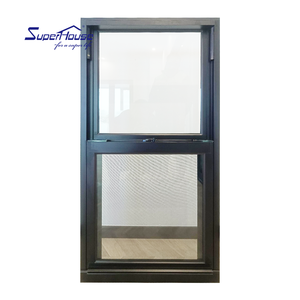
Vertical Sliding Series
Explore our export-certified product lines designed for high-end residential estates, commercial developments, and coastal hurricane zones. Rigorously tested to international standards including AS 2047, CE, and ISO 9001.
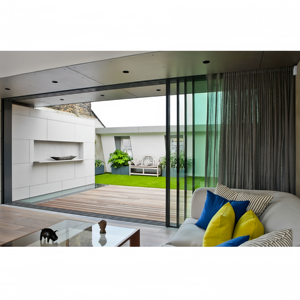
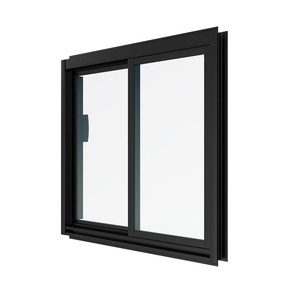
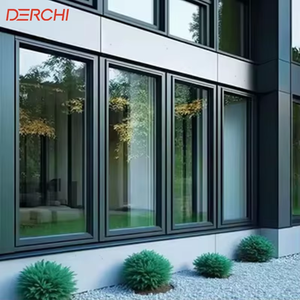
A comprehensive procurement benchmark for international architects, real estate developers, and façade engineers sourcing high-reliability aluminum security screen doors from China.
Modern architectural paradigms require fenestration envelopes that effortlessly combine natural micro-ventilation, daylight penetration, pest exclusion, and anti-intrusion deterrence. When evaluating a China top aluminum net door manufacturer, international procurement teams must look far beyond standard residential flyscreens. Commercial and luxury villa installations require heavy-duty extrusions utilizing primary 6063-T5 or 6061-T6 aluminum alloys combined with architectural-grade 304 or marine-grade 316 stainless steel woven mesh.
Traditional screen doors frequently exhibit structural degradation within 24 to 36 months when exposed to high solar UV indexes, coastal salt spray, or cyclic shear loading. Our Foshan factory addresses galvanic corrosion and mesh sagging through an engineered mechanical pressure-bead clamping system coupled with specialized non-conductive PVC/EPDM isolation strips. This ensures zero direct electrolytic contact between the stainless steel woven mesh and the extruded aluminum chassis, effectively eliminating galvanic corrosion risks in challenging microclimates like coastal Florida, the Arabian Gulf, and tropical Southeast Asia.
Furthermore, each extruded frame features internal corner keys crafted from pressurized zinc alloy or extruded aluminum, crimped with high-tonnage pneumatic presses to guarantee diagonal dimensional tolerances within ±0.5mm across spans reaching up to 3,200mm in panel height.
0.80mm to 1.0mm wire diameter woven with 900+ MPa tensile strength, certified to resist high-impact jimmying, knife-shear, and cyclone debris.
Multi-chambered profiles featuring glass-fiber reinforced thermal break strips drastically reduce U-values to under 1.8 W/m²K for extreme climate zones.
Top, middle, and bottom stainless steel shoot-bolt locking mechanisms linked to ergonomic single-throw handles prevent sash prying and frame warping.
| Performance Criterion | Standard Security Screen | Architectural Grade (DERCHI Spec) | Testing & Regulatory Compliance |
|---|---|---|---|
| Alloy Base & Temper | Recycled aluminum 6063-T4 | Virgin Primary 6063-T5 / 6061-T6 Extrusion | GB/T 5237, ASTM B221 |
| Wall Thickness (Structural) | 1.2mm - 1.4mm | 2.0mm - 3.2mm Heavy Duty Commercial | AS 2047 (N6 Structural Standard) |
| Mesh Material & Wire Spec | Galvanized Iron / 201 Stainless 0.5mm | AISI 316 Marine Stainless Steel (0.8mm - 1.0mm) | AS 5039 / AS 5041 (Knife Shear & Impact) |
| Coating & Surface Treatment | Standard Wet Spray 40μm | AkzoNobel Interpon D2015 Powder / PVDF 3-Coat 80μm | AAMA 2604 / AAMA 2605 / Qualicoat Class 2 |
| Salt Spray Resistance (NSS) | 240 Hours | >3,000 Hours Continuous (Zero Blistering) | ASTM B117 / ISO 9227 |
| Multi-Point Locking System | Single Deadbolt Latch | German / Italian Multi-Point Shoot-Bolt Hook Locks | EN 12209 / PAS 24 High Security Standard |
Strategic purchasing managers and commercial specifiers must anticipate these three macro procurement shifts driving the global architectural door sector.
Developers are moving rapidly away from procuring glass curtain walls, main pivot entrances, and insect/security screen doors from disconnected sub-vendors. Procurement friction, shade mismatching, and dimensional discrepancies at installation interfaces have made one-stop holistic door and window systems the preferred model. Sourcing complete building envelopes—encompassing heavy entry doors, interior soundproof partitions, and integrated flyscreen sliding systems from a single manufacturing conglomerate like DERCHI—cuts ocean logistics overhead by up to 35% while establishing single-point warranty liability.
Government procurement bodies across North America, the EU, and the GCC (Saudi Vision 2030, UAE Net Zero 2050) are placing strict limits on embodied carbon metrics in architectural building materials. Procuring top-tier aluminum net doors now requires certified green billets extruded using renewable hydropower alongside low-VOC electrostatic powder coatings that emit zero hazardous air pollutants (HAPs). Factory-level Environmental Product Declarations (EPDs) and cradle-to-gate life cycle assessments are becoming mandatory qualifying documents in B2B project tenders.
Procurement departments are abandoning physical sample cycles in favor of precision BIM (Building Information Modeling) objects and Revit parametric files. By approving shop drawings with verified thermal break geometry, wind load deflection calculations, and exact threshold drop-seal details before extrusion, contractors completely eliminate on-site modification delays. Chinese manufacturers with in-house structural engineering teams providing complimentary shop drawings within 24 hours are rapidly capturing Tier-1 developer loyalty.
From magnetic levitation track systems to invisible diamond security meshes, here is how industrial fabrication technology is advancing modern architectural entryways.
Historically, heavy security mesh sacrificed natural airflow and outward visibility, giving residences a fortified aesthetic. Contemporary technological innovations utilize micro-drawn 316 marine stainless steel wires electrostatically treated with anti-reflective optical black coatings. This yields light transmission values exceeding 82% and unimpeded natural cross-ventilation while fully passing rigorous category 4 cyclone impact and knife-shear intrusion tests.
Barrier-free living and universal design principles demand track systems that sit completely flush with finished floor surfaces (zero trip hazards). Advanced aluminum net doors are adopting magnetic levitation drive modules integrated within the head frame. This technology yields frictionless, ultra-silent gliding (less than 28 decibels) and features automated motorized deployment controlled via home automation protocols (KNX, Zigbee, Control4).
Rather than treating the net door as a secondary retrofitted add-on, leading industrial factories now extrude monolithic triple-track profiles that seamlessly combine an outer hurricane-rated glass sash, a central vacuum insulated panel, and an inner retractable stainless steel net screen within an elegant 180mm structural depth, completely preserving clean architectural sightlines.
Combining 25+ years of master craftsmanship with industrial-scale smart automation in Foshan, Guangdong—the epicenter of global high-end architectural fenestration.
Operating one of Southern China's largest intelligent doors and windows production complexes, our facility is equipped with automated German CNC machining centers, robotic corner welding arrays, and high-capacity dust-free coating lines that guarantee strict on-time delivery across multi-container development projects.
Awarded continuous Top 10 status in China’s premium doors and windows industry. Having executed luxury projects across the United States, Australia, the United Arab Emirates, Saudi Arabia, Qatar, Canada, and the Philippines, our engineering protocols meet the world's most stringent building codes.
Our doors and windows achieve Australia's highest AS 2047 N6 rating for extreme wind and water tightness, backed by CE compliance, ISO 9001 quality assurance, UL fire-rated certifications, and over 100 technology and design patents for risk-free authority submittals.
We do not constrain clients to off-the-shelf standard sizes. Our in-house façade engineering department reviews architectural door schedules, calculates wind loads, and provides complimentary CAD shop drawings within 24 hours to ensure flawless site coordination.
Engineered specifically for extreme 50°C Gulf summers, severe coastal salt spray, and abrasive shamal sandstorms using multi-point EPDM airtight seals, thermal break barriers, and ultra-durable fluoropolymer finishes that resist UV fading and cracking.
Every single frame and sash is encapsulated in protective film, cushioned with high-density EPE foam corner bumpers, and packed into ISPM-15 compliant solid fumigated wooden crates, accompanied by bilingual step-by-step installation manuals and 24/7 video technical support.
Essential technical clarifications regarding custom fabrication, international shipping standards, surface durability, and testing certifications.
A standard insect flyscreen uses pliable fiberglass or light aluminum wire (0.2mm - 0.3mm) primarily designed to exclude insects, offering zero burglary deterrence. In contrast, an architectural security net door utilizes heavy 6063-T5 aluminum extrusions (2.0mm+ wall thickness) paired with high-tensile 304 or 316 marine-grade stainless steel woven wire mesh (0.8mm - 1.0mm diameter) clamped via mechanical pressure plates. It resists high-energy blunt force impacts, knife cuts, and crowbar jimmying while maintaining unrestricted airflow.
Yes. For coastal projects in coastal Florida, Dubai, Jeddah, the Caribbean, or Queensland, we exclusively specify AISI 316 marine-grade stainless steel mesh and treat the aluminum extrusions with AkzoNobel Interpon D2015 or PPG fluoropolymer (PVDF) 3-coat finishes. Furthermore, we employ non-conductive EPDM isolation barriers between the stainless steel wire and the aluminum frame to stop galvanic corrosion, tested to over 3,000 hours in neutral salt spray (ASTM B117) without degradation.
We provide full third-party laboratory test reports conforming to Australian AS 2047 (N6 cyclone rating) and AS 5039/5041 (security screen knife-shear, dynamic impact, and jemmy tests), European CE standard EN 14351-1, ISO 9001 quality management, ISO 14001 environmental management, and UL fire-rated certifications. Our technical documentation is formulated to streamline approvals with municipal building authorities and consulting engineers.
Over 90% of our production is fully bespoke. Once you share your structural door schedule, architectural elevations, or hand sketches, our engineering department drafts comprehensive CAD shop drawings detailing profile cross-sections, glass thicknesses, anchor spacing, threshold drop clearances, and water evacuation channels. Production commences only after the consultant or project contractor gives signed approval on every drawing detail.
Standard fabrication lead time is 25 to 35 calendar days following shop drawing sign-off and deposit receipt. Products are individually wrapped with anti-scratch protective film, fitted with heavy-duty plastic corner guards, and enclosed in fully enclosed, fumigated ocean-export plywood crates. These crates are engineered to withstand ocean transit, high port humidity, and repeated forklift handling without deformation.
Absolutely. We offer concealed magnetic reed switches for smart intrusion monitoring, as well as high-torque motorized sliding and casement operators compatible with KNX, Zigbee, Z-Wave, or dry-contact building management systems (BMS). Our locks can be paired with high-security biometric fingerprint readers, Tuya / TTLock digital keypads, and face recognition access control hardware.