Engineered Architectural Window & Door Solutions
Precision-manufactured with 6063-T6 virgin aluminum alloy, multi-chambered thermal barriers, and impact-laminated glass assemblies rigorously tested for High-Velocity Hurricane Zones (HVHZ).
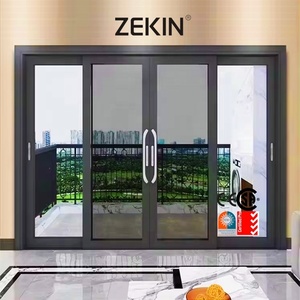
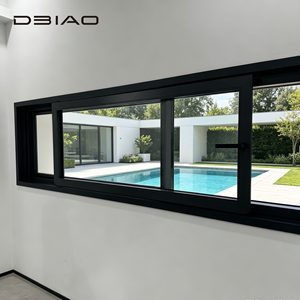
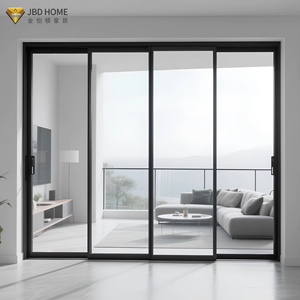
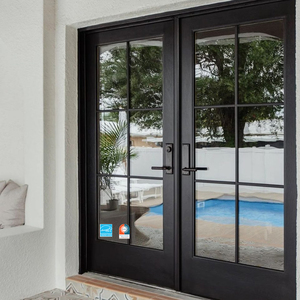
AMJ NFRC Excellent Quality Interior Door Tempered Glass USA Swing French Door Aluminum French Casement Door
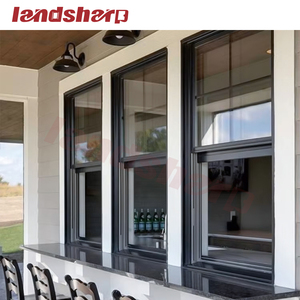
Landsharp Aluminum Single Double Hung Window Sliding Sash Triple Glazed Windows
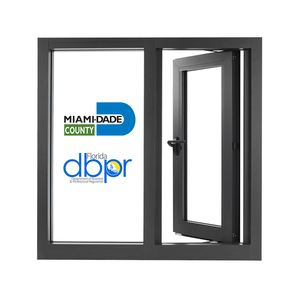
Impact Windows NOA Certified Florida Miami Dade Aluminum Casement Windows Hurricane Proof Impact Windows
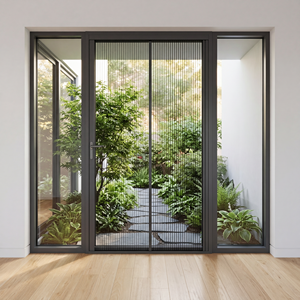
Structural Fenestration Dynamics: Engineering Aluminum Systems for Extreme Meteorological Events
In coastal architecture and storm-prone latitudes, building envelopes face catastrophic structural loads generated by cyclonic systems. A hurricane fenestration unit is not simply a heavy window; it is an intricately balanced mechanical assembly governed by the physics of dynamic air pressure fluctuations, structural elasticity, and impact kinetic dissipation. As an elite China top aluminum hurricane windows factory and exporter, our engineering protocol centers on the uncompromising requirements of ASTM E1886, ASTM E1996, Florida Building Code TAS 201, 202, 203, and the Australian AS 2047 N6 cyclonic standards.
The destructive force of a Category 5 hurricane generates velocity pressures calculated via Bernoulli-derived standards: qz = 0.613 × Kz × Kzt × Kd × Ke × V2. At wind velocities exceeding 175 mph (78 m/s), stagnation pressure on vertical facades can surpass ±5,000 Pa (±104.4 PSF). Under these stresses, unreinforced commercial window profiles experience critical deflection, seal rupture, and frame unseating. DERCHI impact fenestration profiles are extruded exclusively from primary billet 6063-T6 or 6061-T6 structural aluminum, featuring engineered wall thicknesses up to 3.0 mm and integrated internal web stiffeners. This geometric design ensures profile deflection remains strictly within L/175 or L/240 spans under full positive and negative design loads.
Large Missile Impact (LMI)
Engineered to withstand a 9-lb (4.1 kg) 2x4 Southern yellow pine timber projectile fired at 50 ft/s (34 mph / 15.2 m/s) directly into the core and corners without perforation, followed immediately by 9,000 cyclic pressure reversals.
Cyclic Pressure Endurance
Tested under TAS 203 dynamic cycling, oscillating between positive and negative load phases (0.2 to 1.3 × Design Pressure) to simulate the fatigue caused by hours within hurricane eyewalls.
Structural Silicone Glazing (SSG)
Utilizes high-modulus, two-part structural neutral cure silicones (Dow Corning 983 / SikaSil IG-25) ensuring continuous structural adhesion between the glass laminate and the aluminum pocket under extreme suction.
The integrity of the glass unit relies heavily on the interlayer matrix. While conventional fenestration uses 0.030" or 0.060" standard Polyvinyl Butyral (PVB), extreme storm zones require structural ionoplast interlayers, notably Kuraray SentryGlas® (SGP). SGP interlayers exhibit five times the tear strength and one hundred times the rigidity of standard PVB. In the event of outer and inner glass ply fracture, the SGP composite maintains structural diaphragm rigidity, preventing atmospheric envelope breach and catastrophic internal building pressurization.
| Performance Criterion | Standard Commercial Window | DERCHI Heavy Hurricane Specification | Testing & Compliance Protocol |
|---|---|---|---|
| Alloy Specification | Secondary Recycled 6063-T5 | Virgin Billet 6063-T6 / 6061-T6 High Tensile | ASTM B221 / EN 755-2 |
| Design Pressure (DP) Rating | DP 25 to DP 35 PSF | DP 70 to DP 105 PSF (HVHZ Level) | ASTM E330 / TAS 202 |
| Impact Resistance | None (Thermal Tempered Only) | Large Missile Impact (Level D & Level E) | ASTM E1886 / ASTM E1996 / TAS 201 |
| Water Penetration Resistance | 150 Pa (3.13 PSF) | ≥ 720 Pa (15.0 PSF) Continuous Static Chamber | ASTM E331 / AAMA 501.1 |
| Air Infiltration Rate | < 0.30 cfm/ft² @ 1.57 PSF | ≤ 0.05 cfm/ft² @ 6.24 PSF (Hermetic Seal) | ASTM E283 / NFRC 400 |
| Corrosion Resistance (Finish) | Standard Anodized 10 μm | AAMA 2605 70% Fluoropolymer PVDF / C5-M Marine | ASTM B117 (Salt Fog ≥ 4,000 Hours) |
Future Procurement Trends in Architectural Impact Glazing (2025–2030)
Strategic sourcing of fenestration systems from Chinese manufacturing hubs is undergoing a structural paradigm shift. Global real estate developers, facade engineering consultants, and commercial general contractors are shifting away from localized, high-markup fabricators toward Tier-1 vertically integrated Chinese manufacturers capable of end-to-end execution: billet casting, extrusion, polyamide thermal breaking, automated IGU assembly, and overseas logistical packaging. Several key trends are defining this modern procurement landscape:
1. High-Performance Thermal Breaks
Historical impact windows compromised energy conservation for sheer mass. Modern procurement demands low U-factors (≤ 0.26 BTU/hr·ft²·°F / 1.48 W/m²K) achieved through 24mm to 34mm technoform PA66 GF25 polyamides that handle intense shear loads without compromising structural stiffness.
2. Jumbo Architectural Formats
Bespoke residential villas and commercial lobbies now demand uninterrupted vistas. Sourcing trends favor single impact glass panels exceeding 3,000 mm × 6,000 mm with multi-track concealed flush sill drainages, capable of resisting full oceanfront hurricane loads.
3. Multi-Threat Security Hybrids
The convergence of natural disaster mitigation with forced-entry and ballistic protection. Specifiers are procuring dual-certified systems that satisfy ASTM E1996 hurricane impact alongside EN 1627 RC3/RC4 burglary security and UL 752 ballistic levels.
4. BIM/Revit Integration & Digital QC
Direct import of Chinese shop drawings into building information workflows. Tier-1 manufacturers provide fully parametric 3D models, complete with embedded structural deflection formulas and Finite Element Analysis (FEA) reports before tooling begins.
5. Low-Carbon Green Aluminum
Compliance with European CBAM and global ESG frameworks requires suppliers to offer hydro-smelted or recycled-content aluminum billeting, cutting embodied carbon below 4.0 kg CO2e/kg Al while preserving mechanical yield strength (≥ 205 MPa).
Why DERCHI Ranks as China's Premier Hurricane Fenestration Exporter
Operating as Guangdong Dejiyoupin Doors and Windows Co., Ltd. (DERCHI), our manufacturing campus in Foshan, Guangdong encompasses over 180,000 square meters of production space, backed by over 25 years of specialized fenestration fabrication. Unlike regional assembly workshops, our infrastructure represents complete industrial consolidation. From computerized high-precision CNC 4-axis profile machining to robotic dual-seal insulated glass line processing, every millimeter of our impact product line is engineered for high tolerances and repeatable field performance.
In-House Research, FEA & Wind Tunnel Rig
We maintain an on-site, fully accredited meteorological testing chamber. Profile assemblies undergo static wind pressure, cyclical load strain, and high-pressure water spray tests before submittal to Intertek, UL, or Miami-Dade testing authorities, minimizing client certification risk.
Marine-Grade Surface Metallurgy
Located in a region with extensive maritime exposure, we understand coastal decay. Our aluminum profiles receive pre-treatment zirconium chemical conversion coatings followed by PPG Duranar® or AkzoNobel Interpon® D3000 fluoropolymer paints, backed by a 20-year coastal warranty against chalking, salt pitting, and adhesion failure.
Heavy Architectural Hardware Integration
A hurricane window is only as robust as its locking points. We partner with German engineering leaders (Siegenia, Roto, Hoppe) and our own patented multi-point stainless steel 304/316 gear mechanisms, ensuring impact-rated sash closure forces distributed evenly along the master frame perimeter.
Export Ocean Packaging Engineering
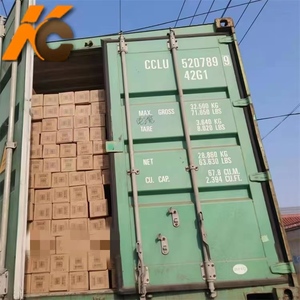
Global transit presents significant vibration, humidity, and shear risks. Every DERCHI order is packed in ISPM-15 heat-treated closed-plywood crates with interior moisture-desiccant packaging, shock-dampening foam blocks, and edge corner armor to guarantee zero jobsite defect rates upon container discharge.
Frequently Asked Technical & Procurement Questions (FAQ)
Direct answers to the critical engineering, shipping, and certification queries raised by B2B importers, structural engineers, and commercial estimators.