Featured Architectural Systems & High-Performance Glazing
Direct-from-factory architectural fenestration manufactured under strict ISO 9001 quality matrices, incorporating thermally broken aviation-grade 6063-T5 aluminum extrusions, automotive-grade EPDM continuous sealing, and certified tempered/laminated IGUs.
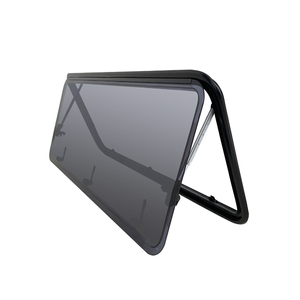
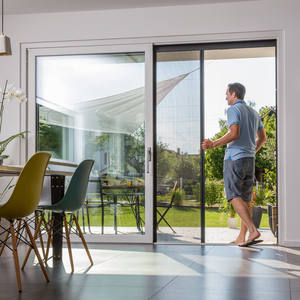
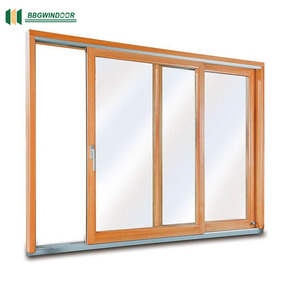
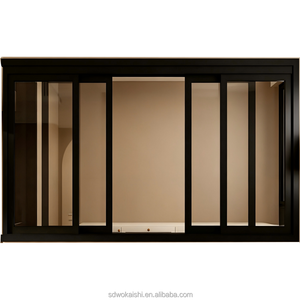
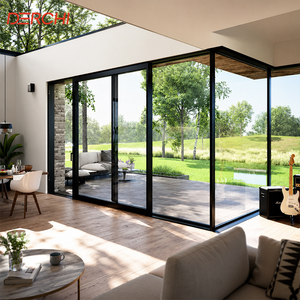
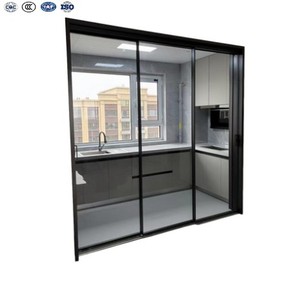
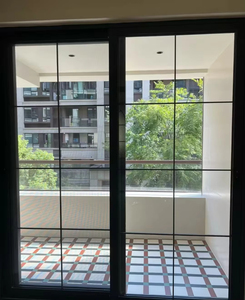
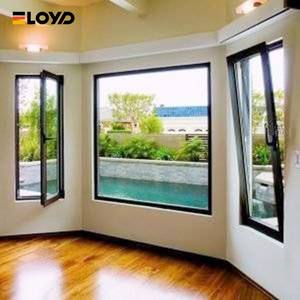
Industrial Authority in Modern Fenestration Engineering
Situated in China's industrial epicenter for architectural aluminum (Foshan, Guangdong), our manufacturing complex combines advanced robotic profile CNC machining, automated powder coating, vacuum insulated glass assembly, and multi-point quality testing.
Tier-1 Global Compliance
Full conformance to Australian AS 2047 (N6 cyclone rating test passed), North American AAMA/WDMA/CSA standards, European CE conformity, ISO 9001 quality audits, and UL-certified fire-resistant pivot assemblies.
One-Stop Turnkey Fabrication
Integrated extrusion die casting, multi-axis profile milling, multi-layer PVDF fluorocarbon spraying, German PA66 thermal bridge insertion, and bespoke glazing options within a unified 180,000㎡ industrial complex.
Marine Crating & Export Precision
Specialized export packaging engineering using customized steel-reinforced fumigated wooden crates, desiccant moisture buffers, and edge shock-absorbers ensuring zero deflection during ocean transit across the Middle East, Americas, and Oceania.
The Definitive B2B Engineering Guide: Sourcing Premium Aluminum and Glass Doors from Top China Factories
In modern commercial construction, high-end residential master developments, and high-performance building envelopes, aluminum and glass architectural doors constitute one of the most structurally and thermally critical procurement categories. The global market has witnessed a decisive shift: tier-one developers, general contractors, and facade consultants are no longer relying on fragmented domestic fabrication. Instead, they are consolidating procurement directly with premier Chinese manufacturing hubs capable of meeting the world’s most stringent fenestration performance criteria.
Evaluating a Chinese aluminum door manufacturer requires looking far beyond superficial aesthetic finishes. Professional procurement teams examine mechanical alloy compositions, structural wind pressure tolerance, Uw-value thermal barrier configurations, acoustic damping indices, and verifiable compliance with testing bodies such as the Australian Fenestration Rating Council (AFRC / AS 2047), the National Fenestration Rating Council (NFRC), and European Harmonised Standards (EN 14351-1).
Strategic Procurement Takeaway: Tier-1 Chinese fenestration factories combine primary 6063-T5/T6 architectural-grade aluminum billets, automated multi-cavity PA66 GF25 thermal break extrusions, and robotically sealed double/triple Low-E insulated glass units (IGUs) to achieve U-values under 1.2 W/(m²·K) and acoustic damping exceeding 42 dB.
Technical Matrix: Mechanical & Structural Performance Thresholds
When drafting tender submittals or evaluating factory mill test certificates (MTC), engineering consultants require precise mechanical benchmarks. The following matrix illustrates the performance specifications achieved by top-tier Chinese extrusion and door factories in contrast with baseline commodity suppliers:
| Performance Parameter | Standard Commercial Grade | High-Performance Export Tier (Our Benchmark) | Standard Testing Reference |
|---|---|---|---|
| Alloy Composition & Hardness | Recycled aluminum scraps / Webster <10 HW | Primary 6063-T5 / 6060-T66 (Webster ≥12-14 HW) | ASTM B221 / GB 5237.1 |
| Thermal Barrier Material | Standard PVC strips (prone to thermal creep) | Polyamide PA66 reinforced with 25% glass fiber (PA66 GF25) | DIN EN 14024 / ISO Jian 8302 |
| Structural Wind Load (Deflection) | 1,500 Pa – 2,500 Pa (Serviceability) | Up to 4,500 Pa – 6,000 Pa (N6 Ultimate / AS 2047) | AS 2047 / ASTM E330 |
| Surface Protection System | Standard architectural powder coating (40μm) | AkzoNobel / PPG PVDF Fluorocarbon (≥3 coats, 35-45μm) | AAMA 2605 / Qualicoat Class 3 |
| Acoustic Isolation (Rw / STC) | Rw 28 - 32 dB (Single/Dual Glaze) | Rw 38 - 46 dB (Acoustic PVB Laminated + Argon IGU) | ISO 10140 / ASTM E90 |
| Water Penetration Resistance | 150 Pa – 300 Pa | 600 Pa – 1000 Pa Static / Dynamic Pressure | AS/NZS 4420.5 / EN 1027 |
Future Procurement Trends: Where the Aluminum & Glass Door Market Is Heading
The global facade and fenestration industry is undergoing rapid technical evolution driven by carbon-neutrality mandates, extreme weather resilience, and structural minimalism. Commercial developers and procurement specialists must factor the following macro-trends into their 3-to-5-year specification strategies:
Low-Carbon & Recycled Billets
Institutional projects require Environmental Product Declarations (EPDs). Leading Chinese factories now offer low-carbon aluminum smelted with renewable hydro/solar energy, bringing embodied carbon under 4.0 kg CO2e per kg of primary metal.
Ultra-Narrow Sightlines & Heavy Payloads
Architects demand sightlines as slim as 20mm to 25mm for floor-to-ceiling glass sliding doors, combined with bottom-rolling stainless steel carriages capable of supporting single-panel glass weights exceeding 600kg without binding.
Integrated Smart Motorization & Access
Concealed magnetic levitation drive systems, integrated dry-contact building automation interfaces, and biometric entry controls built directly into thermal door stiles are quickly replacing exterior bolt-on actuators in luxury and commercial builds.
Industry Development Trends: Engineering Innovations in Extrusion & Glazing
Modern fenestration manufacturing has advanced past standard mechanical stamping. Top Chinese manufacturers have invested heavily in high-precision infrastructure that directly shapes product quality:
- Multi-Axis High-Precision CNC Machining: Advanced 4-axis and 5-axis profile machining centers ensure lock pockets, drain channels, hinge cutouts, and corner joint mortises achieve dimensional tolerances within ±0.1mm. This eliminates air leakages caused by manual assembly variations.
- Warm-Edge Spacer & Vacuum Glazing Technology: Transitioning away from traditional aluminum glass spacers to composite warm-edge spacers (such as Technoform or Swisspacer) drastically reduces perimeter thermal bridging, eliminating condensation along glass perimeters in extreme desert or sub-zero climates.
- Multi-Cavity Co-Extruded Corner Vulcanization: Leading factories deploy continuous vulcanized EPDM rubber gaskets with factory-molded 90-degree corner joints. This prevents joint shrinkage over 20-year lifespans and maintains Class 4 air-tightness under hurricane wind regimes.
- Marine-Grade Pre-Treatment (Seaside Anti-Corrosion): For coastal villas and waterfront commercial resorts (such as in Dubai, Miami, or Sydney), top factories apply a specialized zirconium-based or anodized chemical pre-treatment prior to PVDF coating, easily surpassing 3,000 to 5,000 hours of Neutral Salt Spray (NSS) testing without blistering.
Comprehensive Total Cost of Ownership (TCO) & Supplier Risk Mitigation
Purchasing directly from Chinese factories yields direct material cost reductions between 30% and 55% compared to local fabrication in North America, Europe, or Australia. However, sophisticated procurement directors evaluate the complete landed equation:
1. Tooling & Custom Die Extrusion Capabilities: Reliable factories maintain internal die design and wire-EDM cutting shops. Custom extrusion dies can be opened, tested, and certified in as little as 14 to 21 days with modest tooling fees (often credited back against bulk container volume commitments), enabling architects to realize bespoke mullion depths and sightlines without budget penalties.
2. Structural Engineering Submittals: A true B2B manufacturing partner does not merely send product brochures. Their in-house engineering team provides free comprehensive CAD shop drawings, glass wind deflection calculations, anchor fastener structural calculations, and wind/water test certificates ready for consultant and municipality approvals.
3. Protection Against Shipping Stresses: Transit damage is the most common pitfall with inexperienced exporters. Standard cardboard wrapping is inadequate for sea freight. Professional factories build customized plywood cases with inner PE protective films, high-density foam corners, desiccants, and shock-resistant steel frames that integrate directly with overhead cranes and telehandlers on job sites.
Frequently Asked Questions for B2B Importers & Contractors
Clear, technically rigorous answers addressing certification, lead times, custom engineering, and shipping protocols when sourcing aluminum and glass doors from China.