Featured Fenestration Systems & Security Collections
Explore our certified range of high-performance architectural aluminum solutions, engineered with integrated security grilles, acoustic attenuation, and certified storm barrier technologies.
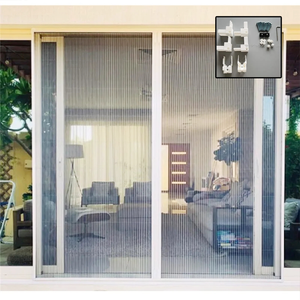
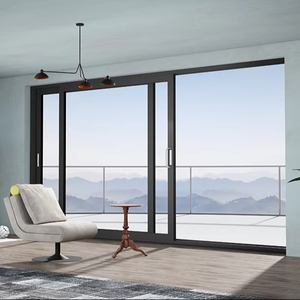
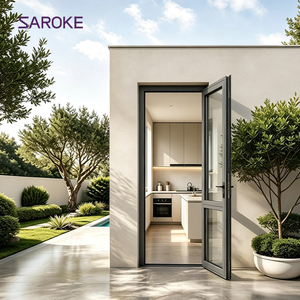
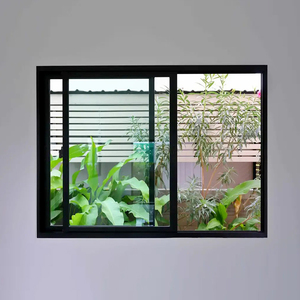
Engineering Excellence in Aluminum Grille Window Manufacturing
In contemporary civil and commercial architecture, the window envelope represents an intricate compromise between daylighting, passive energy regulation, and structural boundary security. Guangdong Dejiyoupin Doors and Windows Co., Ltd. (DERCHI) stands at the pinnacle of fenestration manufacturing in China, operating out of an expansive 180,000 square metre manufacturing hub in Foshan, Guangdong. Engineered for demanding global climates—ranging from the high-salinity coasts of Florida and the Caribbean to the intense sandstorm friction and 50°C summer conditions of the Middle East—our aluminum grille windows integrate uncompromising physical barrier protection with refined visual symmetry.
Unlike standard fenestration fabricators that bolt external wrought-iron bars onto pre-existing outer frames, DERCHI designs structurally integrated internal and external grille profiles. Utilizing primary 6063-T5 and structural 6063-T6 grade aluminum extrusions with wall thicknesses reaching 1.8mm to 2.5mm, these systems integrate internal anti-pry stainless steel reinforcement pins, concealed anchor channels, and multi-point perimeter compression deadbolts. As a certified manufacturer compliant with CE, ISO 9001, North American NAFS standards, and Australian AS 2047 cyclonic metrics, we maintain end-to-end quality jurisdiction across casting, profile machining, electrostatic powder coating, multi-laminate glass integration, and final performance verification.
Critical Material & Engineering Specifications
To serve commercial procurement officers, structural consultants, and bespoke residential contractors, DERCHI ensures every component meets uncompromising architectural benchmarks. The table below illustrates standard baseline parameters across our security grille fenestration portfolios:
| Engineering Attribute | Standard Derchi Specification | Testing Benchmark & Validation | Performance Benefit |
|---|---|---|---|
| Extruded Alloy Profile | Architectural Grade 6063-T5 / T6 High-Tensile Aluminum | GB/T 5237, ASTM B221 | High flexural modulus preventing frame deflection under extreme wind loads |
| Thermal Insulation | Technoform PA66 GF25 Polyamide Thermal Break Strips | EN 14024, ISO 10077-2 | Eliminates thermal bridging; achieves low U-values below 1.4 W/m²·K |
| Surface Protection | AkzoNobel Interpon D2525 PVDF Fluorocarbon or Qualicoat Class 2 Powder | AAMA 2605 (10-Year Coastal Warranty) | Immunity to chalking, severe coastal salt-fog blistering, and high-UV fading |
| Security Barrier Core | Embedded Aluminum Lattice or 304/316 Stainless High-Tensile Mesh | AS 5039 / AS 5041 (Knife Shear & Dynamic Impact) | Anti-burglary defense with unobtrusive architectural sightlines |
| Glazing Integration | Double/Triple Tempered Low-E with Argon Gas & SentryGlas PVB Interlayers | ASTM E1996 / E1886 Large Missile Impact (Level D/E) | Hurricane impact defense, shatter containment, and STC sound reduction up to 45dB |
Future Procurement & Architectural Fenestration Trends
Strategic buyers are pivoting toward multifunctional fenestration systems that simultaneously satisfy stringent decarbonization regulations, severe weather codes, and seamless smart-home integration.
1. Decarbonization & Low-Carbon Metallurgy
Global regulatory bodies like California Title 24, the EU Energy Performance of Buildings Directive (EPBD), and Gulf Estidama mandates are compelling developers to specify low-carbon virgin aluminum profiles manufactured using hydroelectric smelting. Low-E triple glazing integrated with warm-edge composite spacers is replacing traditional dual-pane configurations, achieving near-zero building operational emissions.
2. Integrated Multifunctional Security Membranes
The historical distinction between separate mosquito netting, decorative grilles, and structural hurricane barriers has dissolved. Modern specifications demand hybrid profiles uniting high-tensile 316 marine-grade diamond security meshes with internal aluminum aesthetic grilles, ensuring unobstructed daylight, natural draft ventilation, and physical resistance against intrusion in a single slim sash.
3. Mechatronic & Concealed Hardware Automation
Architects increasingly demand concealed hinge geometries and magnetic perimeter locks integrated directly into building automation systems (BMS). DERCHI’s motorized grille window lines allow automated sash tilting based on indoor air-quality sensors, smart phone actuators, or fire-safety smoke clearance protocols without visible surface conduits.
Why International Specifiers Source From DERCHI
With over a quarter-century of specialized engineering experience, Guangdong Dejiyoupin Doors and Windows Co., Ltd. eliminates offshore procurement risks through verified manufacturing capacity and certified submittals.
Massive Scale & Capacity
Our 180,000㎡ industrial complex in Foshan is equipped with precision CNC double-head cutting equipment, multi-axis automated corner crimping lines, and electrostatic coating lines, supporting uninterrupted supply chains for mega compounds and high-volume residential developments.
Rigorous Global Certification
Our fenestration arrays hold over 30 utility and invention patents and meet CE, AS 2047 (Australian N6 cyclonic testing benchmark), ISO 9001, and UL fire standards. We provide complete third-party mechanical laboratory test reports for immediate municipality and consultant sign-off.
Complimentary Shop CAD Engineering
We bridge linguistic and technical gaps through dedicated English-speaking fenestration engineers. Clients submit window schedules and structural elevations to receive comprehensive, fully dimensioned shop drawings, structural wind load calculations, and thermal modeling free of charge prior to casting.
Frequently Asked Questions (Procurement FAQ)
Crucial guidance for general contractors, purchasing agents, and project managers importing custom aluminum grille windows from China.
Q: How do aluminum grille windows perform in severe hurricane or cyclonic zones?
DERCHI's hurricane-impact product lines incorporate structural 6063-T6 aluminum reinforced with embedded cold-rolled steel channels. When paired with laminated SGP (SentryGlas) safety glass, our systems pass ASTM E1886 and E1996 Level D large missile impact protocols as well as the Australian AS 2047 cyclonic N6 design pressures exceeding 4500 Pa, withstanding Category 5 hurricane wind velocity without structural disengagement.
Q: Can the grille aesthetic patterns be customized to match traditional or contemporary designs?
Yes. Our CNC waterjet and laser engraving workshops, coupled with profile extrusion dies, allow us to fabricate custom patterns ranging from traditional Islamic Arabesque motifs and classic Georgian divided-lites to ultra-minimalist horizontal colonial bars. All configurations are rendered in precision CAD shop drawings for architect approval before extrusion.
Q: How do you prevent coastal galvanic corrosion and chalking in high-salinity marine air?
We treat all raw aluminum profiles with multi-stage chemical pre-passivation before applying AkzoNobel Interpon D2525 fluorocarbon (PVDF) or Qualicoat Class 2 coatings. Furthermore, all internal fastening screws, hinges, and friction stays are sourced exclusively from marine-grade AISI 316 stainless steel to eliminate contact-induced galvanic corrosion.
Q: What is the typical lead time and export packaging standard for container shipments?
Standard custom fabrication ranges from 25 to 35 business days following final shop CAD drawing sign-off. For export transit, each window unit receives protective blue adhesive PE tape, thick multi-layer pearl foam edge wrapping, corner guards, and is crated within ISPM-15 compliant heat-treated fumigation-free wooden crates reinforced with internal steel strapping.