Precision Aluminum Hatch & Specialized Architectural Enclosure Systems
Manufactured in our 180,000㎡ industrial complex, our specialized hatch openings and aluminum door assemblies combine certified thermal breaks, gas-spring counterbalancing, and marine-grade multi-point sealing.
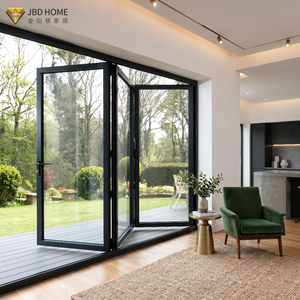
Hurricane Proof Aluminum Exterior Patio Door Soundproof Glass Bi-Fold
- ASTM E1886/E1996 Large Missile D Impact
- Polyamide PA66 Thermal Break Insulation
- Heavy-Duty Stainless Top-Hung Bogie Rollers
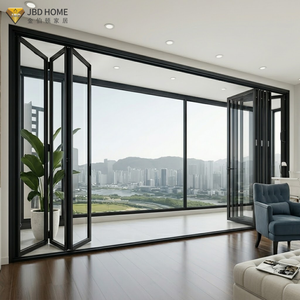
American Certified Hurricane Proof Folding Door Double Tempered Glass
- High-Performance Dual EPDM Gasket Compression
- 6063-T6 High-Tensile Structural Extrusions
- Wind Load Resistance Exceeding 4500 Pa
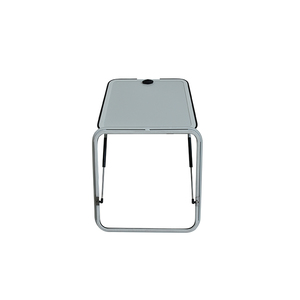
RV Aluminum Alloy Hatch Door Waterproof Luggage Storage Access Door
- Automotive Dual EPDM Lip Moisture Barrier
- Integrated Stainless Keyed Compression Cam Lock
- UV-Resistant Electrostatic Powder Coating
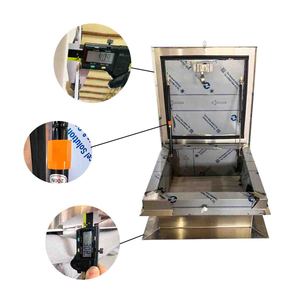
Aluminum Roof Hatches Doors 24x24 / 30x30 / 36x36 Custom Engineered
- 11-Gauge 6061-T6 Aluminum Curb & Cover
- 1-Inch Polyisocyanurate Thermal Core (R-6.5)
- Nitrogen Cylinder Counterbalance Assist (<10kgf)
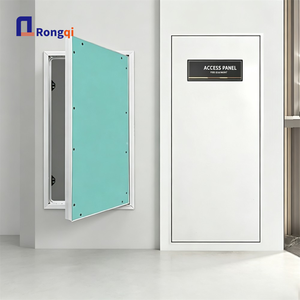
Access Panel Flush Finish Drywall Aluminium Touch Latch Wall Ceiling Hatch
- Beaded Perforated Frame for Seamless Jointing
- Concealed Spring-Loaded Mini-Latch Hardware
- Removable Door Leaf with Safety Restraint Wire
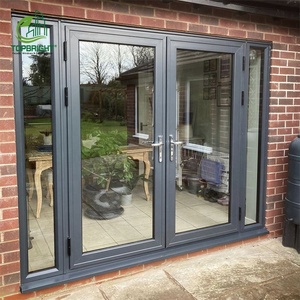
Villa Entry Aluminium Glass Security French Doors Laminated Safety Glass
- 3mm Wall Thickness Heavy Structural Aluminum
- Multi-Point Deadbolt Security Mortise Locking
- Acoustic Interlayer PVB Sound Dampening (STC 42)
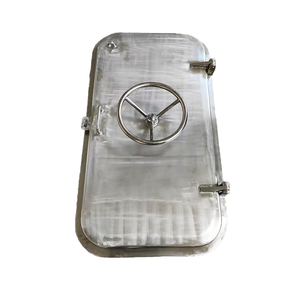
CCS Certified Quick-Action Weatherproof Aluminum Marine Ship Hatch Door
- 5083-H116 Salt-Mist Marine Corrosion Resistance
- Single-Lever Quick-Acting Central Dogging Mechanism
- Hydrostatic Head Pressure Tested to 0.2 MPa
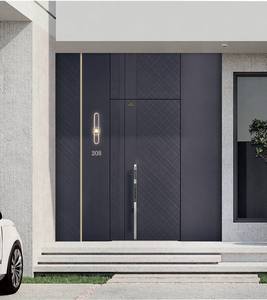
Heavy Duty Insulated Aluminum Entrance Nordic Relief Modern Front Door
- Monolithic CNC Relief Plate with Aero-Foam Core
- Extreme Thermal Isolation U-Value < 0.95 W/m²K
- Concealed 3D Adjustable Pivot Hinge Bearing
Engineering Specifications & Alloy Selection Matrix
Structural integrity in commercial hatch door fabrication demands exact metallurgy. Our Foshan factory formulates high-purity billets according to structural live-load criteria, deflection thresholds, and environmental halide concentrations.
| Alloy & Temper Grade | Yield Strength (Rp 0.2) | Tensile Strength (Rm) | Primary Industrial Sector | Corrosion Rating (ASTM B117) | Standard Certifications |
|---|---|---|---|---|---|
| 5083-H116 (Al-Mg) | ≥ 215 MPa | ≥ 305 MPa | Offshore Platforms, Marine Vessels, Coastal Ship Hatches | Class A Marine (>3,500 hrs salt spray) | CCS, DNV-GL, BV Marine Type Approval |
| 6061-T6 (Al-Mg-Si) | ≥ 240 MPa | ≥ 290 MPa | Industrial Roof Scuttles, High-Load Floor Access Panels | Class B Industrial Anodized (>1,500 hrs) | ASTM B221, EN 755-2, AS/NZS 1866 |
| 6063-T5 / T6 | ≥ 160 MPa | ≥ 215 MPa | Architectural Flush Drywall Panels, RV Storage Hatches | Class B Electrostatic Powder (>1,000 hrs) | Qualicoat Class 2, AAMA 2604 / 2605 |
| Cast Al-Si Alloy (A356) | ≥ 185 MPa | ≥ 260 MPa | Sculpted High-Security Entrances, Heavy Bastion Gates | High Atmospheric Salt & Sand Resistance | ISO 9001, CE EN 14351-1, UL 10C |
Structural Deflection & Dynamic Live-Load Verification
Roof hatches and horizontal floor doors manufactured by our engineering unit undergo finite element analysis (FEA) to confirm compliance with international building codes. Standard roof access apertures withstand a uniform live load of 40 lb/ft² (1.92 kPa) with zero permanent deformation, while trafficable floor hatch systems achieve AASHTO H-20 wheel load ratings (16,000 lbs concentrated axle load) using stiffened 6061-T6 structural sub-ribbing.
Thermal Decoupling Systems
Condensation and thermal bridging are catastrophic failure modes for access hatches mounted on insulated industrial roofdecks. We engineer 24mm to 34mm continuous Polyamide (PA66 GF25) thermal barriers between inner and outer extruded skins, eliminating frost build-up while preserving interior HVAC cooling energy in GCC regions reaching 50°C ambient temperatures.
Hermetic Ingress Gasketing
To conquer abrasive desert sandstorms (Shamal winds) and severe typhoons, our hatches incorporate vulcanized continuous EPDM and fluorosilicone dual-lip sealing gaskets. Mechanically secured within dedicated retaining tracks, these seals achieve air infiltration rates < 0.05 m³/(h·m) under 600 Pa cyclic positive and negative pressure differentials.
Hydrostatic Counterbalancing
Operating massive 150kg horizontal hatch leaves safely requires precision kinematics. Our counterbalanced gas-spring mechanisms use nitrided steel piston rods housed in hermetic cylinders charged with 99.9% pure inert nitrogen. Automatic mechanical hold-open arms engage at 90 degrees to safeguard operators from accidental descent caused by high-velocity wind gusts.
Future Procurement Trends in Global Aluminum Hatch Door Sourcing
Procurement directors, general contractors, and marine architects are navigating evolving regulatory baselines. Strategic global sourcing from China is shifting from commodity volume purchasing toward certified, engineered lifecycle performance.
LEED & Stringent U-Values
ASHRAE 90.1-2022 and European EN ISO 10077 standards now penalize thermal leaking through non-conditioned access hatches. Future B2B tender specifications require fully enclosed polyisocyanurate (PIR) cores delivering overall heat transfer coefficients below 0.28 W/m²K, making uninsulated single-sheet hatches obsolete in institutional projects.
Automated BMS Integration
Industrial automation requires roof scuttles and smoke-venting hatches to function as active cyber-physical components. Modern procurement favors 24V DC electromechanical linear actuators with optical stroke encoders that connect directly to central SCADA and building management systems via BACnet or Modbus protocols.
Low-Carbon Circular Metallurgy
With the phase-in of the EU Carbon Border Adjustment Mechanism (CBAM), enterprise purchasers mandate third-party Environmental Product Declarations (EPD). Chinese manufacturing leaders utilize hydropower-smelted low-carbon primary aluminum alongside >40% clean post-industrial recycled scrap, reducing the embedded carbon footprint below 4.0 kg CO₂e per kg of finished extrusion.
Pre-Engineered Rapid Assembly
Job-site labor shortages across North America, Europe, and the Middle East make field welding and adjustments uneconomical. Top-tier Chinese exporters deliver pre-hung, factory-shimmed assemblies equipped with integrated curb flanges, self-adhering membrane transitions, and pre-drilled anchors, reducing on-site installation time by over 65%.
Why Global Specifiers Partner with DERCHI / Dejiyoupin
Headquartered in Shishan Town, Foshan—China's aluminum manufacturing heartland—Guangdong Dejiyoupin Doors and Windows Co., Ltd. (DERCHI) operates one of the continent's most technologically sophisticated custom envelope production plants.
Sub-Millimeter 5-Axis CNC Milling
Our machining bays feature German-built 5-axis CNC machining centers capable of milling monolithic extruded aluminum profiles up to 8,000mm in length. Hinge pockets, multi-point lock mortises, and drain channels are precision routed in a single clamping setup, guaranteeing angular tolerance within ±0.15mm across the entire door assembly.
Robotic Friction Stir & TIG Welding
Conventional manual welding creates localized heat-affected zones that induce warping and weaken high-temper alloys. We deploy robotic friction stir welding (FSW) and pulse-synergic robotic TIG welding in an argon shield chamber, producing uniform, pore-free joints that retain over 90% of base aluminum parent-metal mechanical yield strength.
Fully Certified Compliance Shield
DERCHI products hold full compliance approvals including Australian AS 2047 N6 cyclonic testing, American AAMA/NFRC hurricane impact certifications, CE EN 14351-1, China Classification Society (CCS) marine approvals, and UL 10C positive pressure fire testing. Consultant and developer authority submittals are supported with complete engineering packages.
Extreme Environmental Resistance: Fluoropolymer & Marine Anodizing
Whether installed on offshore petroleum barges, desert solar substations in Saudi Arabia, or beachfront estates in Miami, exterior aluminum hatch doors must withstand extreme UV bombardment, abrasion, and aggressive chlorine and sulfate attack.
Qualanod Class 1 Hard Anodizing
For demanding marine and wastewater treatment applications, our automated vertical dipping line produces electrolytic hardcoat anodizing up to 25μm thickness (Qualanod Class 1). This creates a sapphire-hard aluminum oxide layer that resists chemical abrasion, high salinity, and micro-cracking even under intense seismic torsion.
70% Kynar 500 / PVDF Triple-Coat
Where architectural color consistency is mandatory, our electrostatic lines apply 3-coat liquid fluoropolymer PVDF systems meeting AAMA 2605 criteria. This coating withstands 10 years of continuous South Florida exposure with color change ΔE < 5 and chalking rating of 8+, preventing yellowing, peeling, or brittleness under 300+ days of direct desert sunlight.
Electro-Polished Marine Hardware
A hatch is only as durable as its fasteners. All hinges, gas strut brackets, dogging lugs, and compression latches are fabricated from cold-forged 316-grade austenitic stainless steel. Fasteners undergo electro-polishing and nitric passivation, preventing galvanic reactions between the aluminum frame and ferrous hardware.
Frequently Asked Questions for Aluminum Hatch Door Importers
Detailed technical answers to common questions asked by project engineers, MEP coordinators, and commercial procurement managers when sourcing custom architectural and marine hatch apertures from China.
Galvanic corrosion occurs when aluminum is in direct contact with dissimilar metals (like carbon steel or zinc-rich rebar) in the presence of an electrolyte. In our factory-engineered shop drawings, we supply vulcanized self-adhesive EPDM isolation gaskets and non-conductive high-density neoprene shims that physically separate the aluminum curb from the supporting roof substrate. For concrete mounting, the curb's outer apron receives an alkali-resistant bituminous isolation coating to prevent chemical degradation during wet concrete curing phases.
Under international building codes (including OSHA 1910.23 and IBC requirements), single-operator roof hatches must require no more than 30 lbs of force (133 N / 13.5 kgf) to unlock and push open to 90 degrees. Our engineering unit calculates each cover's mass and center of gravity, tuning nitrogen cylinder pre-charge pressures so that standard 30"x30" and 36"x36" covers open smoothly with less than 22 lbs (98 N / 10 kgf) of lifting effort, while featuring an automatic hold-open arm with a safety release pull-cord.
Yes. Our marine access door division fabricates quick-acting, weather-tight, and water-tight marine hatch doors under strict China Classification Society (CCS) and DNV quality frameworks. Each batch undergoes hydrostatic pressure chamber testing up to 0.2 MPa (20 meters water head pressure equivalent) without leakage. Mill Test Certificates (MTC EN 10204 3.1) for 5083-H116 alloy plate, welding procedure qualification records (WPS/PQR), and third-party inspection sign-offs are provided prior to container stuffing.
Standard off-the-shelf hatches are uninsulated, creating cold bridges that trigger interior condensation and mold. For air-conditioned and cold-climate buildings, we engineer thermally broken hatch assemblies consisting of an inner 6063-T6 frame crimped with 24mm continuous Polyamide PA66 struts to the outer frame. The internal leaf cavity is pressure-injected with high-density polyisocyanurate (PIR) foam or rockwool, achieving custom U-values as low as 0.28 W/m²K (R-20+ thermal performance) with zero internal dewpoint condensation.
Standard modular hatch dimensions (e.g., 24"x24", 30"x30", 36"x36") ship in 15 to 20 calendar days. Custom-engineered or oversized architectural pivot entries require 25 to 35 calendar days, including 2D/3D CAD shop drawing submittals and client approval. For international maritime transport, every hatch is wrapped in 0.2mm protective PE film, corner-guarded with high-density polyethylene foams, and crated inside fumigated ISPM-15 compliant solid plywood cases with internal moisture desiccant packs to prevent transit water staining.
Partner with China's Premier Access Aperture Engineering Factory
Whether you require hurricane-certified folding doors, CCS-approved quick-acting marine hatches, or custom thermally broken architectural roof scuttles, our Foshan engineering staff provides complete structural calculation packs and free CAD shop drawings within 24 hours.