Engineered Aluminum Window & Sliding Door Product Portfolio
Precision-manufactured in our Foshan industrial base, tested to global building codes (AS2047, NFRC, CSA, CE, UL), and tailored for high wind-load defiance, extreme thermal barrier insulation, and lifetime mechanical stability.
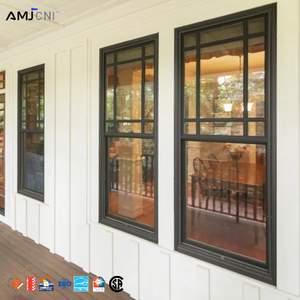
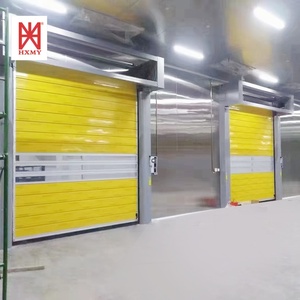
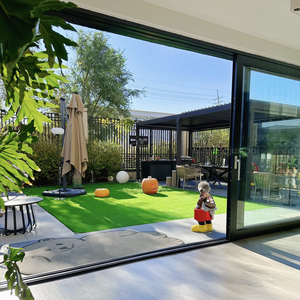
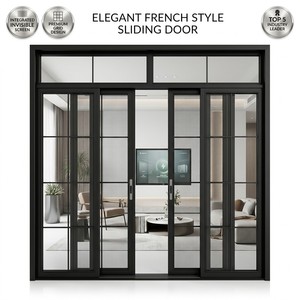
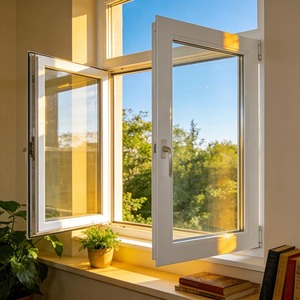
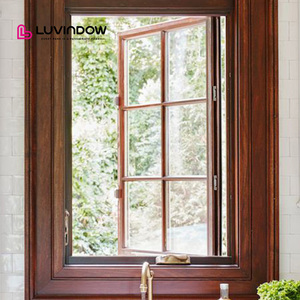
The Engineering Architecture of China High-Performance Aluminum Sliding Systems
When sourcing architectural sliding doors and high-span fenestration from China, international developers, facade engineers, and general contractors must look beyond superficial aesthetics. The operational lifespan of an exterior sliding door assembly depends directly on primary billet purity, structural inertia of profile extrusions, multi-cavity thermal breaking, and rolling hardware kinematic resistance.
1. Primary 6063-T5 vs. 6063-T6 Extrusion Metallurgy
A primary failure mode in budget aluminum sliding doors is frame deflection under dynamic wind pressure (per ASTM E330 or EN 12211 testing). At our Guangdong manufacturing complex, all structural profiles for exterior patio sliding doors and vertical sliding double-hung systems are extruded strictly from 100% primary A00-grade aluminum billets. We avoid recycled scrap mixtures that introduce iron contaminants and compromise structural ductility.
Profile wall thicknesses are calibrated beyond minimum residential baselines: our commercial-grade sliding systems feature structural main walls of 2.0mm to 3.0mm, enabling vertical sash configurations exceeding 3,500mm in height without intermediate steel reinforcement. Profiles receive precision age-hardening treatments to reach a Webster hardness of 12–15 HW, ensuring zero sagging under triple-glazed insulated glass unit (IGU) sash loads exceeding 450 kg.
2. Thermal Barrier Isolation: Technoform Polyamide PA66 GF25
Thermal bridge isolation is fundamental to high-efficiency fenestration in both sub-zero continental winters (U-factor ≤ 1.4 W/m²·K) and extreme desert climates where solar surface temperatures breach 75°C. Rather than low-grade poured-and-debridged polyurethane resins that become brittle over thermal cycling, our systems utilize imported Technoform PA66 GF25 (polyamide 66 reinforced with 25% longitudinal glass fiber) thermal struts. The coefficient of thermal expansion of PA66 GF25 (2.5 × 10⁻⁵ K−1) precisely matches that of aluminum alloy (2.3 × 10⁻⁵ K−1). This metallurgical equilibrium prevents structural shearing, frame warping, or air leakage over decades of seasonal thermal expansion and contraction.
3. Multi-Cavity Extrusion Design and Isobaric Drainage Technology
Inferior sliding doors frequently fail the ASTM E331 water penetration resistance test at high wind speeds (500 Pa to 1000 Pa). Our sliding door bottom sills integrate an isobaric pressure-equalized stepped decompression chamber. Combined with hidden gravity-assisted directional drainage slots and anti-backflow silicone check flaps, water accumulated during severe tropical downpours is drained outward instantly under gravity, eliminating indoor leakage even during typhoon and hurricane atmospheric depressions.
Multi-Point Locking
Reinforced 304 stainless steel mushroom cams and anti-lift pin blocks resist pry-bar forces exceeding 8,000 N, ensuring certified RC2/RC3 burglary resistance.
Kinematic Rollers
Dual tandem precision CNC stainless steel quad-rollers with encapsulated self-lubricating ceramic bearings, rated for 150,000 continuous glide cycles.
EPDM Gasket Seals
Automotive-grade continuous co-extruded EPDM foam weatherstrips with vulcanized corner joints prevent air infiltration, exceeding Class 4 airtightness.
AAMA 2605 PVDF
70% Kynar 500 fluoropolymer and Qualicoat Class 2 certified surface coatings withstand 3,000+ hours of continuous salt spray fog testing without chalking.
System Engineering & Certified Performance Metrics
International facade consultants require empirical testing data for submittal packages. The comparative matrix below outlines our signature sliding, hung, and casement configurations tested in accredited laboratories.
| System Classification | Profile Depth & Wall | Glazing Architecture | Thermal U-Factor (W/m²·K) | Acoustic STC (dB) | Wind Load (Pa) | Certification |
|---|---|---|---|---|---|---|
| Heavy-Duty Lift & Slide Door | 160mm System / 2.5mm Wall | 6mm Low-E + 16Ar + 6mm + 16Ar + 6mm | 1.2 – 1.5 | 42 dB | 4500 Pa (Serviceability) | CE / AS2047 / ISO9001 |
| Ultra-Slim Panoramic Slider | 120mm System / 2.0mm Wall | 8mm Low-E + 20Ar Warm Edge + 8mm | 1.4 – 1.7 | 38 dB | 3800 Pa | CE / ASTM E330 |
| Vertical Sliding Double Hung | 80mm System / 1.8mm Wall | 5mm + 12A + 5mm Dual Low-E | 1.6 – 1.8 | 35 dB | 3000 Pa | NFRC / CSA Verified |
| Architectural Casement Window | 75mm Multi-Cavity / 2.0mm Wall | 6mm + 12Ar + 6mm + 12Ar + 6mm | 1.1 – 1.4 | 44 dB | 5000 Pa (N6 Cyclonic) | AS2047 N6 / CE |
| Commercial Glass Partition Slider | 50mm Slim Frame / 2.0mm Wall | 5mm Clear + 0.76PVB + 5mm Laminated | 2.8 (Interior) | 36 dB | Internal Static | RoHS / SGS Certified |
Future Procurement & Architectural Trends in Aluminum Sliding Fenestration
As global building standards shift toward Net-Zero Energy Buildings (NZEB), Passivhaus envelopes, and universal barrier-free accessibility, aluminum sliding doors are evolving from simple mechanical openings into advanced architectural systems.
Zero-Threshold Flush Drainage & ADA Accessibility
Traditional sliding door bottom sills create architectural barriers with high upstands prone to tripping. Next-generation procurement demands completely flush 0mm floor-level transitions. Our embedded floor track incorporates hidden stainless steel drainage troughs with high-capacity siphon channels, achieving seamless indoor-to-outdoor transitions for wheelchairs, hospitality venues, and modern villas without compromising water tightness or structural seal integrity.
Smart Motorization & Concealed BMS Actuation
As oversized luxury sliding glass sashes exceed 500kg, manual operation becomes physically demanding. Future specifications require concealed magnetic levitation motors (MagLev) or heavy-duty brush-free servo drives hidden entirely within the top head jamb. These smart operators feature obstacle-detection pinch protection, integration into KNX/Crestron Building Management Systems (BMS), and smartphone app automation with ultra-silent <35dB operation.
Low-Carbon Circular Aluminum & EPD Verification
International environmental regulations, such as the EU Carbon Border Adjustment Mechanism (CBAM) and LEED v4.1 certification, require contractors to submit verified Environmental Product Declarations (EPD). DERCHI is leading China fenestration manufacturers by introducing low-carbon primary aluminum billets smelted using hydroelectric energy, ensuring embodied carbon below 4.0 kg CO&sub2;e/kg Al compared to traditional coal-fired averages of 16.0 kg CO&sub2;e/kg Al.
Frequently Asked Questions for Global Fenestration Buyers
Direct technical and commercial answers addressing specifications, packaging, shop drawing submittals, and factory audit capabilities.
We employ automated German 4-axis CNC double-miter saws and machining centers with positioning accuracy within ±0.2mm. Before full batch fabrication, our engineering team provides exhaustive 1:1 CAD shop drawings, elevation schedules, and BIM Revit files for consultant sign-off. We build full-scale mockups in-house to verify frame plumbness, diagonal squareness, and interlocking reveal tolerances.
Our door and window systems are certified across the primary global standards: AS2047 (Australian Standards wind, water, air, operating force, and N6 deflection), NFRC / CSA (North American thermal and condensation metrics), CE marking (EN 14351-1), ISO 9001 quality management, and UL fire ratings. Complete certified laboratory test reports and factory-stamped calculations can be issued with your submittal package.
Each profile is wrapped with electrostatic protective film, corner-guarded with high-density EPE foam buffers, and sealed in vapor-barrier plastic wrap with industrial desiccant bags. For ocean transport, units are secured into custom fumigated OSB plywood crates with steel reinforcement bands and internal vibration-dampening rubber chocks, fully compatible with 40ft HQ or Open Top container handling.
Yes. We maintain direct OEM strategic partnerships with elite European hardware brands including Siegenia-Aubi, Gretsch-Unitas (G-U), Hoppe, and Sobinco, ensuring 100% genuine German multi-point gearboxes, lift-and-slide transmissions, and designer handles. We also offer our proprietary engineered heavy-duty stainless steel hardware packages for cost-optimized project value engineering.
For beachfront developments in coastal climates (Florida, Dubai, Caribbean, Sydney), we specify Qualicoat Seaside Class 2 pre-treatment with 70% fluoropolymer PVDF coatings, resisting up to 3,000 hours of ASTM B117 neutral salt spray testing. All visible and concealed hardware components, including fasteners, roller carriers, and lock keeps, are upgraded to marine-grade AISI 316 stainless steel to eliminate galvanic corrosion.
Yes. We welcome third-party inspection firms (SGS, TÜV, Bureau Veritas, Intertek) to conduct raw material batch audits, structural water test witness trials, and pre-loading quantity checks. Furthermore, clients can inspect our 180,000㎡ facilities in Foshan anytime via our interactive 360-degree VR factory audit tour and scheduled live video conferences with our senior technical engineering team.
Initiate Your Architectural Project Specification Today
Connect directly with our senior fenestration engineers to receive free structural wind-load calculations, thermal U-factor simulations, comprehensive CAD shop drawings, and competitive direct factory quotation within 24 hours.
Send an Inquiry